
View 1 of 31
Maruyama Ōzui (1766–1829)
円山応瑞
Three Shrines
三社図
- Era
- Kinsei (近世)
- Subject
- Religion (神仏)
- Period
- Edo Period
- Date
- 1789
- Medium
- Hanging scroll; ink and color on silk
- Availability
- Not for sale
Description
Maruyama Ōzui was the eldest son of Maruyama Ōkyo 円山応挙, the founder of the Kyoto-based Maruyama School, which was famous for its revolutionary synthesis of objective naturalism and traditional Japanese decorative aesthetics. Some of Ōzui’s best works have been designated as Important Cultural Properties in Japan.
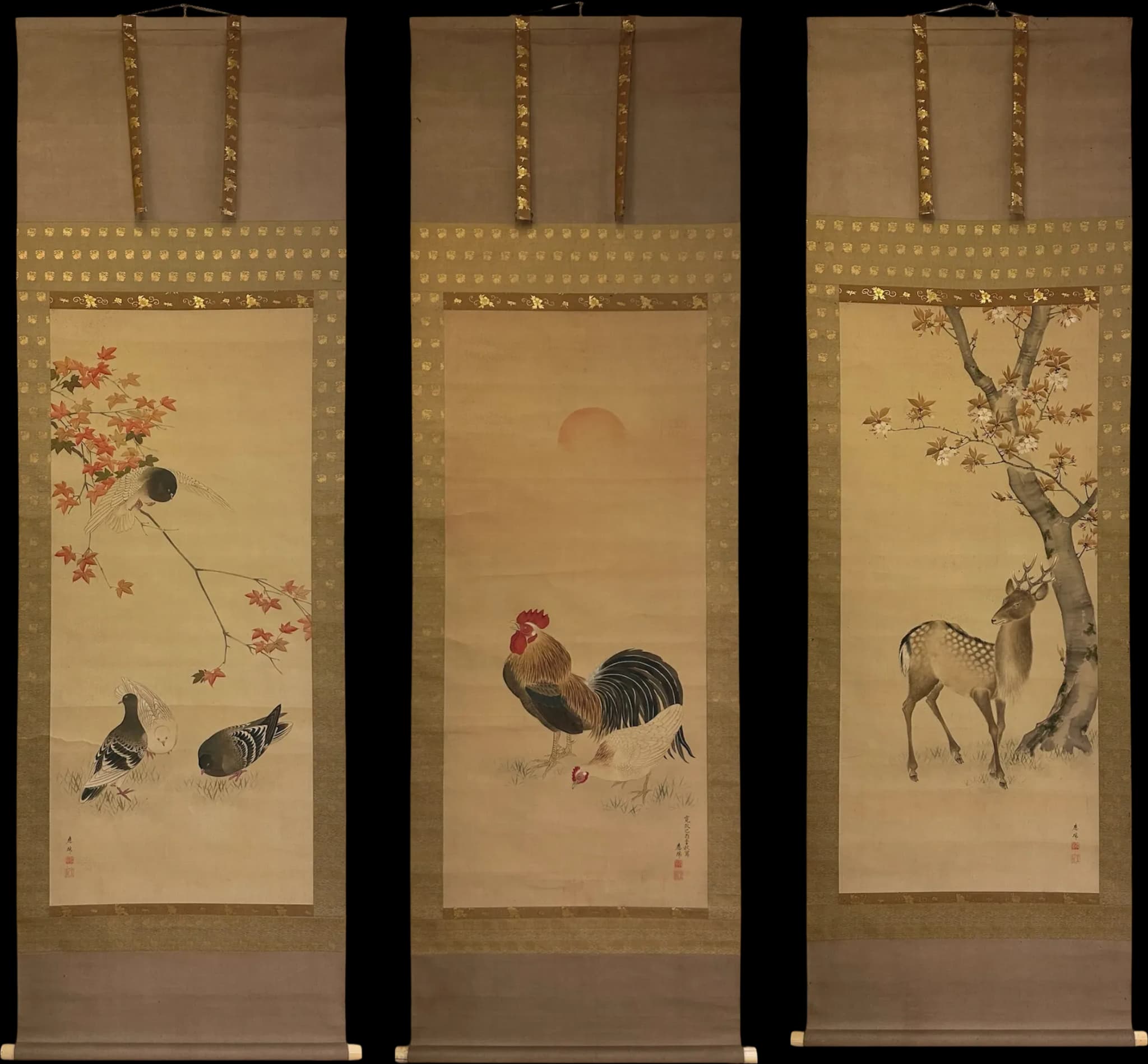
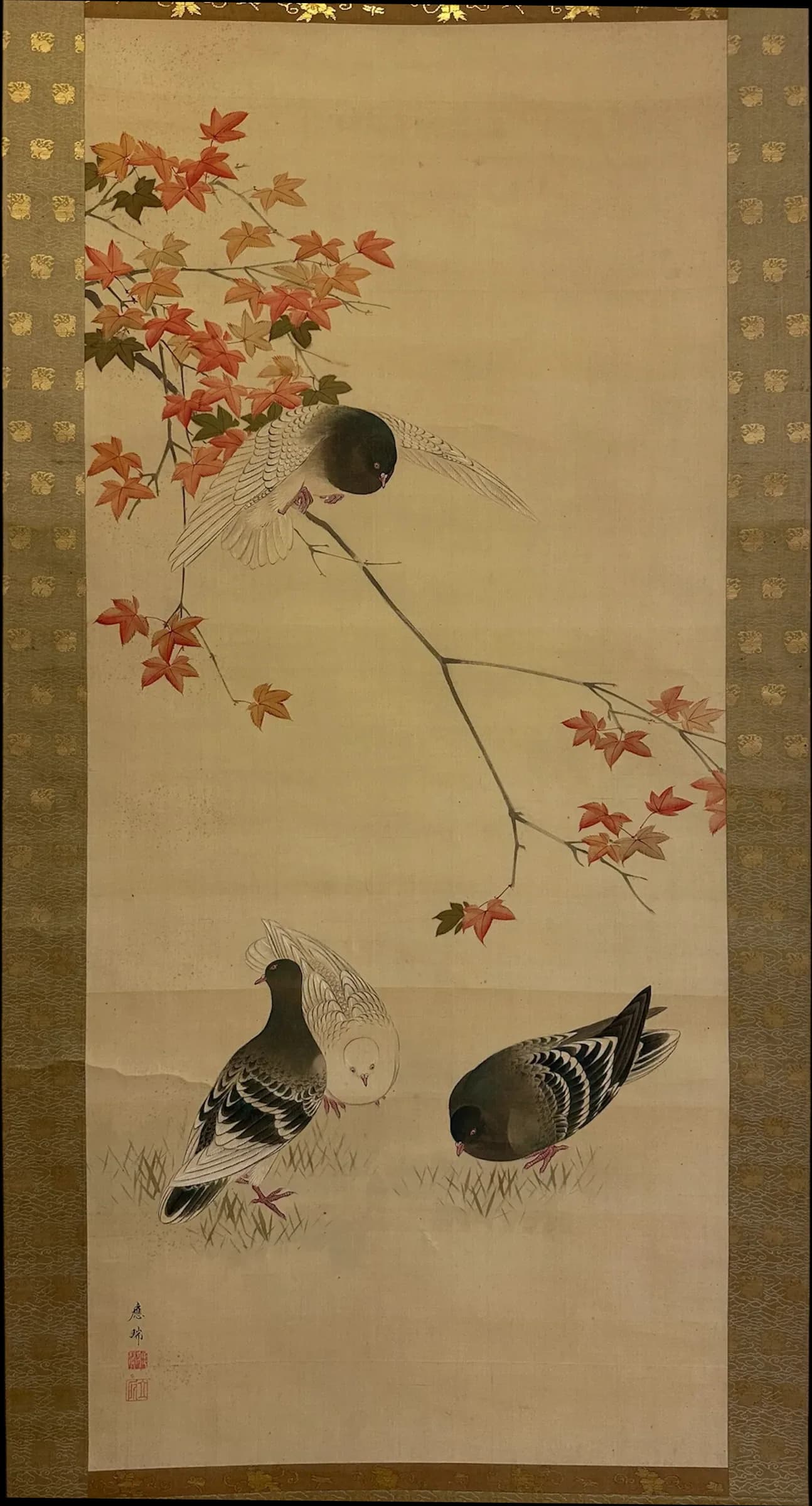
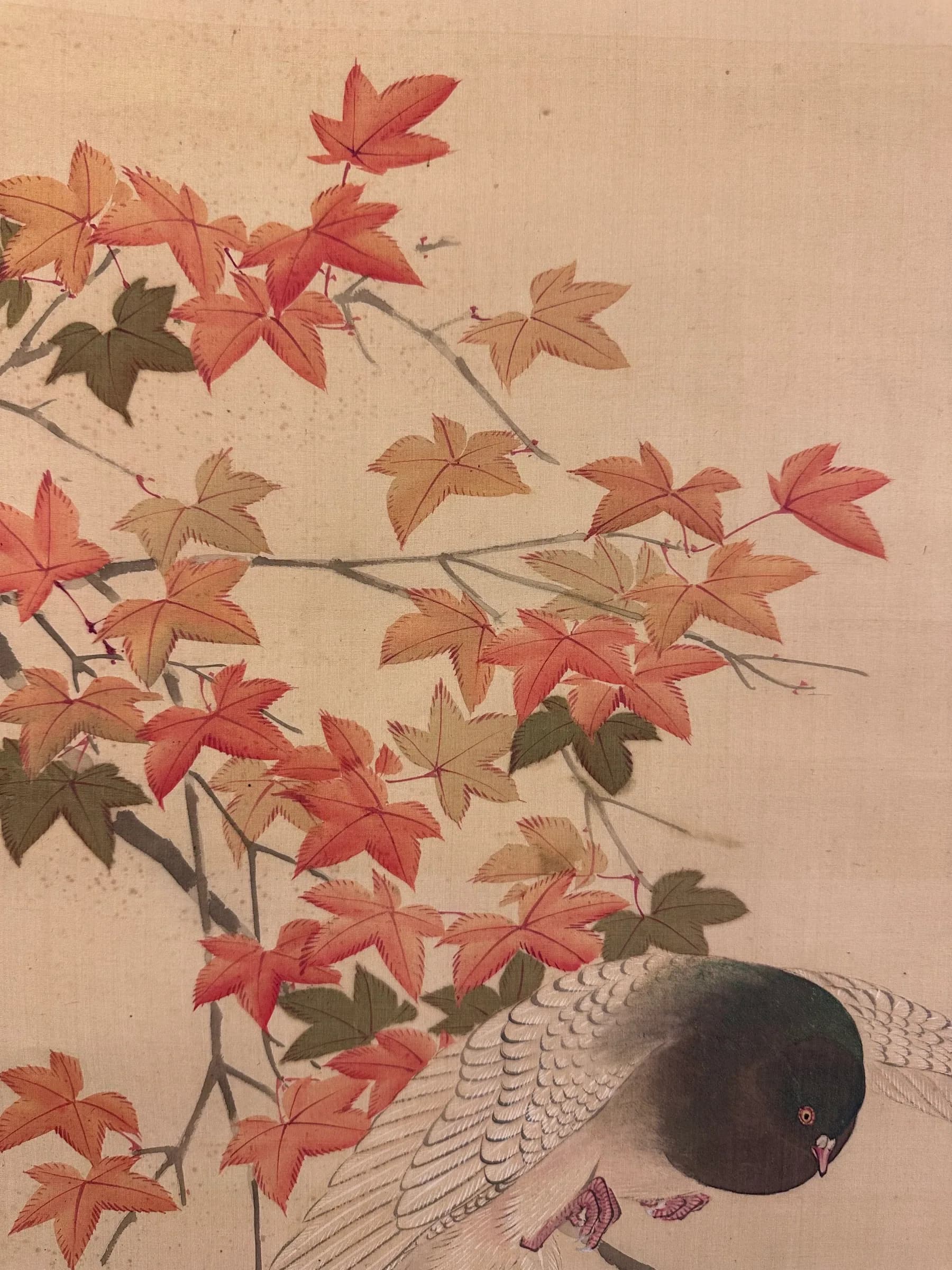
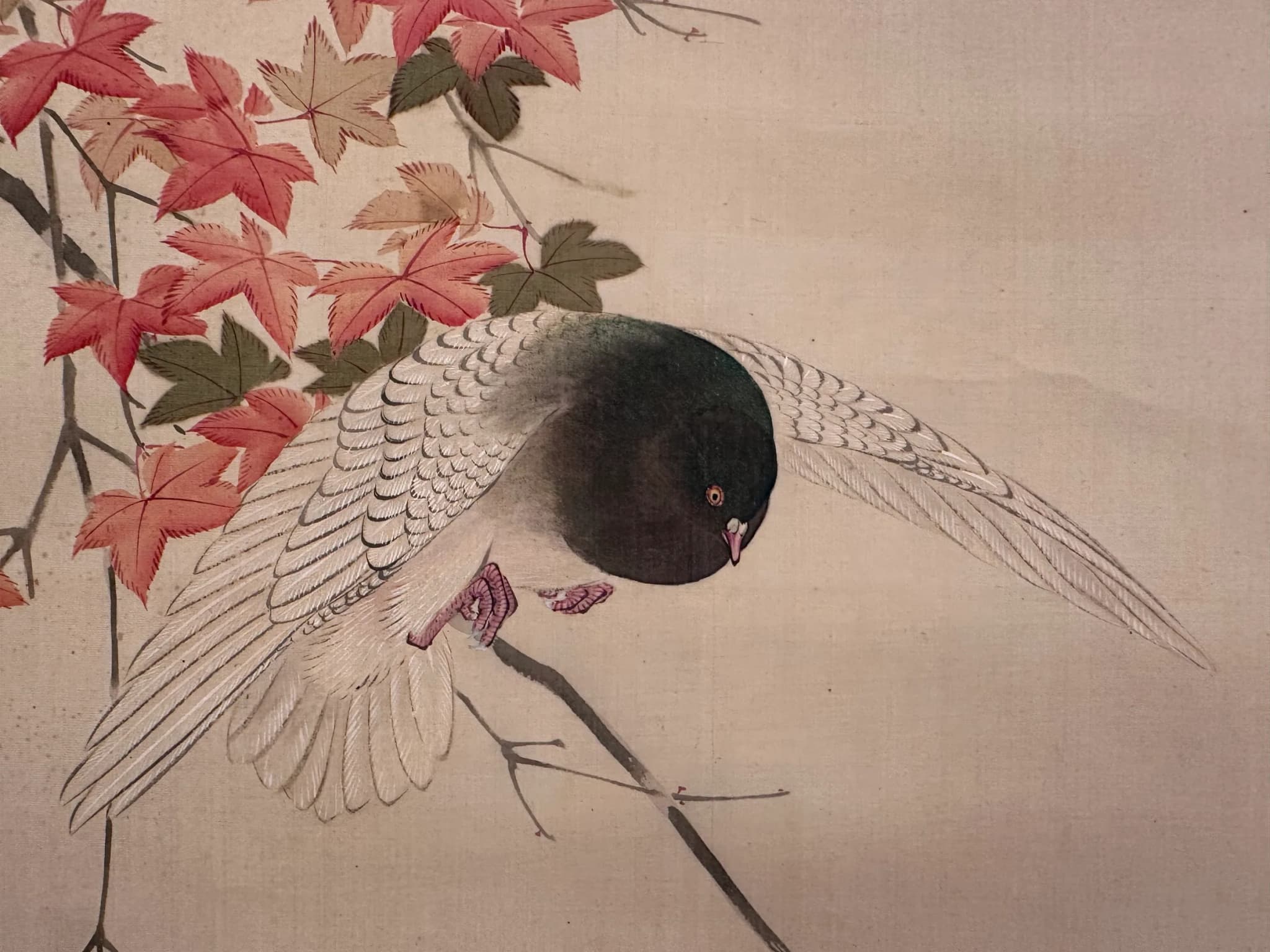
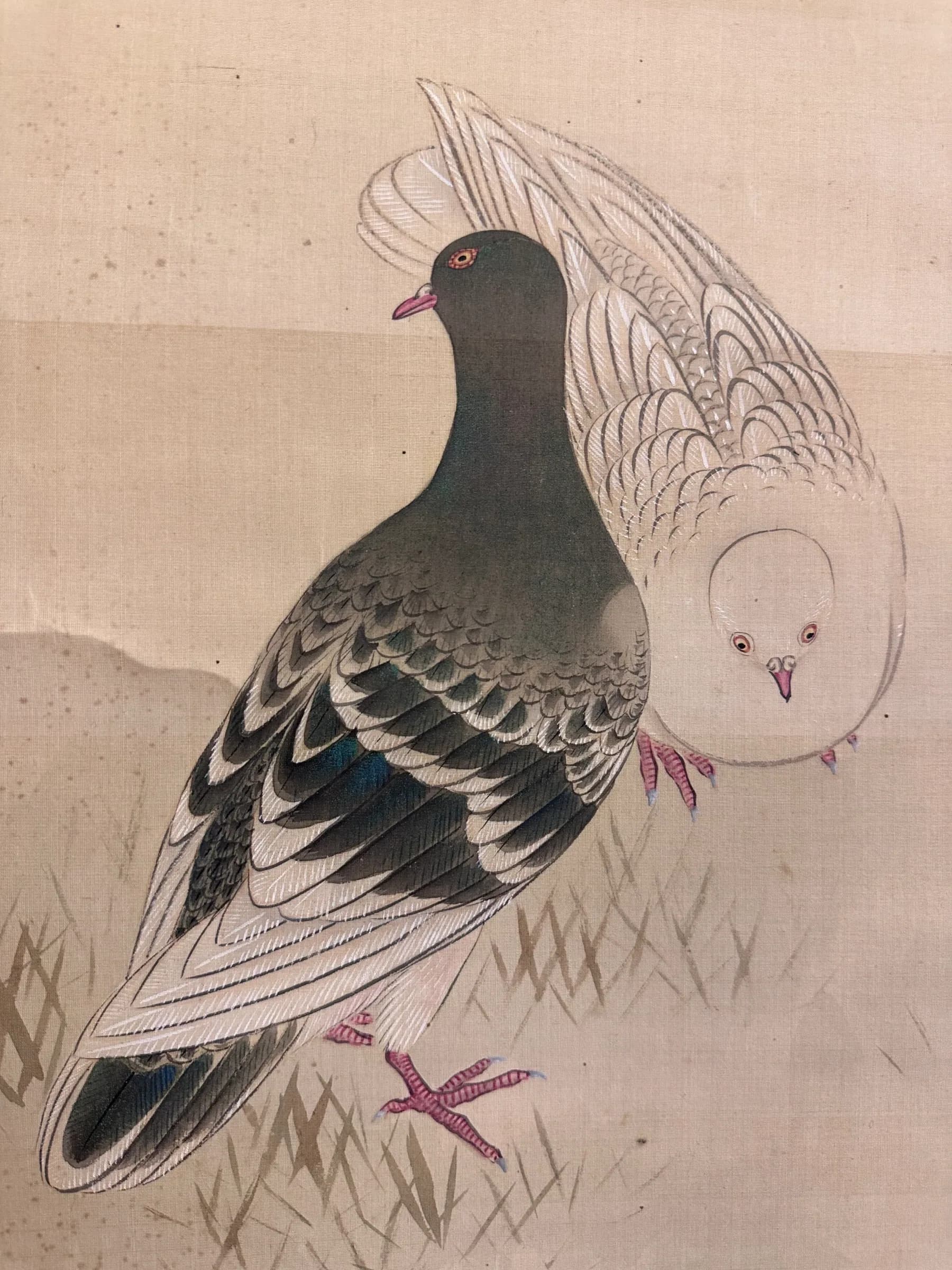
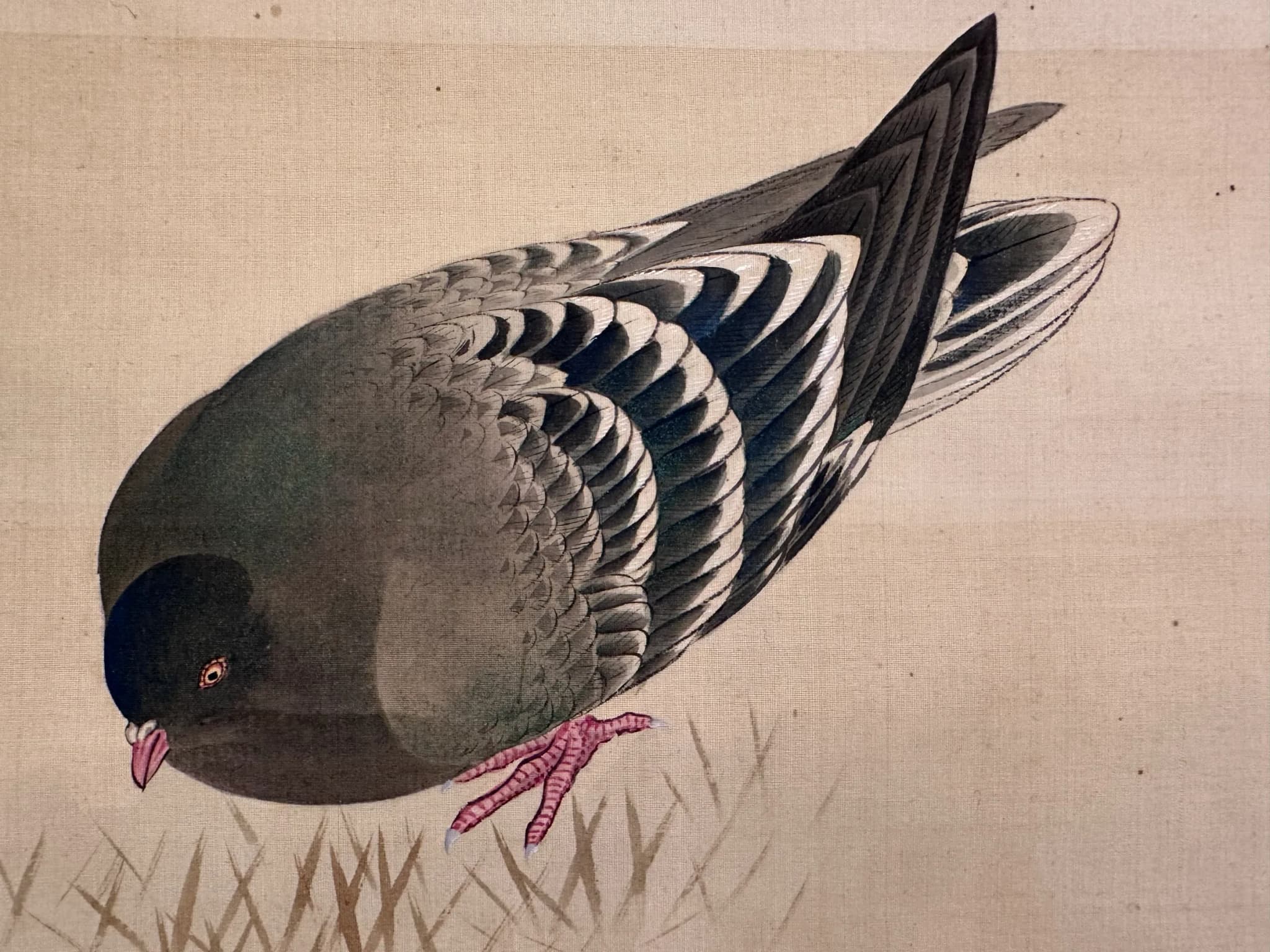
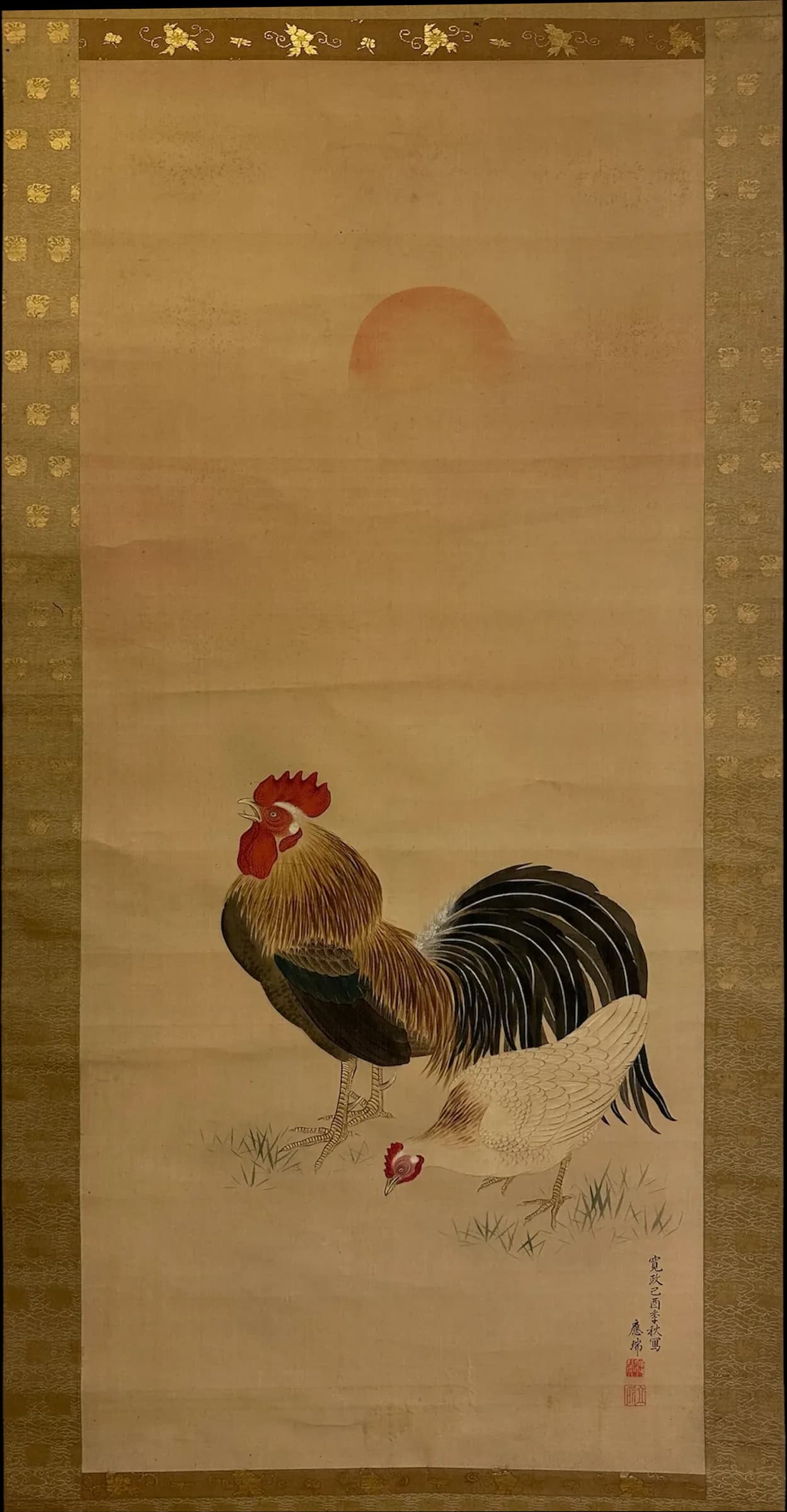
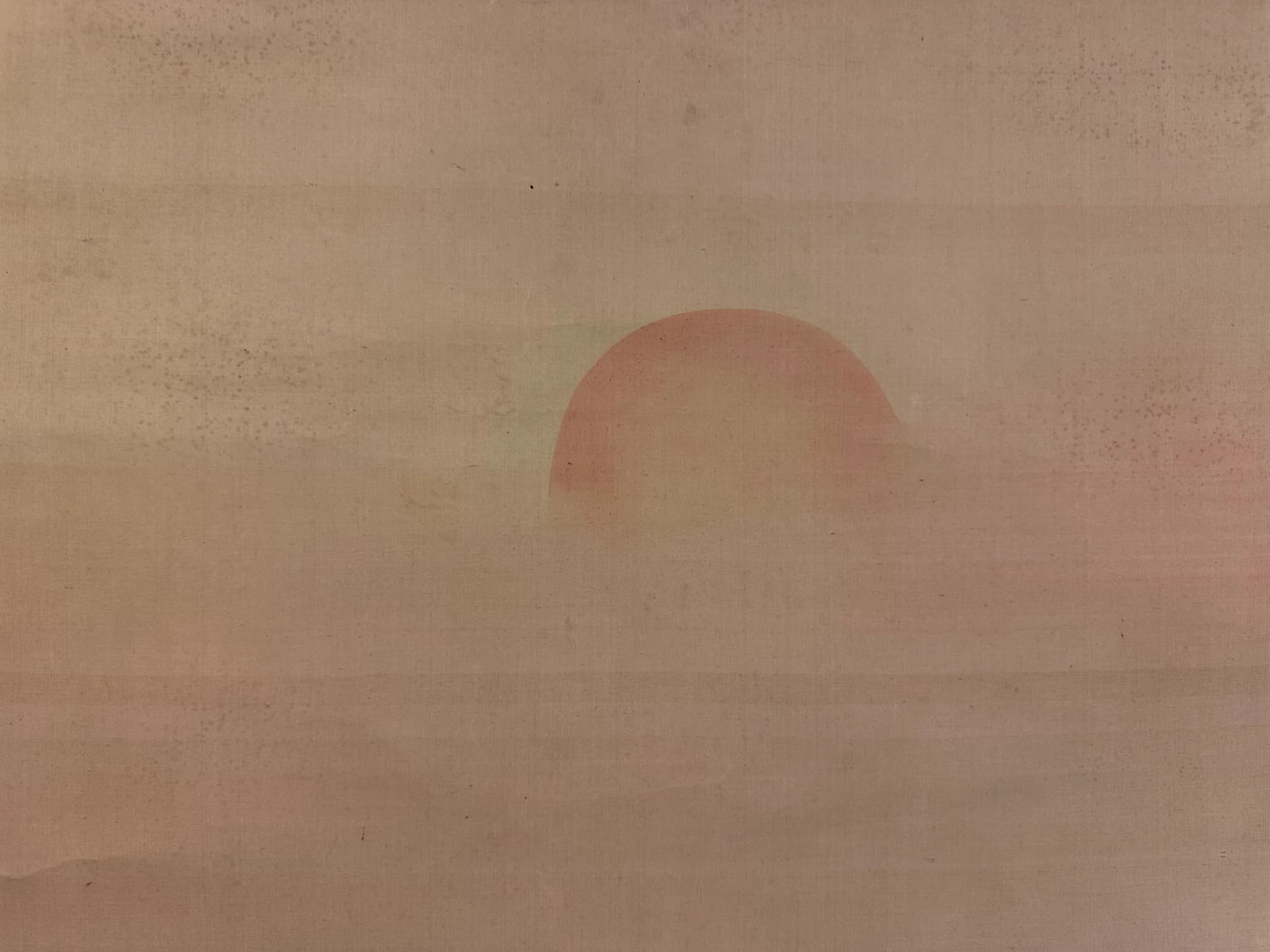
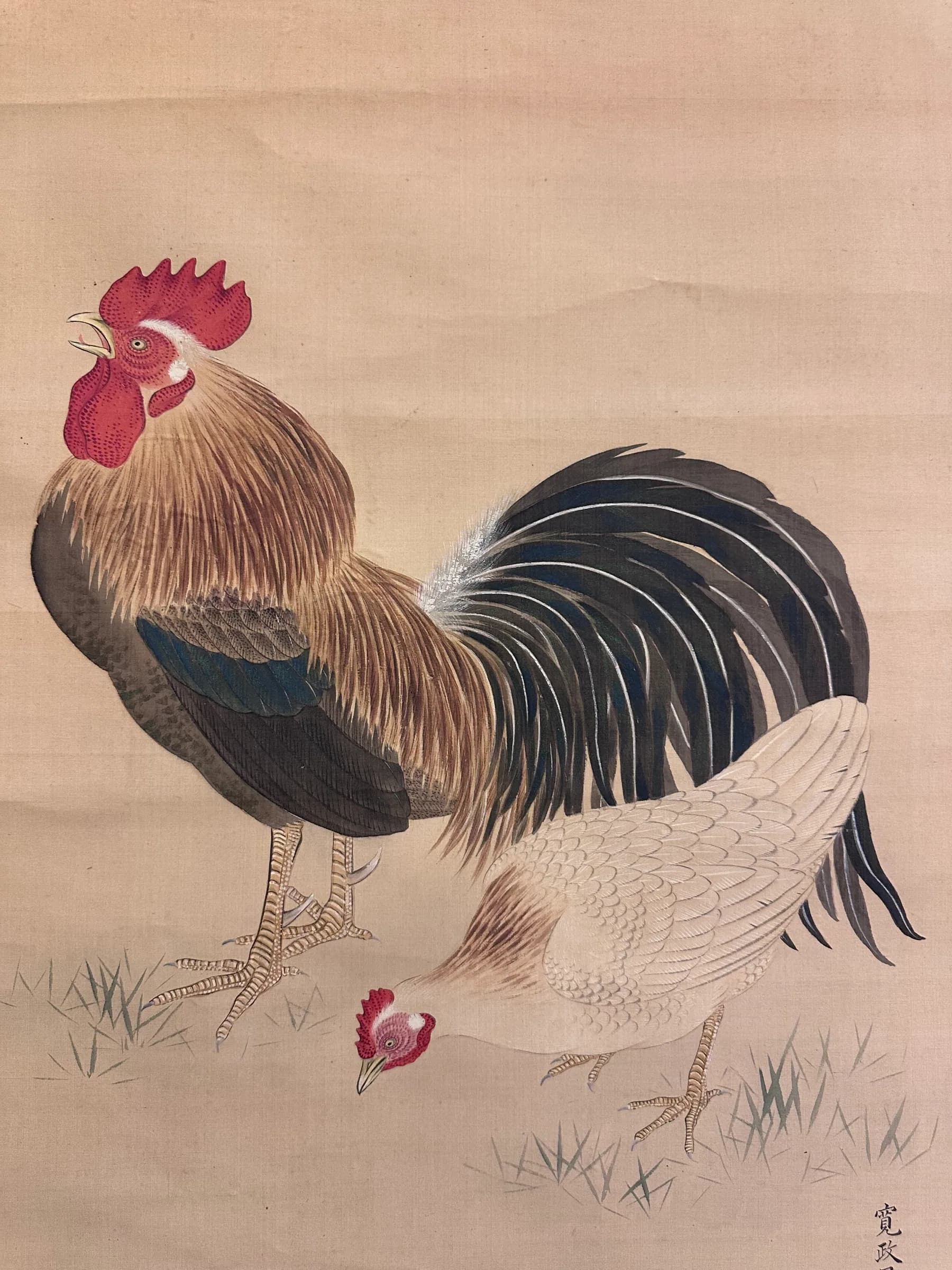
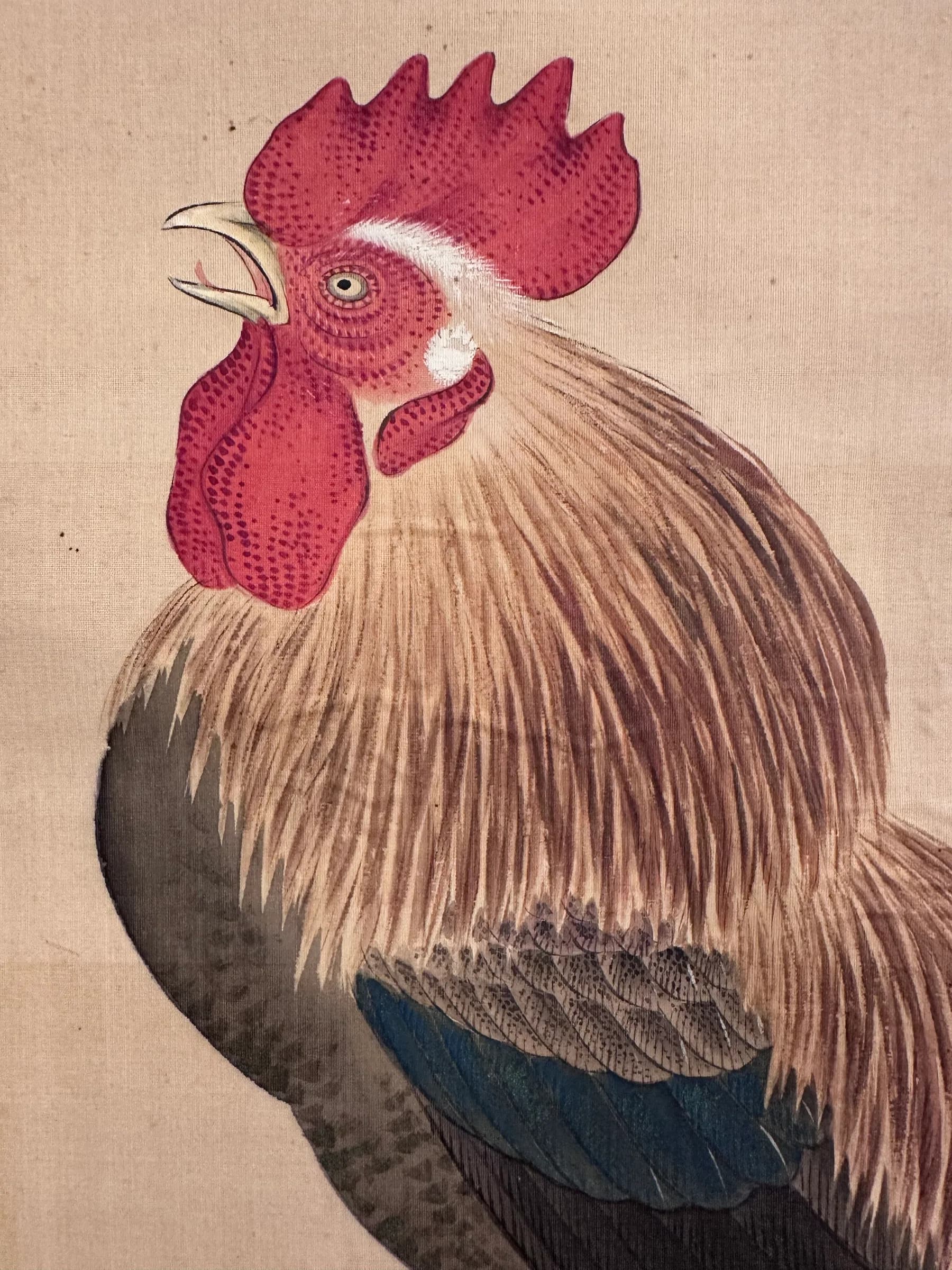
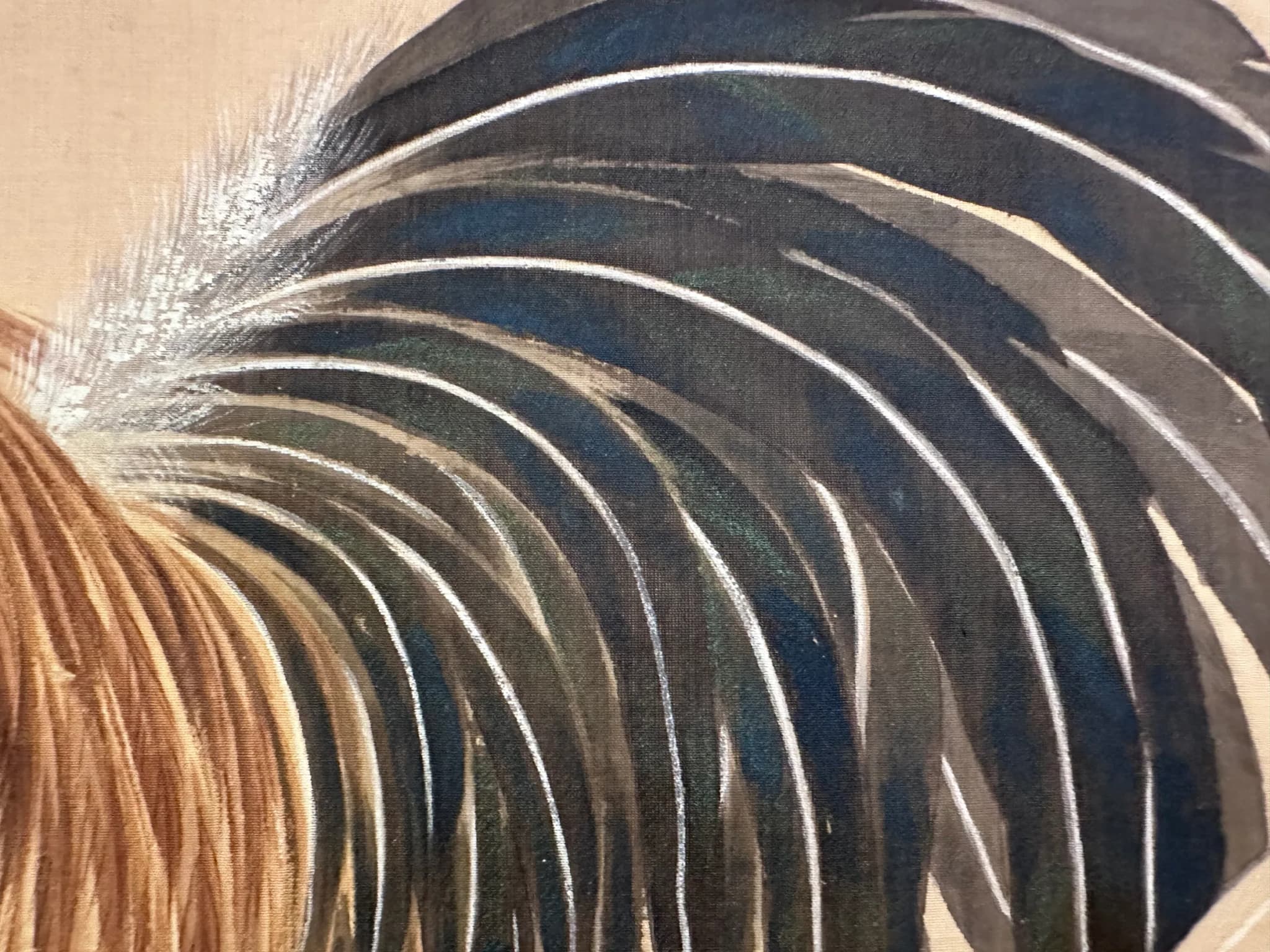
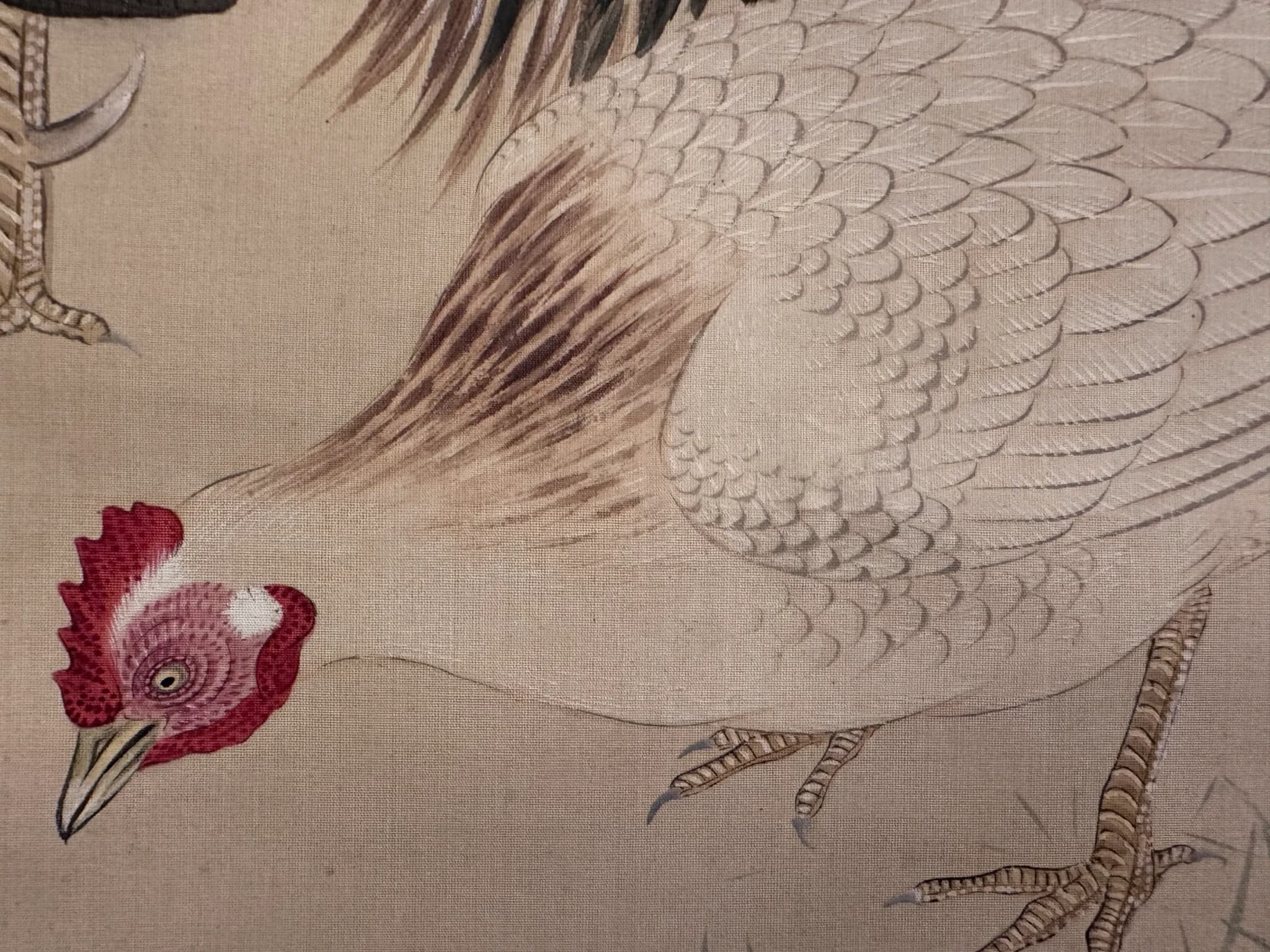
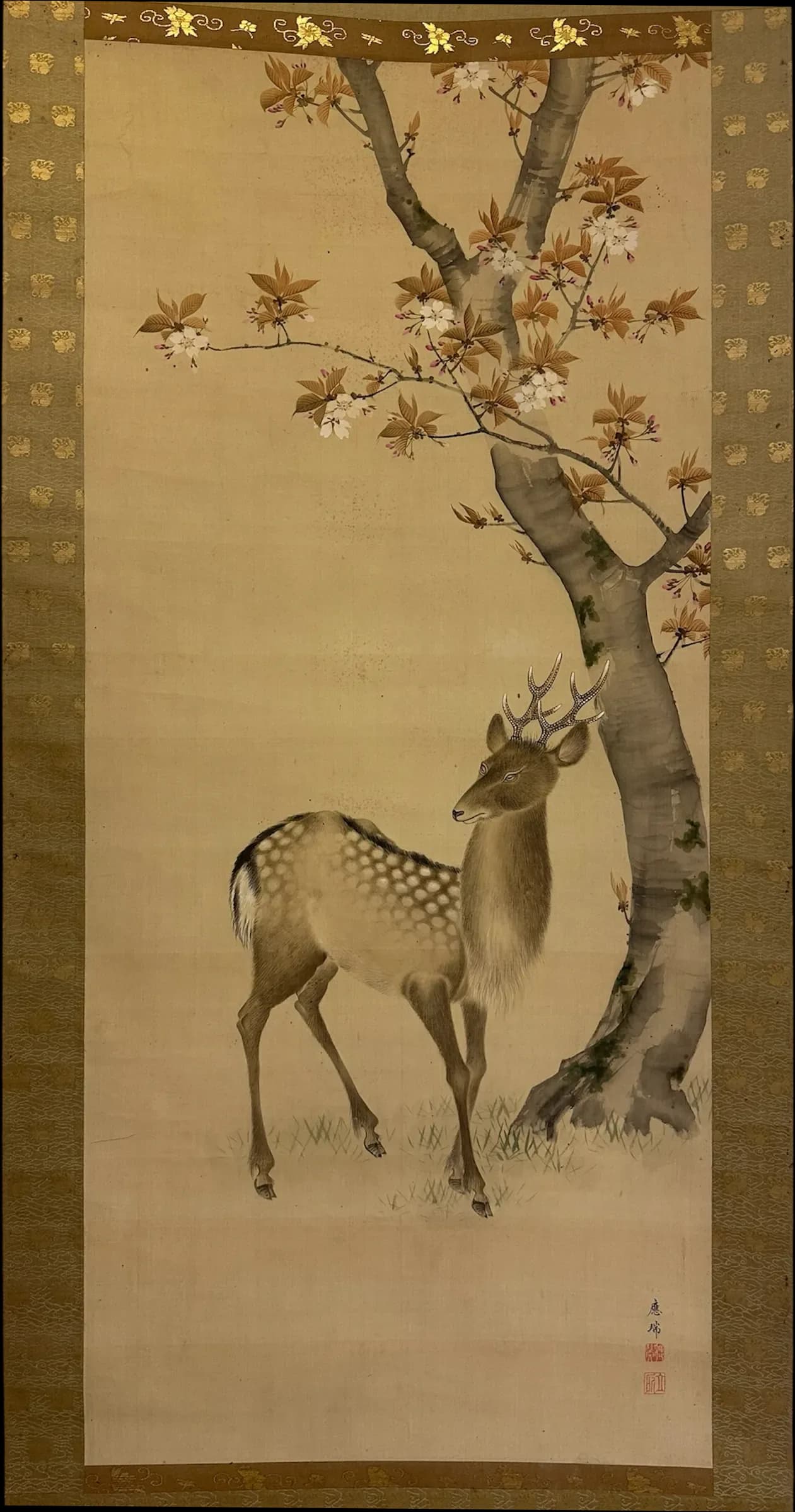
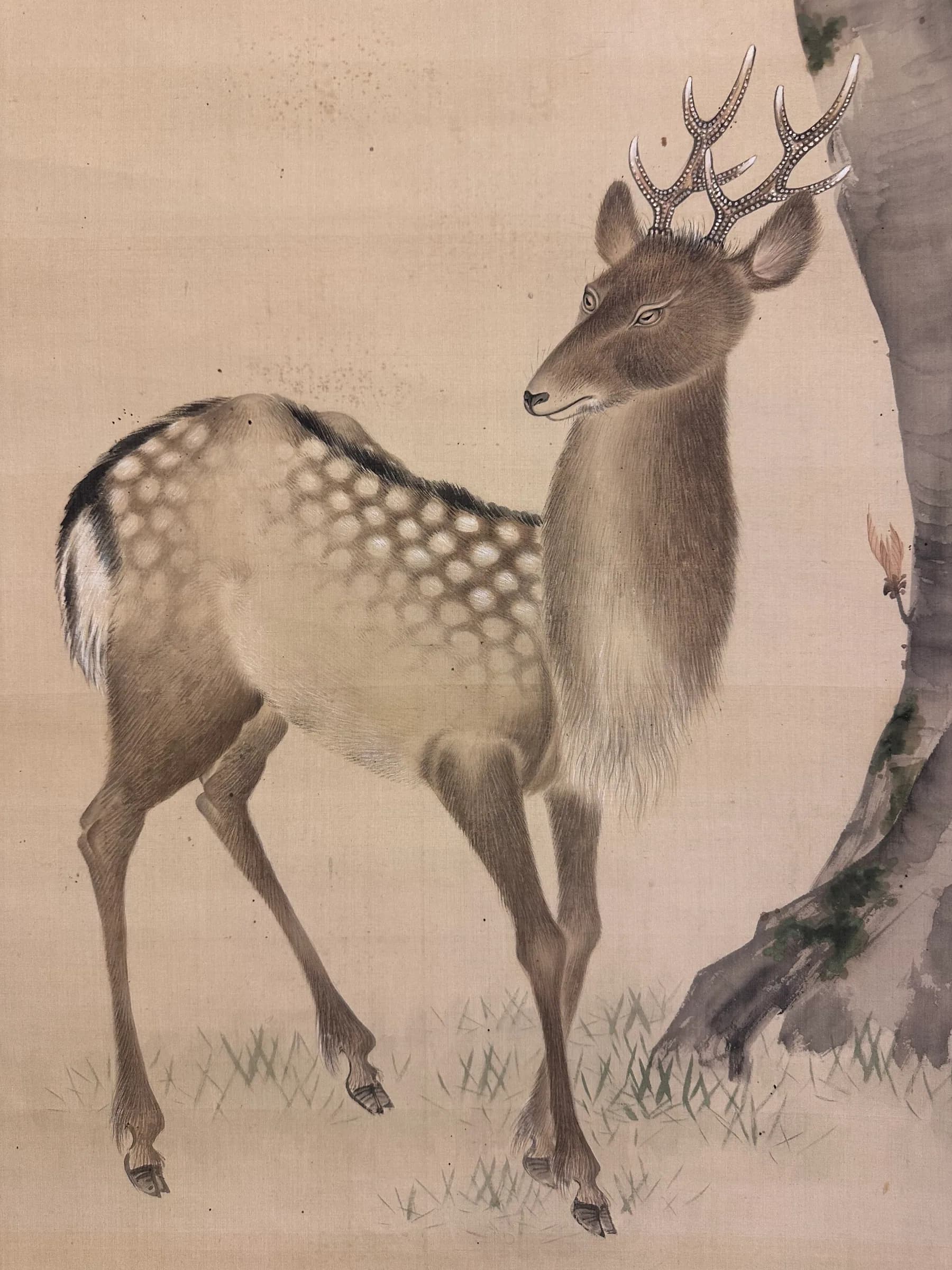
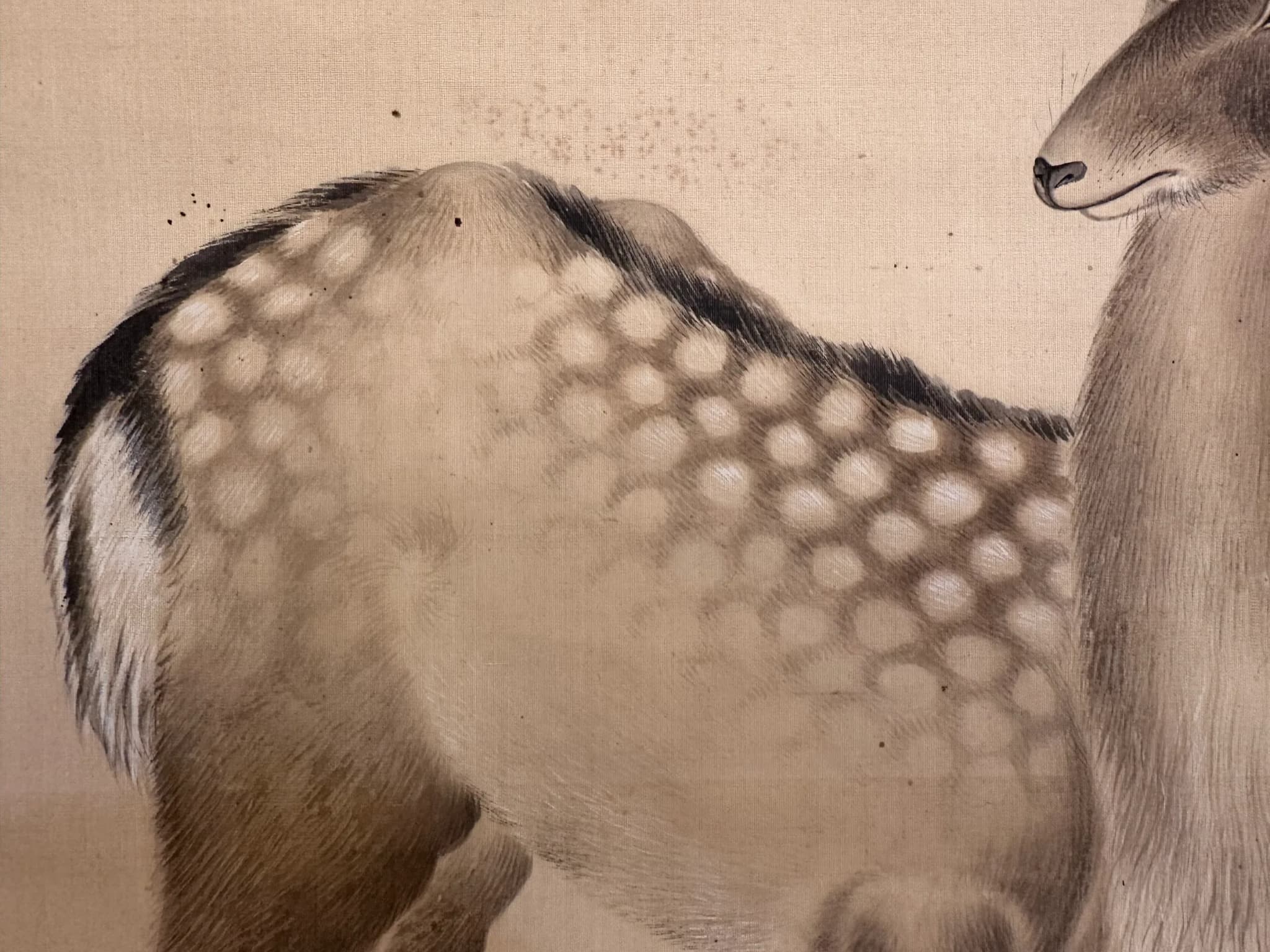
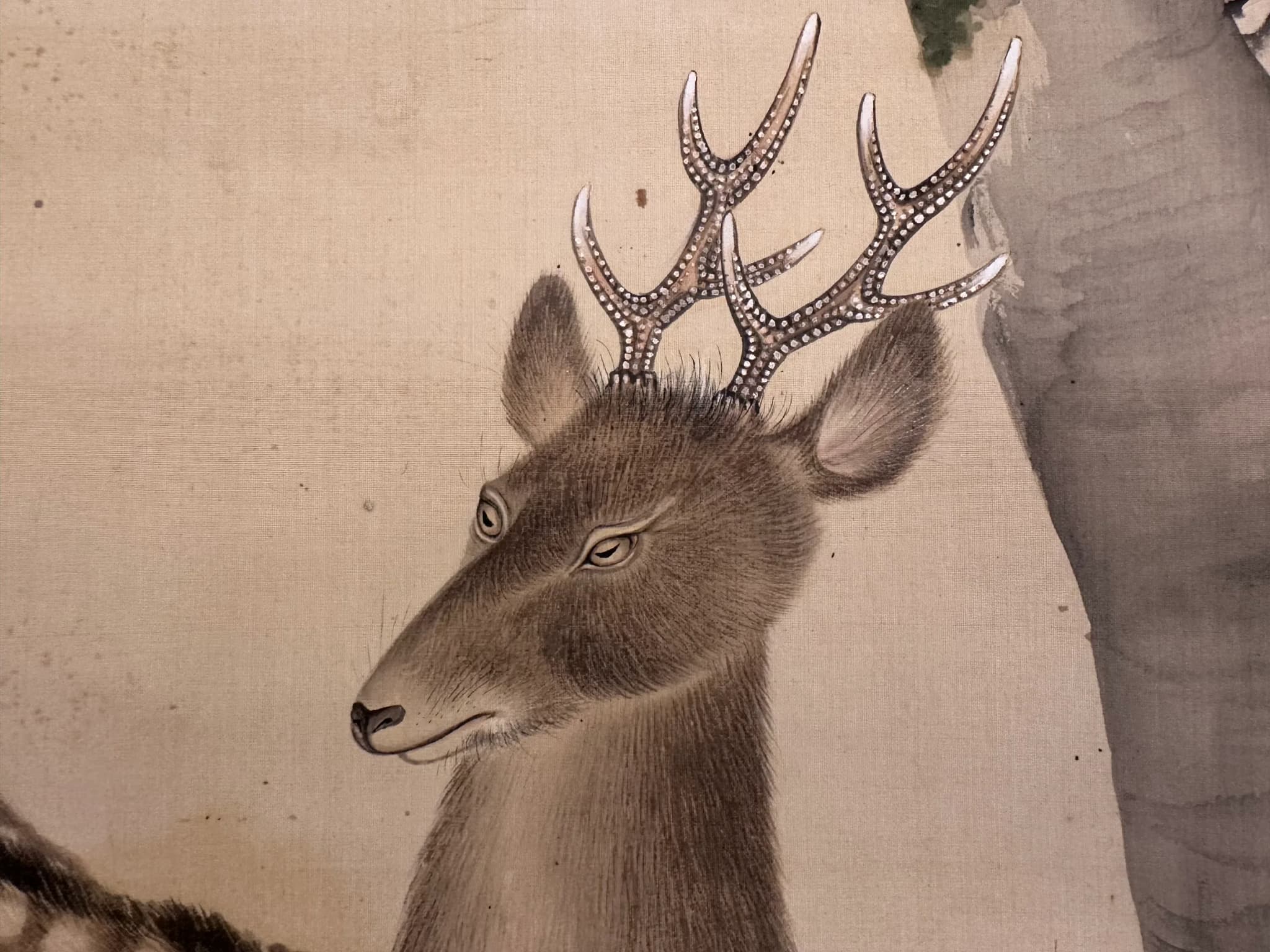
The Sansha-zu (三社図) is a traditional Japanese religious scroll that serves as a “spiritual tripod,” unifying the three pillars of Japanese society—the Imperial line, the court nobility, and the military shogunate—into a single visual icon. This particular variation replaces anthropomorphic deities with their sacred animal messengers. At the center stands the Rooster, representing the solar authority of Amaterasu and the Ise Grand Shrine; to the right is the Deer, the graceful protector of the Kasuga Shrine and the Fujiwara aristocracy; and to the left is the Pigeon, the martial envoy of Hachiman and the samurai class. By substituting these animals for the deities, the scroll highlights the omnipresence of divine power in the natural world while acting as a microcosmic pilgrimage site for the home.
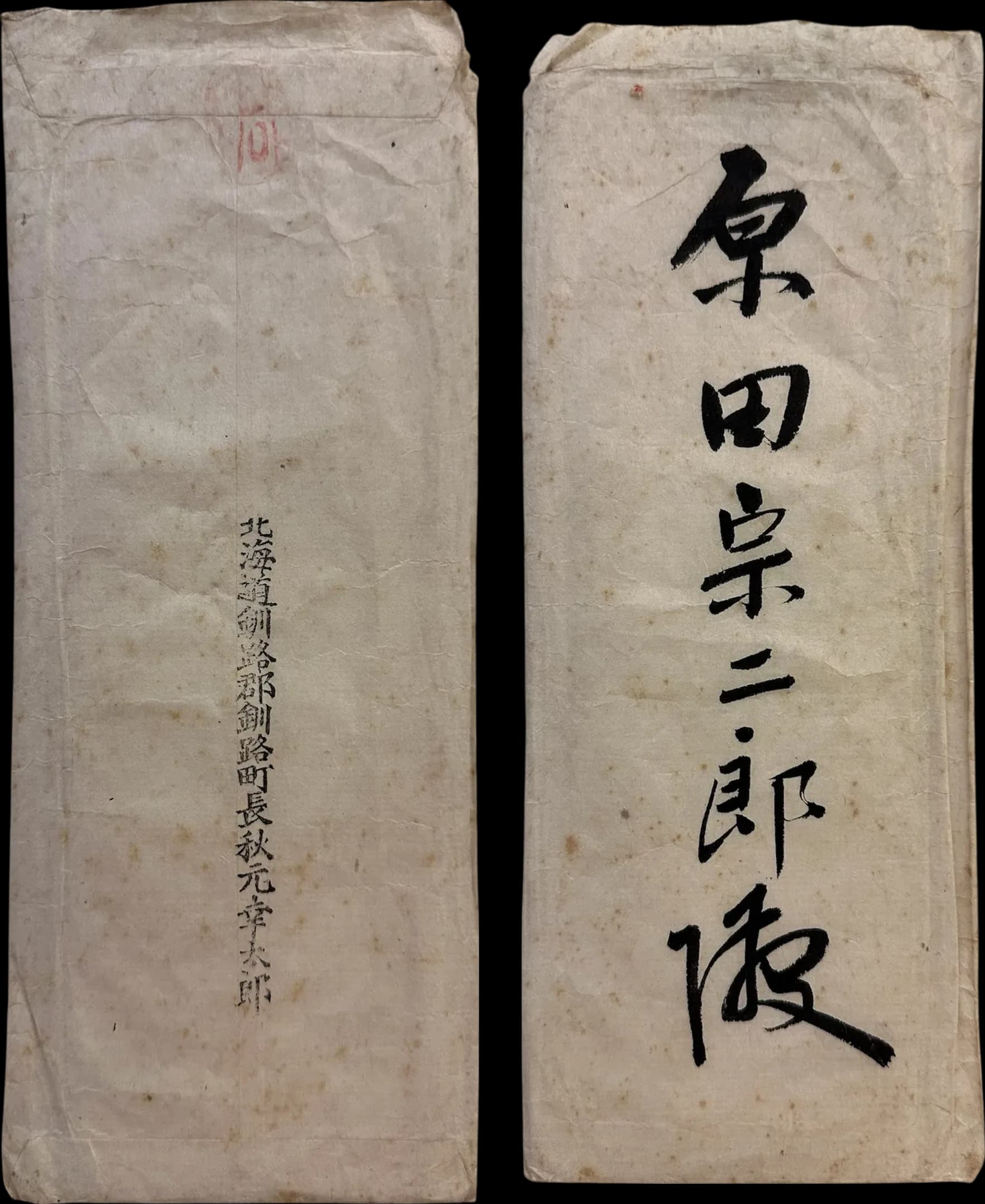
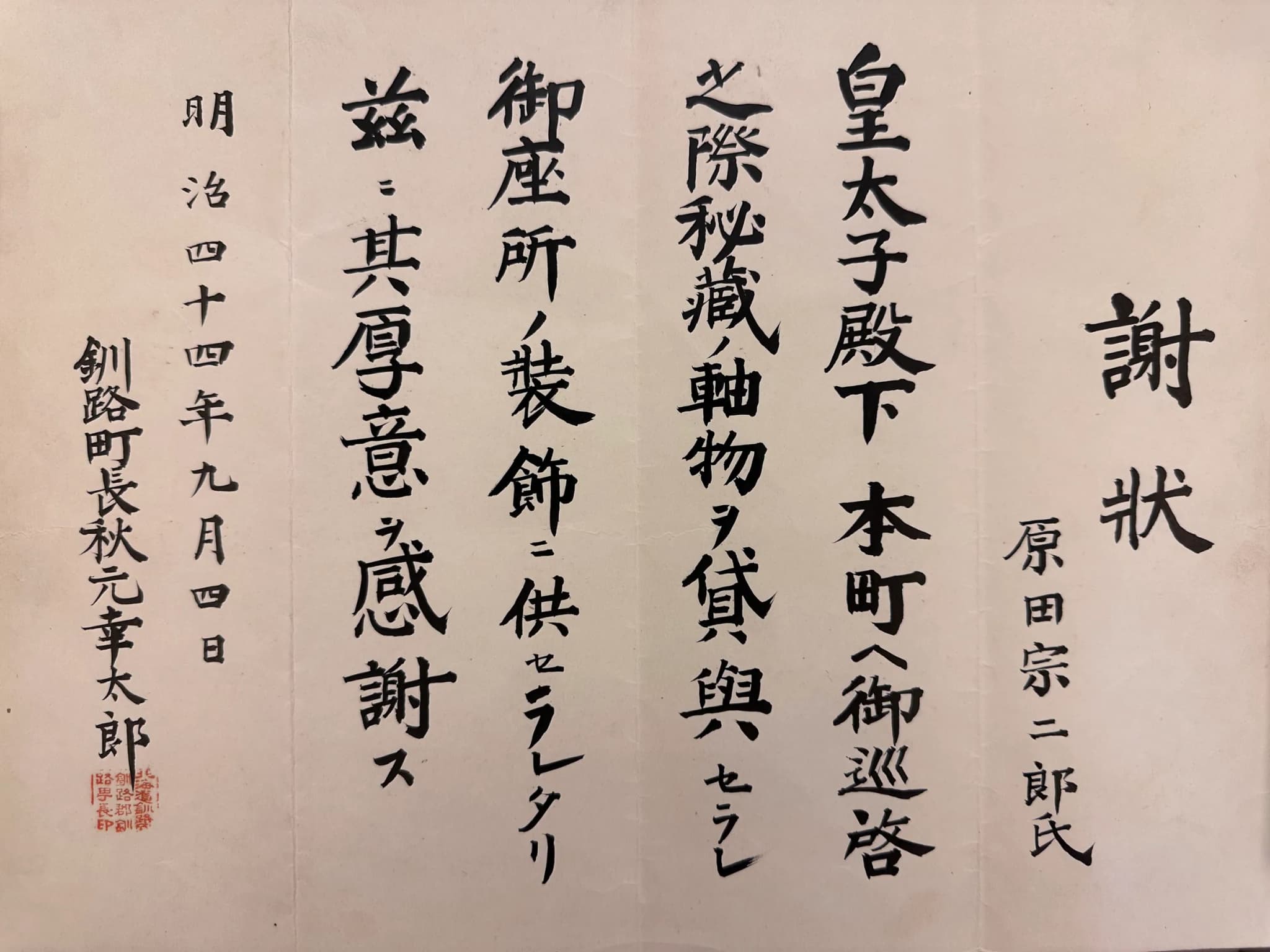
A thank-you note accompanies the triptych. Records show that from August to September of 1911, the future Taisho Emperor visited Hokkaido (where Kushiro is located). Harada Sōjirō, the original owner and generous lender of this triptych, was a prominent entrepreneur of fertilizer and fishing industries in Kushiro, notably overcoming a catastrophic business loss during the Russo-Japanese War through sheer resilience. He was described as a “enthusiast of calligraphy and painting” (書画狂) in Biographies of Kushiro Figures (『釧路人物評伝』).
Painting inscription
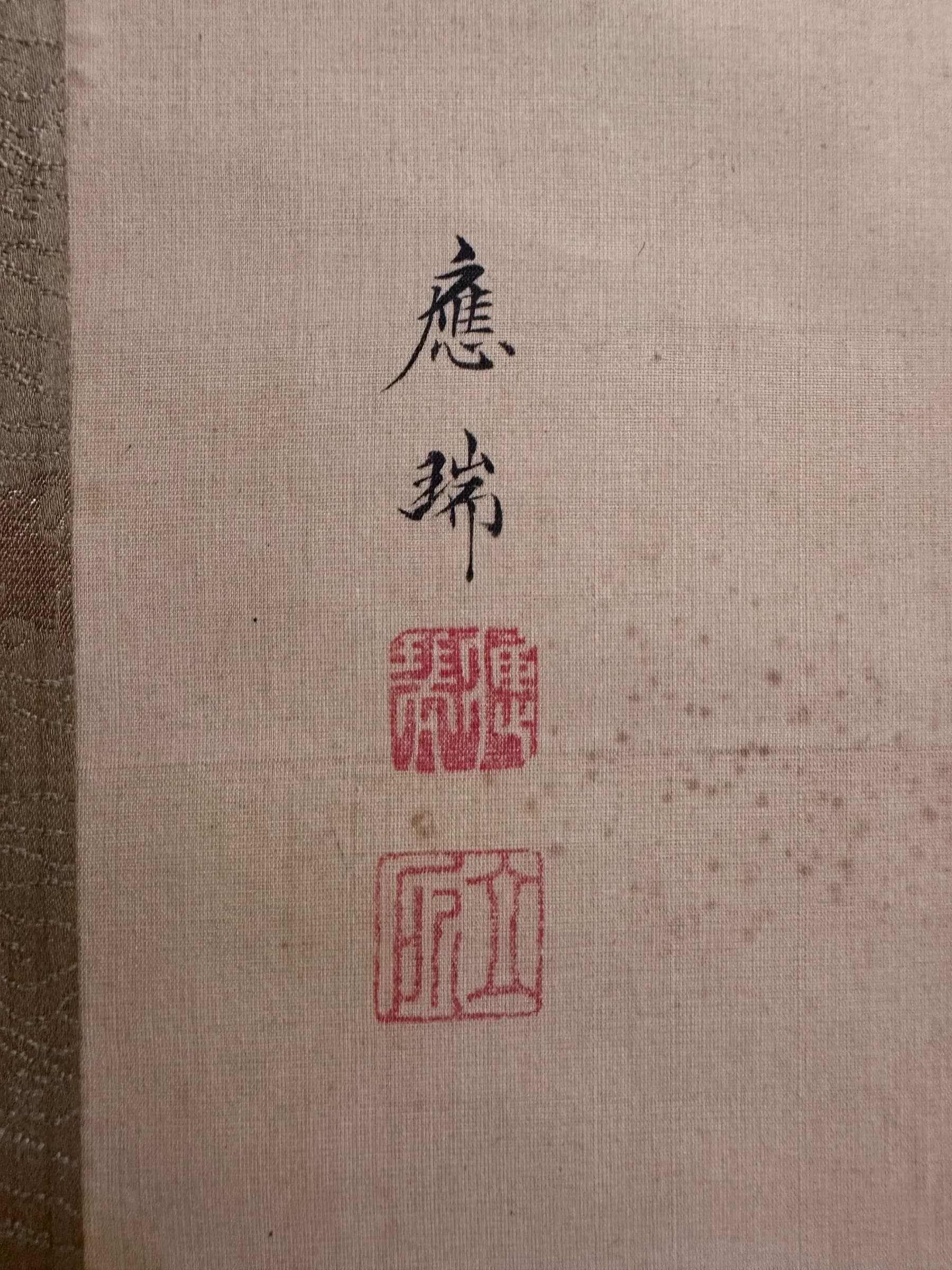
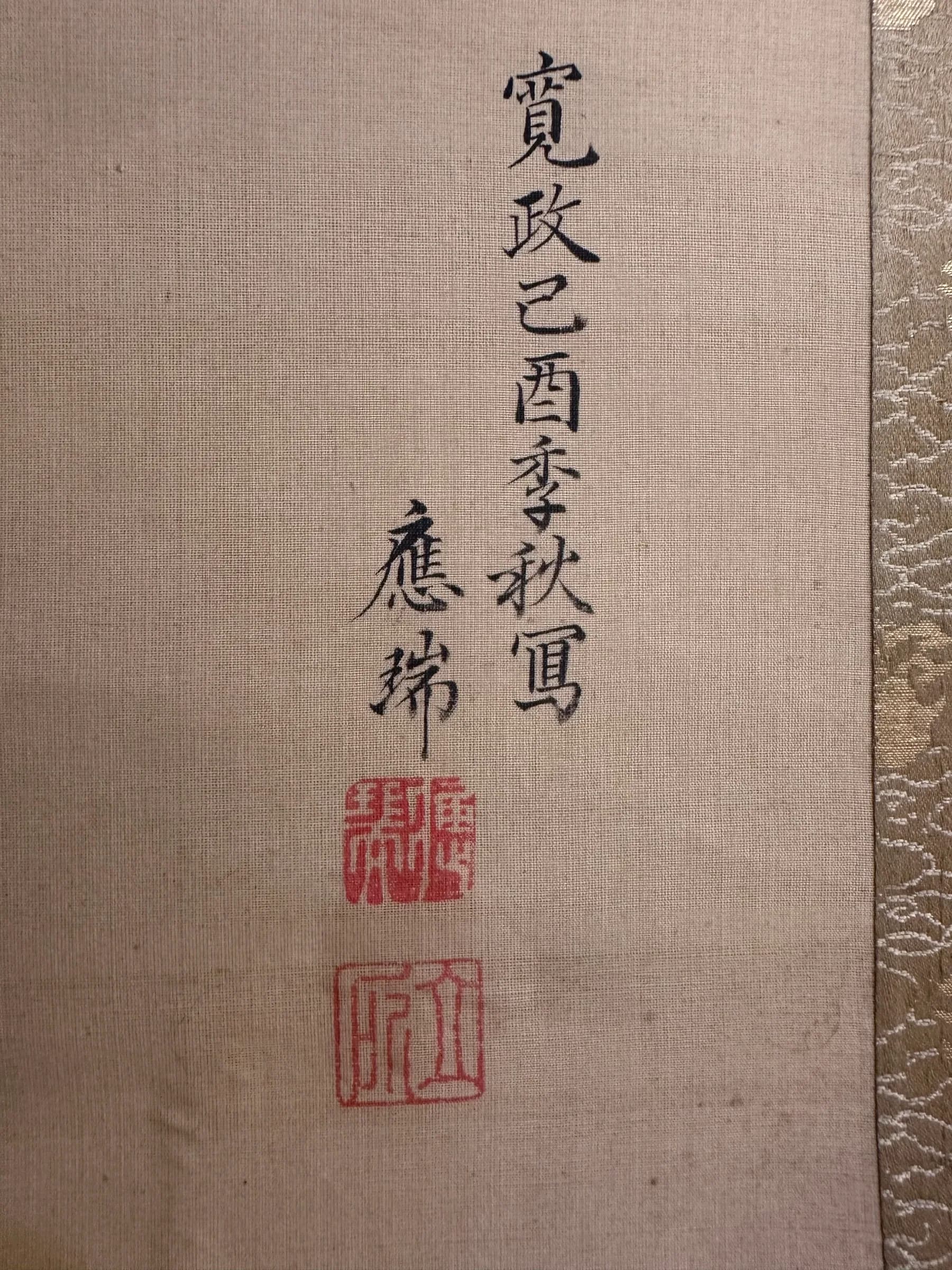
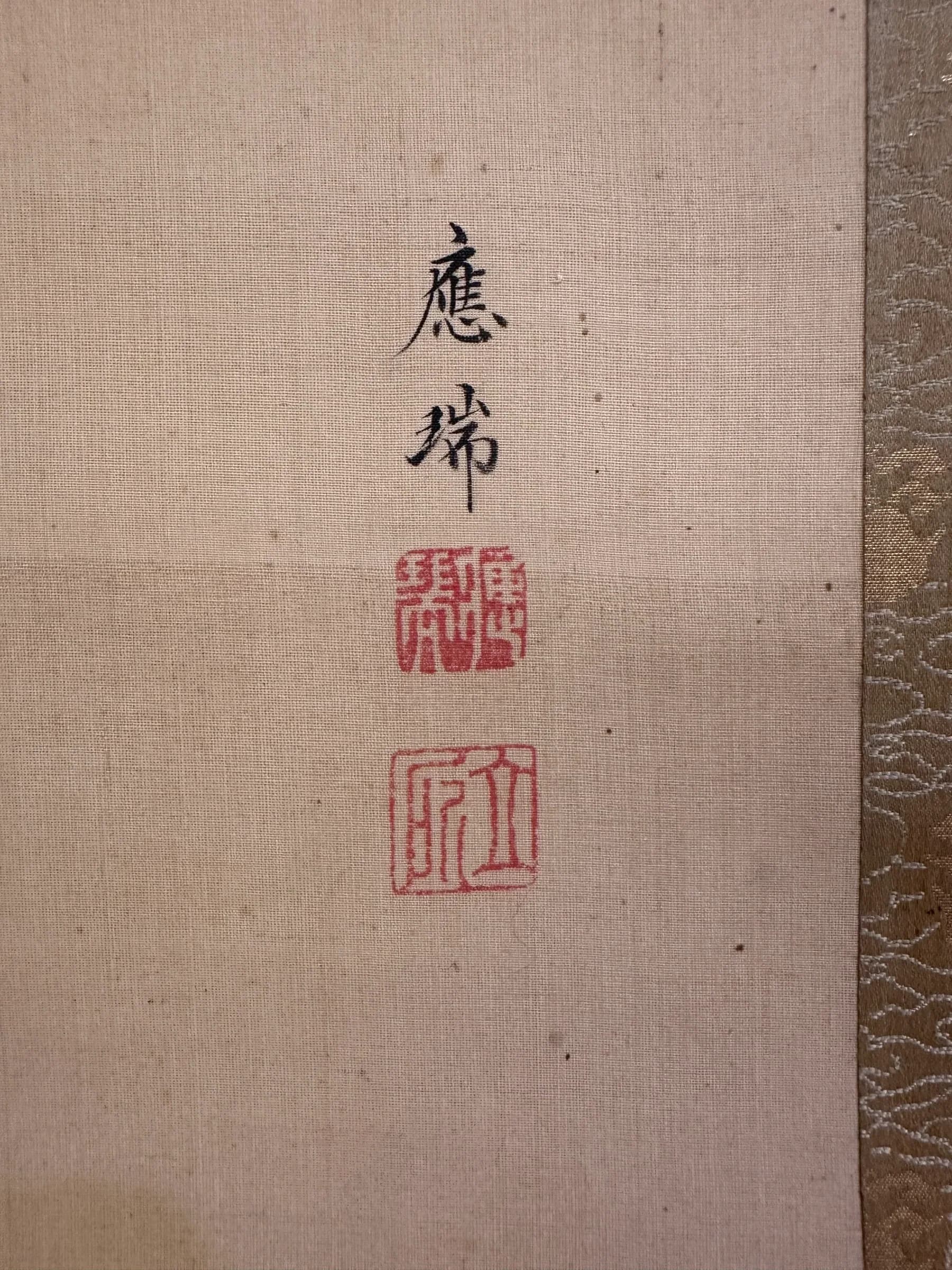
Center: 寛政己酉季秋冩 應瑞 (Painted in late autumn, tsuchinototori year [1789] of Kansei—Ōzui)
Left: 應瑞 (Ōzui)
Right: 應瑞 (Ōzui)
Seals
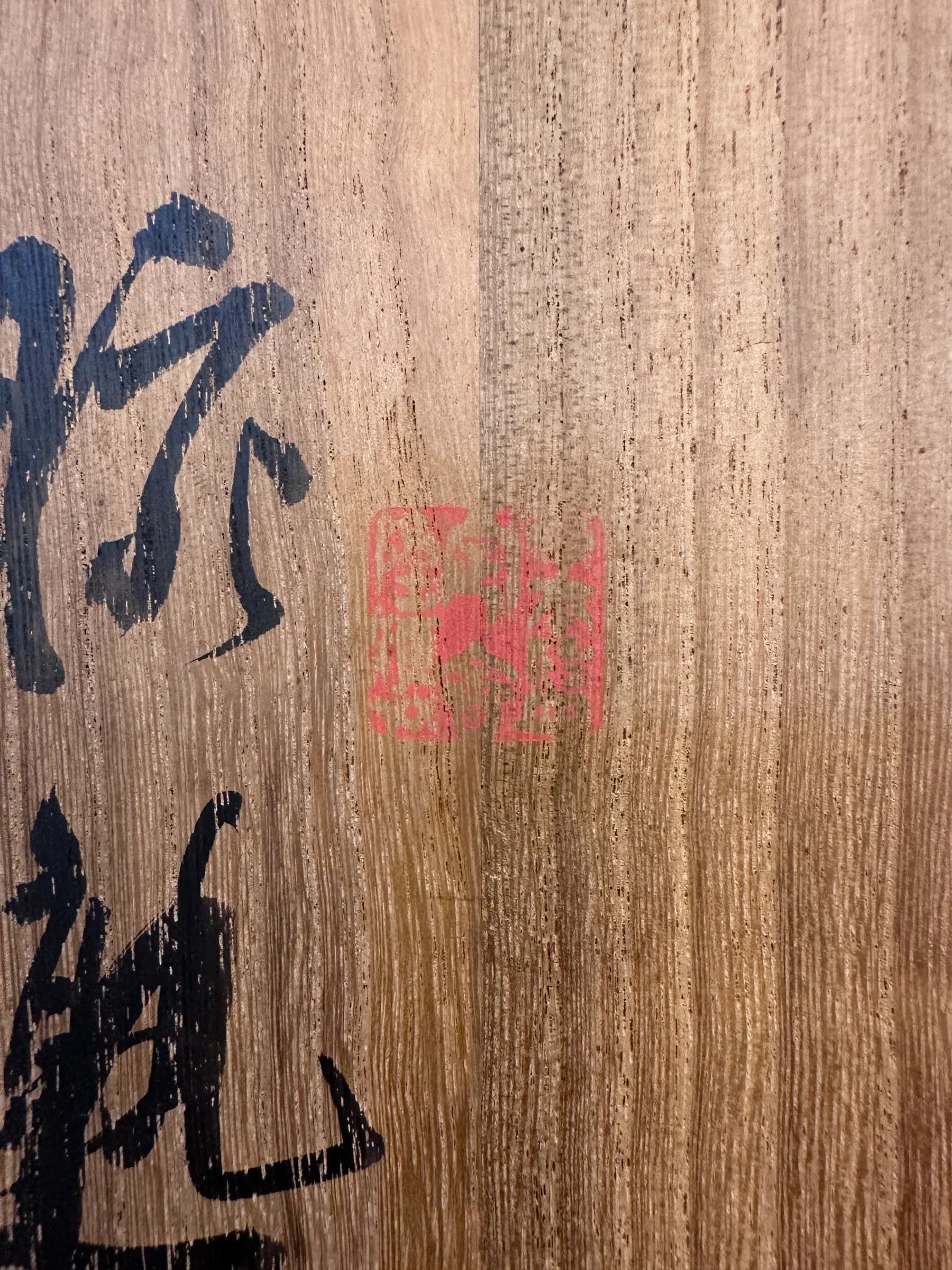
Center: (square intaglio seal) Ōzui 應瑞; (square relief seal) tachidokoro 立所
Left: (square intaglio seal) Ōzui 應瑞; (square relief seal) tachidokoro 立所
Right: (square intaglio seal) Ōzui 應瑞; (square relief seal) tachidokoro 立所
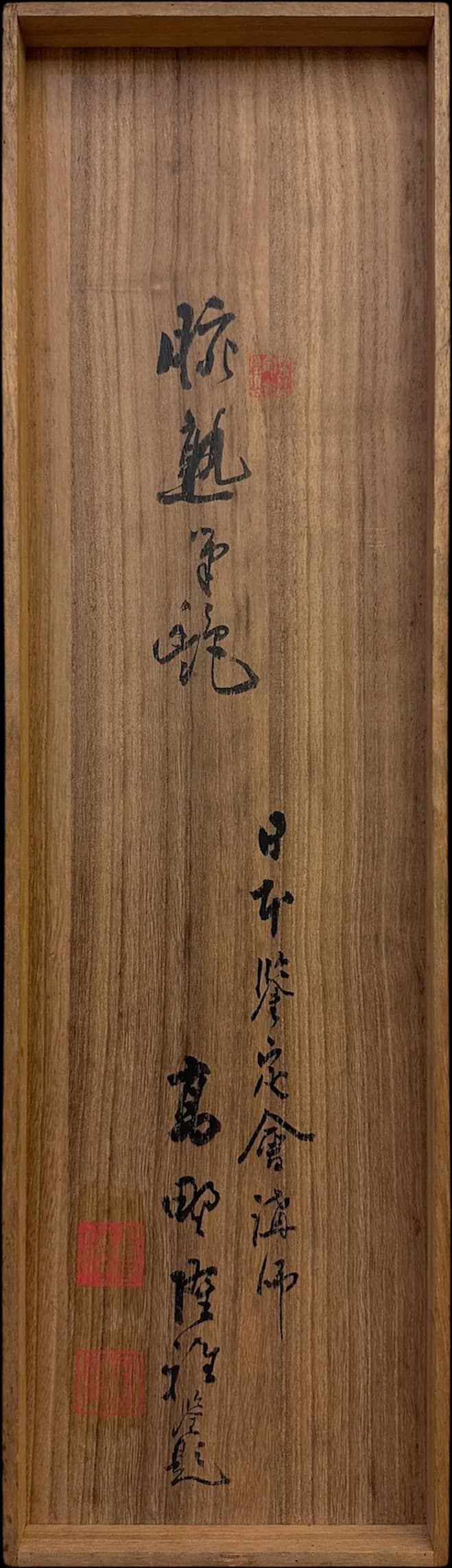
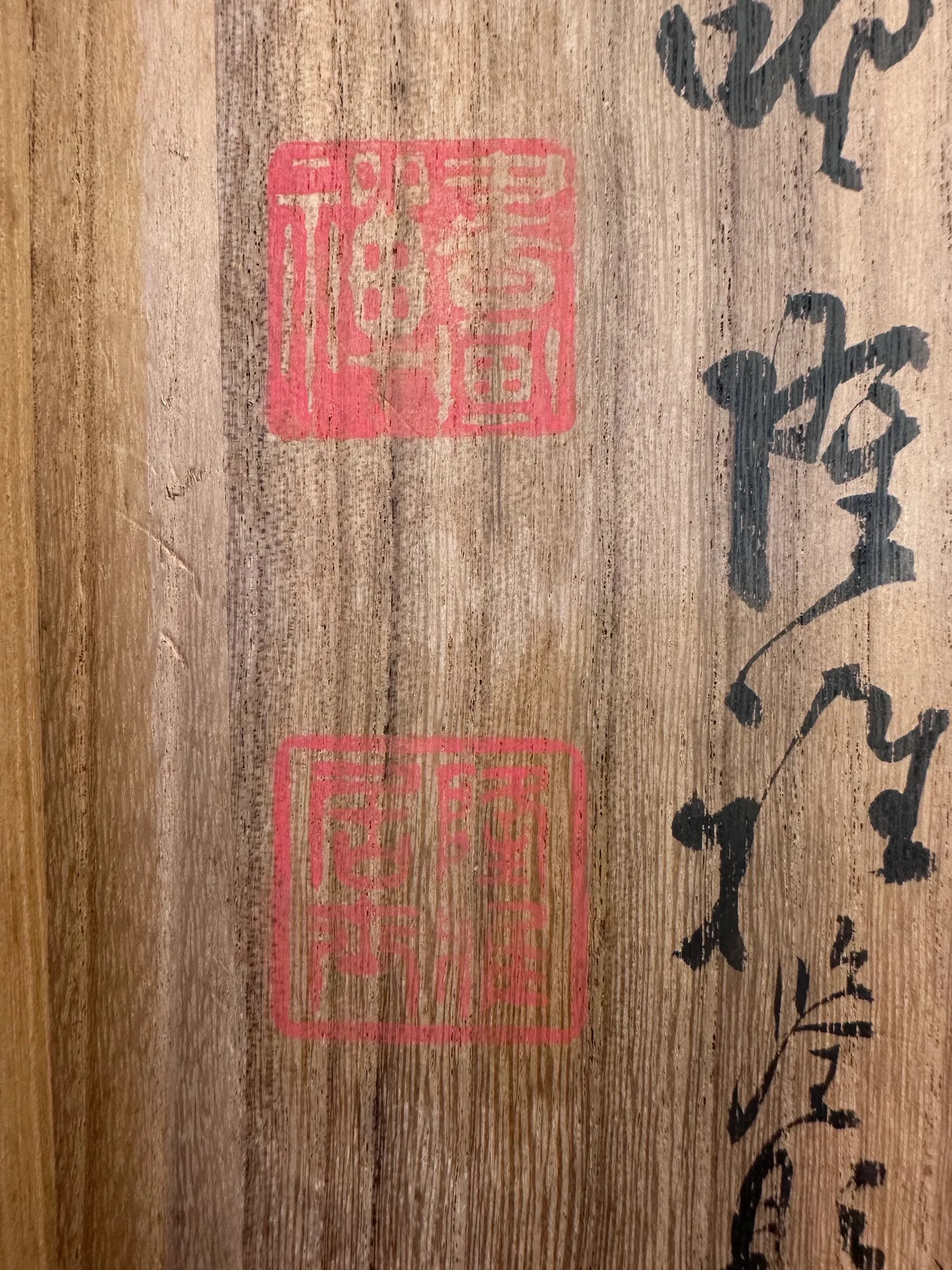
(box square intaglio seal) nihon kantei kai Ryūga 日本鑑定会隆雅; (box square intaglio seal) shogazen 書画禪; (box square relief seal) Ryūga kōji 隆雅居士
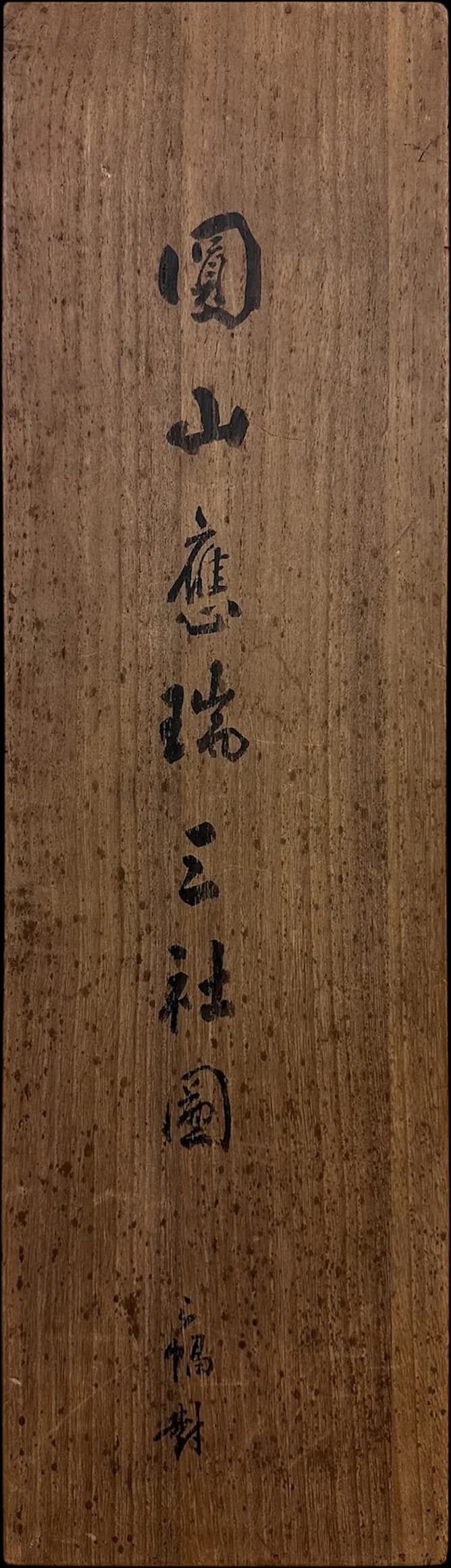
Box inscription
(front): 圓山應瑞三社圖 (Picture of Three Shrines by Maruyama Ōzui)
(verso): 腕熟筆艷 日本鑒定會講師 髙野隆雅鑒題 (Masterful technique and vibrant brushwork—appraised and inscribed by Takano Ryūga, lecturer at the Japan Appraisal Association)
Accessories and documentation
謝狀
原田宗二郎氏
皇太子殿下 本町ヘ御巡啓之際秘藏ノ軸物ヲ貸與セラレ御座所ノ裝飾ニ供セラレタリ兹ニ其厚意ヲ感謝ス
明治四十四年九月四日
釧路町長秋元幸大郎
Certificate of Appreciation
To Mr. Harada Sōjirō
On the occasion of His Imperial Highness the Crown Prince’s official visit to our town, you generously lent your treasured hanging scroll to decorate His Highness’s temporary residence. We hereby express our sincere gratitude for your kindness.
September 4, Meiji 44 [1911]
Akimoto Kōtarō, Mayor of Kushiro Town