
View 1 of 11
Tanaka Gekkō (?–?)
田中月耕
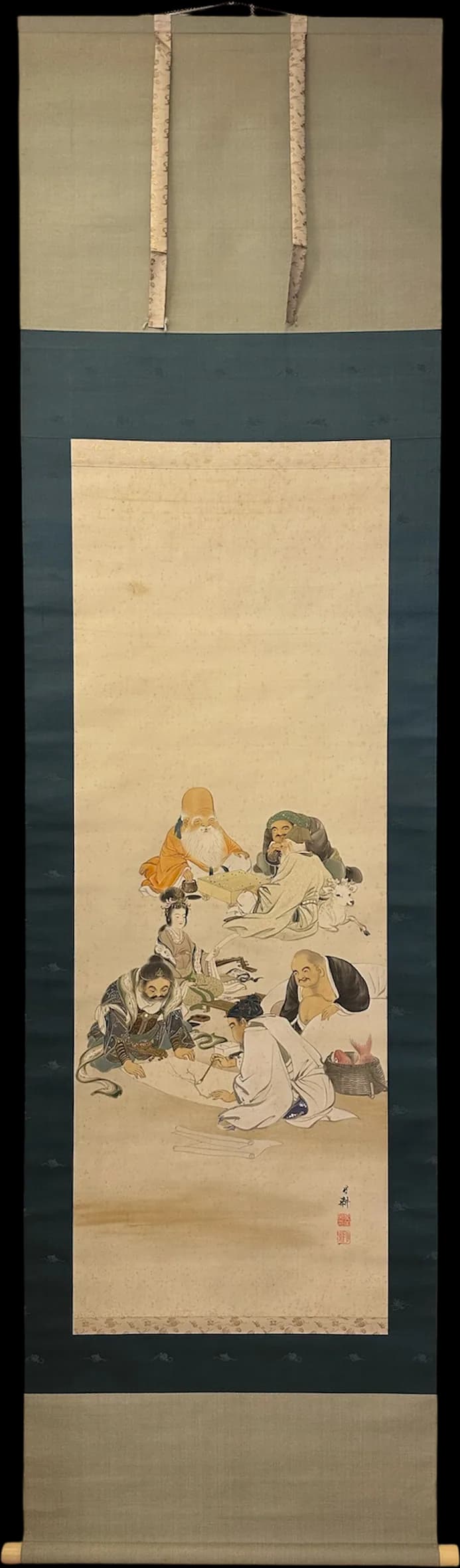
Seven Lucky Gods
七福神図
- Era
- Kindai (近代)
- Subject
- Figures (人物)
- Period
- Meiji Period
- Medium
- Hanging scroll; ink and color on silk
- Dimensions
- 42.4 × 113.4 cm (image); 55.8 × 195.7 cm (overall)
- Availability
- Not for sale
Description
Tanaka Gekkō was a Meiji-period painter trained in the Maruyama-Shijō tradition under the master Kōno Bairei 幸野楳嶺. He was sometimes confused with his contemporary, the famed ukiyo-e artist Ogata Gekkō 尾形月耕.
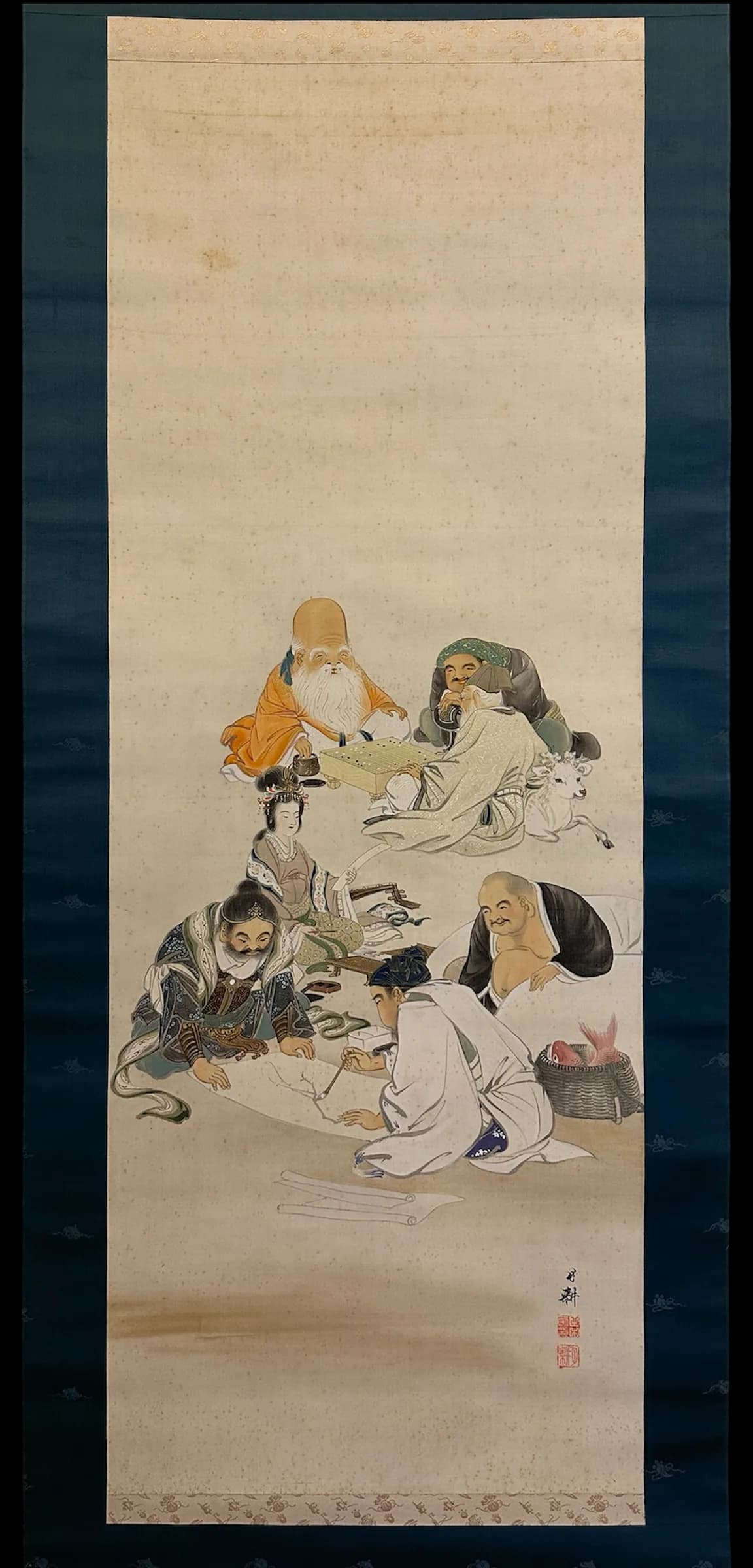
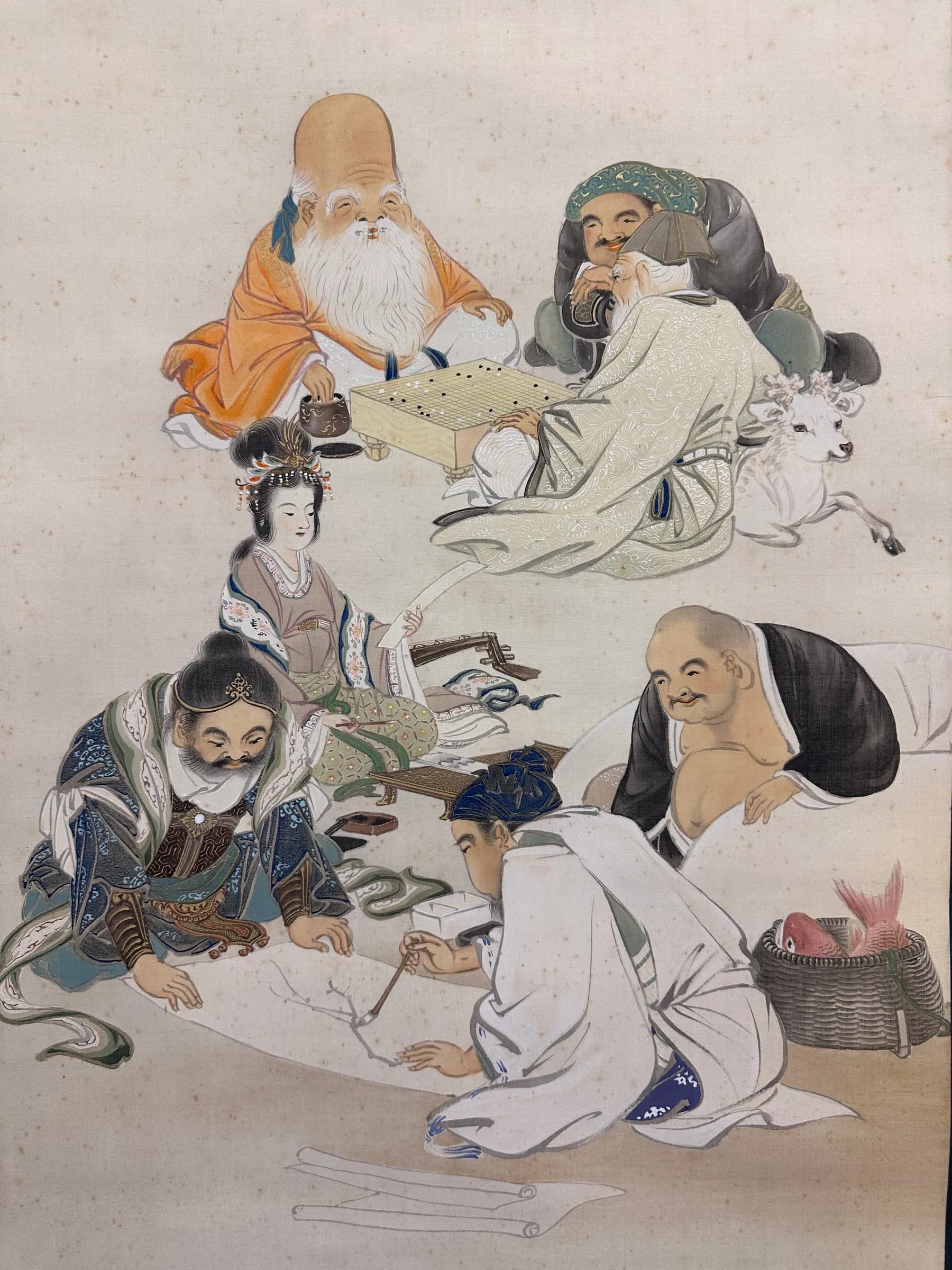
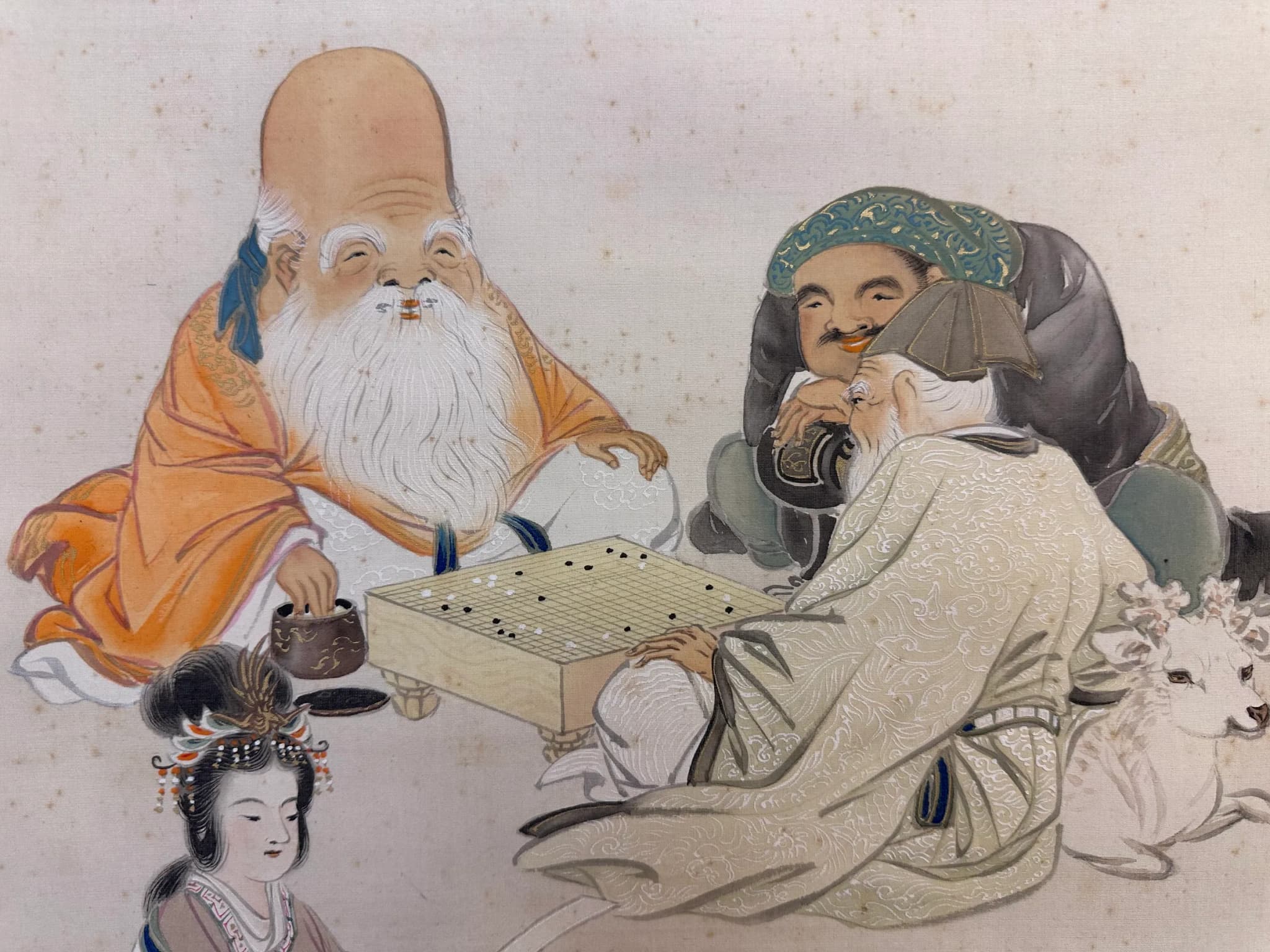
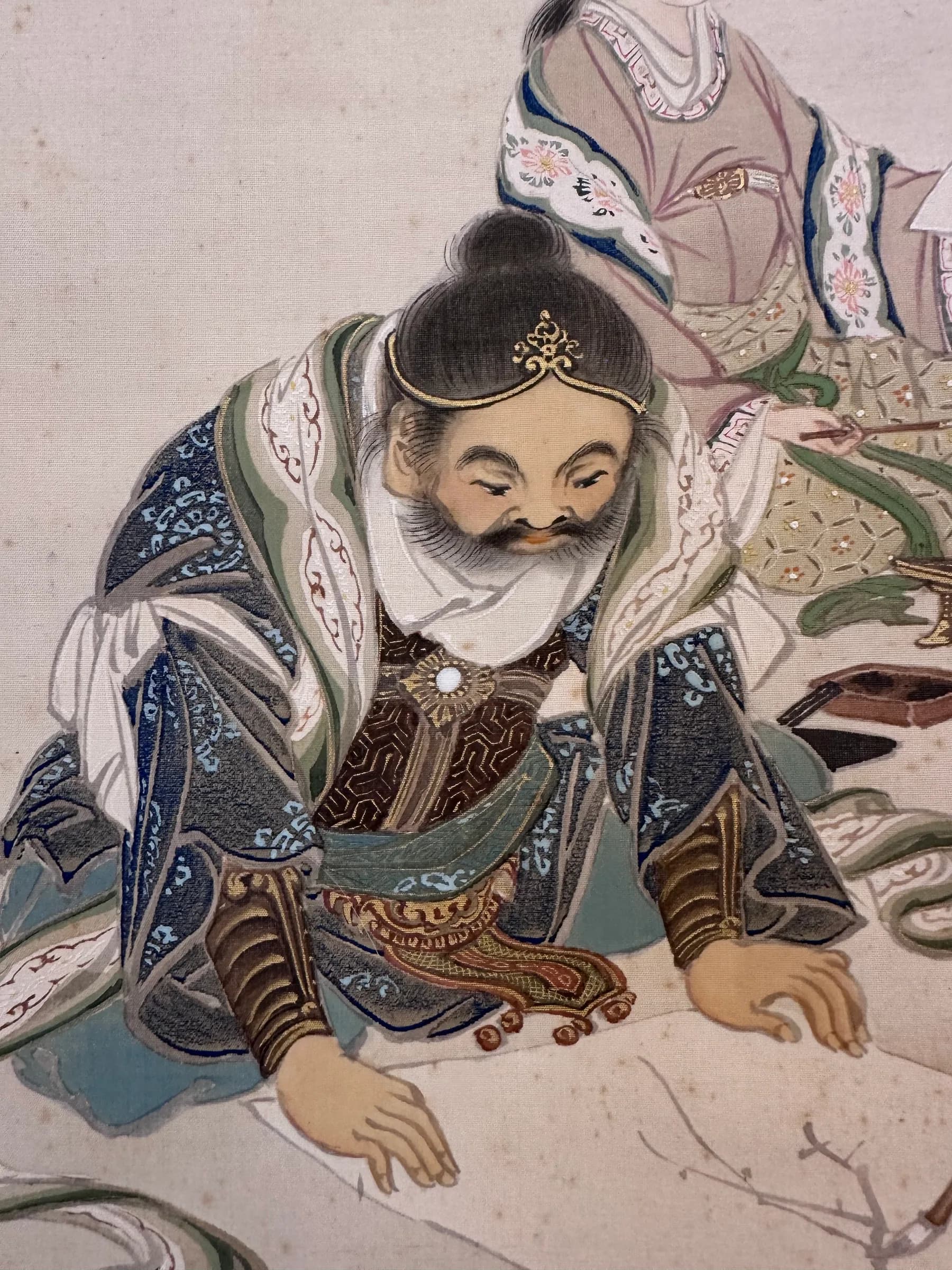
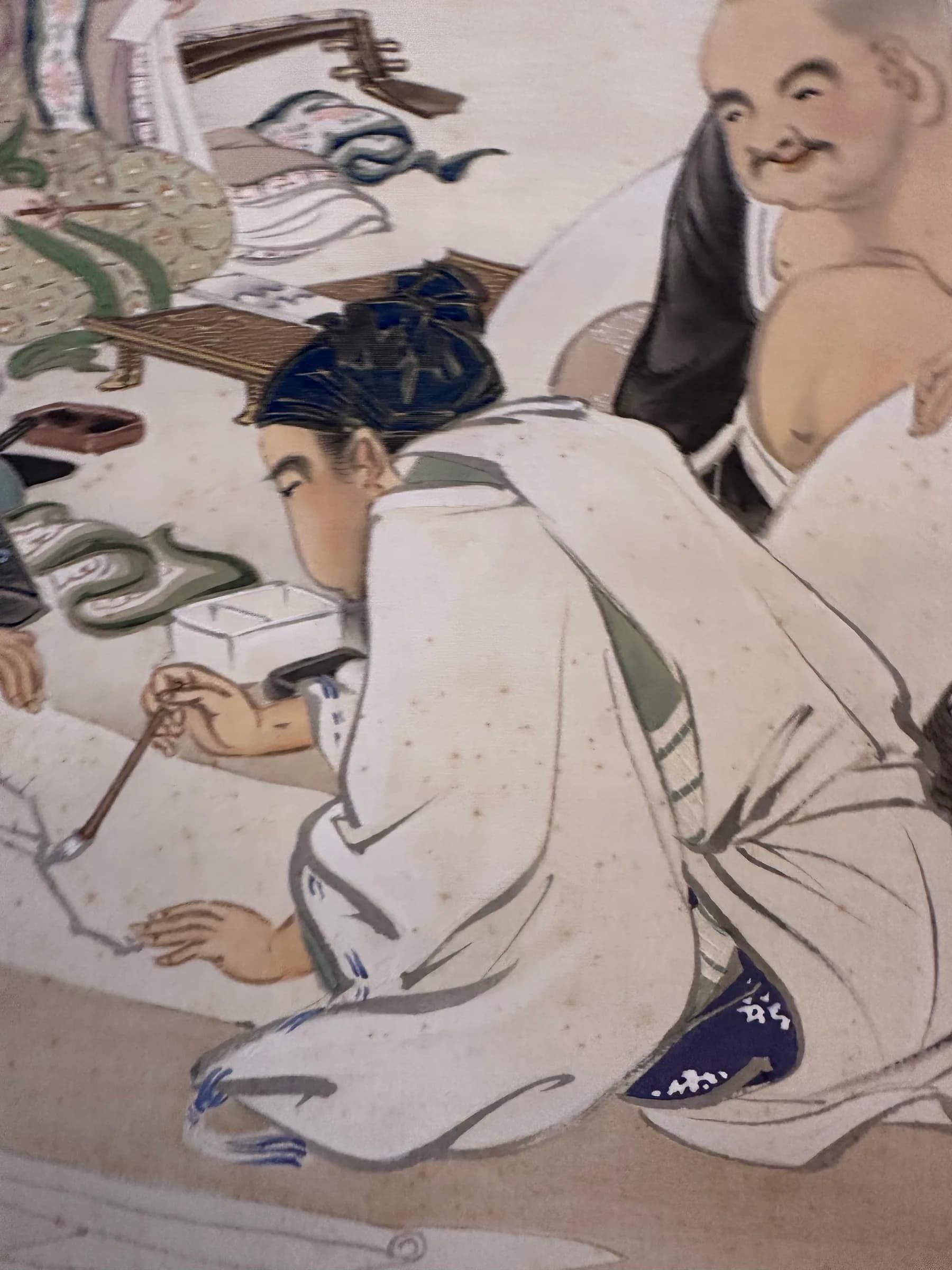
While biographical details on Tanaka Gekkō remain sparse, this inventive composition demonstrates his exceptional versatility and wit. Traditional depictions of the Seven Lucky Gods almost universally present them in rigid stances, aboard their auspicious treasure ship, or distanced from the mundane world. Here, Gekkō cleverly subverts iconography by reimagining the deities engaged in quintessential activities of the East Asian literati:
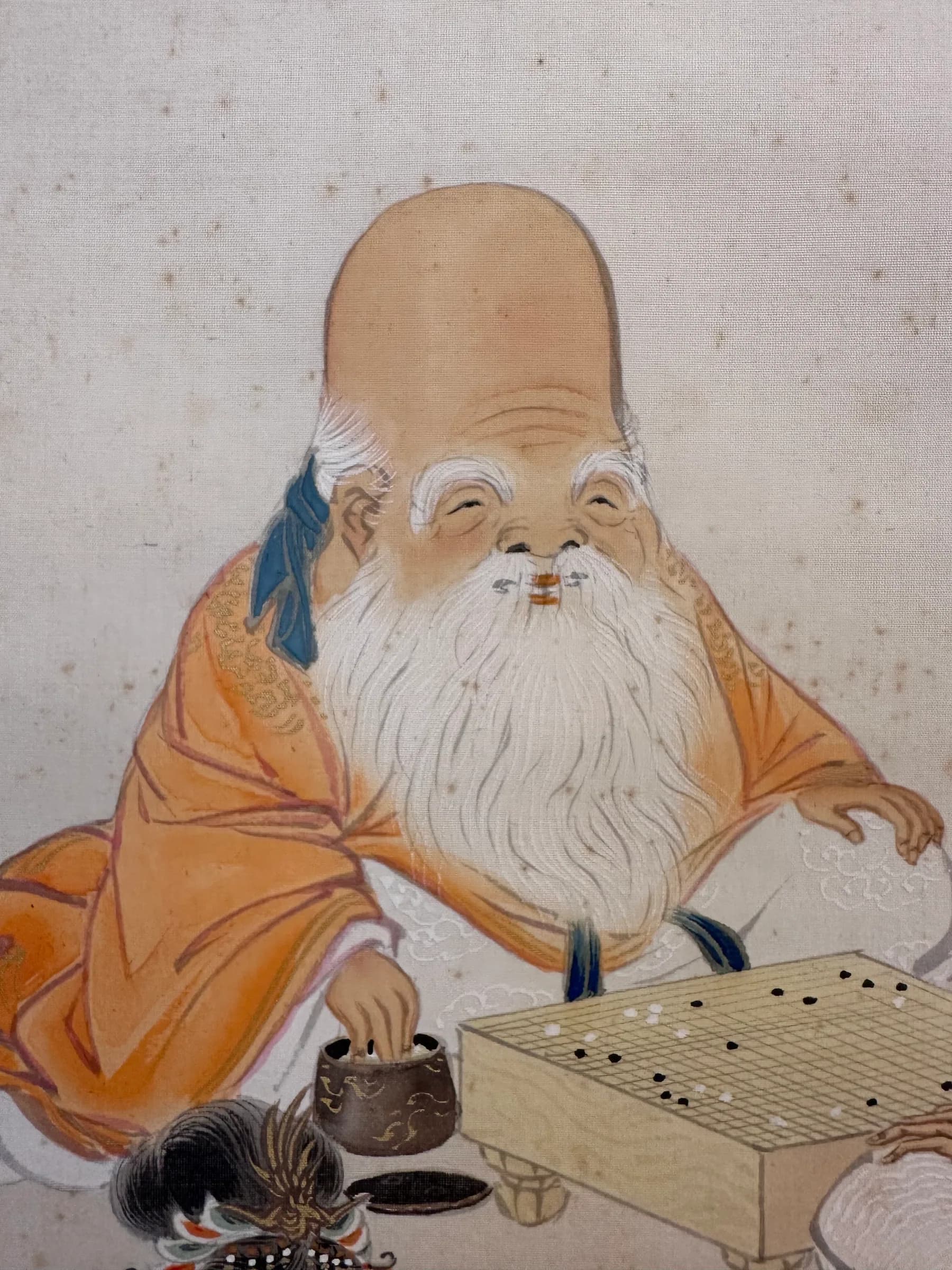
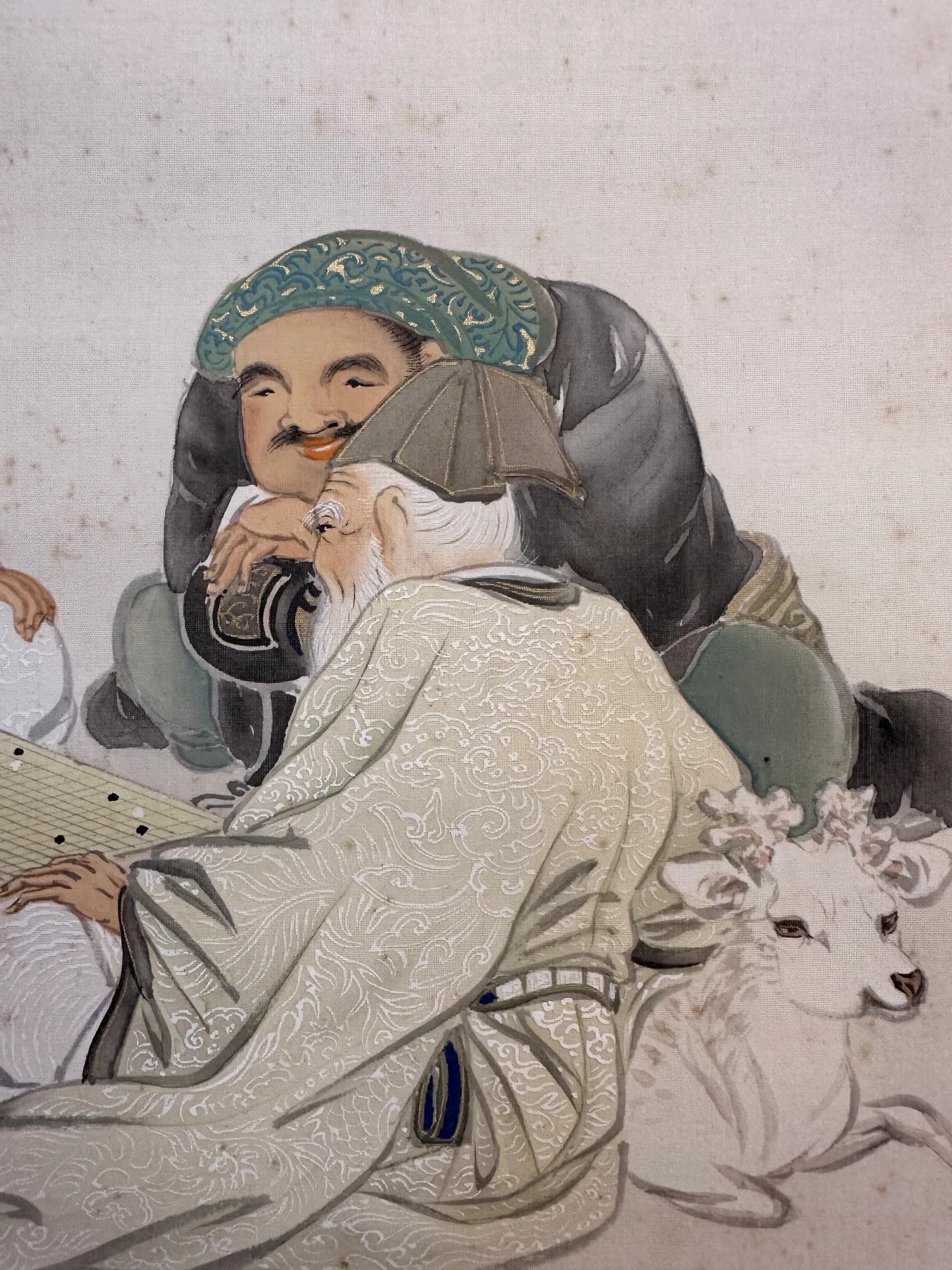
At top, Fukurokujin and Jurōjin are locked in a quiet match over a Go board, while Daikokuten rests his chin on his clasped hands behind them, completely absorbed in watching the game. Jurōjin’s companion, a white deer, rests peacefully nearby.
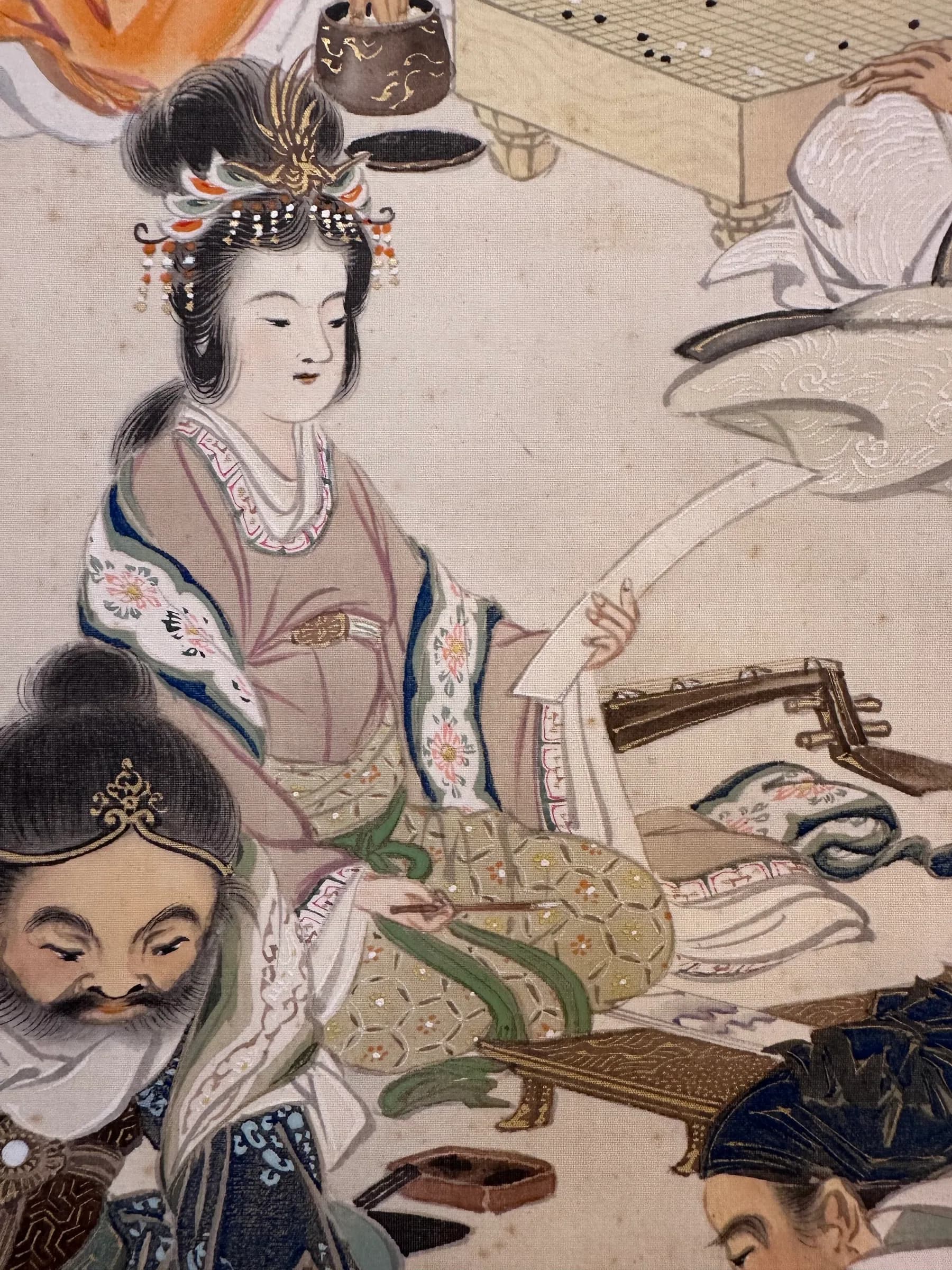
In the center, Benzaiten sets aside her traditional biwa to inspect a strip of delicate paper as she prepares to practice calligraphy.
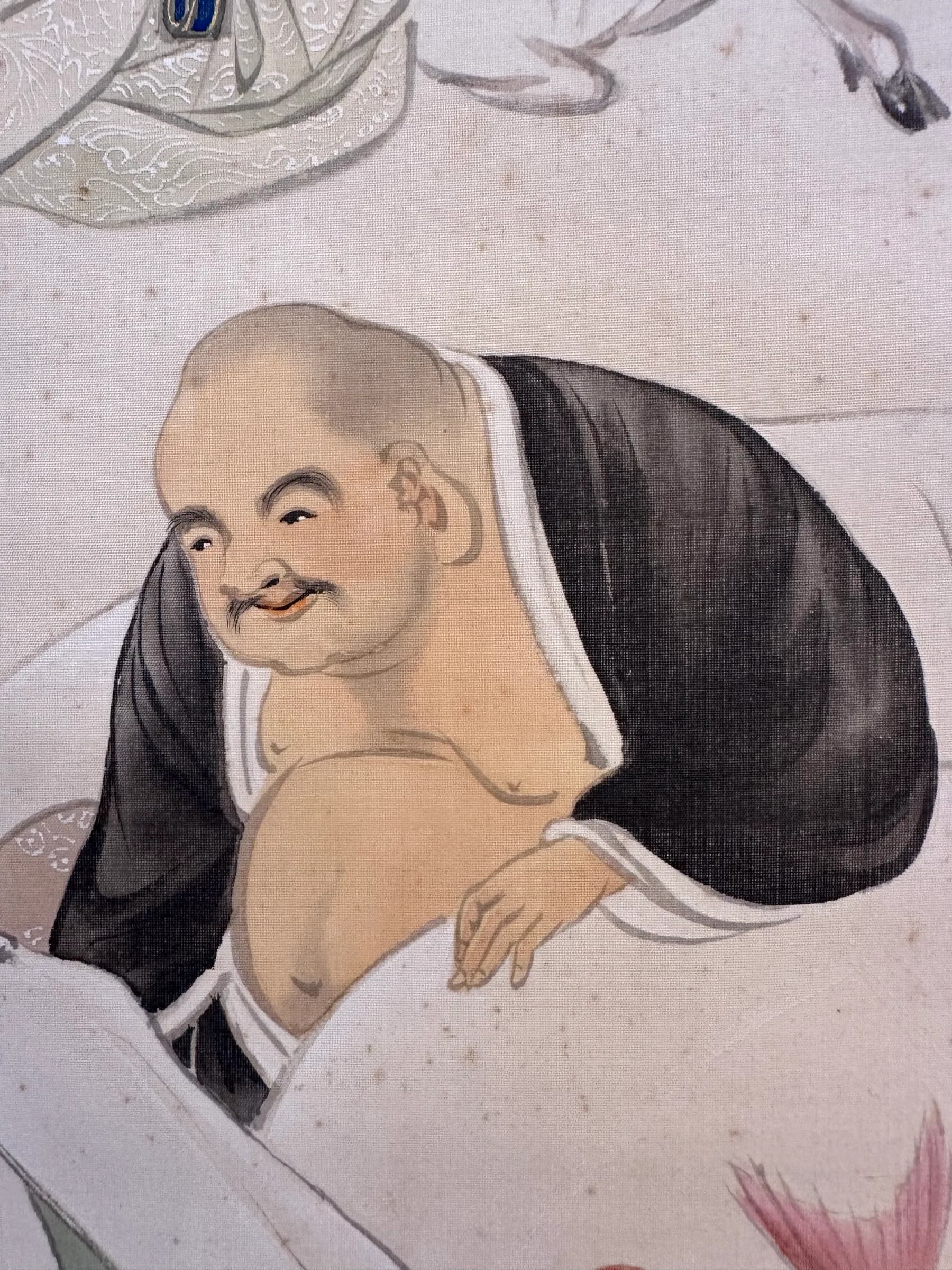
At the bottom, Ebisu, his wicker basket of red sea bass resting beside him, holds a fine brush to paint a delicate branch of plum blossoms. Bishamonten, clad in full martial armor, sits in a playful gesture of assistance to hold the long paper flat, while a cheerful Hotei leans casually against his linen sack to observe.
Through exquisite ink work, subtle color washes, and a delightful sense of human camaraderie, Gekkō transforms a timeless religious motif into an intimate, lighthearted celebration of scholarly culture.
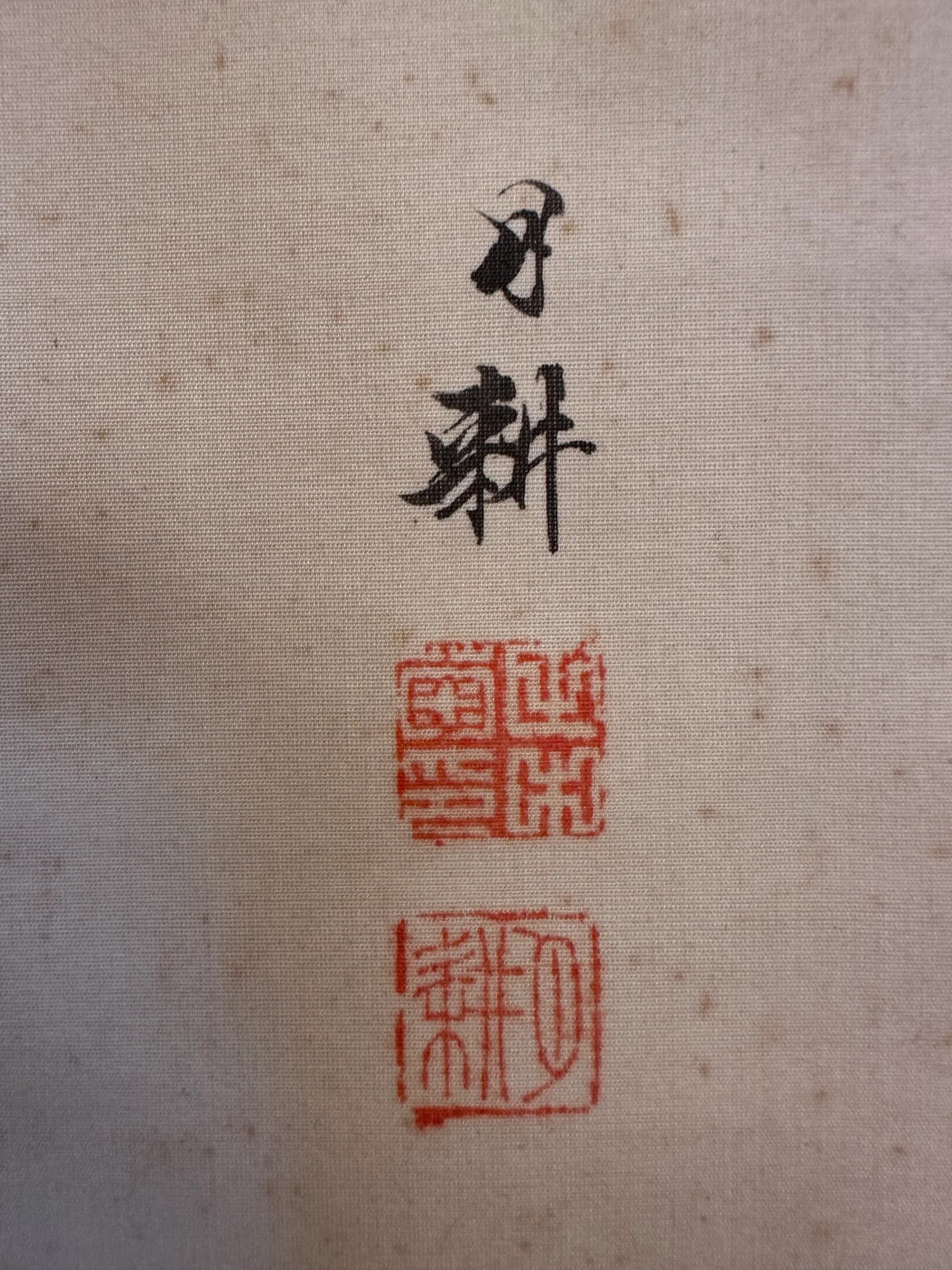
Painting inscription
月耕 (Gekkō)
Seals
(square intaglio seal) Tanaka Kiku in 田中菊印; (square relief seal) Gekkō 月耕