View 1 of 21
Hoashi Kyōu (1810–1884)
帆足杏雨
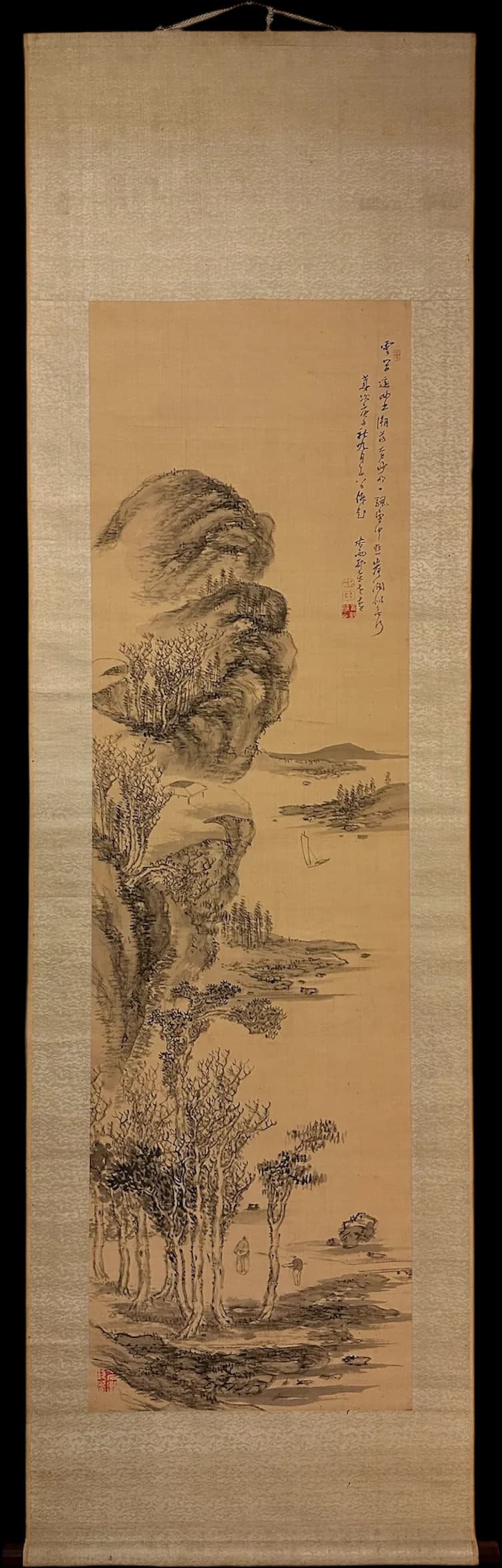
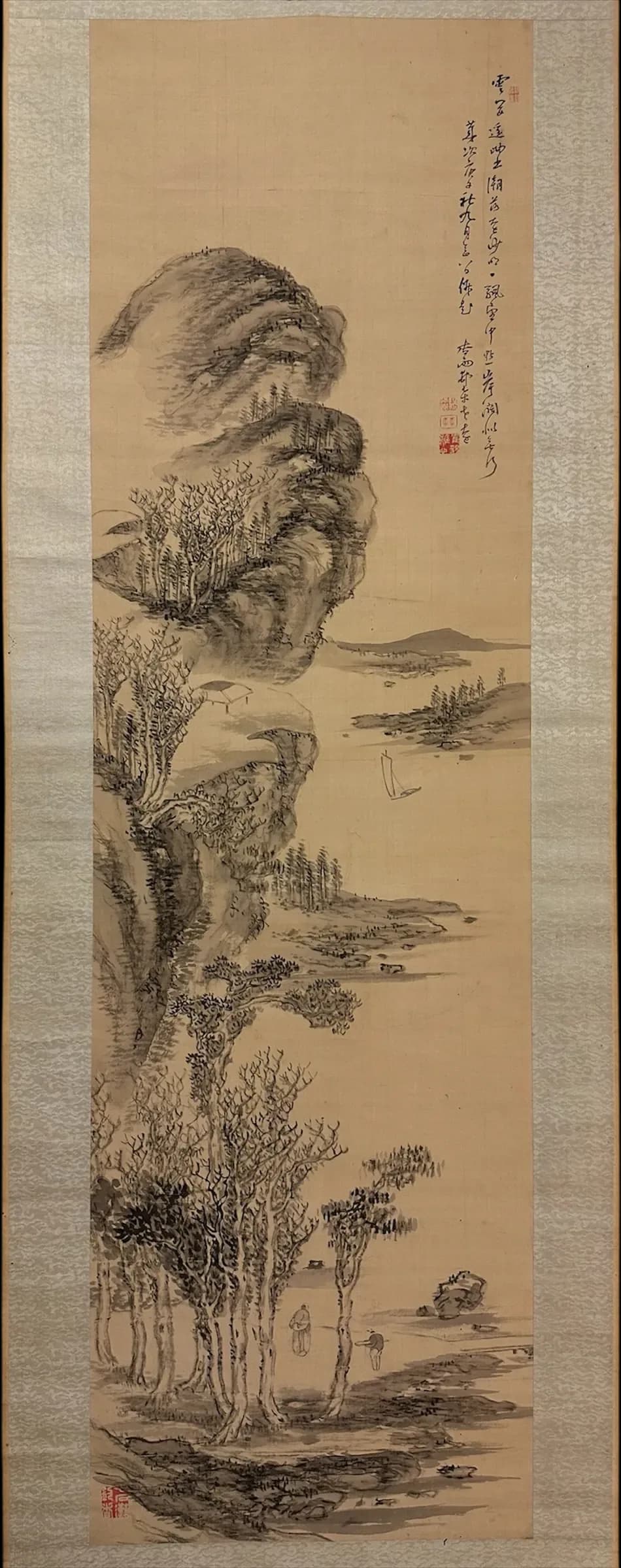
A Lone Sail on the Yangtze River
長江帆影図
- Era
- Kinsei (近世)
- Subject
- Landscape (山水)
- Period
- Edo Period
- Date
- 1840
- Medium
- Hanging scroll; ink and color on silk
- Dimensions
- 42.4 × 145.2 cm (image); 58.8 × 197.1 cm (overall)
- Availability
- Not for sale
Description
Hoashi Kyōu was a prominent Nanga painter from Bungo Province, present-day Oita City. His family belonged to a wealthy clan in Hetsugi town that operated a local sake brewery. Their family residence, Fushunkan 富春館, now a historic local landmark, served as a celebrated cultural hub for regional literati. At age 15, Kyōu began his formal art training under master Tanomura Chikuden 田能村竹田, a frequent guest at Fushunkan, while also studying Sinology and poetry under Hirose Tansō 広瀬淡窓 and Hoashi Banri 帆足万里. Beginning in 1838, he traveled extensively across Kyushu, befriending leading Nagasaki painters and gaining direct exposure to imported Chinese masterworks in Nagasaki—then Japan’s sole international port during the era of national isolation. In his later years, Kyōu’s paintings were chosen to represent Japan at the 1873 Vienna World’s Fair.
Early in his career, Hoashi Kyōu drew heavily on the brushwork and spatial conventions of his master, Tanomura Chikuden. Following Chikuden’s death in 1835 and a pivotal journey to Nagasaki, Kyōu turned toward Chinese Ming and Qing dynasty masters, gradually forging an independent artistic identity.
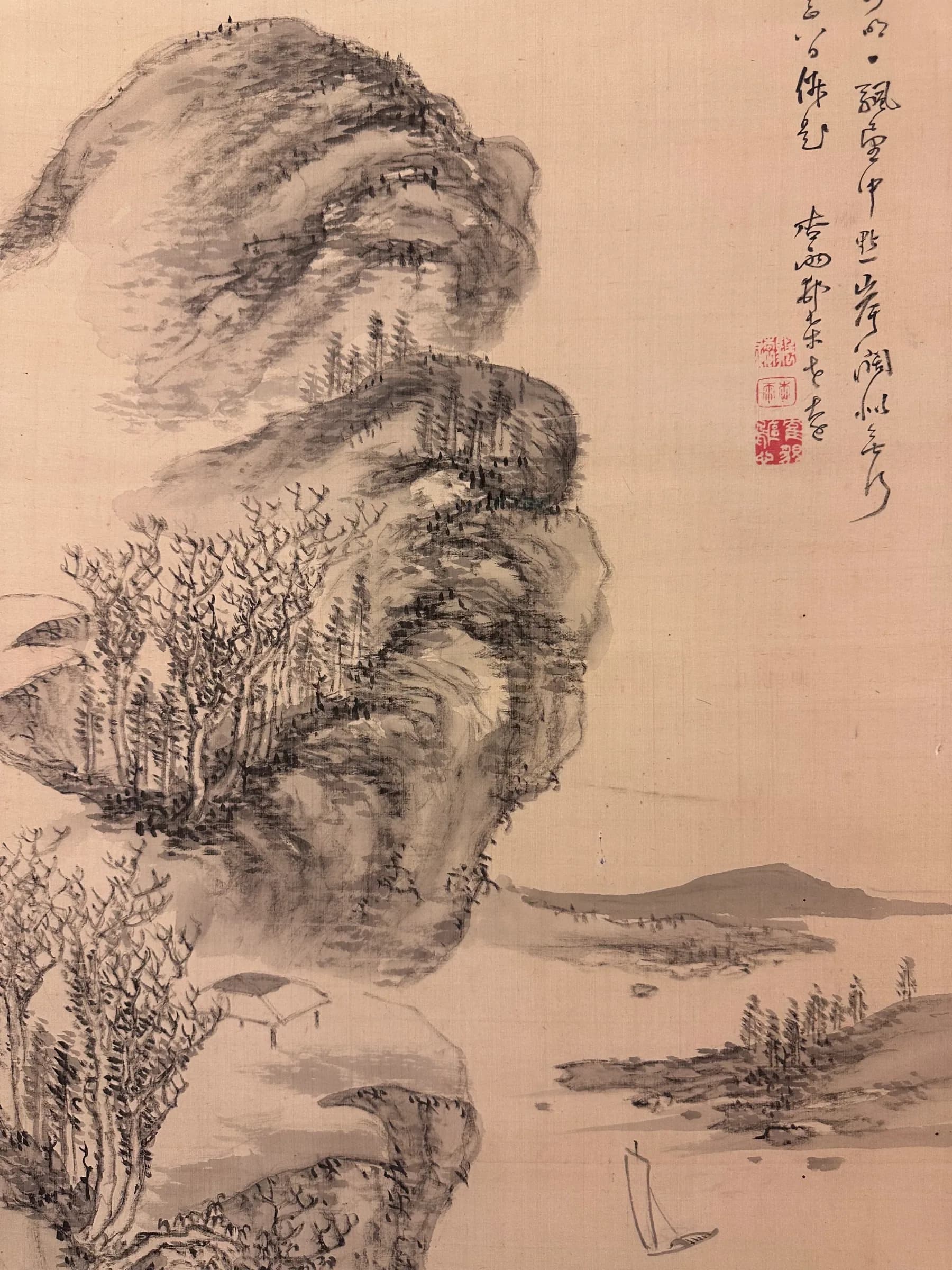
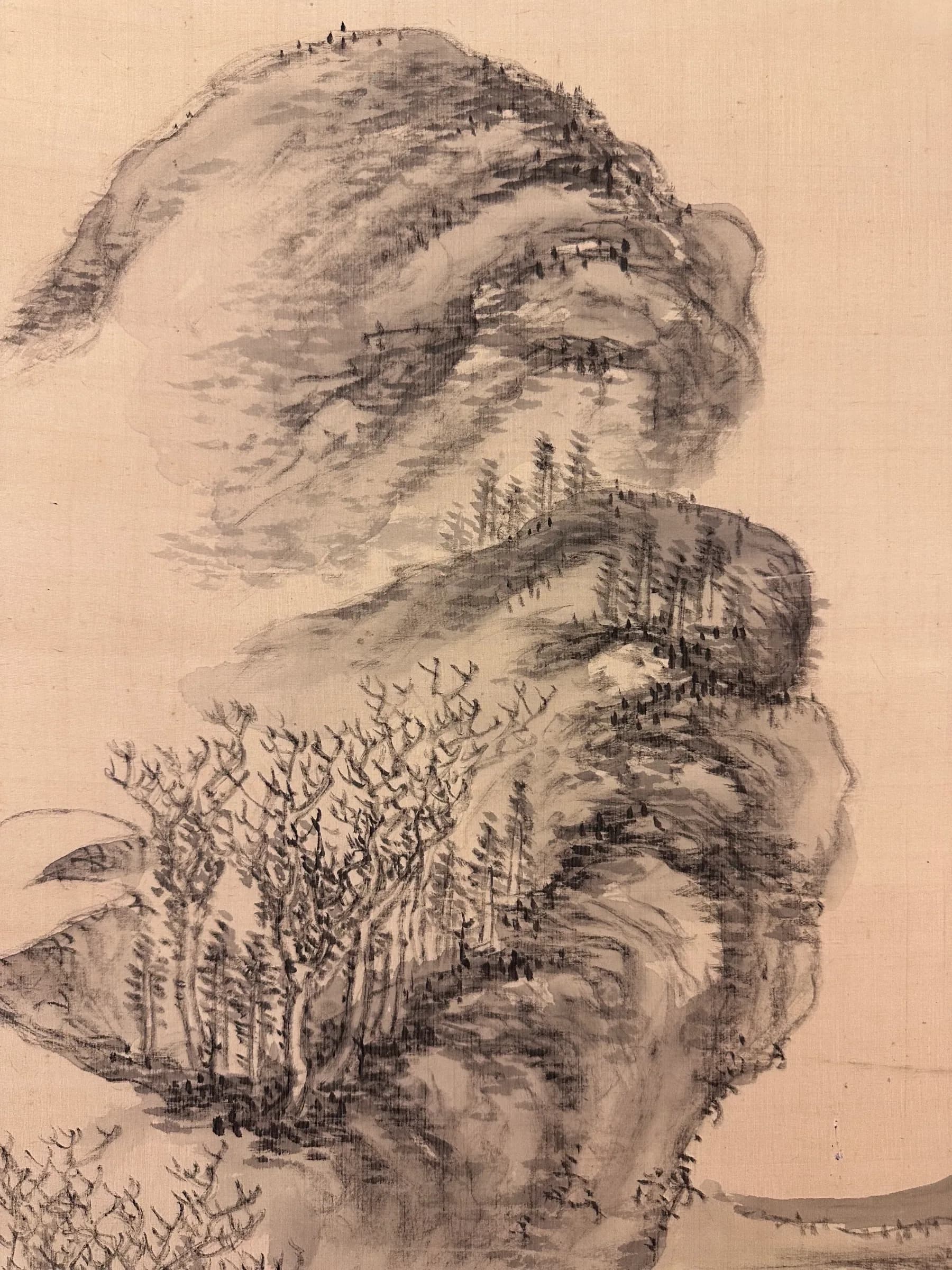
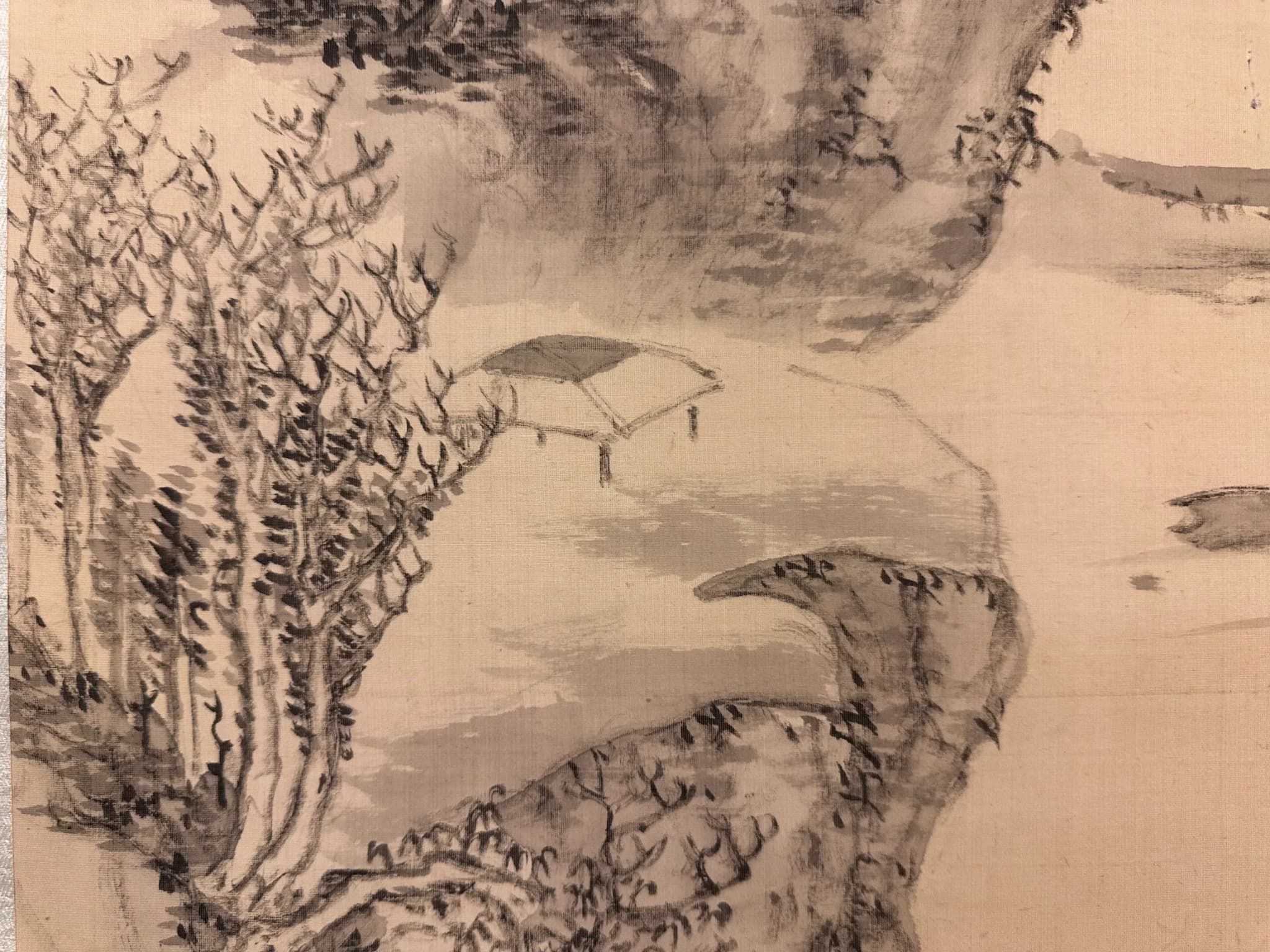
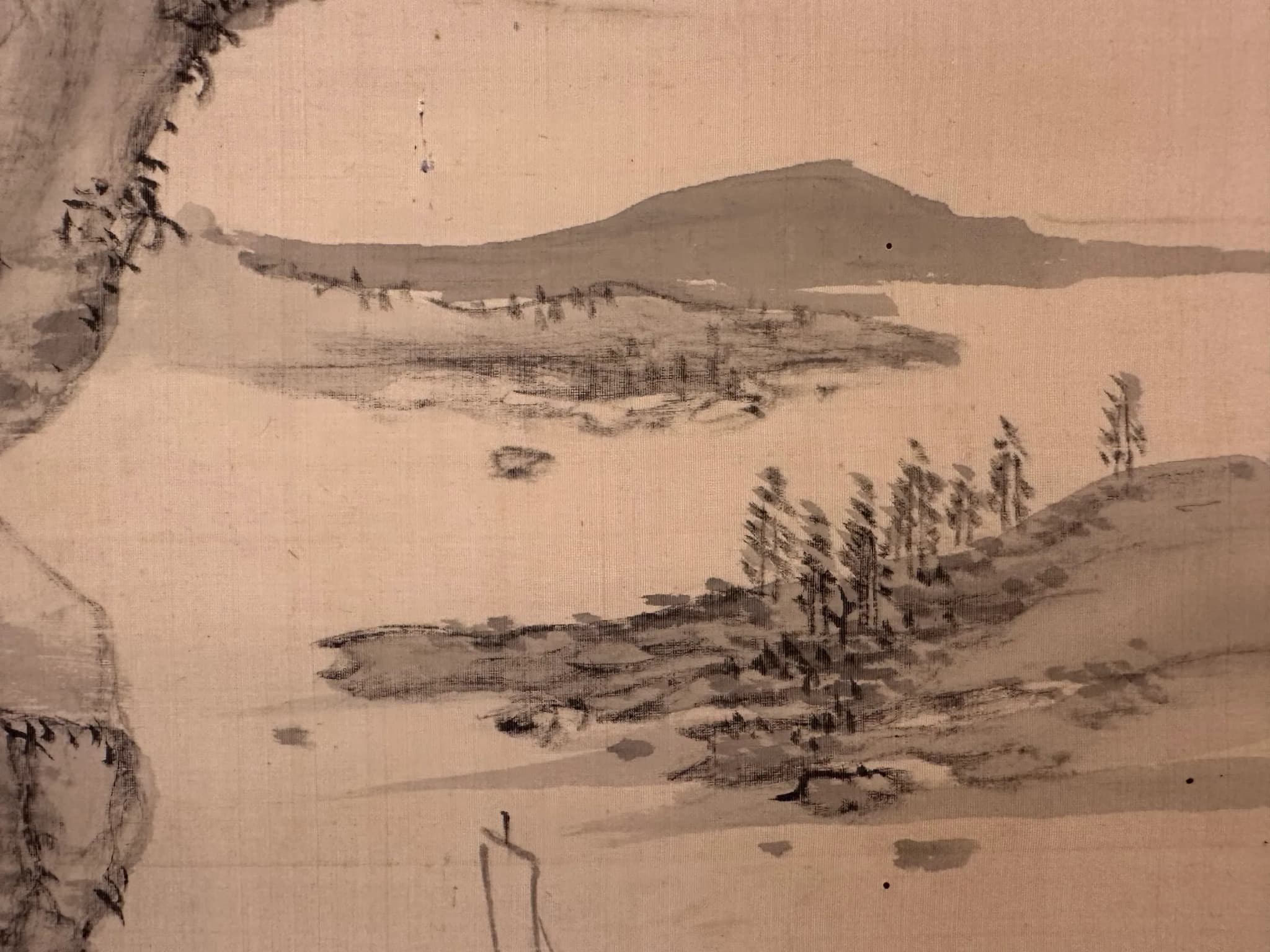
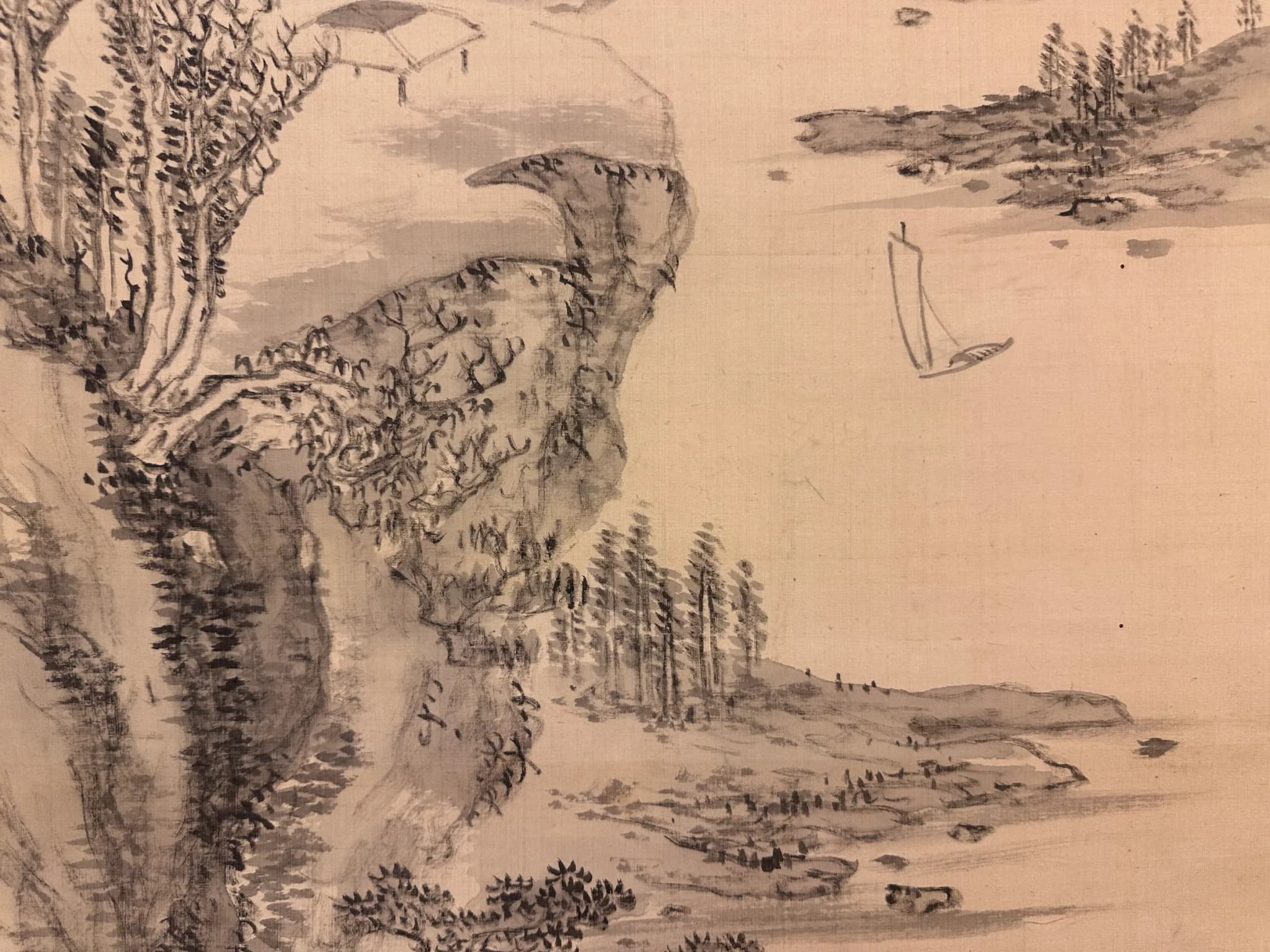
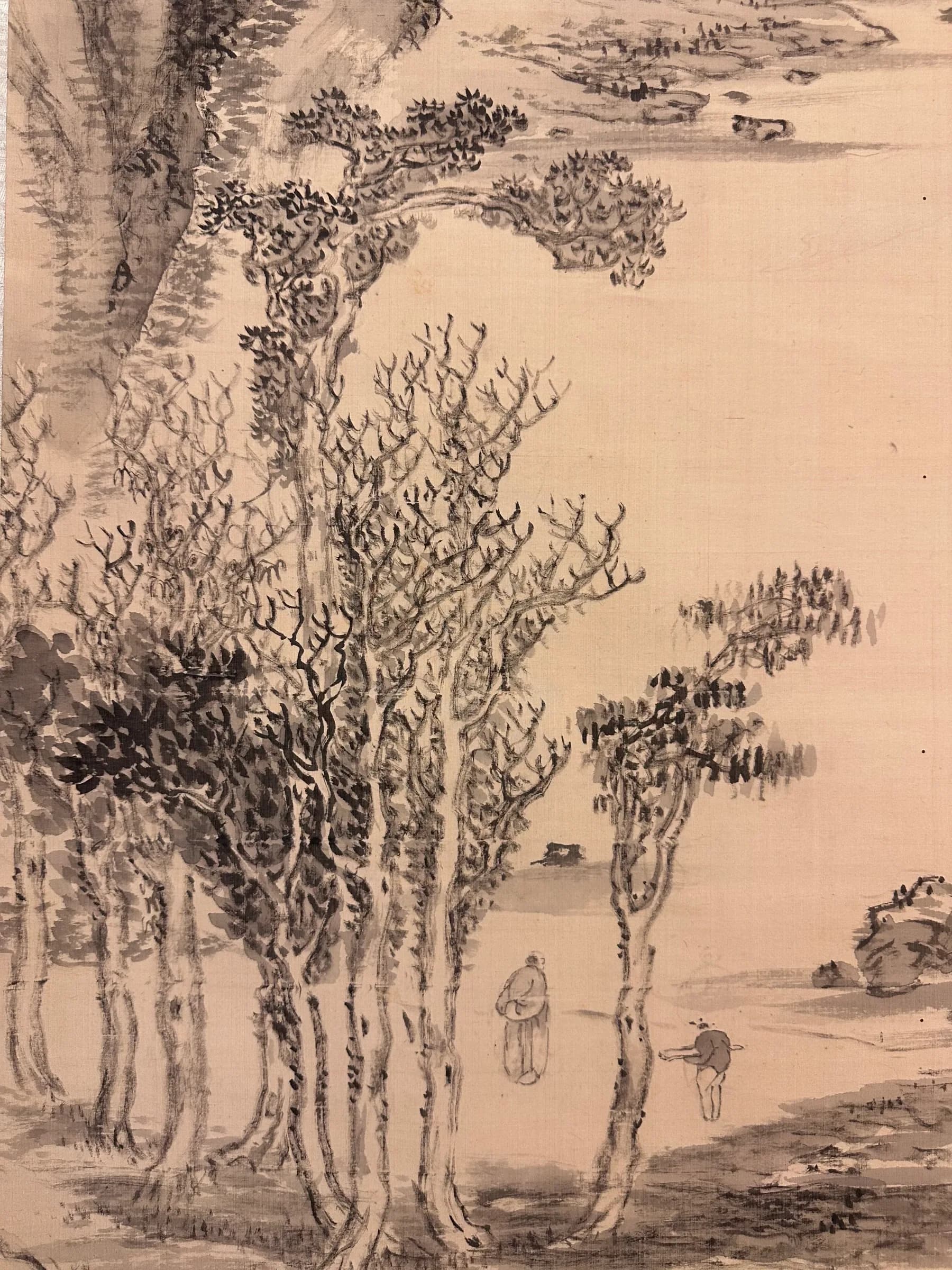
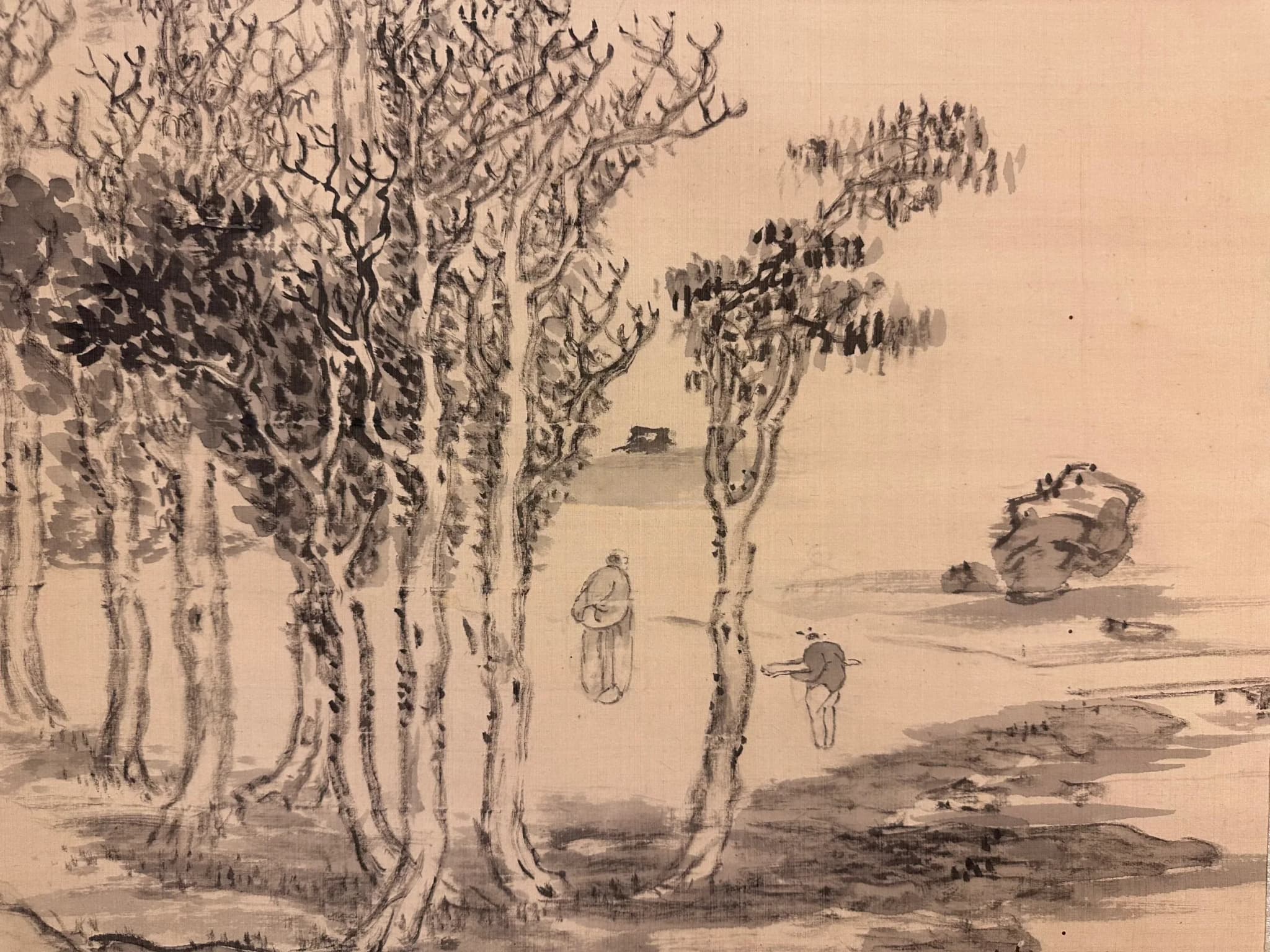
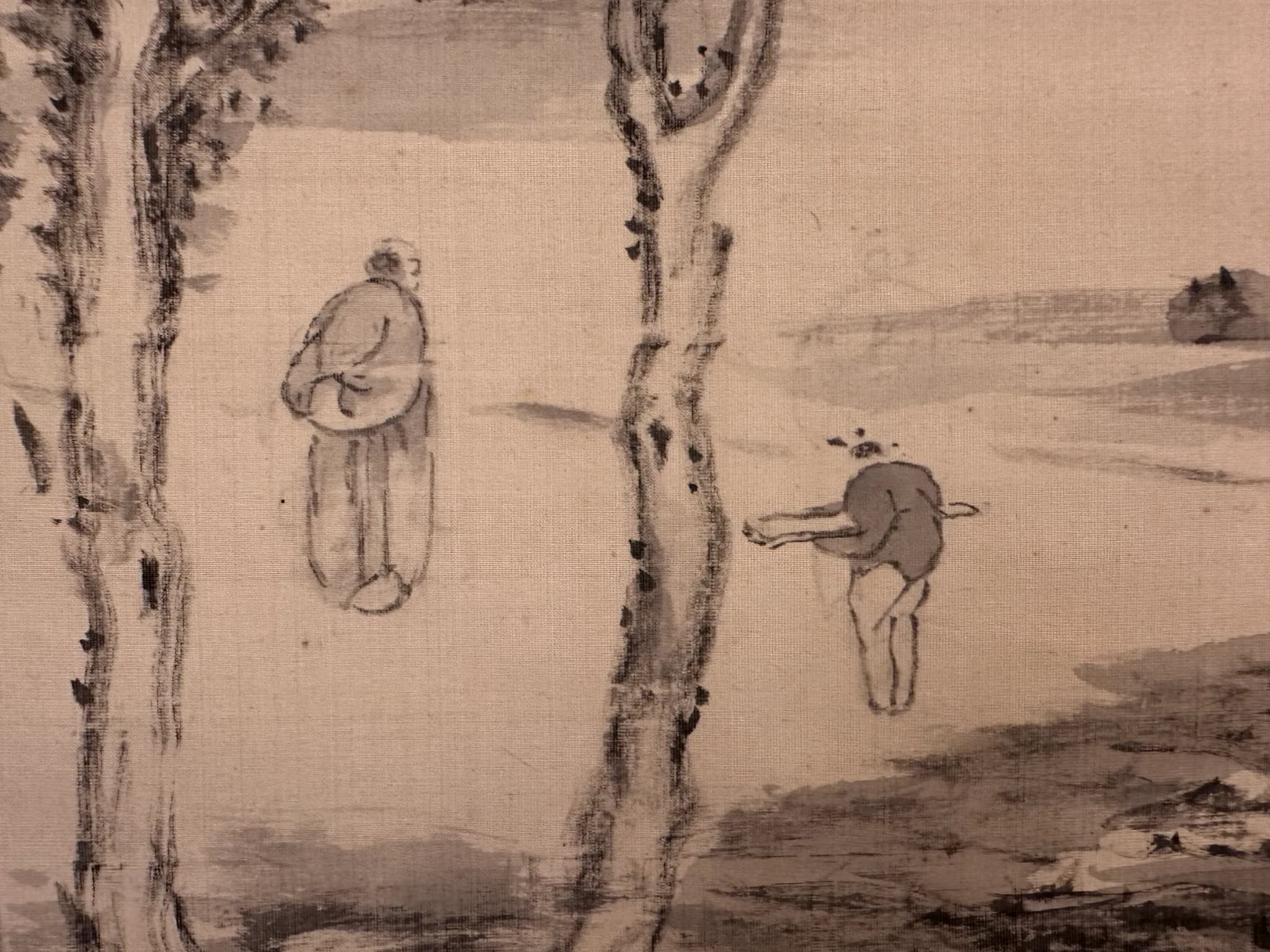
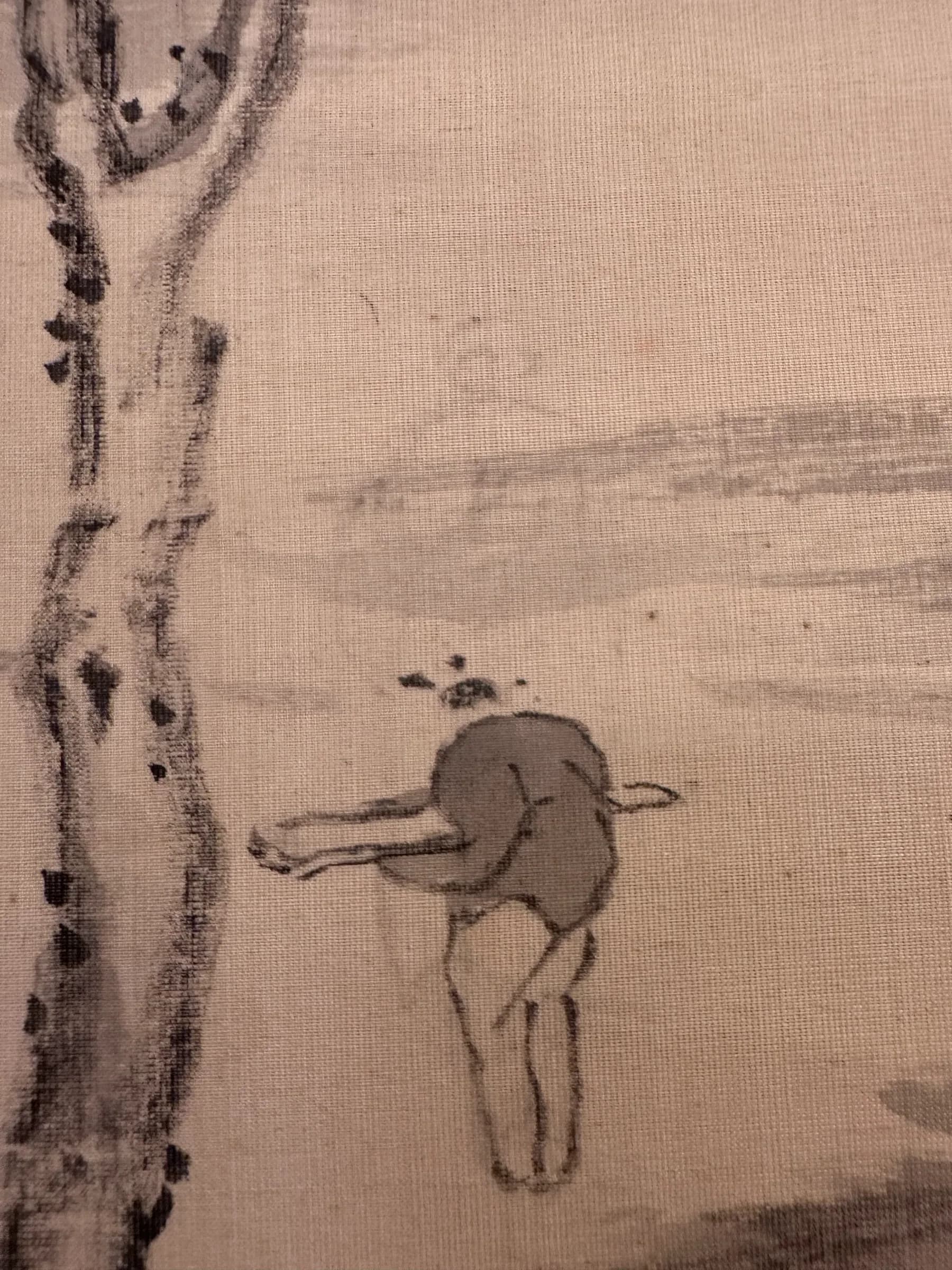
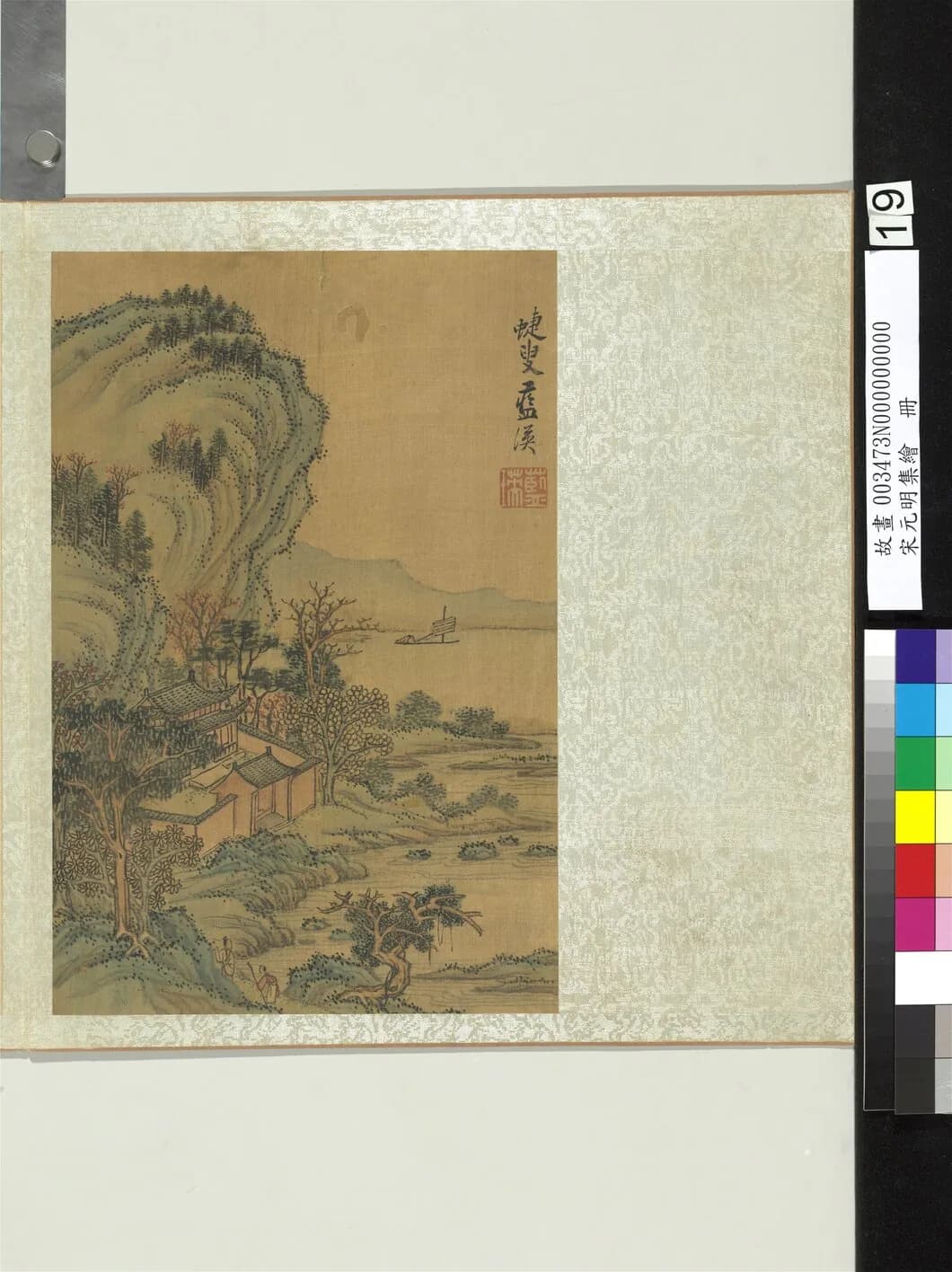
Executed in 1840 at the height of his study of Chinese art, this landscape directly derives its defining motif—the distinct, fist-shaped main mountain—from Ming master Lan Ying 藍瑛 (1585–1664). As demonstrated by the leaf from Taipei Palace Museum, Kyōu likely absorbed Lan Ying’s visual vocabulary through similar powder sketches, adapting the fist-shaped rock into a signature motif that would endure throughout his lifelong oeuvre. Below the towering peak, a scholar gazing into the distance is rendered in contemporary Qing-dynasty attire, complete with a braided queue. Just beside the young attendant carrying a guqin, a subtle charcoal mark—a trace unique to Kyōu’s creative process—reveals a compositional change: he initially planned to place the scholar where the attendant now stands. These Chinese adaptations and the fluid, soft-textured linework of his mature hand together make this painting a pivotal anchor in Kyōu’s stylistic transformation.
Painting inscription
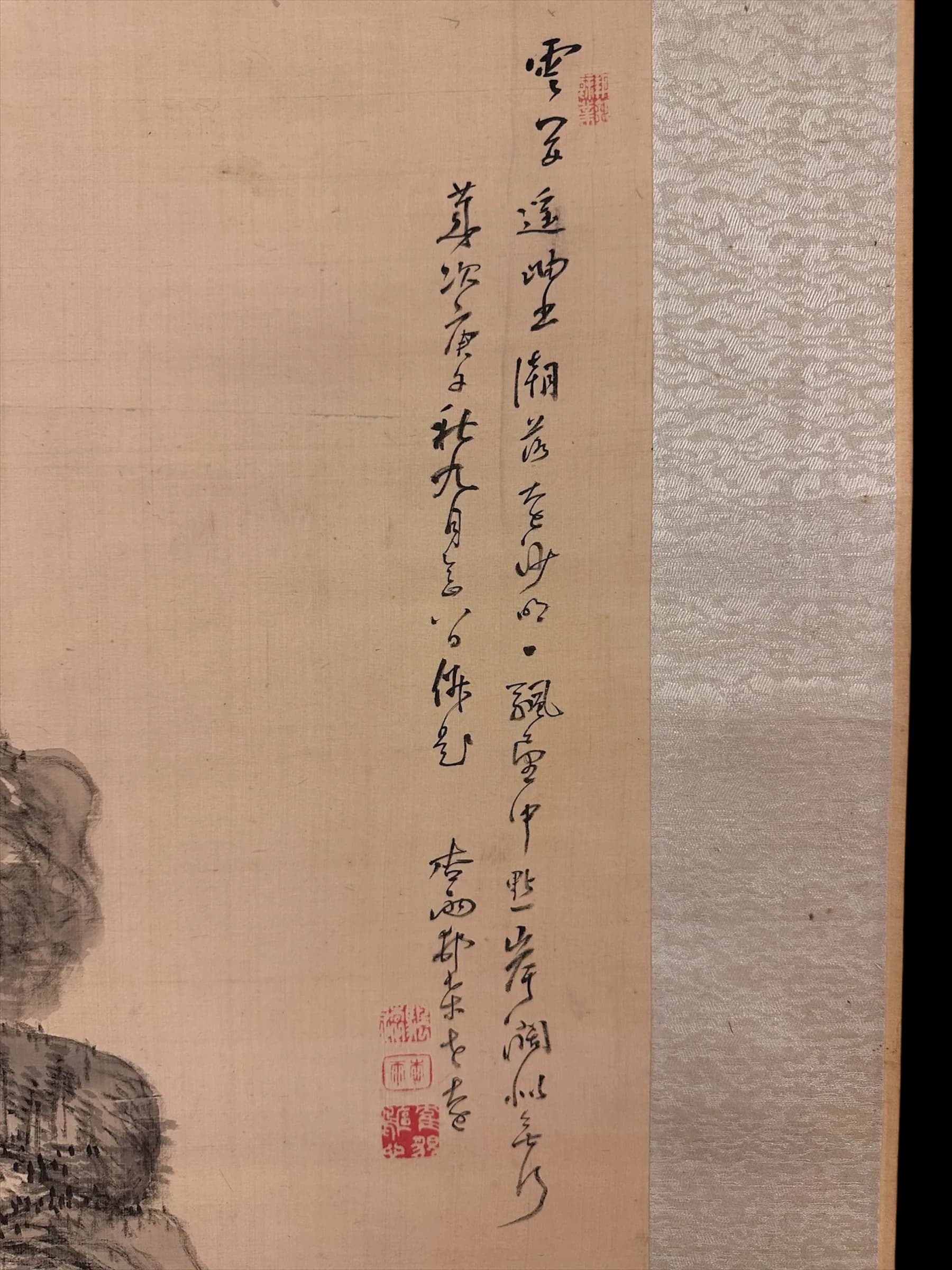
雲開遥岫出
潮落遠沙明
一颿望中點
岸濶似無行
The clouds part, and distant peaks emerge;
The tide recedes, and faraway sands gleam.
A solitary sail is just a speck within sight;
The shores are so vast, the boat seems completely motionless.
歳次庚子秋九月意寫併題 杏雨邨桑者遠 (Painted freehand and inscribed in the ninth lunar month, autumn of the kanoene year [1840]—En, the mulberry leaf picker from Kyōu village)
Seals
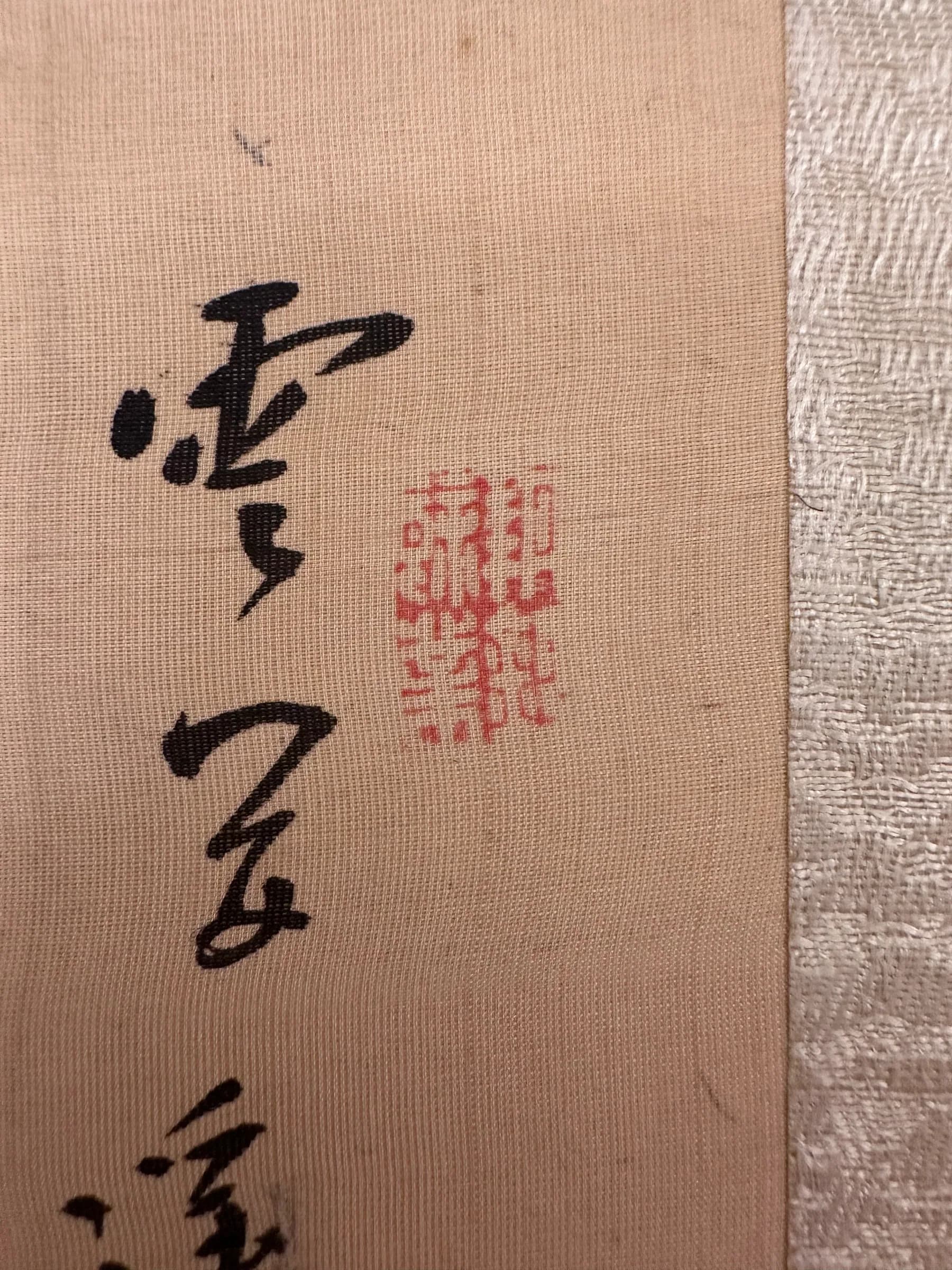
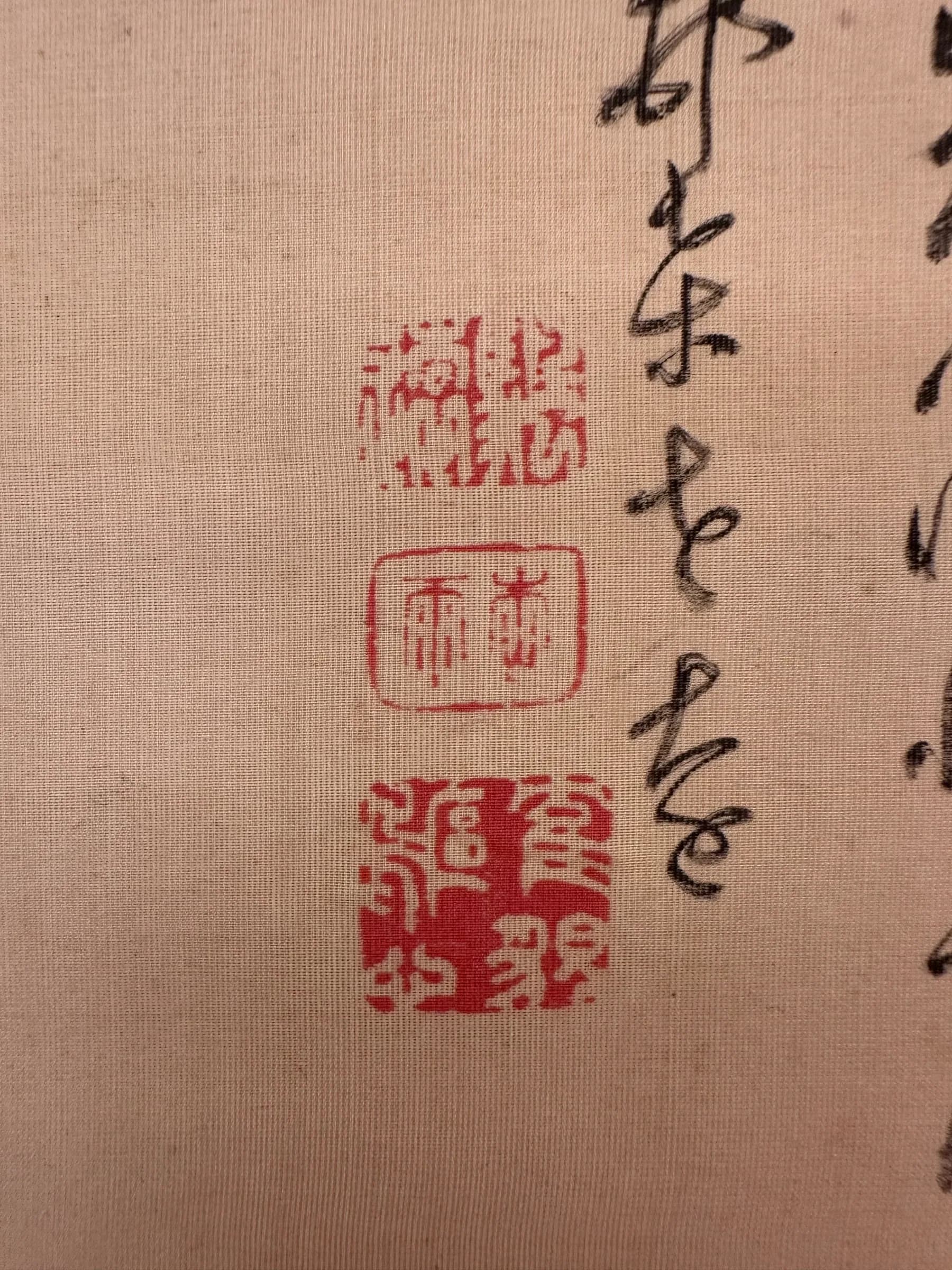
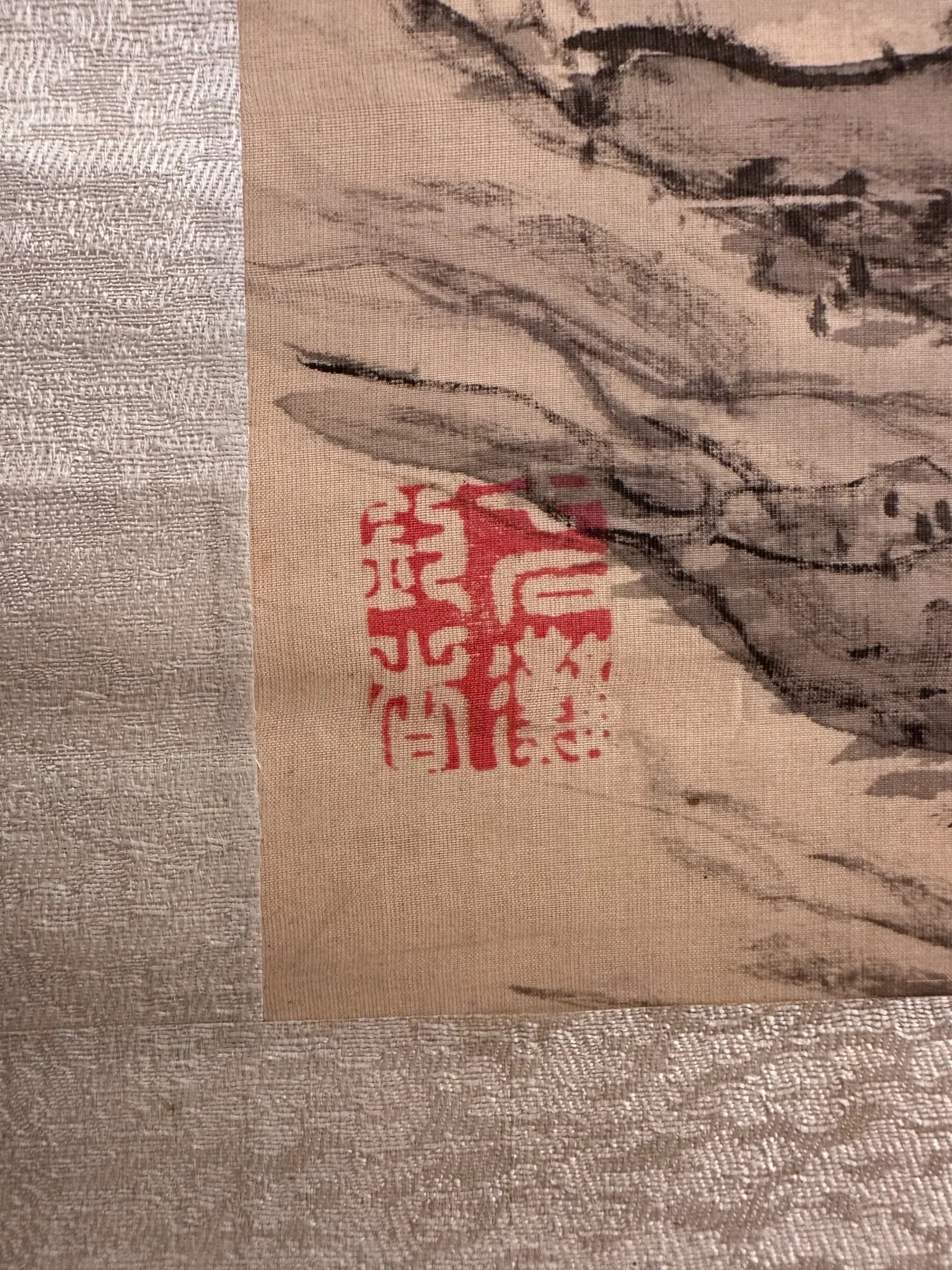
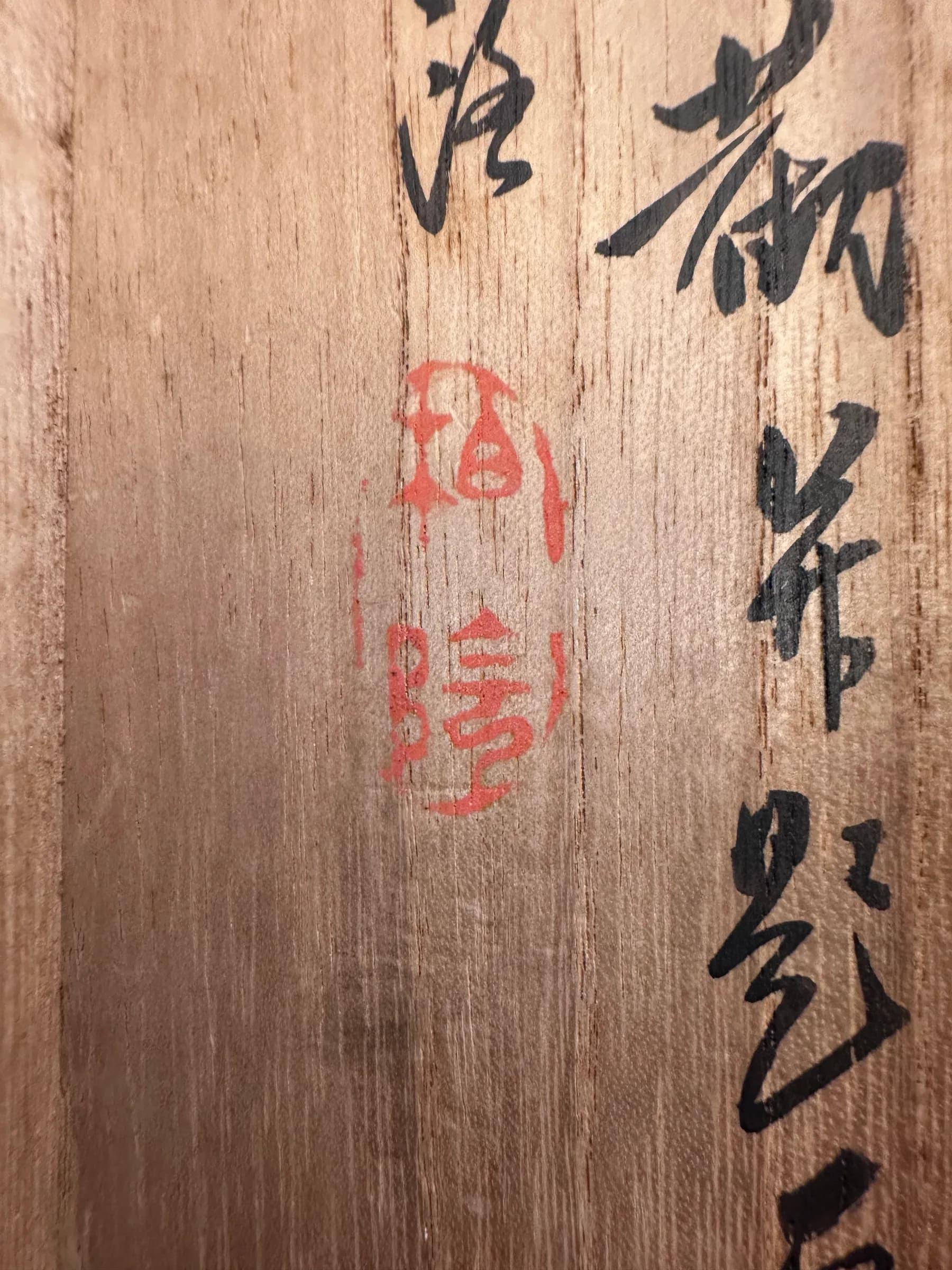
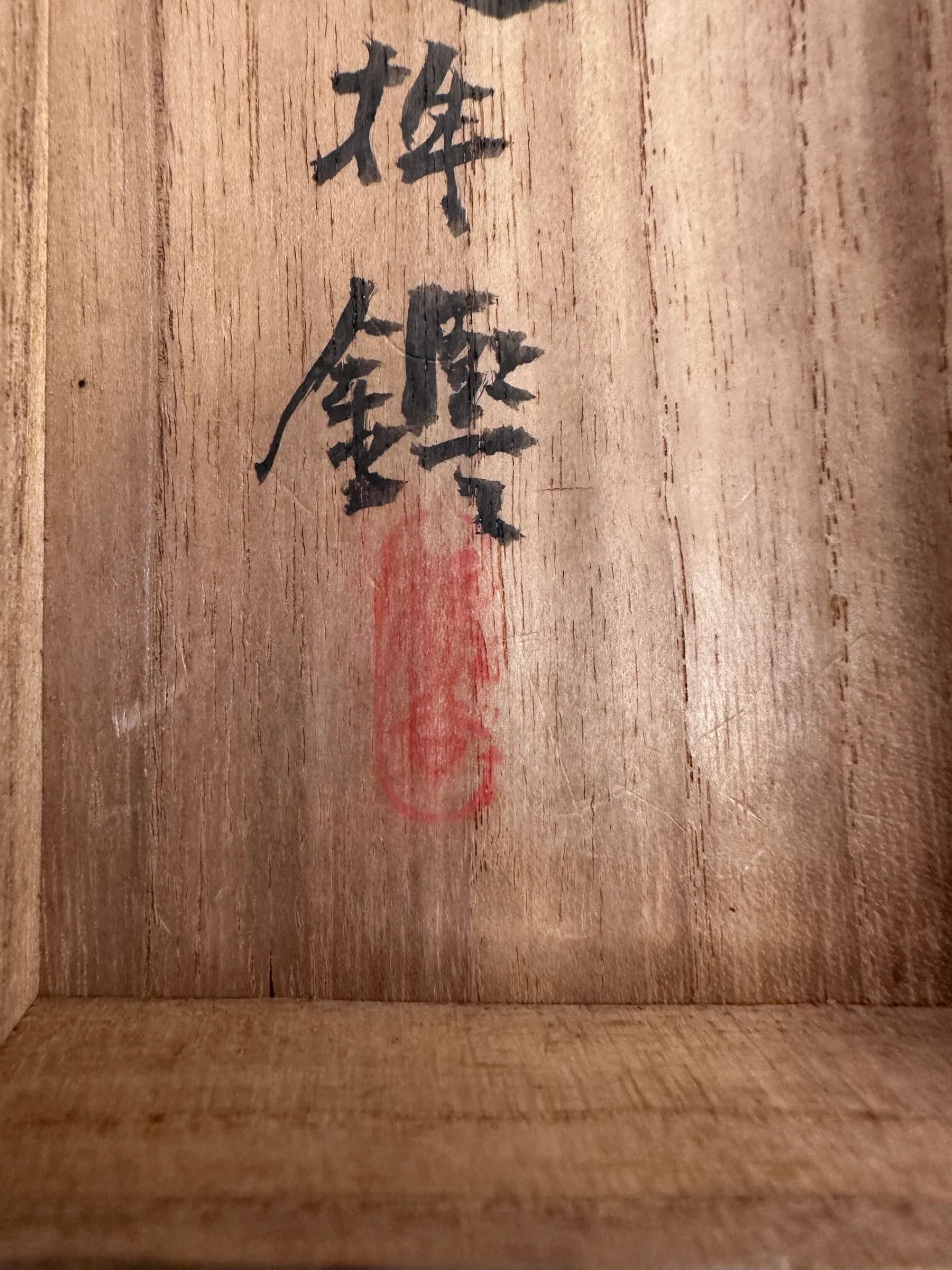
(kanbōin 関防印: rectangular intaglio seal) kōchō yogyō 耕釣餘業; (rectangular double seal, intaglio above relief below) Han En Kyōu 颿遠 杏雨; (square intaglio seal) kakubō ōshin 鶴貌鴎心; (yūin: square intaglio seal) Shichishitan chōsha 七石灘釣者; (box oval relief seal) Hakuin 柏隂; (box oval relief seal) Shōkoku 樵谷
Box inscription
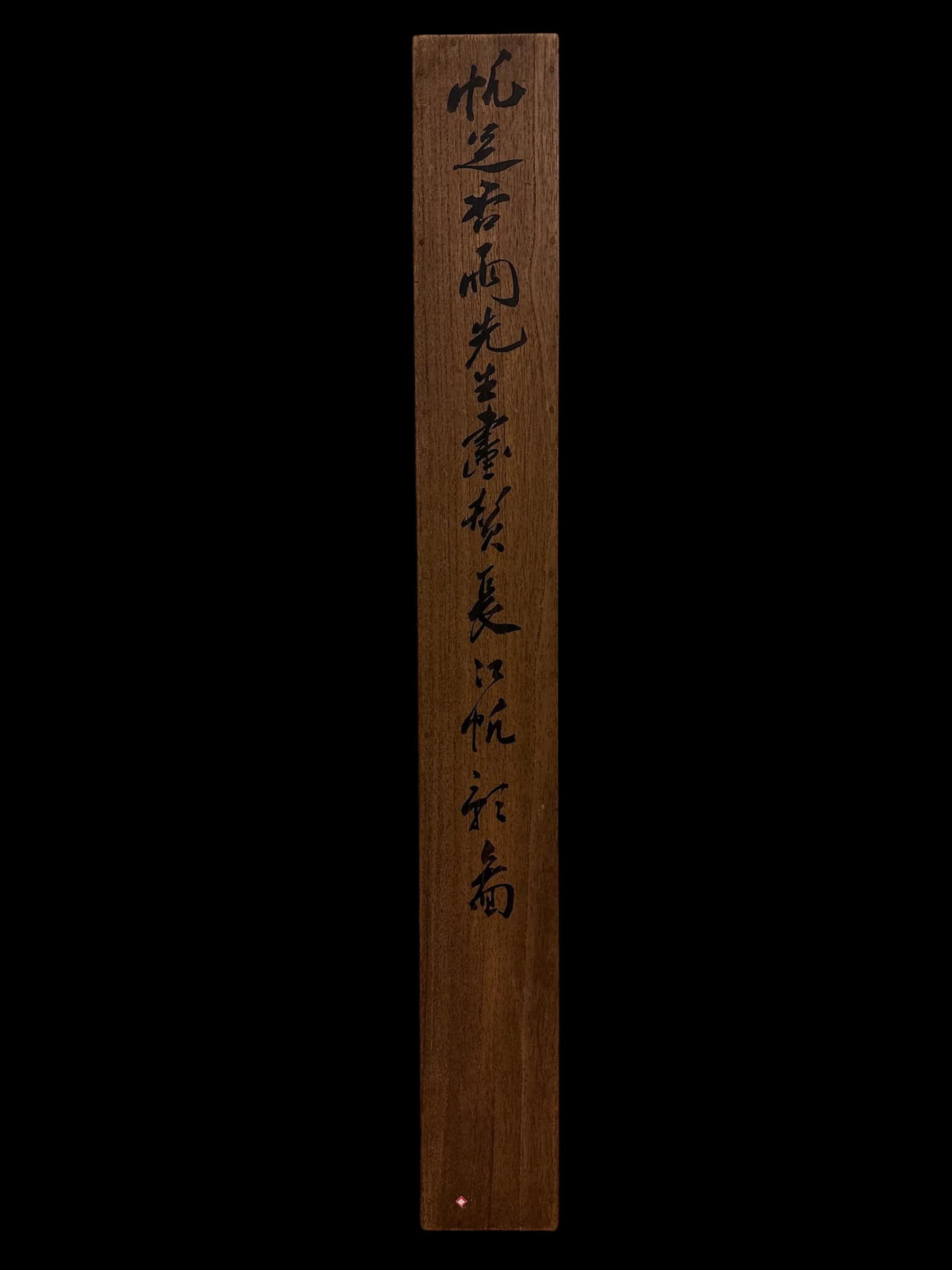
(front): 帆足杏雨先生畵賛長江帆影図 (A Lone Sail on the Yangtze River, painted and praised by master Hoashi Kyōu)
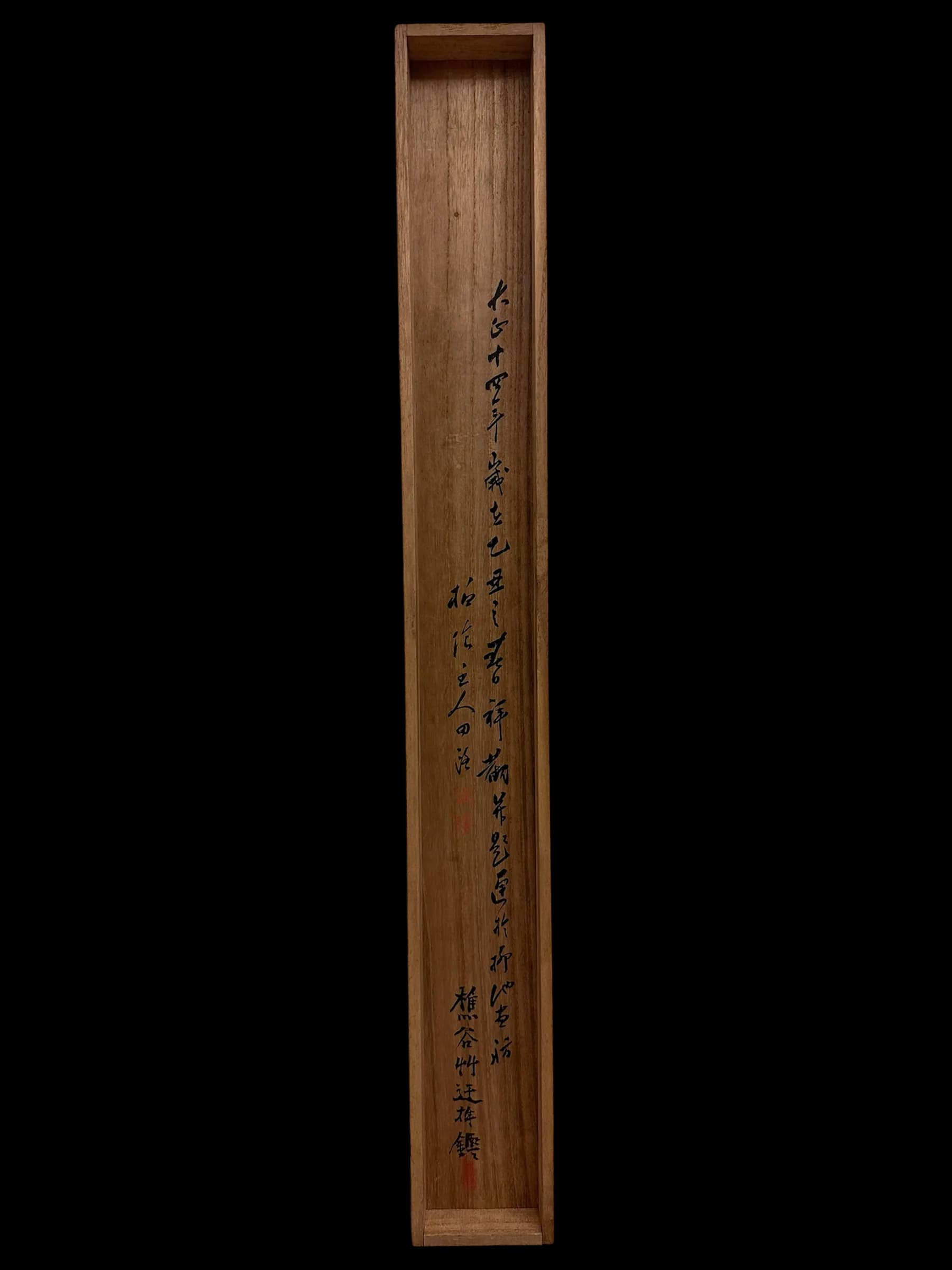
(verso): 大正十四年歲在乙丑之春拜觀并題匣於柳池畫舫 柏陰主人田洛 (In spring of the 14th year of Taishō, the kinotōshi year [1925], viewed with respect and inscribed the box on the decorated boat of the Ryūchi district—Den Raku, Master Hakuin)
樵谷艸迂拝鑑 (Shōkoku, Sō, the pedantic, appraised with respect)
Tanaka Hakuin 田中柏陰 (1866–1934) and Kusakari Shōkoku 草刈樵谷 (1892–1993) are both pivotal figures in the Bungo Nanga tradition.
Accessories and documentation
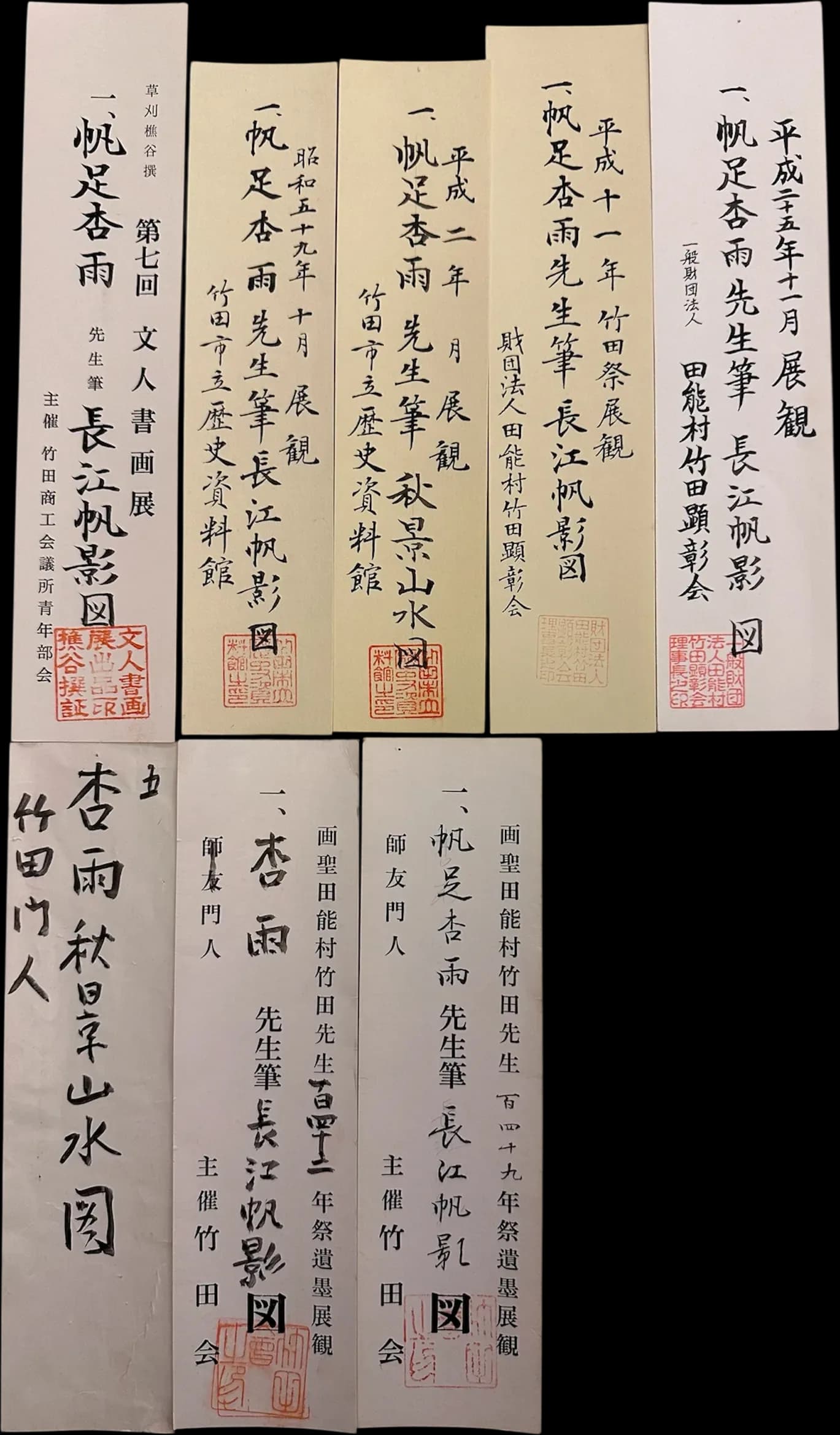
草刈樵谷撰 第七回文人書画展 帆足杏雨先生筆長江帆影図 主催 竹田商工会議所青年部会 (Selected by Kusakari Shōkoku, 7th Literati Calligraphy and Painting Exhibition. A Lone Sail on the Yangtze River by Master Hoashi Kyōu. Organized by the Youth Division of the Taketa Chamber of Commerce and Industry)
昭和五十九年十月展観 帆足杏雨先生筆長江帆影図 竹田市立歴史資料館 (Exhibited October, Showa 59 [1984]. A Lone Sail on the Yangtze River by Master Hoashi Kyōu. Taketa City Historical Museum)
平成二年展観 帆足杏雨先生筆秋景山水図 竹田市立歴史資料館 (Exhibited Heisei 2 [1990]. Autumn Landscape by Master Hoashi Kyōu. Taketa City Historical Museum)
平成十一年竹田祭展観 帆足杏雨先生筆長江帆影図 財団法人田能村竹田顕彰会 (Exhibited at the Taketa Festival, Heisei 11 [1999]. A Lone Sail on the Yangtze River by Master Hoashi Kyōu. Tanomura Chikuden Memorial Foundation, Incorporated Foundation)
平成二十五年十一月展観 帆足杏雨先生筆長江帆影図 一般財団法人田能村竹田顕彰会 (Exhibited November, Heisei 25 [2013]. A Lone Sail on the Yangtze River by Master Hoashi Kyōu. Tanomura Chikuden Memorial Foundation, General Incorporated Foundation)
画聖田能村竹田先生百三十三年祭記念展観 杏雨秋景山水図 竹田门人 主催 竹田会 (Exhibition Commemorating the 133rd Memorial Service of Master Tanomura Chikuden, Saint of Painting. Autumn Landscape by Kyōu, Disciple of Chikuden. Organized by the Taketa Society)
画聖田能村竹田先生百四十二年祭遺墨展観 杏雨先生筆長江帆影図 主催 竹田会 (Posthumous Works Exhibition for the 142nd Memorial Service of Master Tanomura Chikuden, Saint of Painting. A Lone Sail on the Yangtze River by Master Kyōu. Organized by the Taketa Society)
画聖田能村竹田先生百四十九年祭遺墨展観 帆足杏雨先生筆長江帆影図 主催 竹田会 (Posthumous Works Exhibition for the 149th Memorial Service of Master Tanomura Chikuden, Saint of Painting. A Lone Sail on the Yangtze River by Master Hoashi Kyōu. Organized by the Taketa Society)