View 1 of 17
Mizuta Chikuho (1883–1958)
水田竹圃
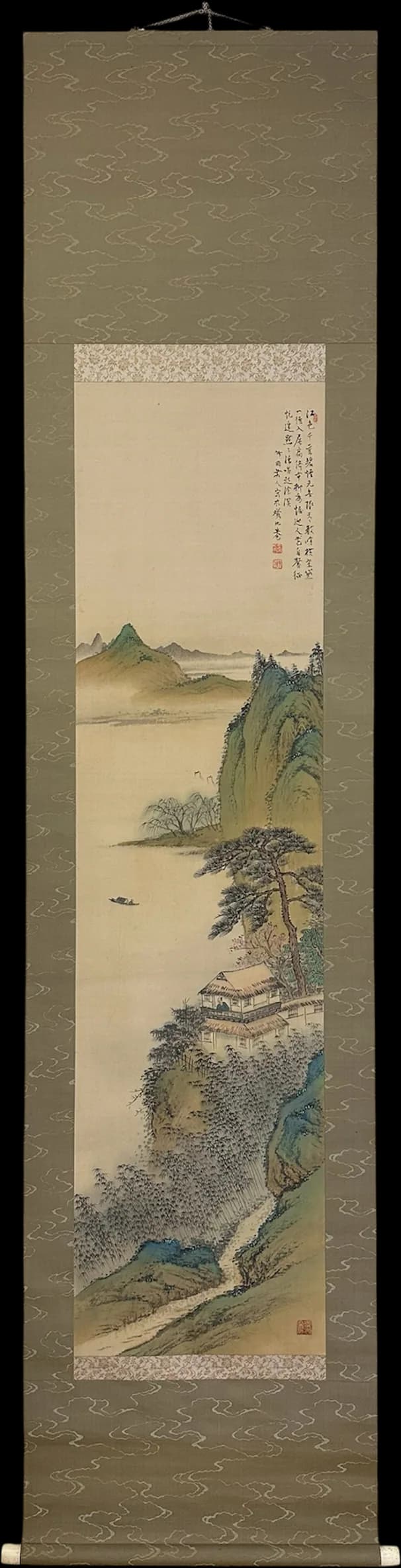
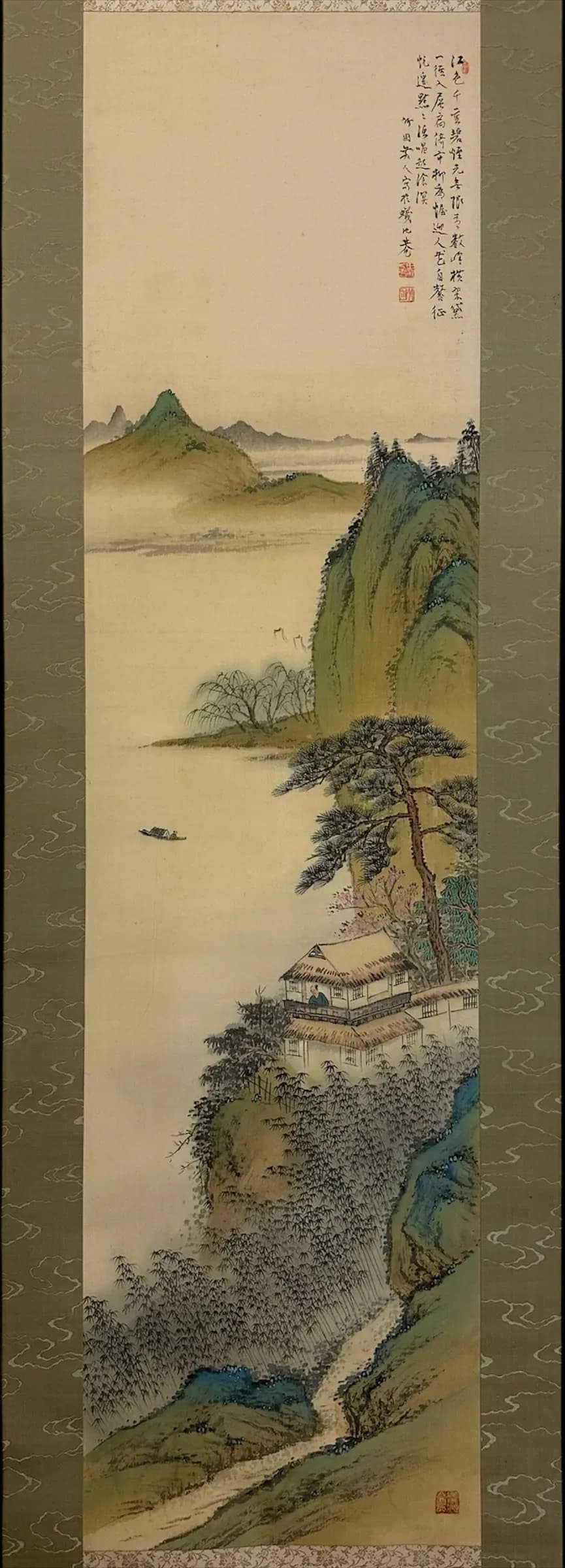
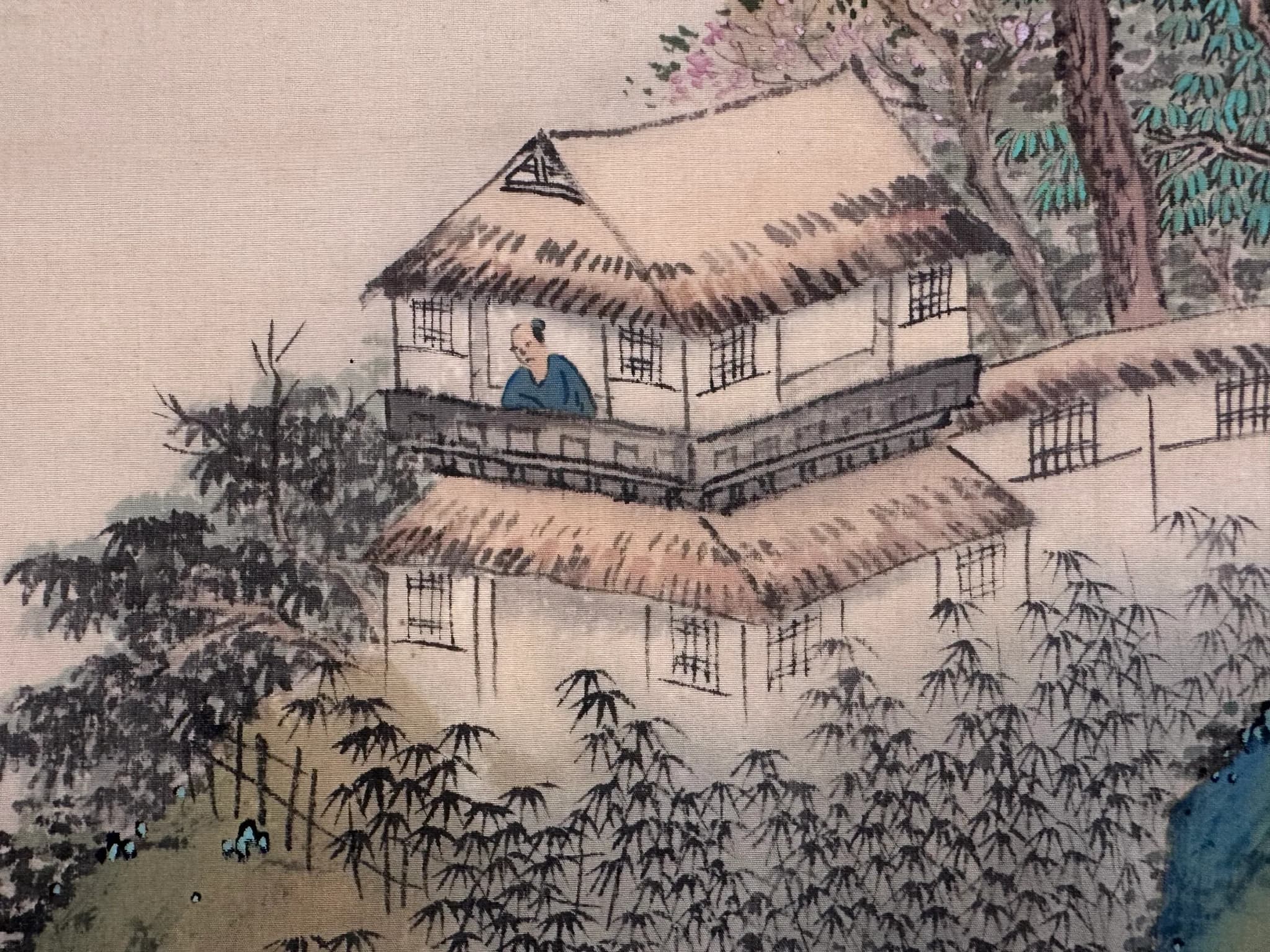
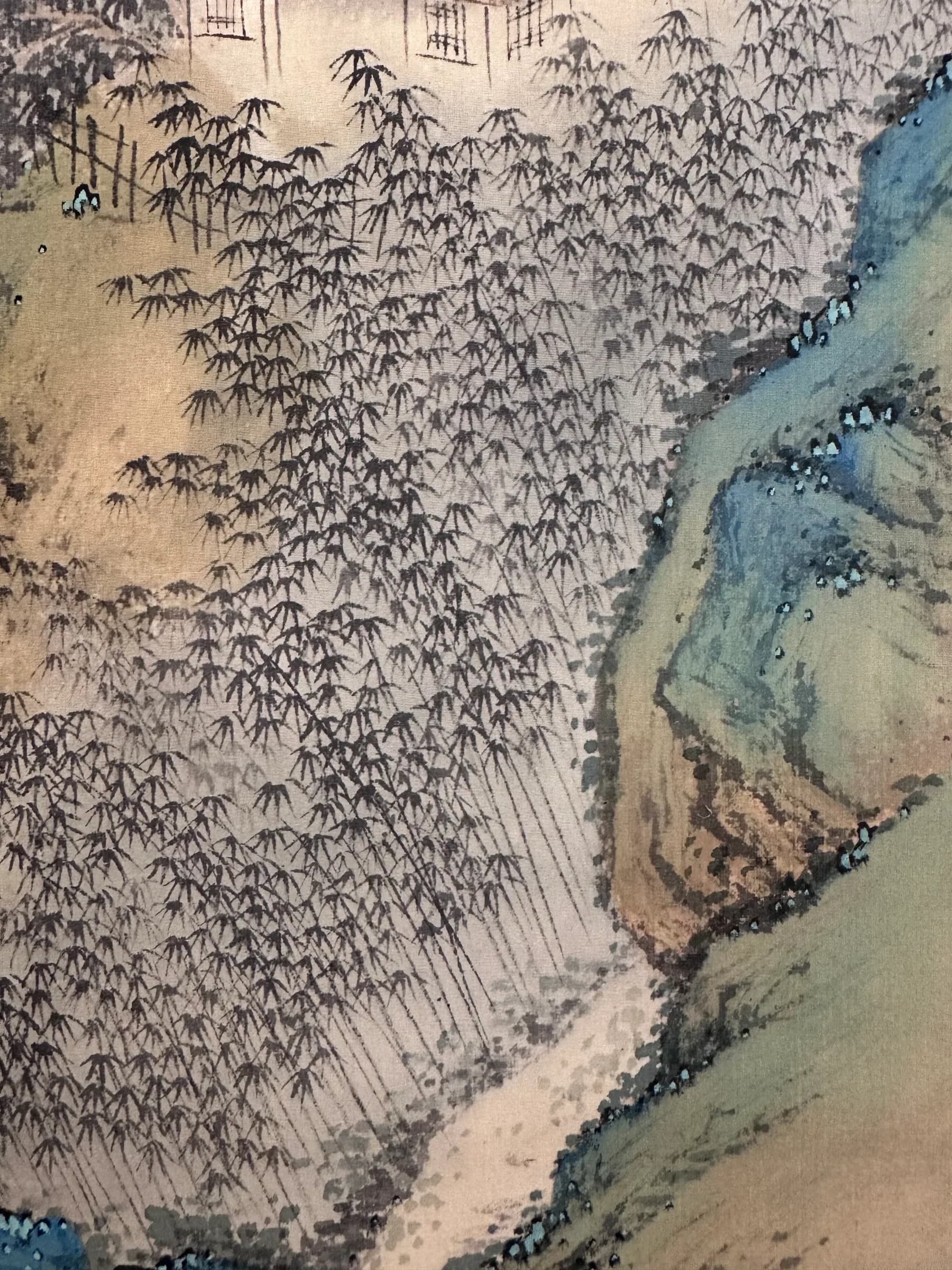
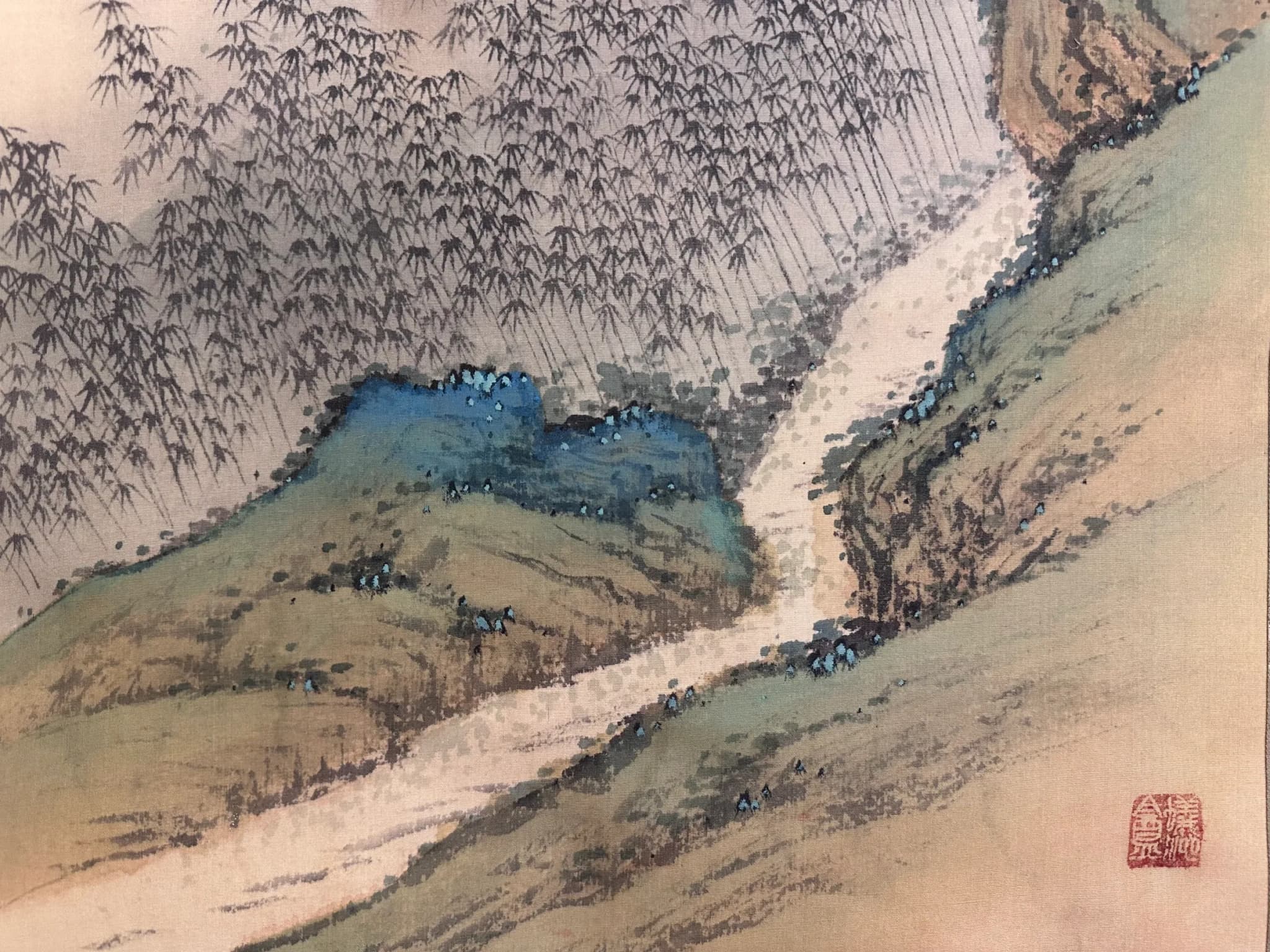
Autumn Mountains Under Clear Evening Skies
秋山晚晴図
- Era
- Kindai (近代)
- Subject
- Landscape (山水)
- Period
- Shōwa Period
- Medium
- Hanging scroll; ink and color on silk
- Dimensions
- 35.0 × 135.1 cm (image); 49.2 × 208.7 cm (overall)
Description
Mizuta Chikuho was a master painter and pivotal reformer of modern Japanese Nanga active across the Meiji, Taishō, and Shōwa eras. Raised in Osaka, a merchant city with a deep foundation in Nanga and Sinology, Chikuho began formal training under master Himejima Chikugai 姫島竹外 at the age of fourteen while studying classical literature and poetry with local Confucian scholar Itō Kaifu 伊藤介夫. In 1921, seeking to revitalize the waning legacy of literati art, he co-founded the Japanese Nanga Academy 日本南画院 alongside other prominent figures such as Tajika Chikuson 田近竹邨 and Yamada Kaidō 山田介堂. Stylistically, Chikuho anchored his work in the classic brush strokes of ancient Chinese masters while incorporating modern perspectives to replace traditional Nanga spatial conventions. His innovative approach gained widespread acclaim at official salon exhibitions (Bunten, Teiten, and Nitten), making him one of the few Nanga artists to receive continuous awards and serve as an official judge through his career until his death from heart failure at age 75.
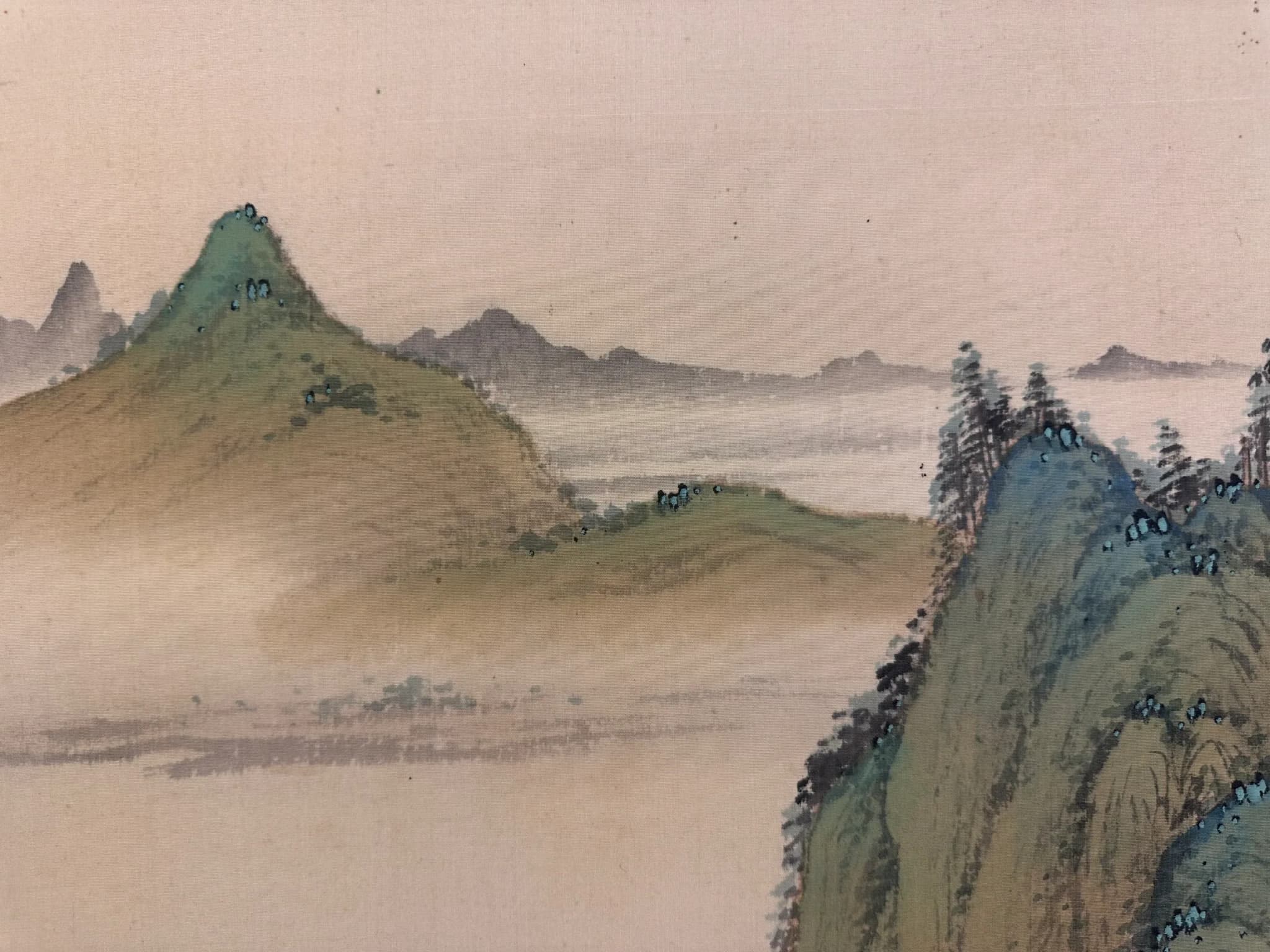
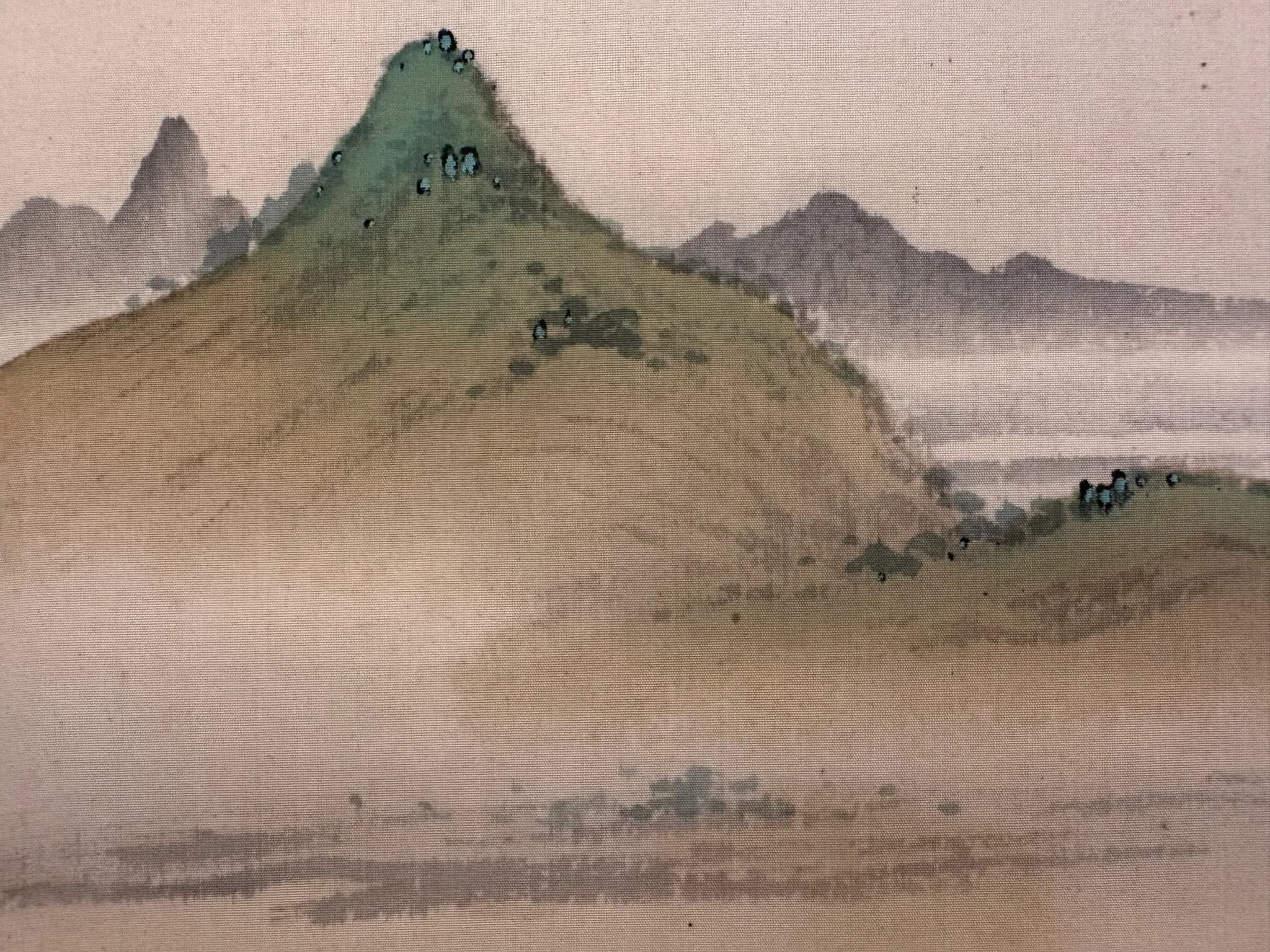
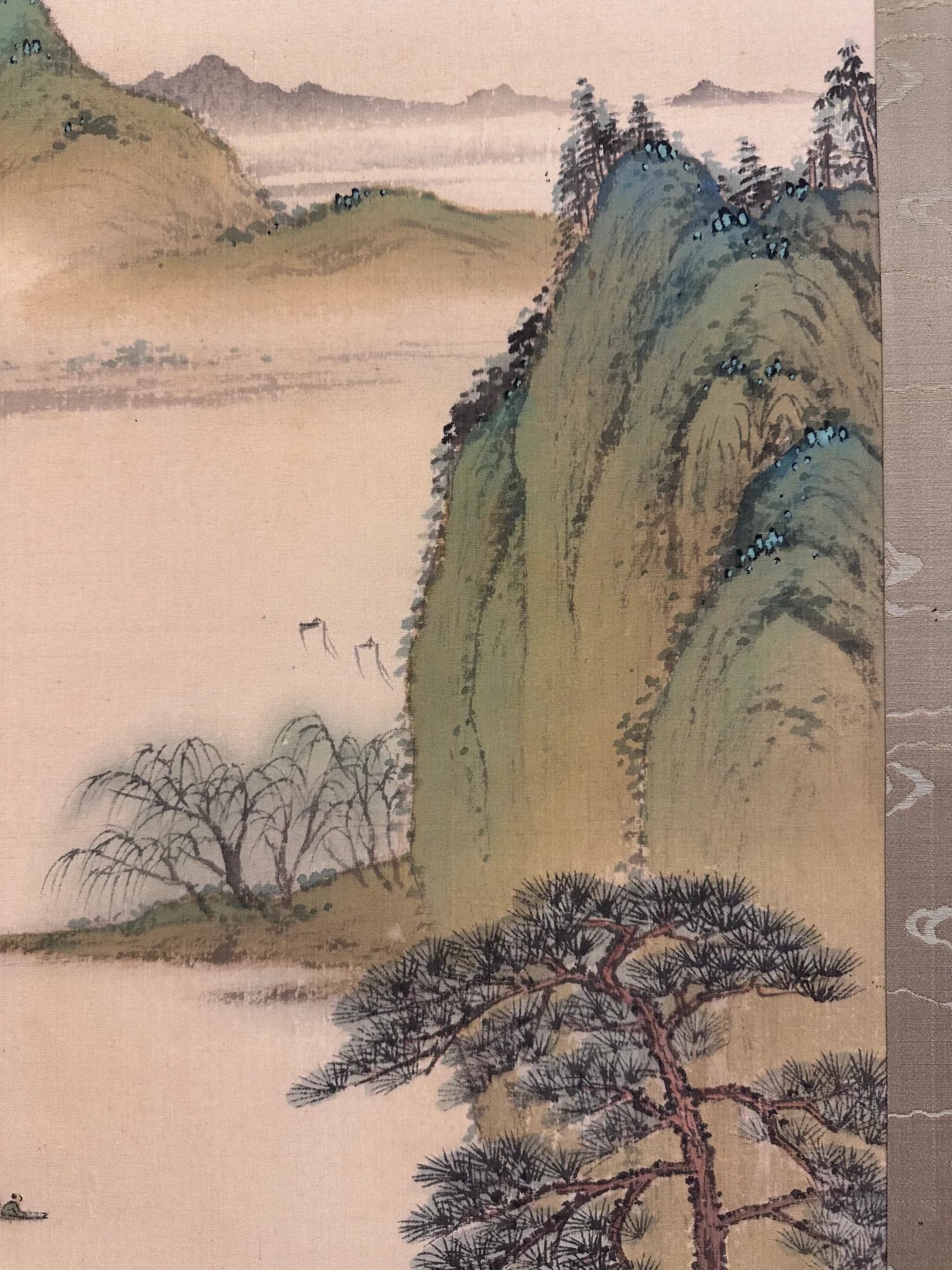
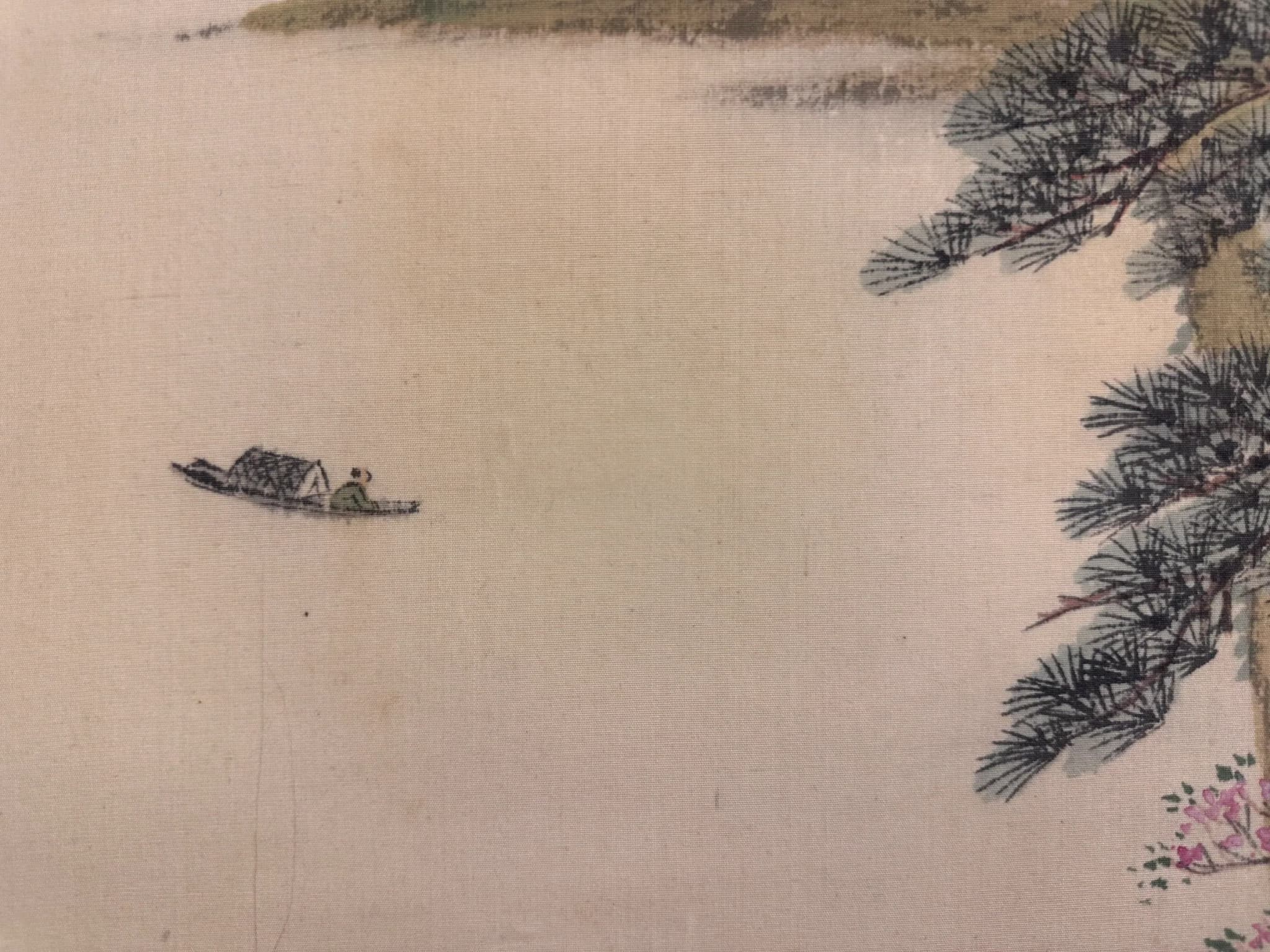
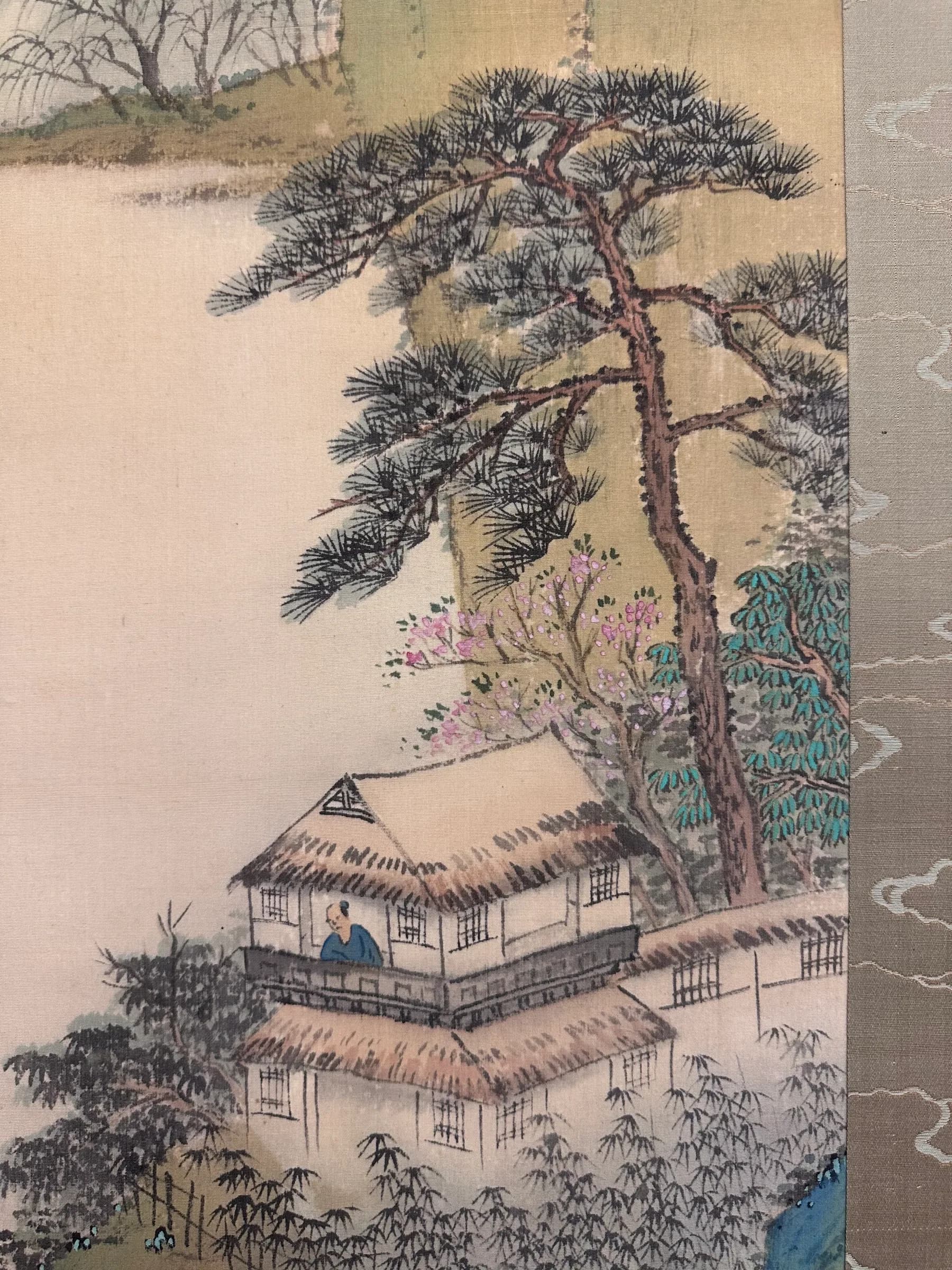
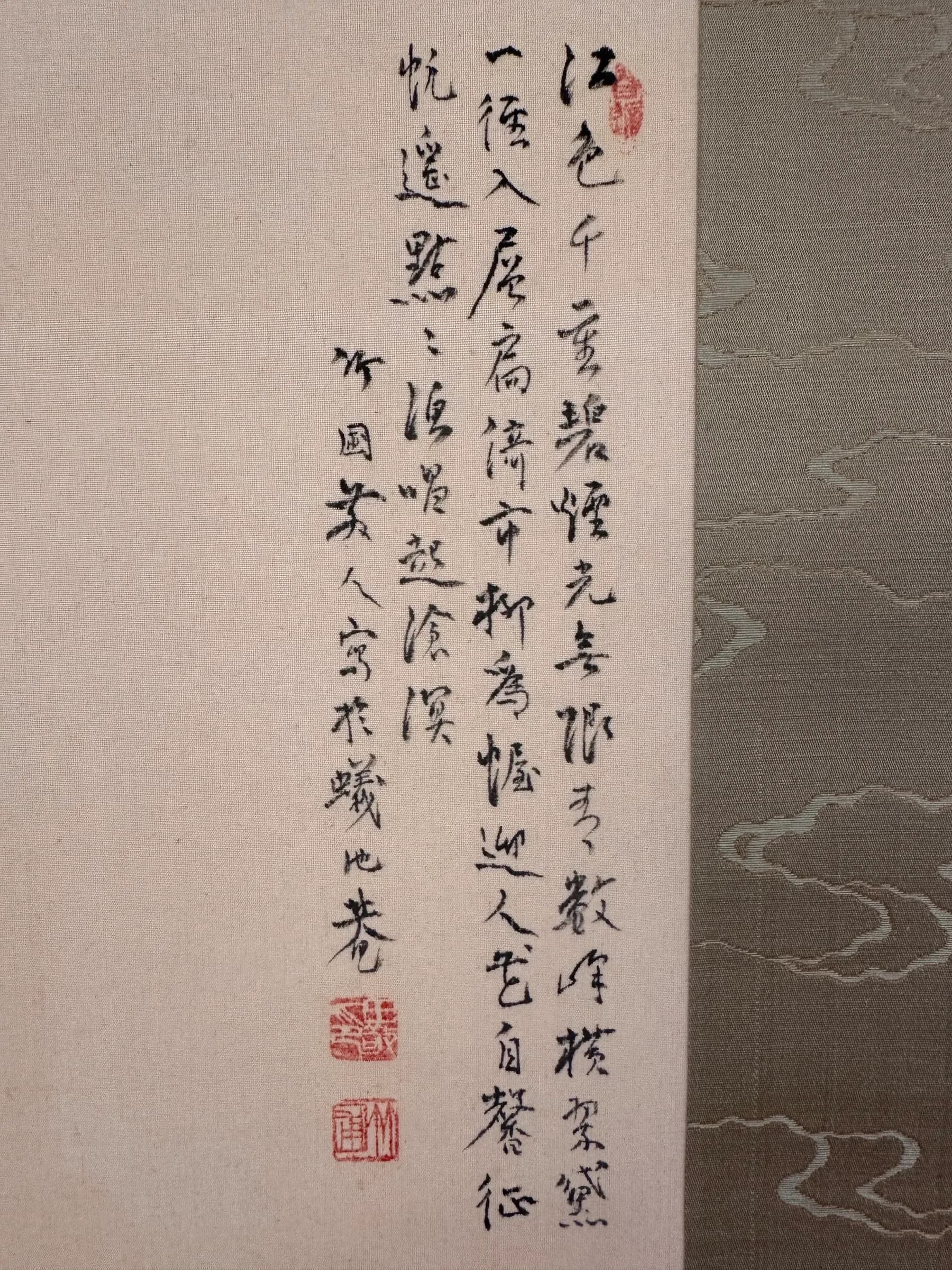
Belonging to Mizuta Chikuho’s traditional portfolio, this work features a blue-green palette that reflects the influence of his teacher Chikugai. In the inscription, Chikuho quotes Yuan master Wu Zhen’s poem, “Zhao Songxue’s Layered Rivers and Overlapping Peaks, First of Two” 趙松雪重江疊嶂二首其一, composed in praise of a landscape by the celebrated Yuan artist Zhao Mengfu 趙孟頫. In classic Nanga fashion, Chikuho faithfully translates the verse’s poetic imagery into visual form—meticulously rendering layered emerald peaks, weeping willows, distant sails, and a solitary fisherman. While Zhao’s original masterpiece (now in the collection of the National Palace Museum, Taipei) was executed in monochrome ink, leaving room for visual interpretation, Chikuho’s edition uses vibrant mineral pigments to reify the poem’s atmospheric colors, bringing the verse’s vivid landscape into reality.
Painting inscription
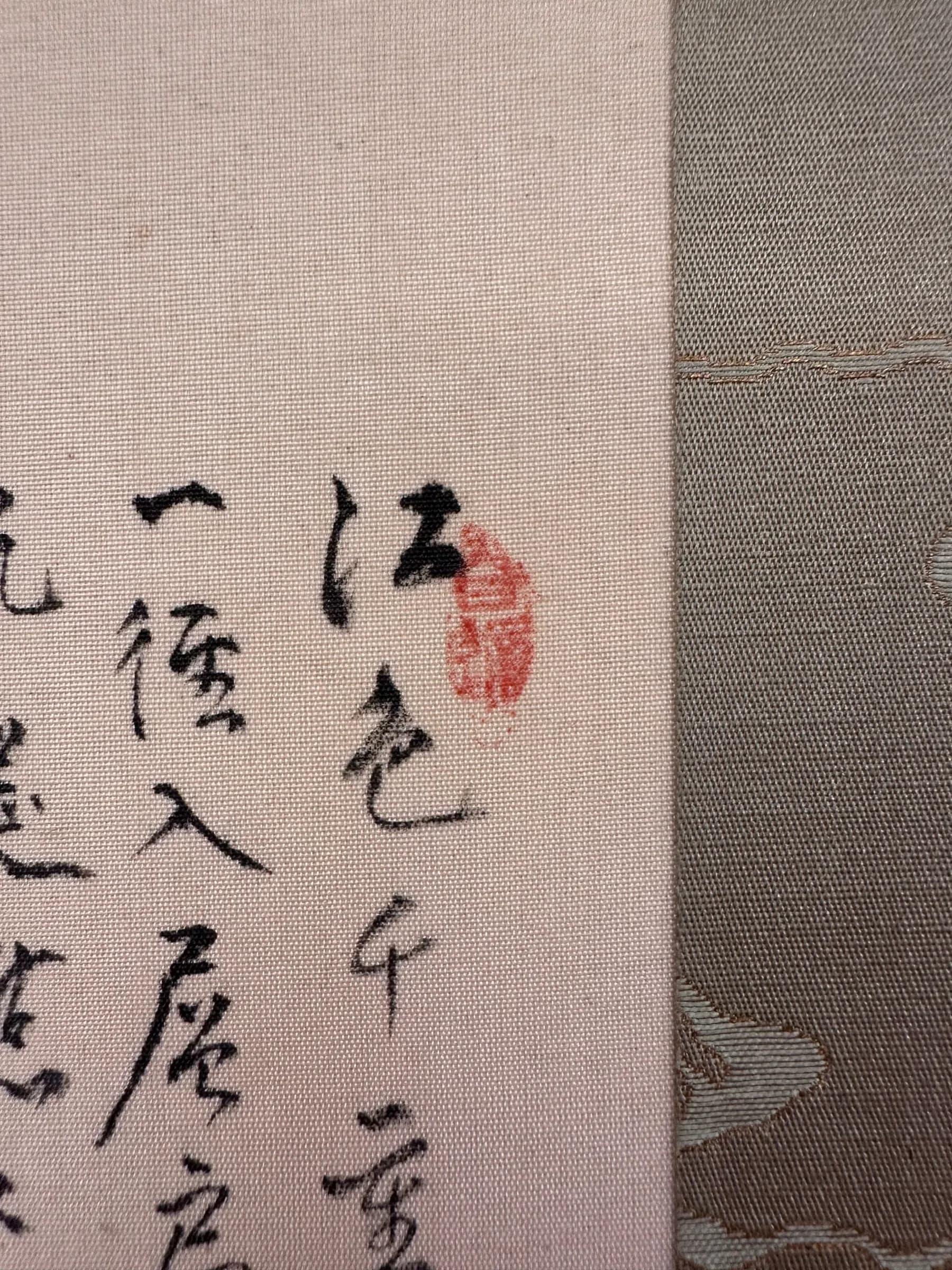
江色千重碧
煙光無限青
數峰橫翠黛
一徑入層扃
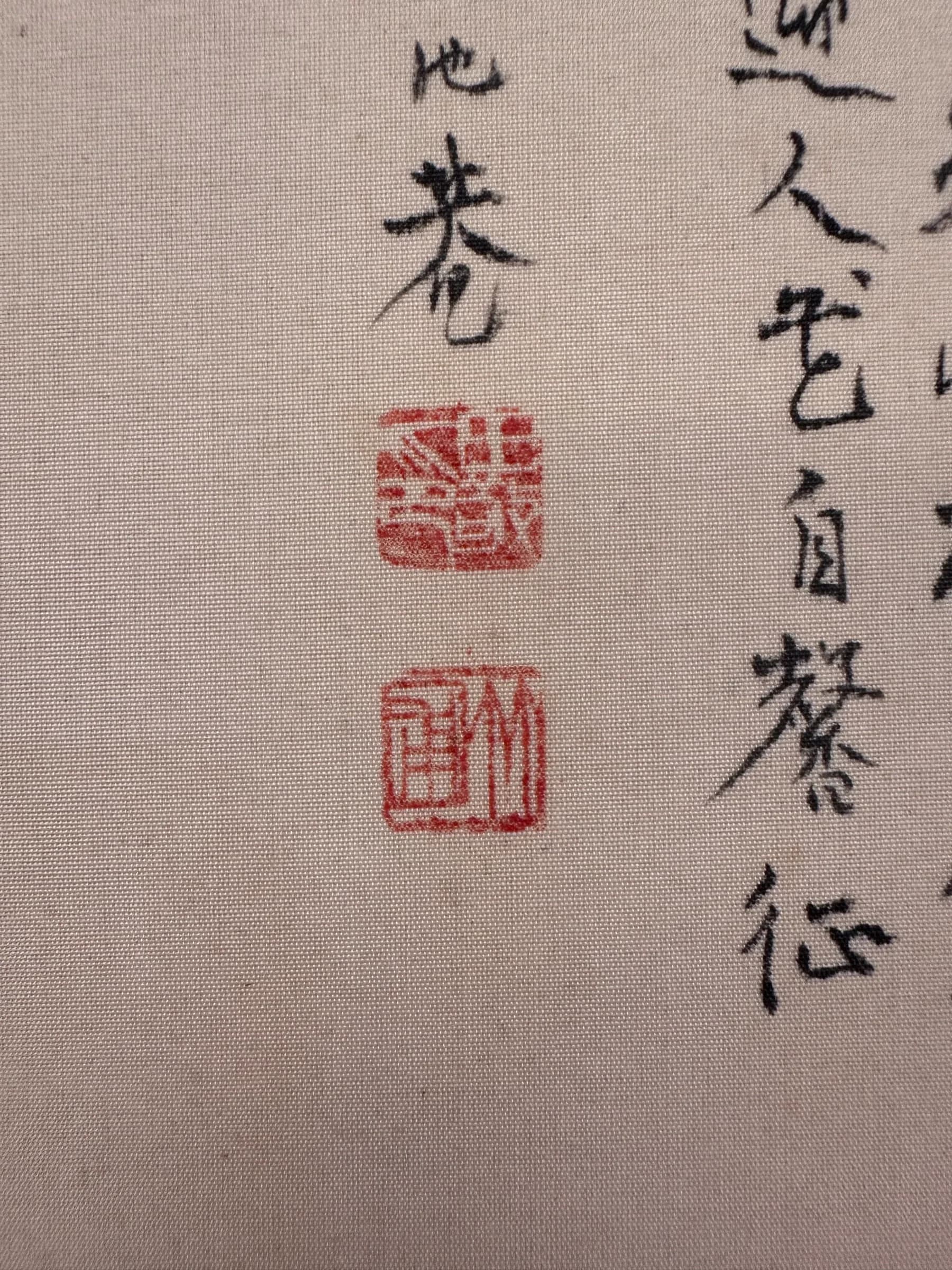
倚市柳為幄
迎人花自馨
征帆遙點々
漁唱起滄溟
The river reflects a thousand shades of deep emerald green,
Misty vapors spread endlessly in boundless verdant blue.
Distant peaks stretch across the horizon like dark emerald brows,
And a single winding path enters deep into layered, secluded gates.
Willows bordering the market town fold into a shady canopy,
While wildflowers welcoming travelers naturally release their sweet fragrance.
Distant sails vanish into tiny specks on the remote skyline,
As fishermen’s songs echo up from the vast, deep ocean waters.
竹圃散人寫於蟻池菴 (Painted by Hermit Chikuho at the Ant Pond Hermitage)
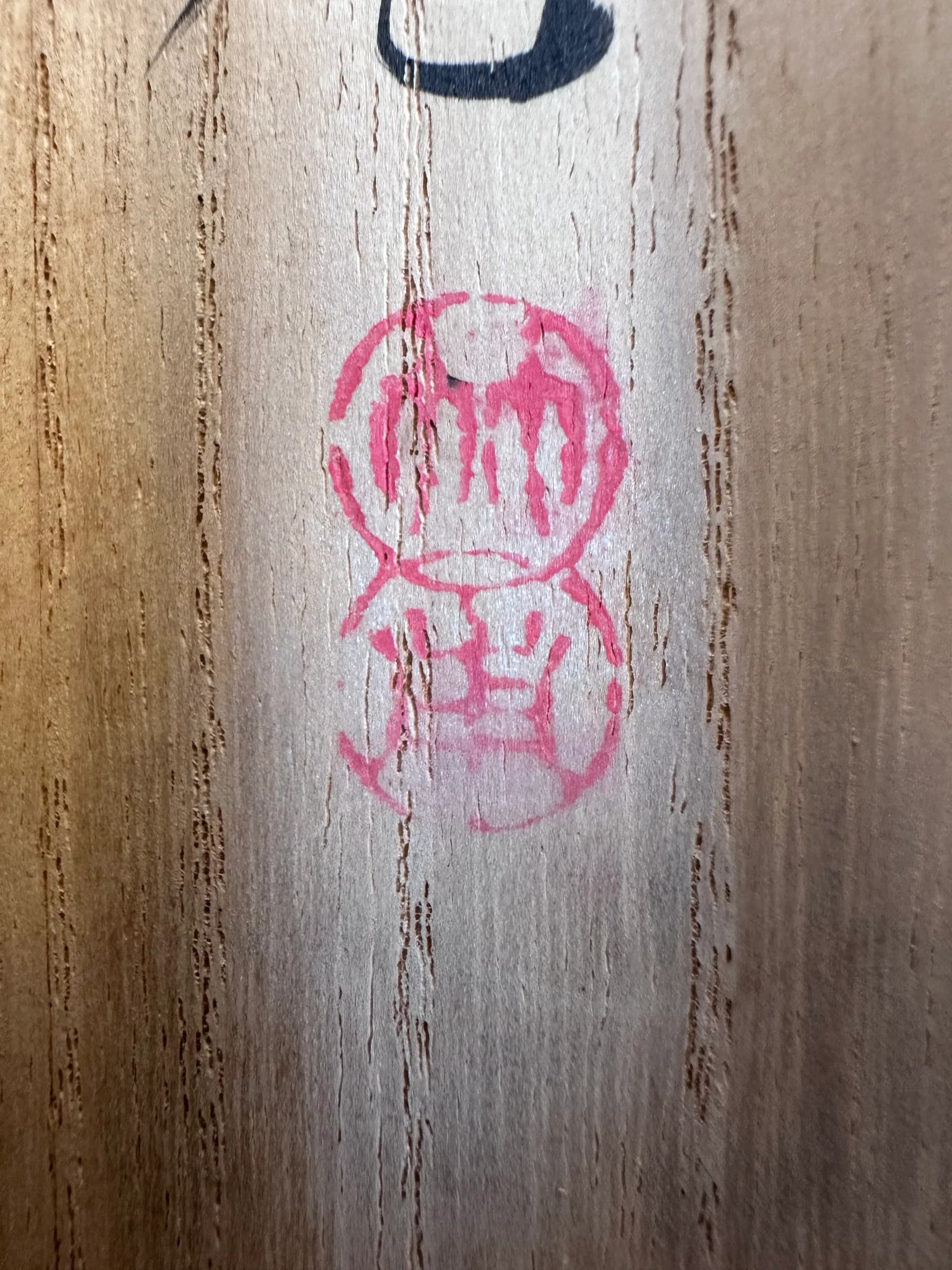
Seals
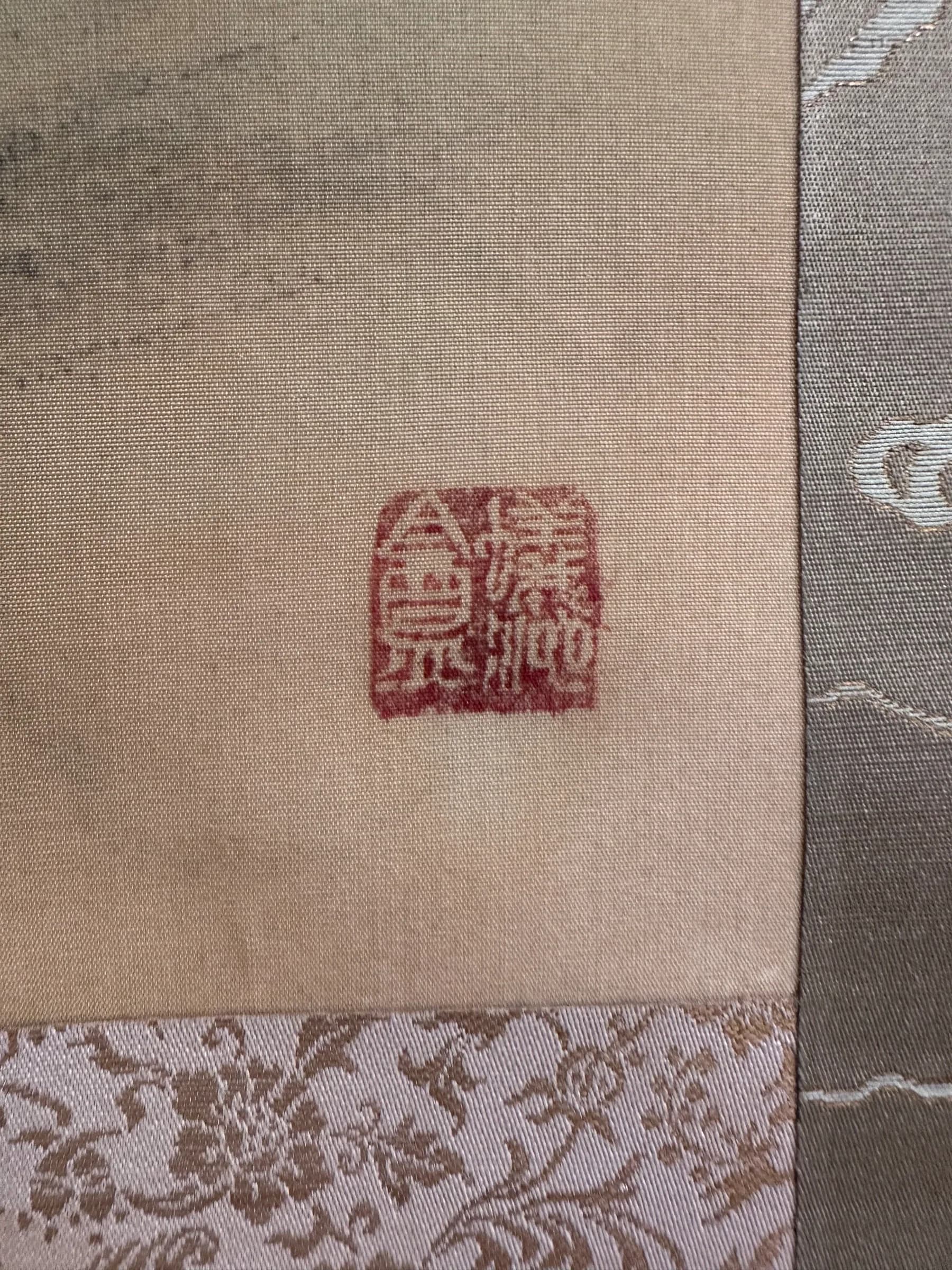
(kanbōin: oval relief seal) jiteki 自適; (square intaglio seal) Den Kei in 田敬印; (square relief seal) Chikuho 竹圃; (yūin: square intaglio seal) Gichian 蟻池庵; (box vesica piscis relief seal) Chikuho 竹圃
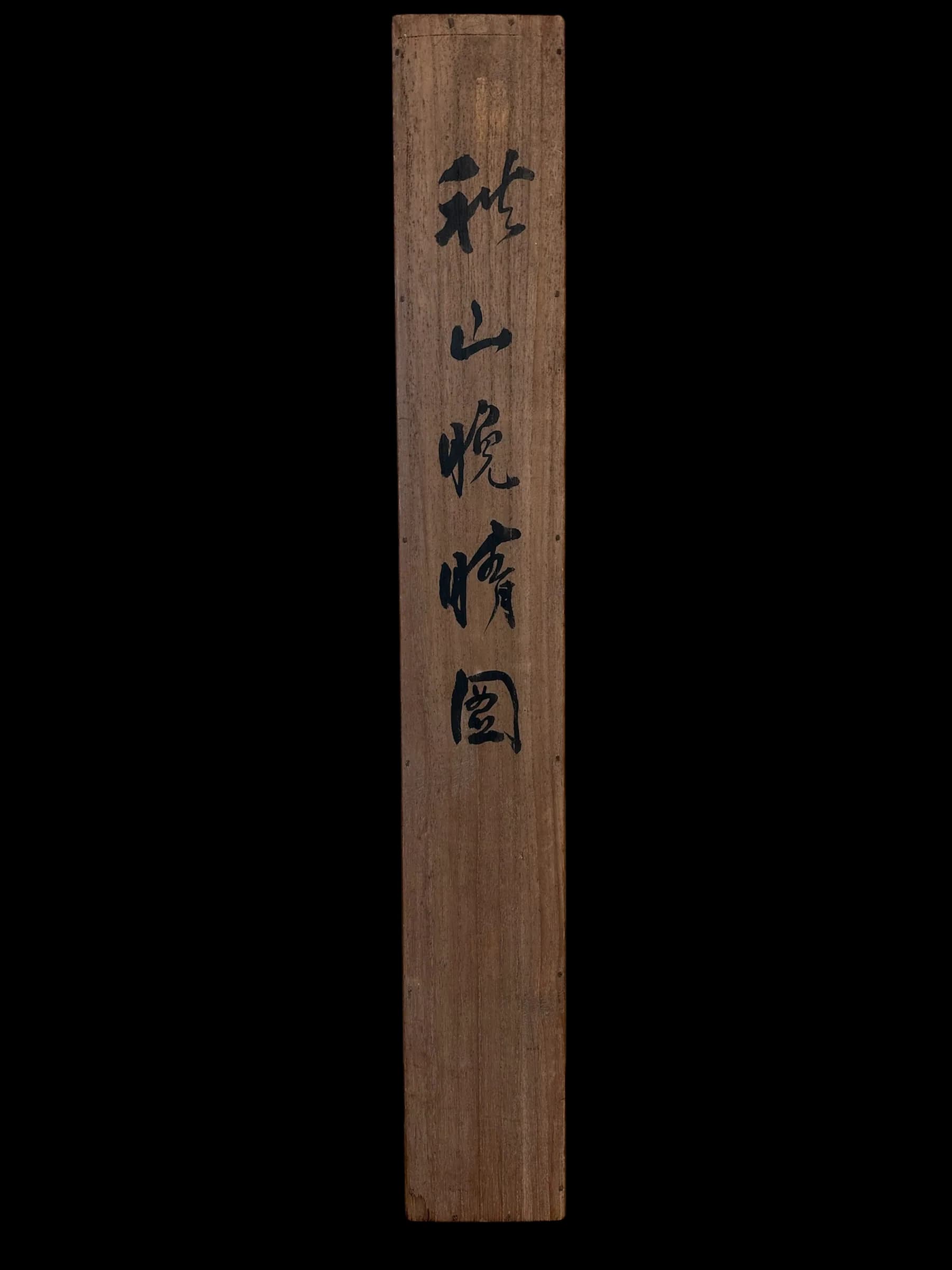
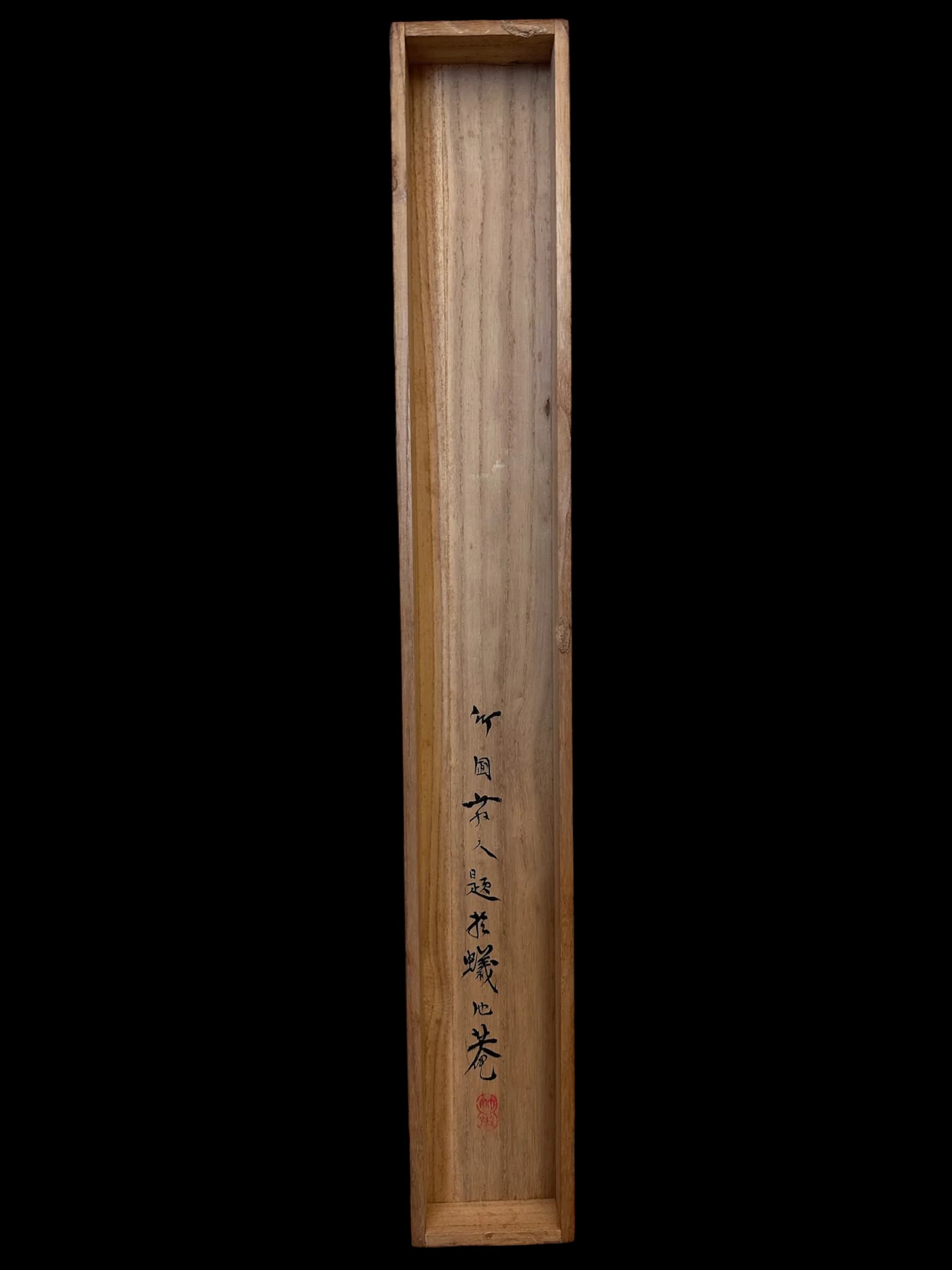
Box inscription
(front): 秋山晚晴図 (Autumn Mountains Under Clear Evening Skies)
(verso): 竹圃散人題於蟻池菴 (Inscribed by Hermit Chikuho at the Ant Pond Hermitage)