View 1 of 15
Tanaka Hakuin (1866–1934)
田中柏陰
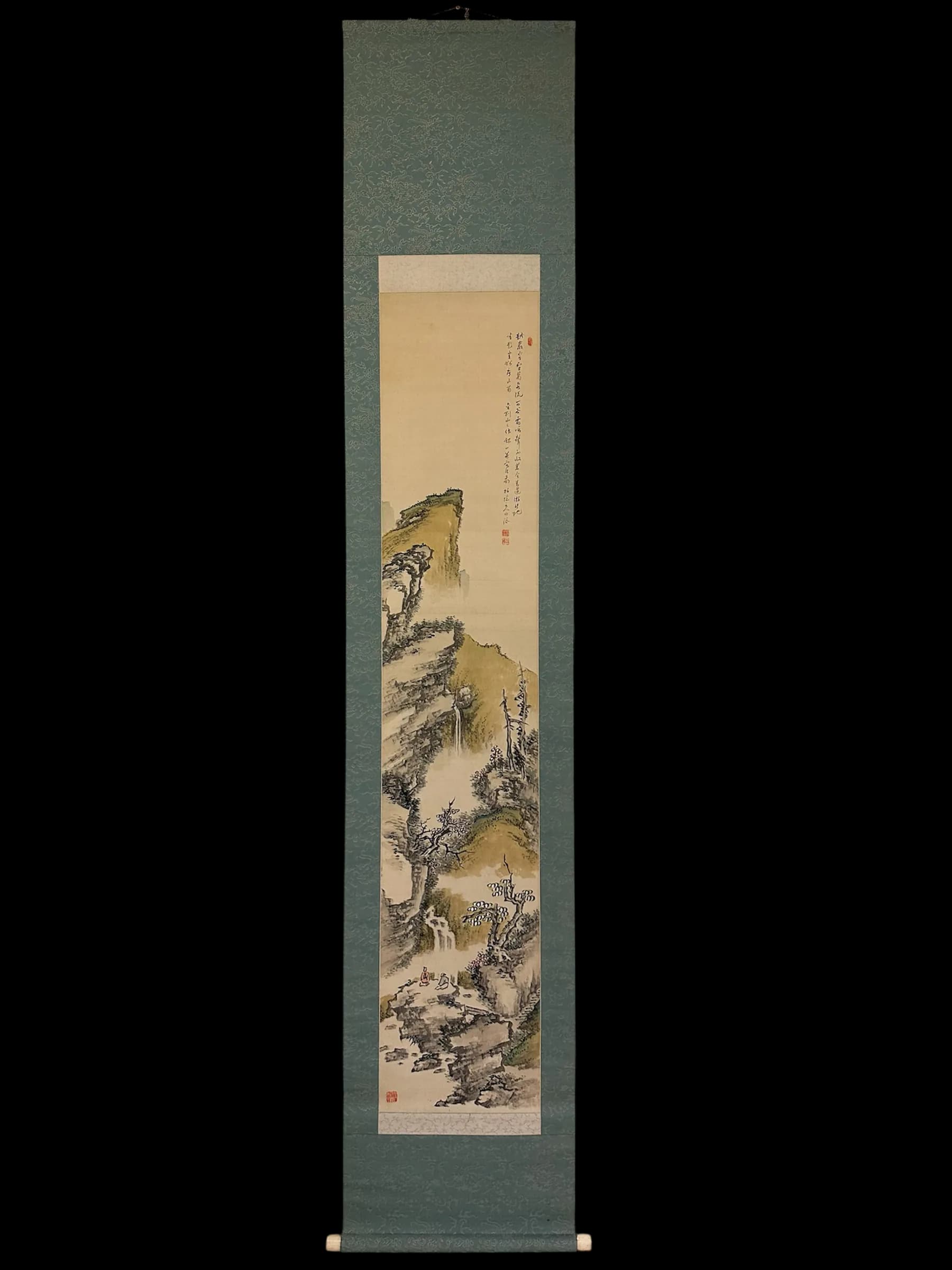
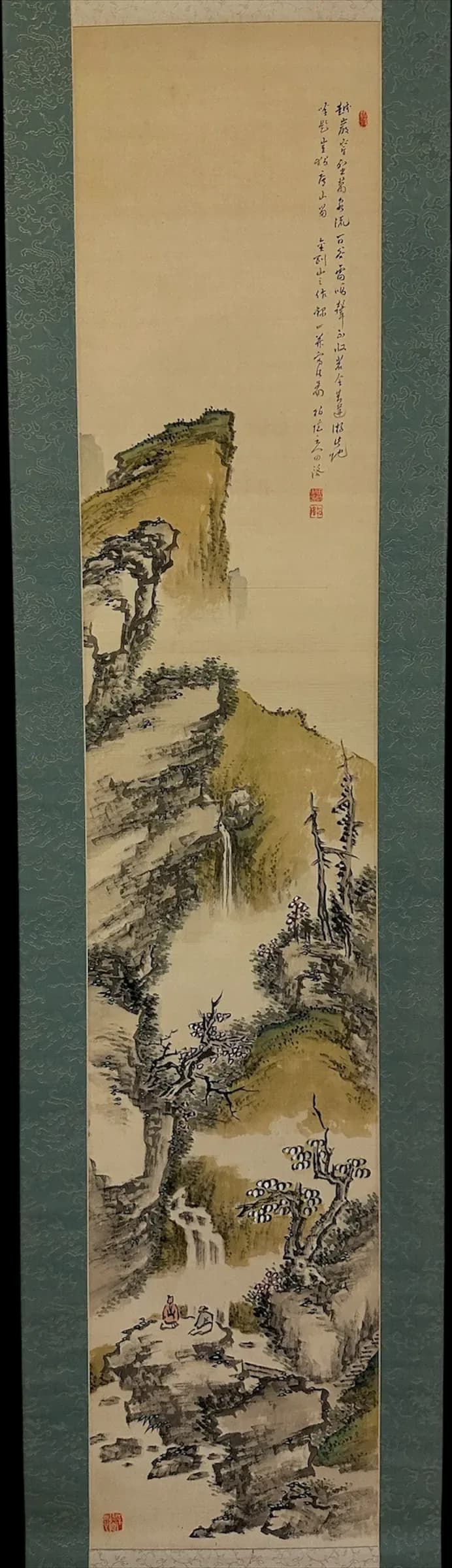
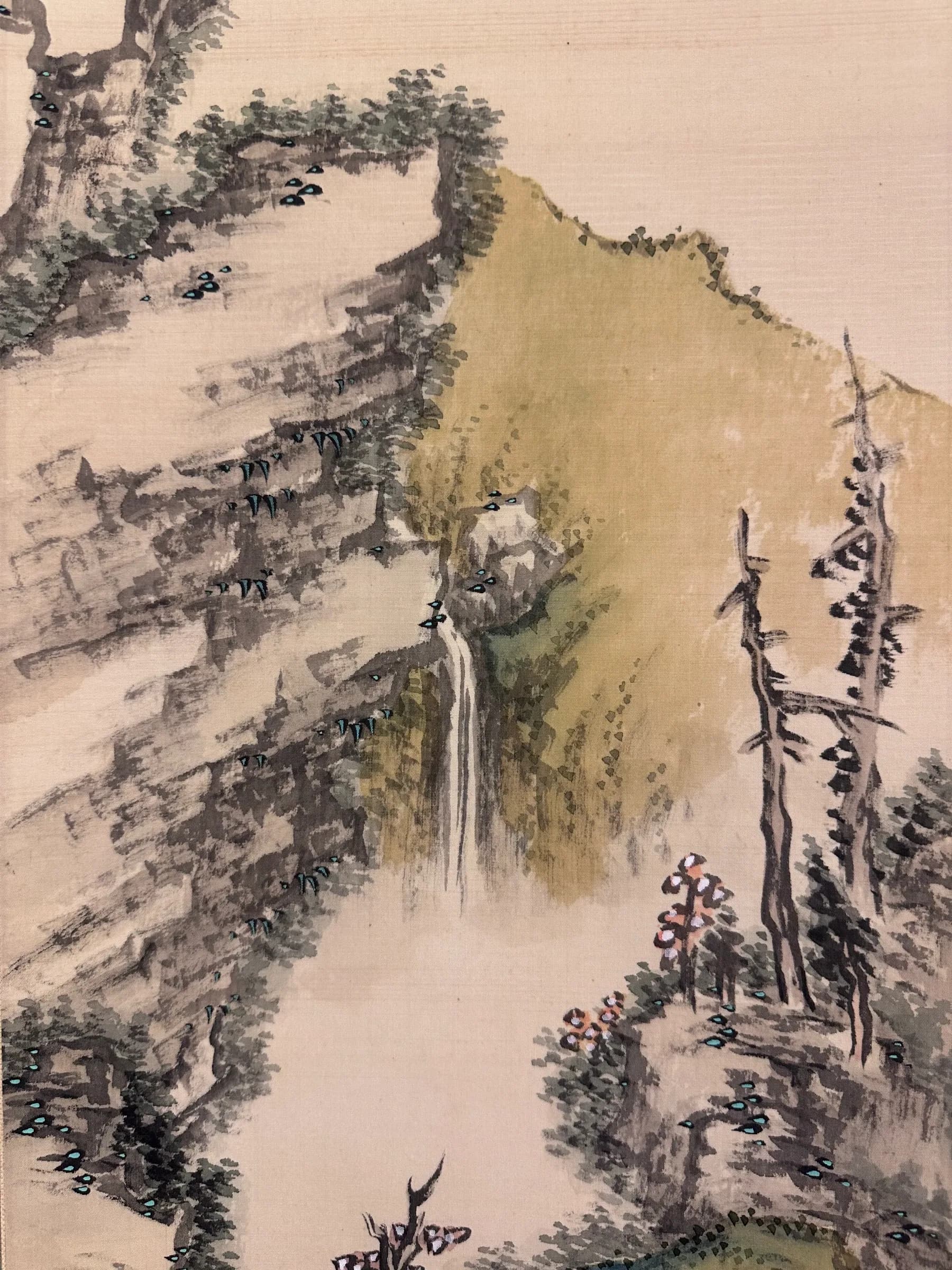
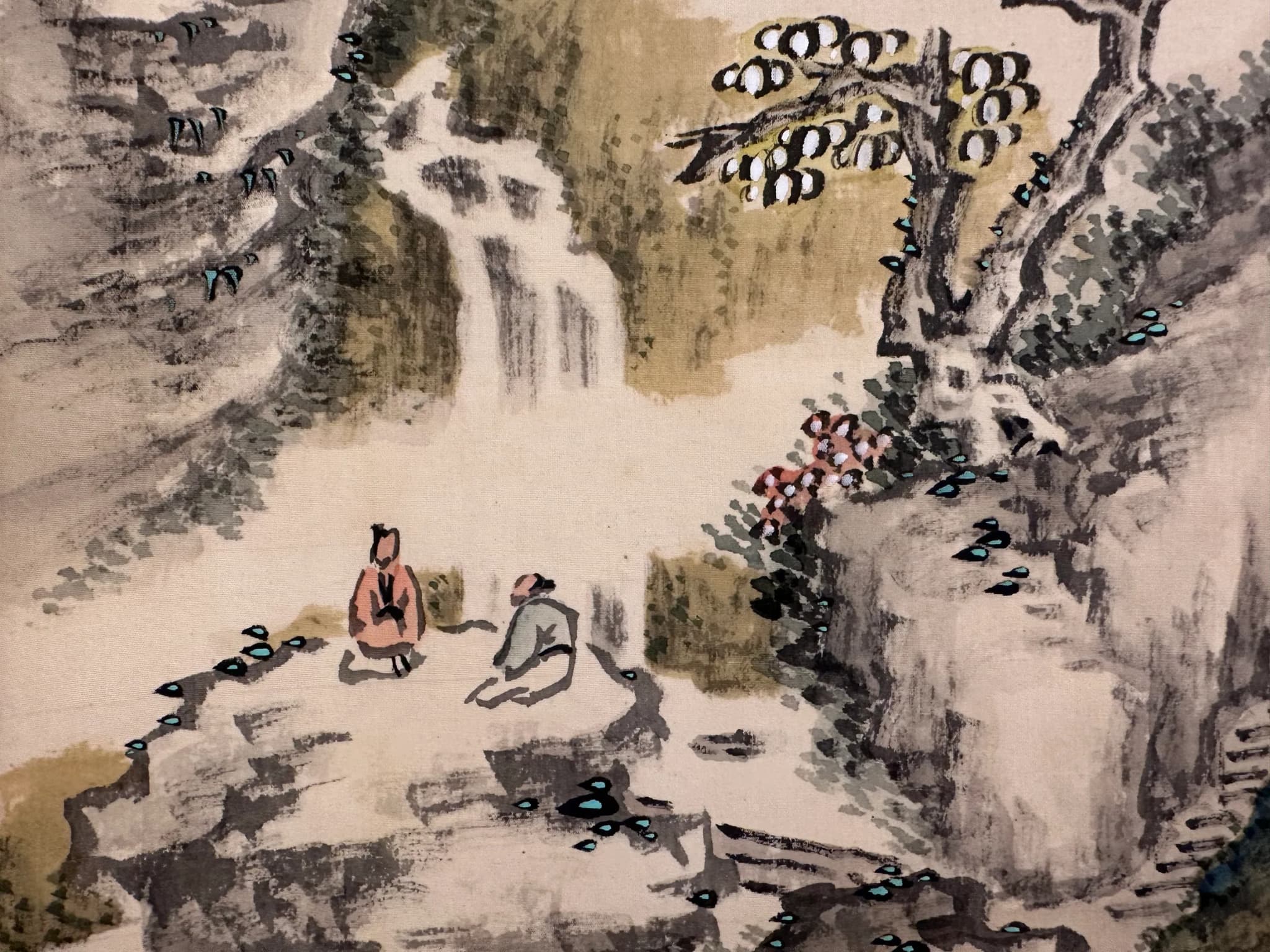
Noble Scholar Contemplating the Waterfall
高士観泉図
- Era
- Kindai (近代)
- Subject
- Landscape (山水)
- Period
- Taishō Period
- Date
- 1922
- Medium
- Hanging scroll; ink and color on silk
- Dimensions
- 25.7 × 131.6 cm (image); 37.5 × 194.4 cm (overall)
- Availability
- Available
Description
Tanaka Hakuin was a leading figure in the Kansai Nanga circle from the Meiji to early Shōwa eras. In 1883, at the age of 17, he moved to Kyoto and studied under Tanomura Chokunyū 田能村直入 (1814–1907), one of the final great masters of Japanese literati painting. Chokunyū recognized Hakuin’s immense talents and adopted him. Hakuin therefore abandoned his original family name Nakagawa and took the name Tanomura Hakuin. He also served in Chokunyū’s private Nanga academy in this era. In 1900, at the age of 34, Hakuin was married into the Tanaka family and since then inherited his wife’s surname. From the late Meiji to the Taishō period, Hakuin travelled extensively across Japan, Korea, and China to sketch landscapes directly from nature. Meanwhile, he opened several painting academies in Japan, such as the Painting Zen Studio in Yamaguchi Prefecture where he inscribed the box for this painting. Beyond his own artistry, Hakuin was celebrated as the authority on authenticating works of the Tanomura Chikuden lineage.
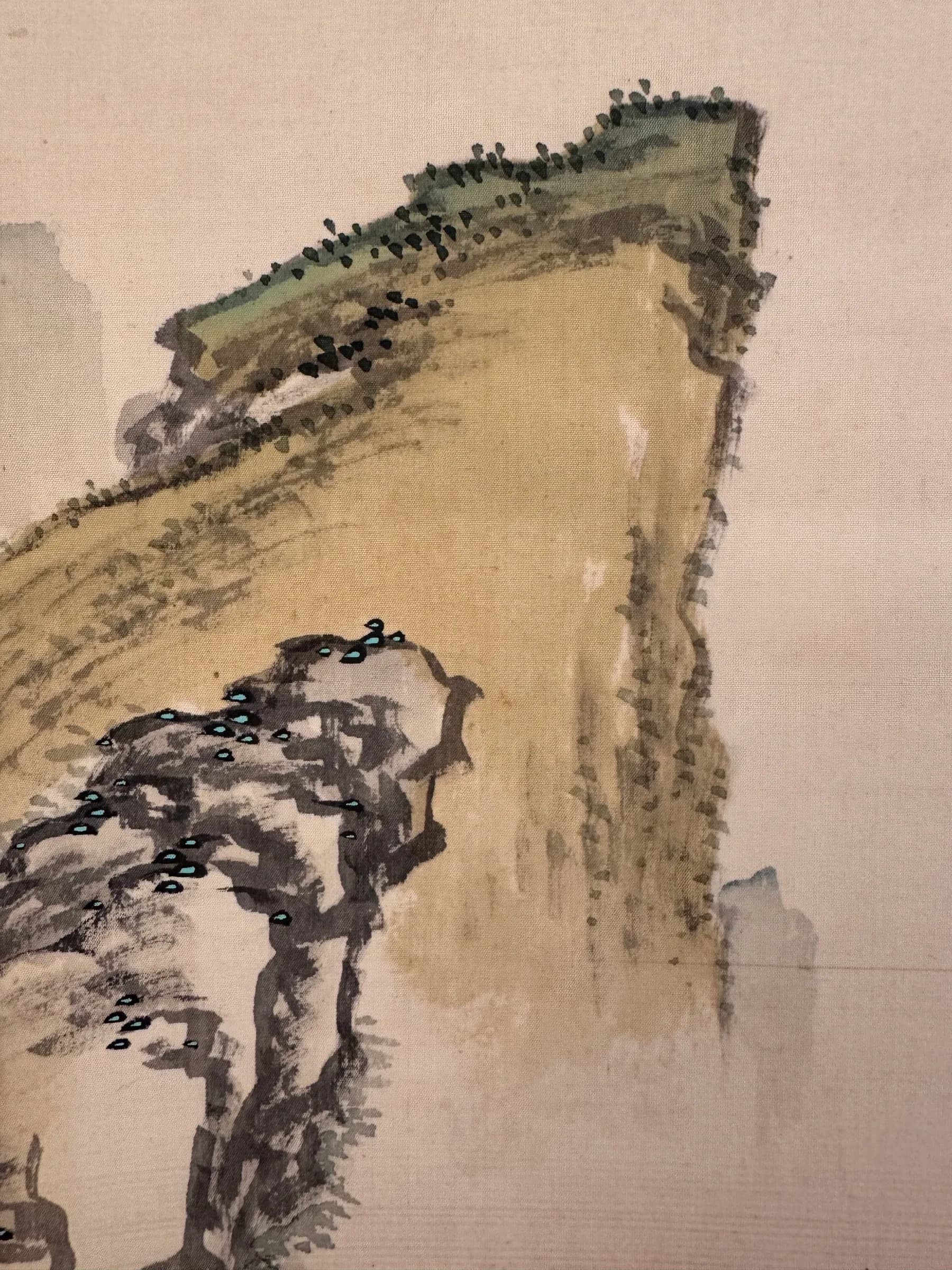
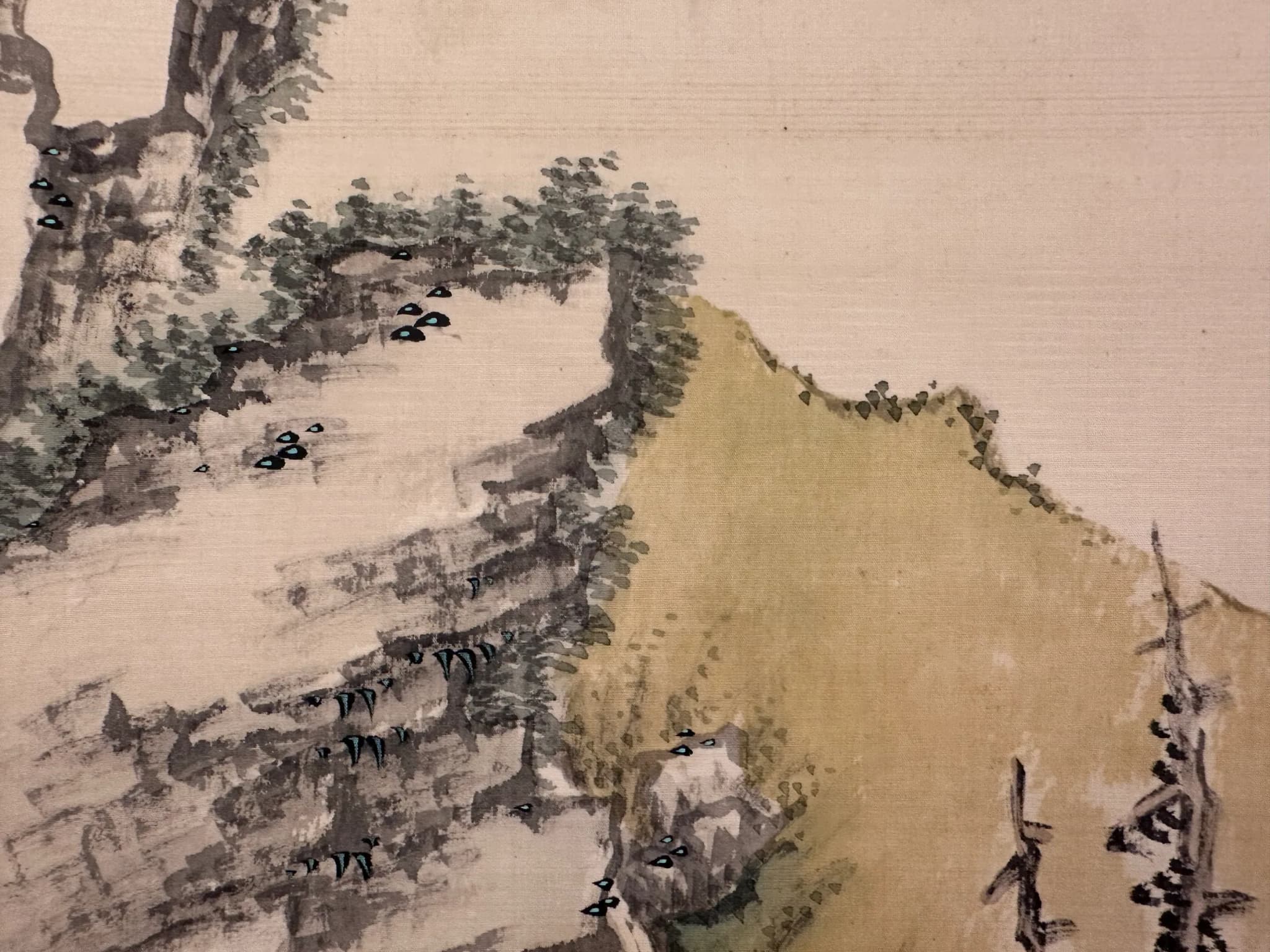
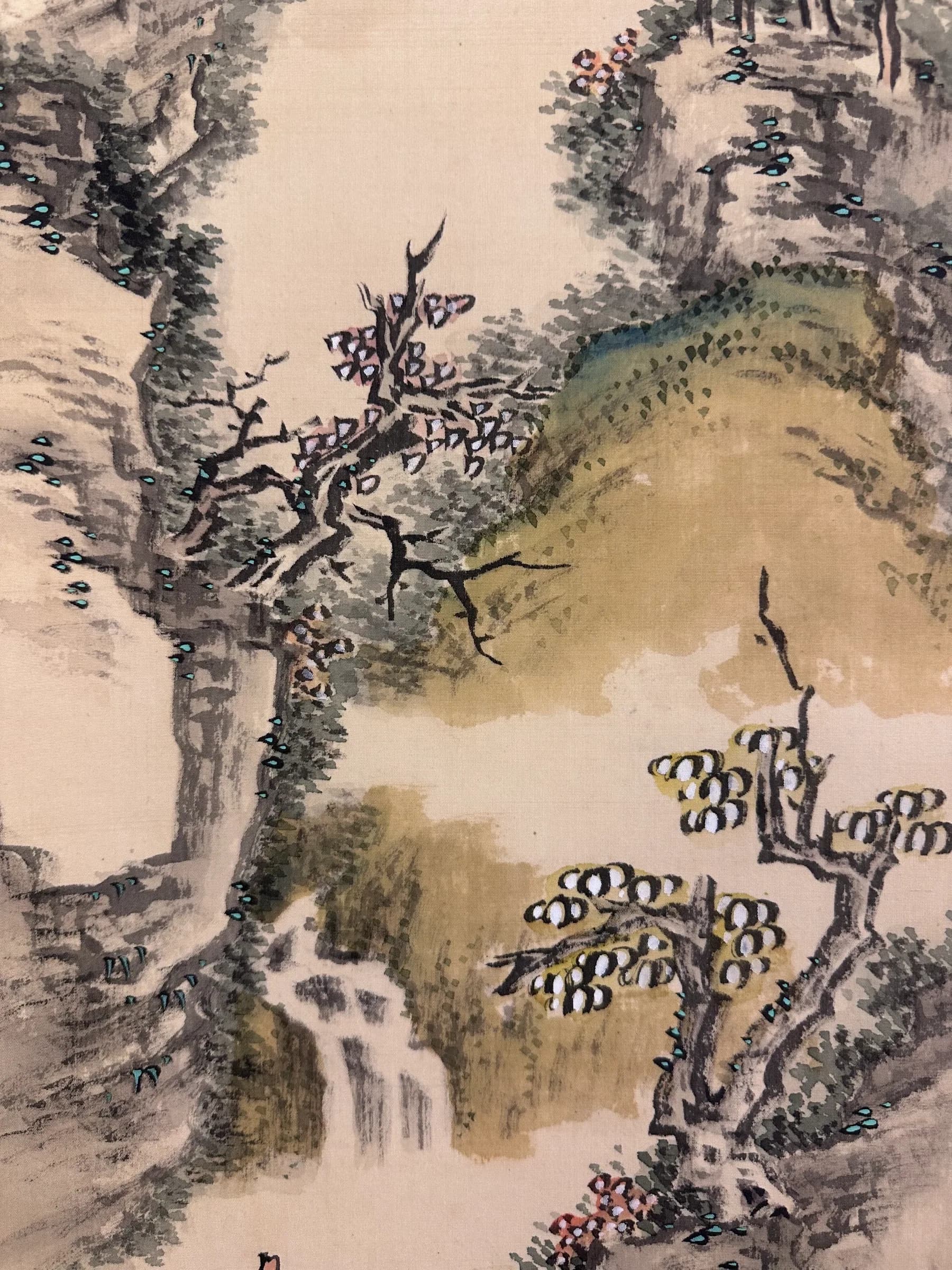
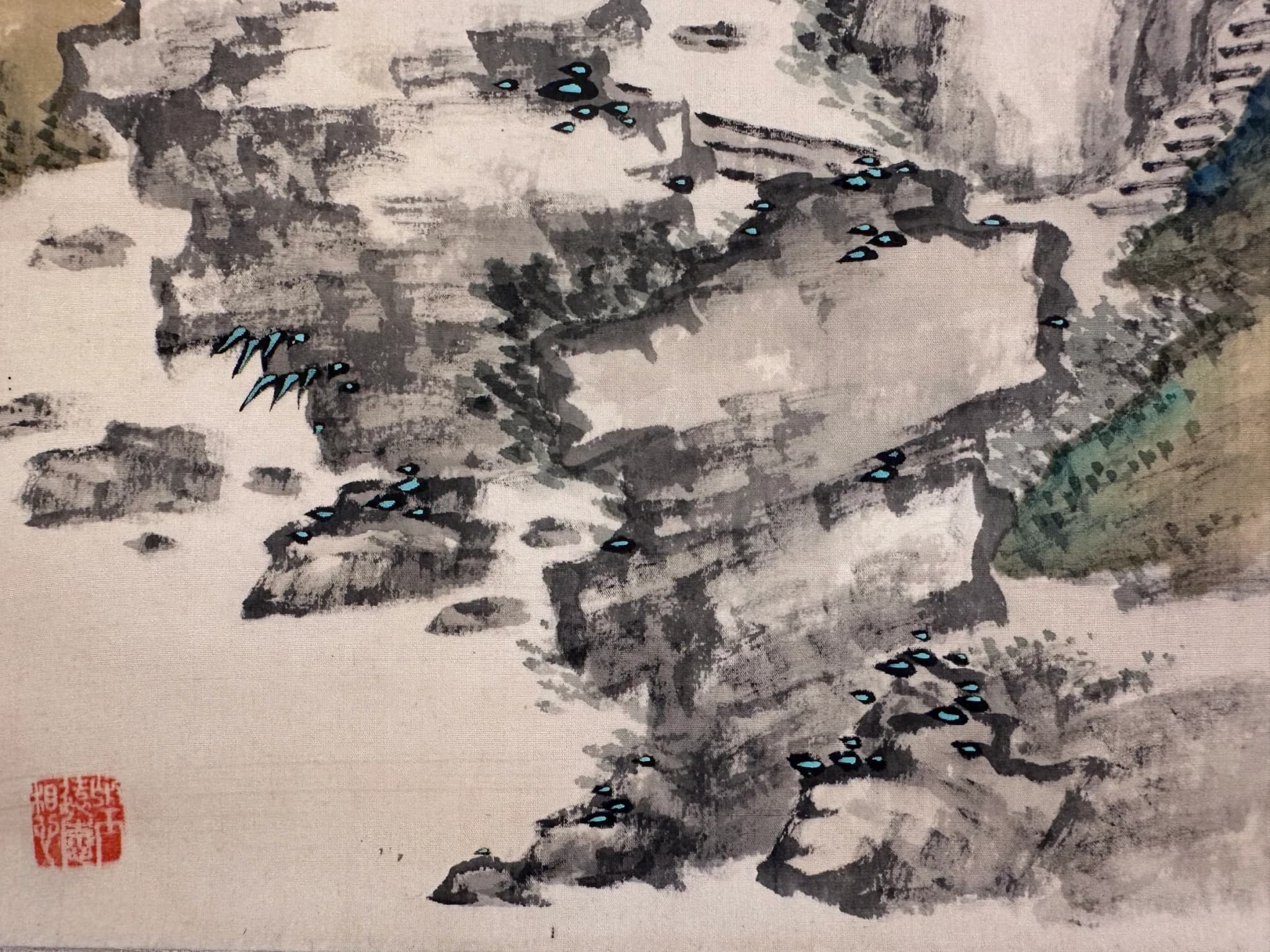
This painting can be categorized as one of Hakuin’s “plein-air” landscapes inspired by his travels to Korea. Located on the east coast of modern-day North Korea, Mount Kumgang holds immense cultural significance across the Korean Peninsula. To depict its distinctive terrain, Hakuin applied uncolored, grey-ink strokes to render the rugged granite cliffs, while reserving blue-green washes for the vegetation-covered slopes. Mount Kumgang is equally renowned for its water features. The cascade in this composition evokes iconic sites such as the Kuryong Fall with a 74-meter drop partially concealed by clouds or the region’s many other celebrated waterfalls.
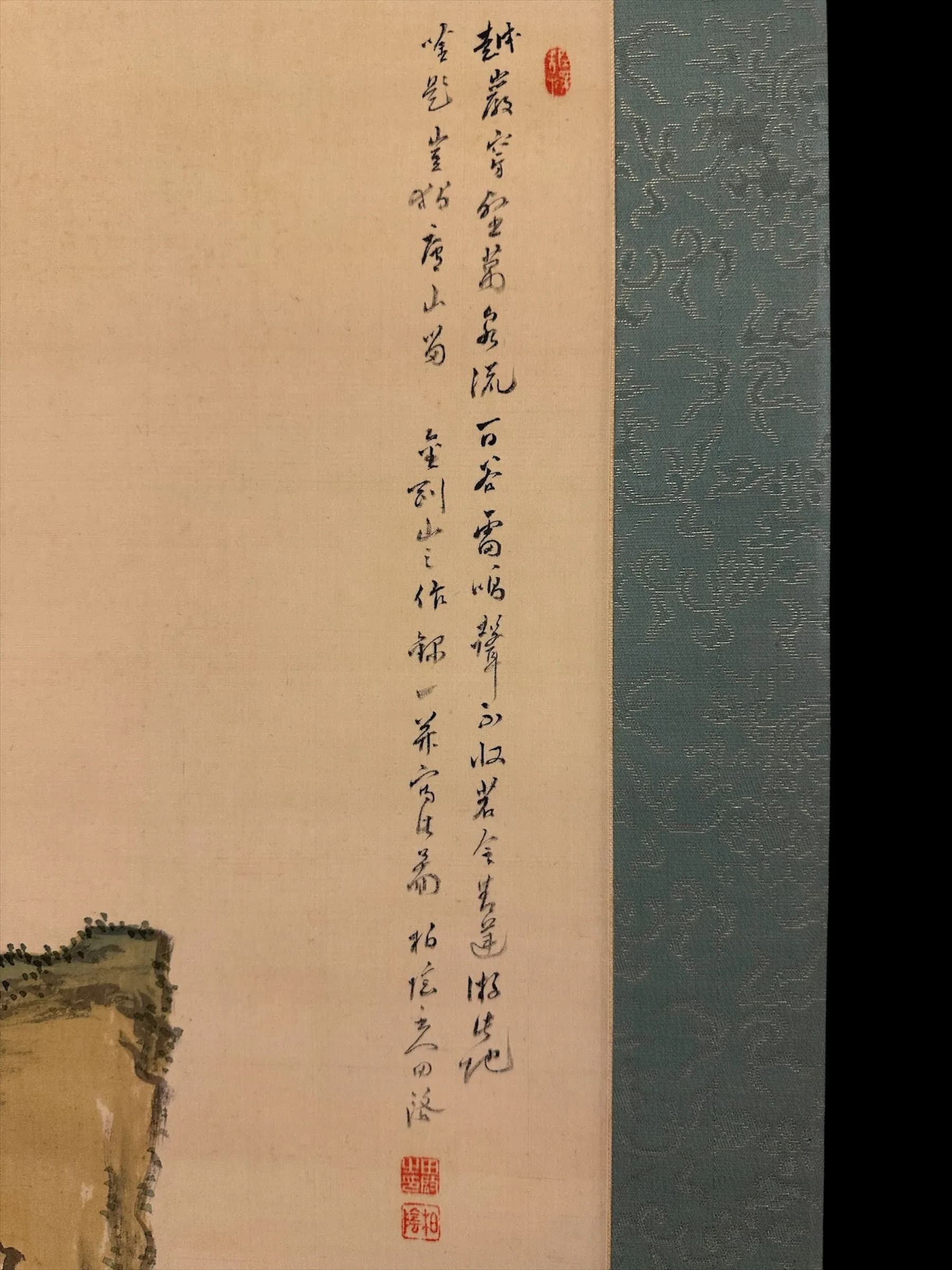
In the last couplet of his inscription, Hakuin engages in a trans-historical dialogue with the Tang Dynasty poet Li Bai, referencing Li’s canonical verses on Mount Lu’s roaring waterfalls: Plunging down three thousand feet, it seems as though the Milky Way has fallen from the Ninth Heaven 飛流直下三千尺 疑是銀河落九天. This literary allusion exemplifies the traditional scholarly practice of conversing with past masters to align oneself within the orthodox lineage of literati art and poetry.
Painting inscription
越巖穿壑萬泉流
百谷雷鳴聲不收
若令莫逆游此地
唫題豈獨廬山留
Leaping over crags and piercing through ravines, ten thousand springs cascade;
A hundred valleys echo with a thunderous roar that never ceases.
If my bosom friends could journey to this wondrous place,
How could their inscribed poems be left only at Mount Lu?
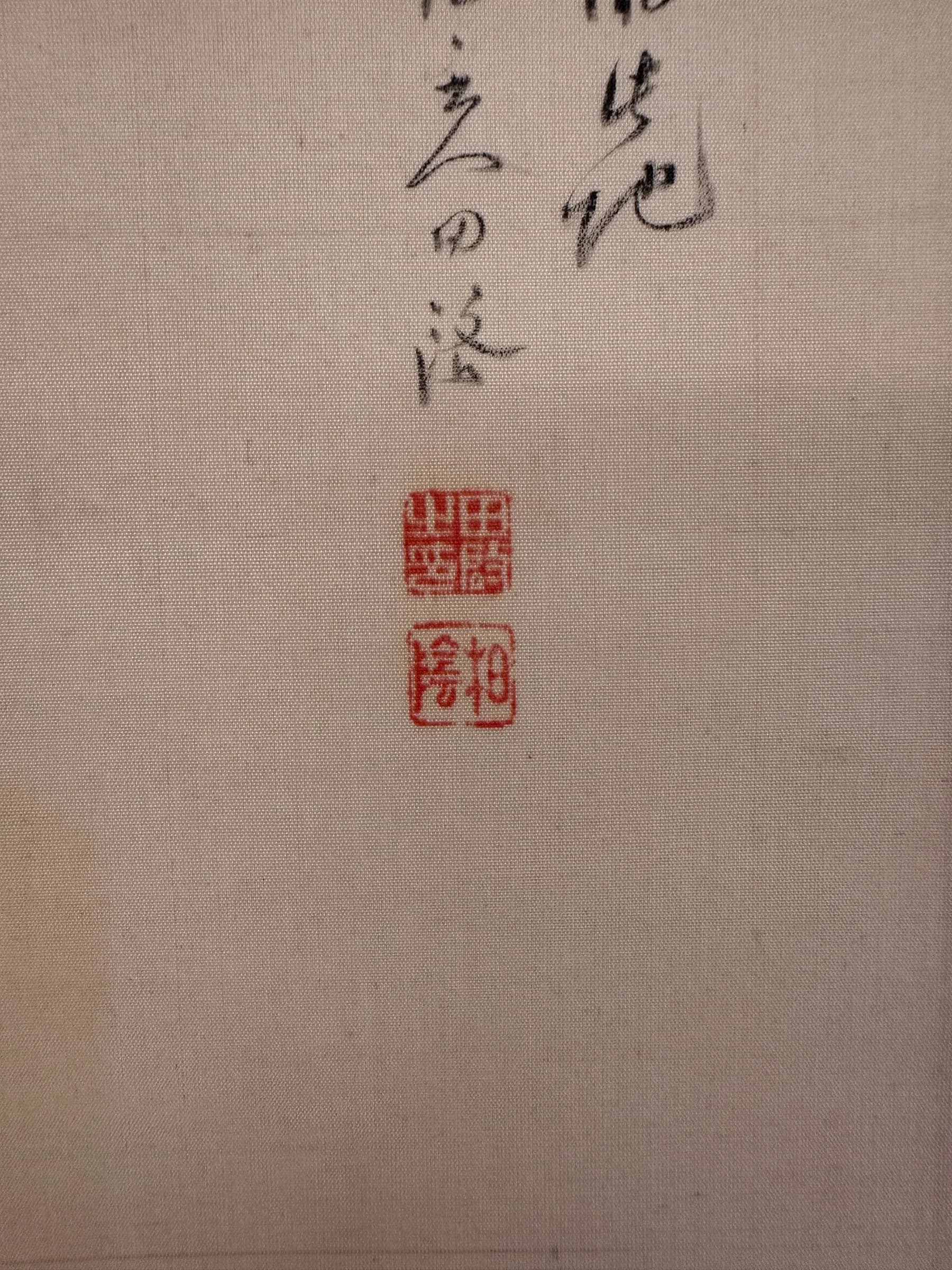
金剛山之作録一并寫此図 柏陰主人田洛 (Recorded the poem composed at Mount Kumgang and painted this picture—Den Raku, Master Hakuin)
Seals
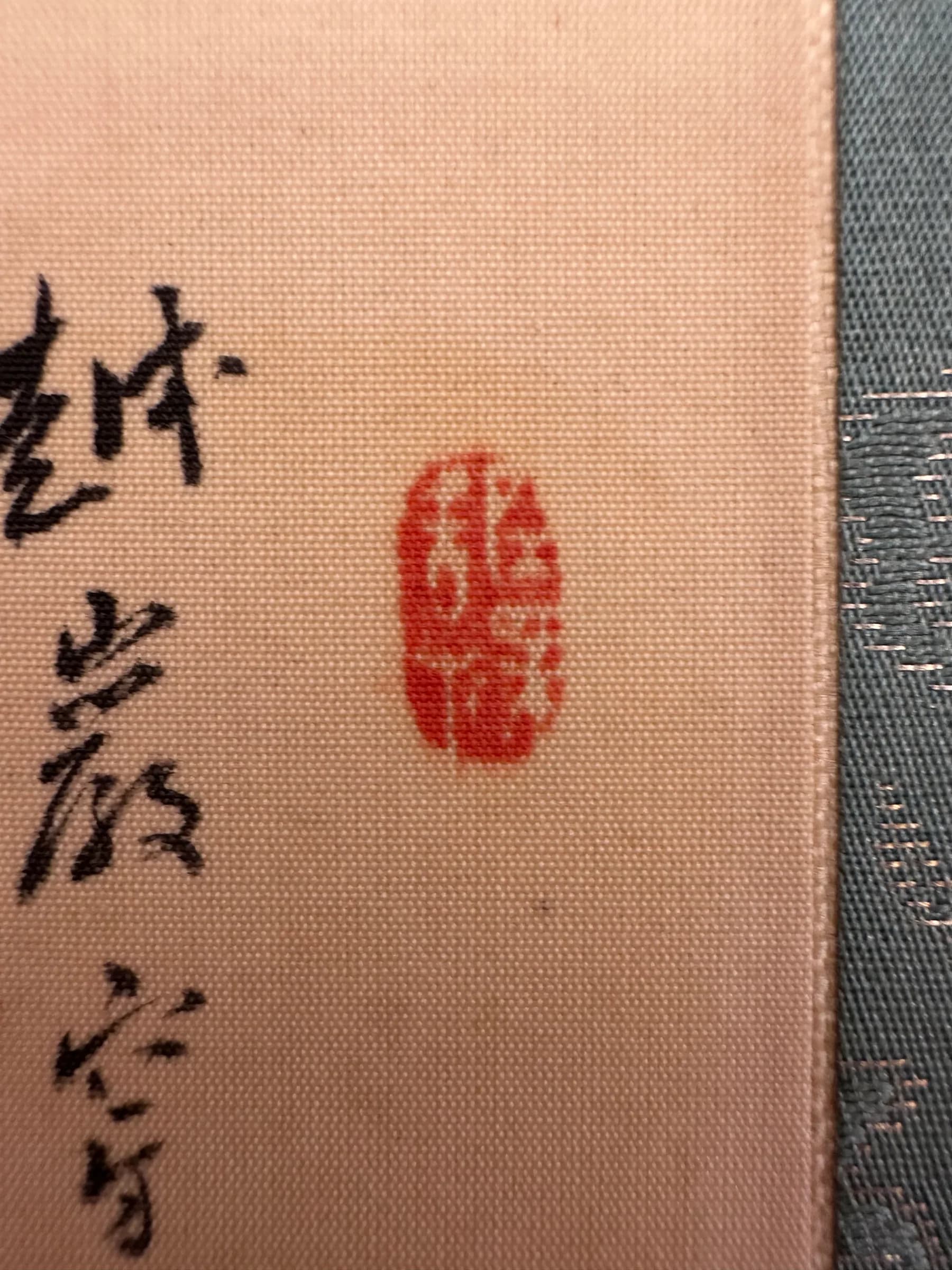
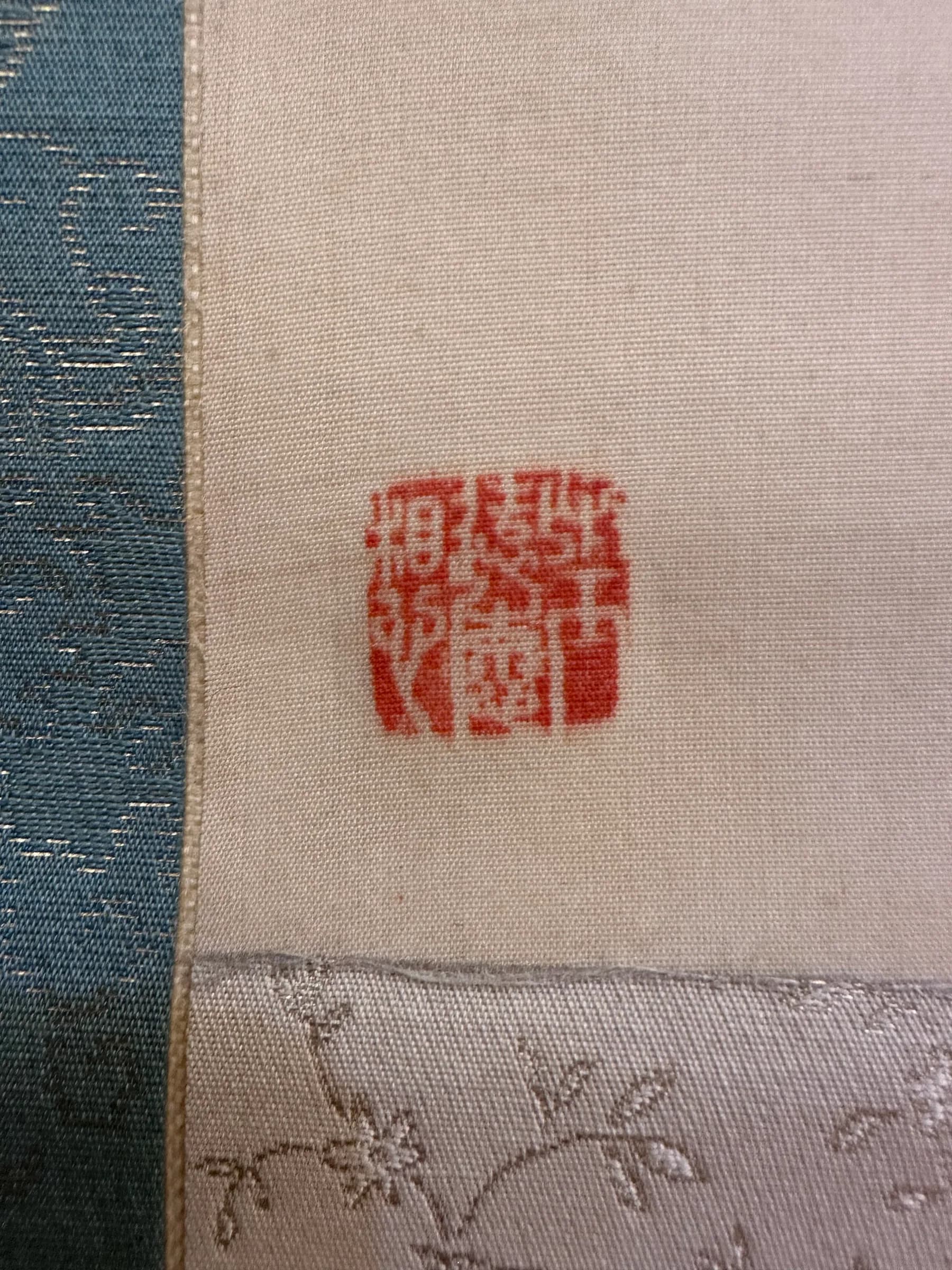
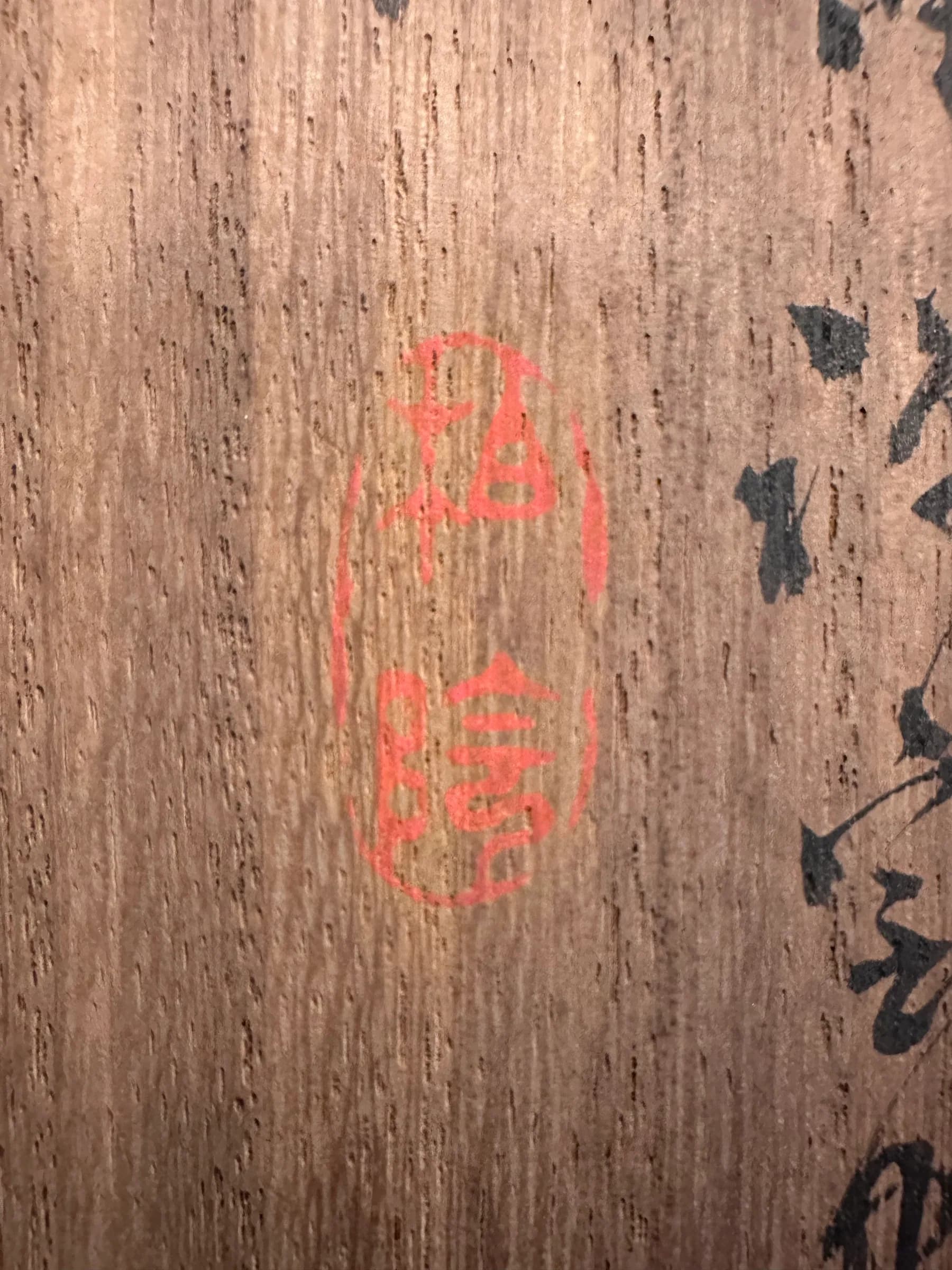
(kanbōin: oval intaglio seal) kōtaku tenka 厚澤天下; (square intaglio seal) Den Kei no in 田啓之印; (square relief seal) Hakuin 柏陰; (yūin: square intaglio seal) bōen kaisō 望遠懐想; (box oval relief seal) Hakuin 柏陰
Boxed characters are a tentative reading of the impression.
Box inscription
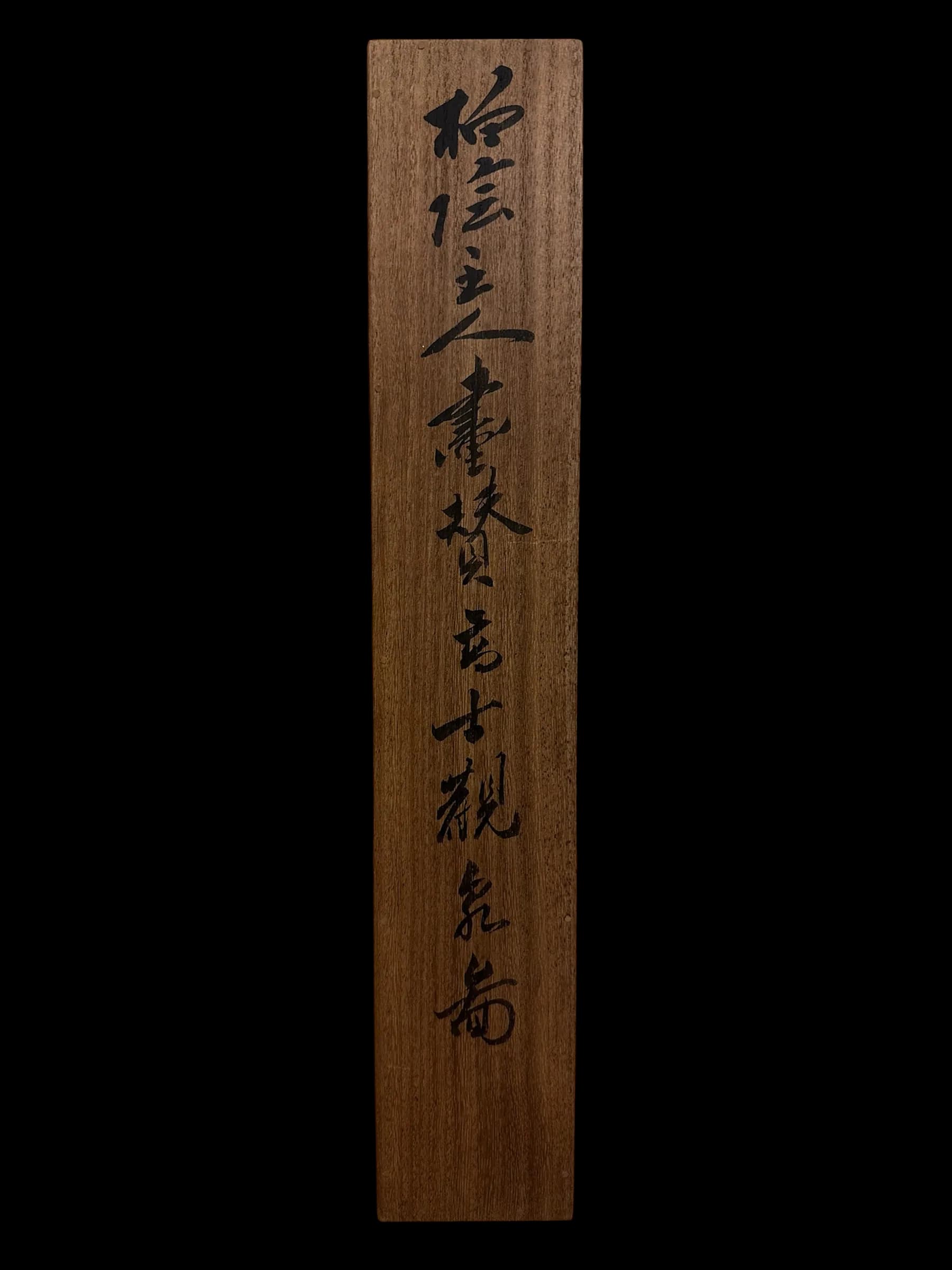
(front): 柏陰主人畵賛高士観泉図 (Noble Scholar Contemplating the Waterfall, painted and praised by Master Hakuin)
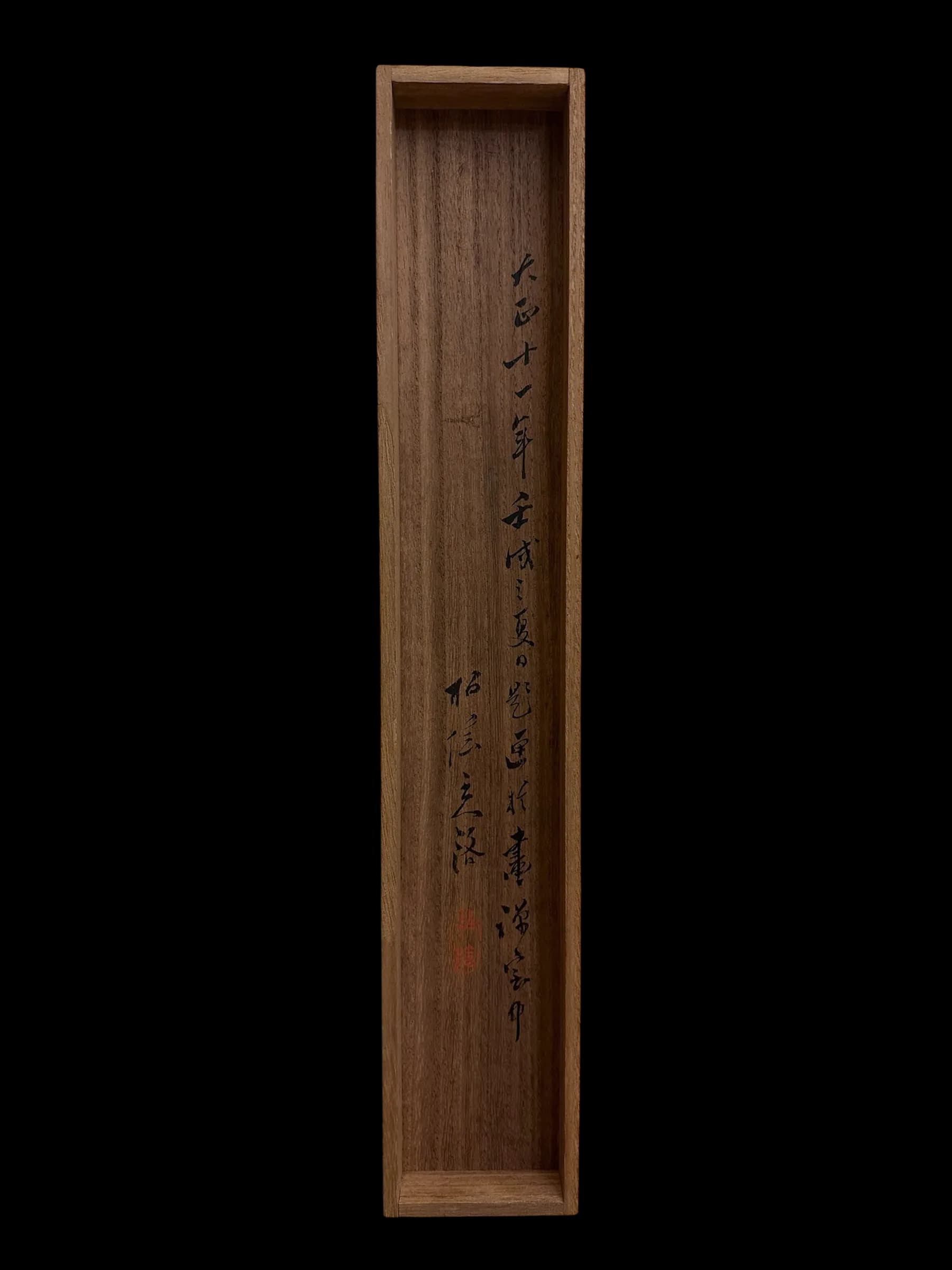
(verso): 大正十一年壬戌之夏日題匣於畫禅室中 柏陰主人洛 (In summer of the 11th year of Taishō, the mizunoe-inu year [1922], inscribed the box in the Painting Zen Studio—Raku, master Hakuin)