View 1 of 21
Kanō Uhō (1866–1933)
加納雨篷
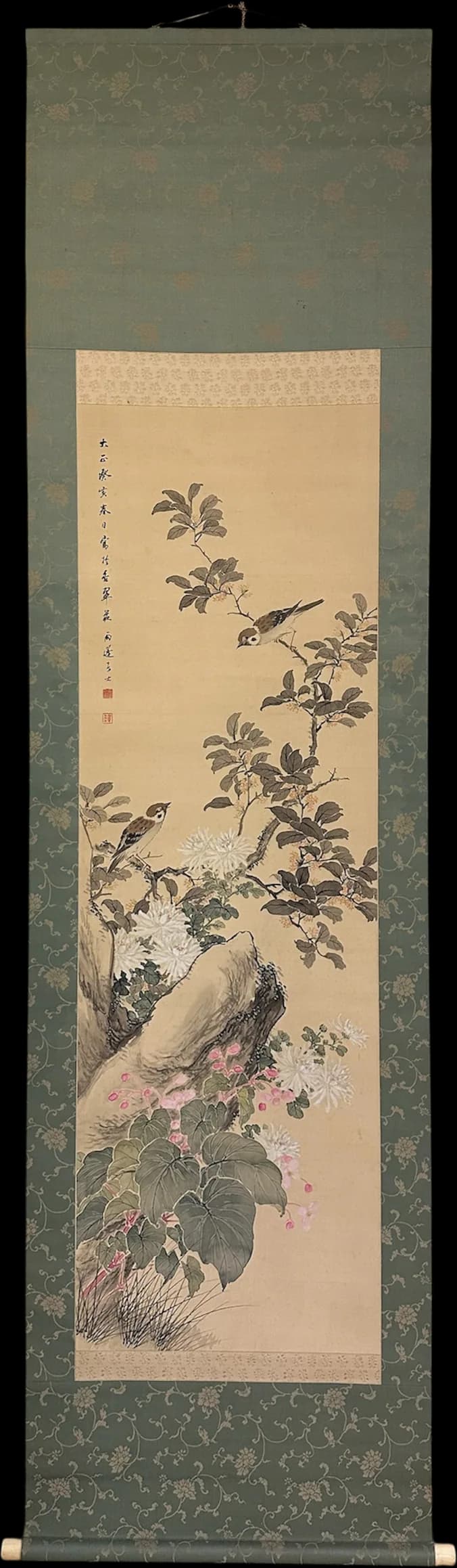
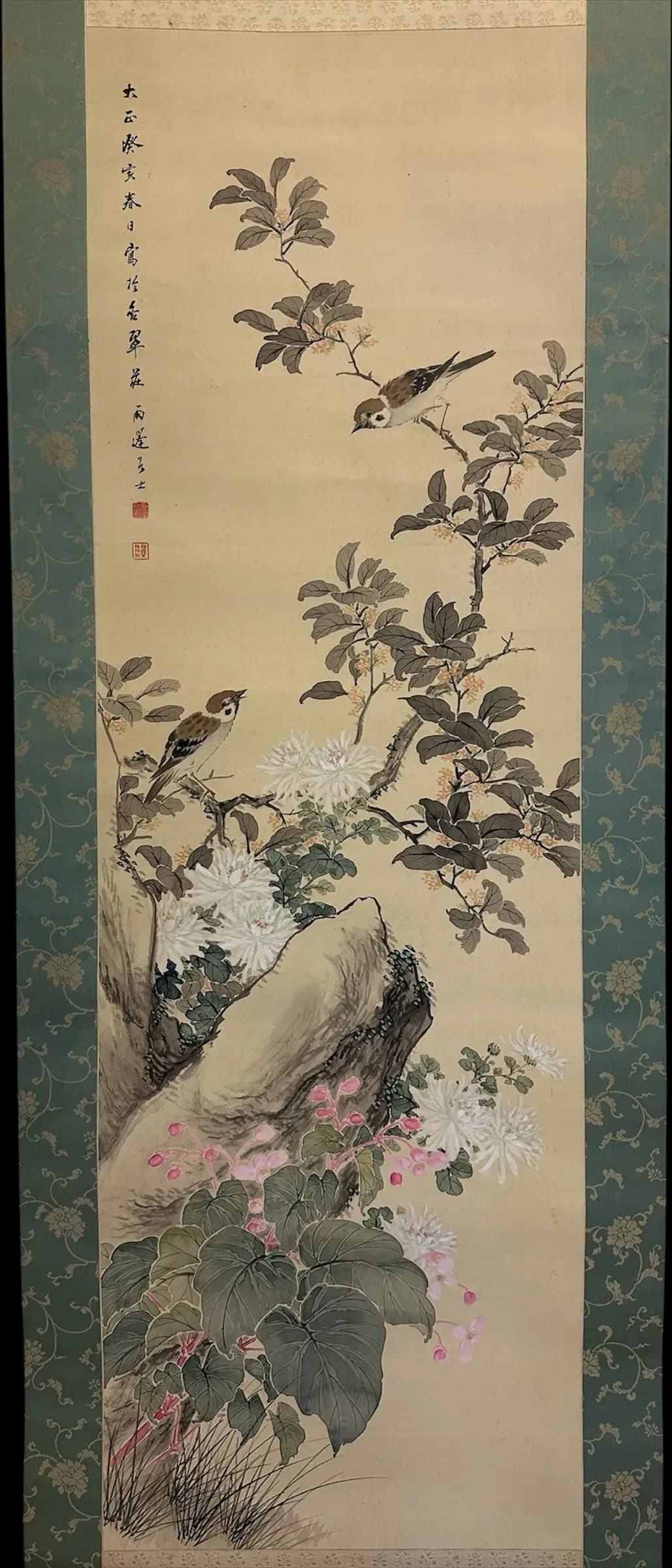
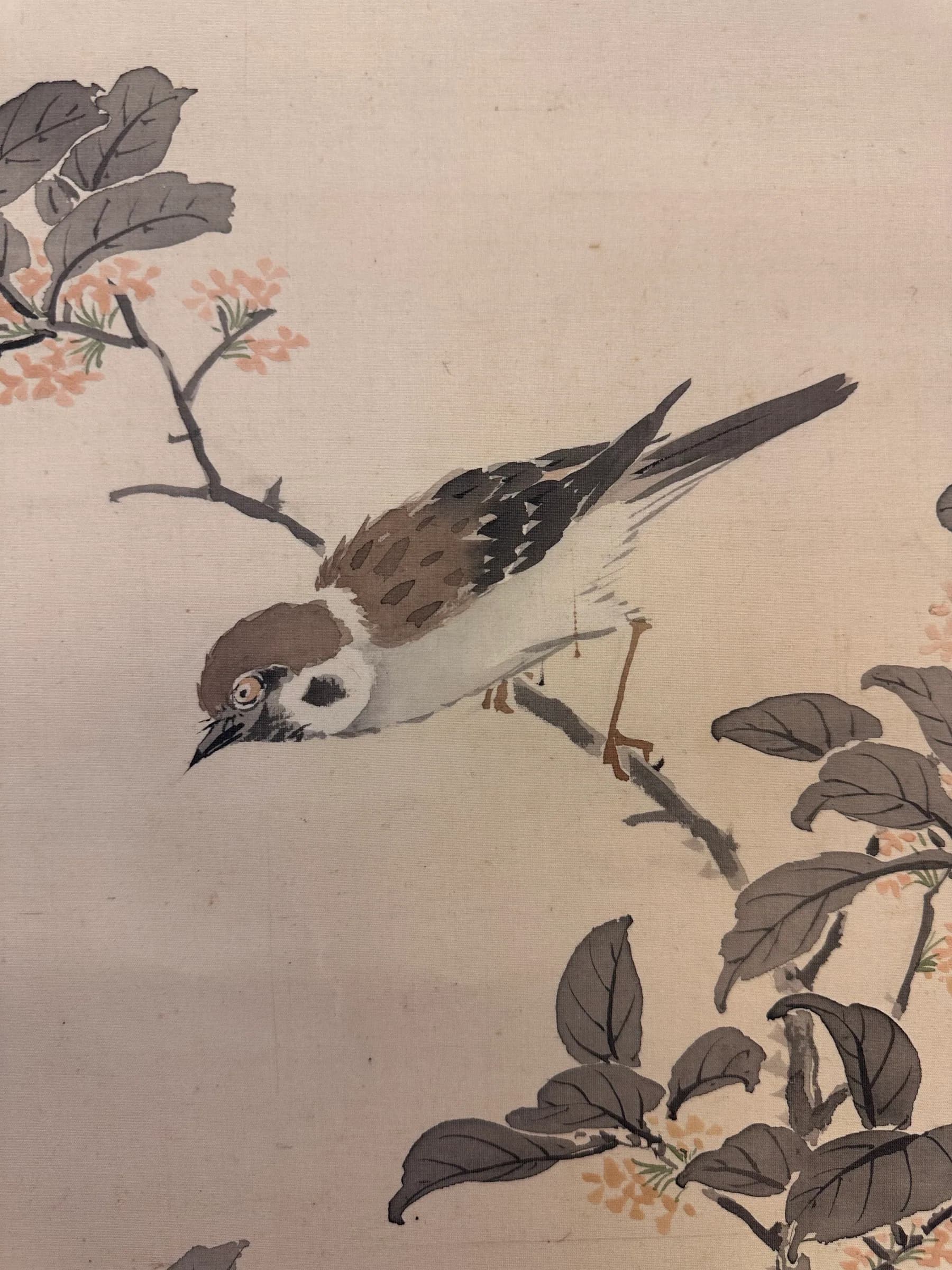
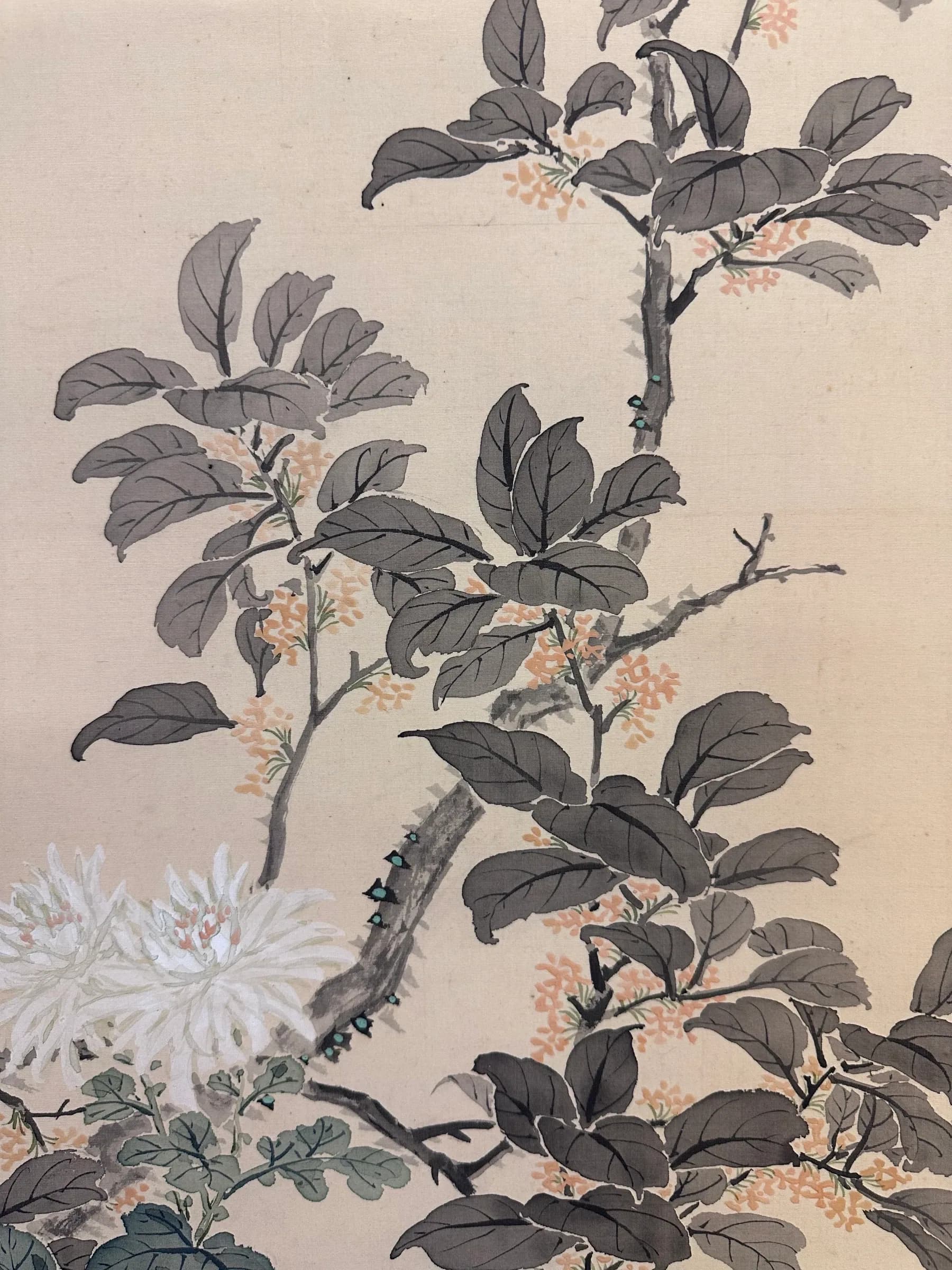
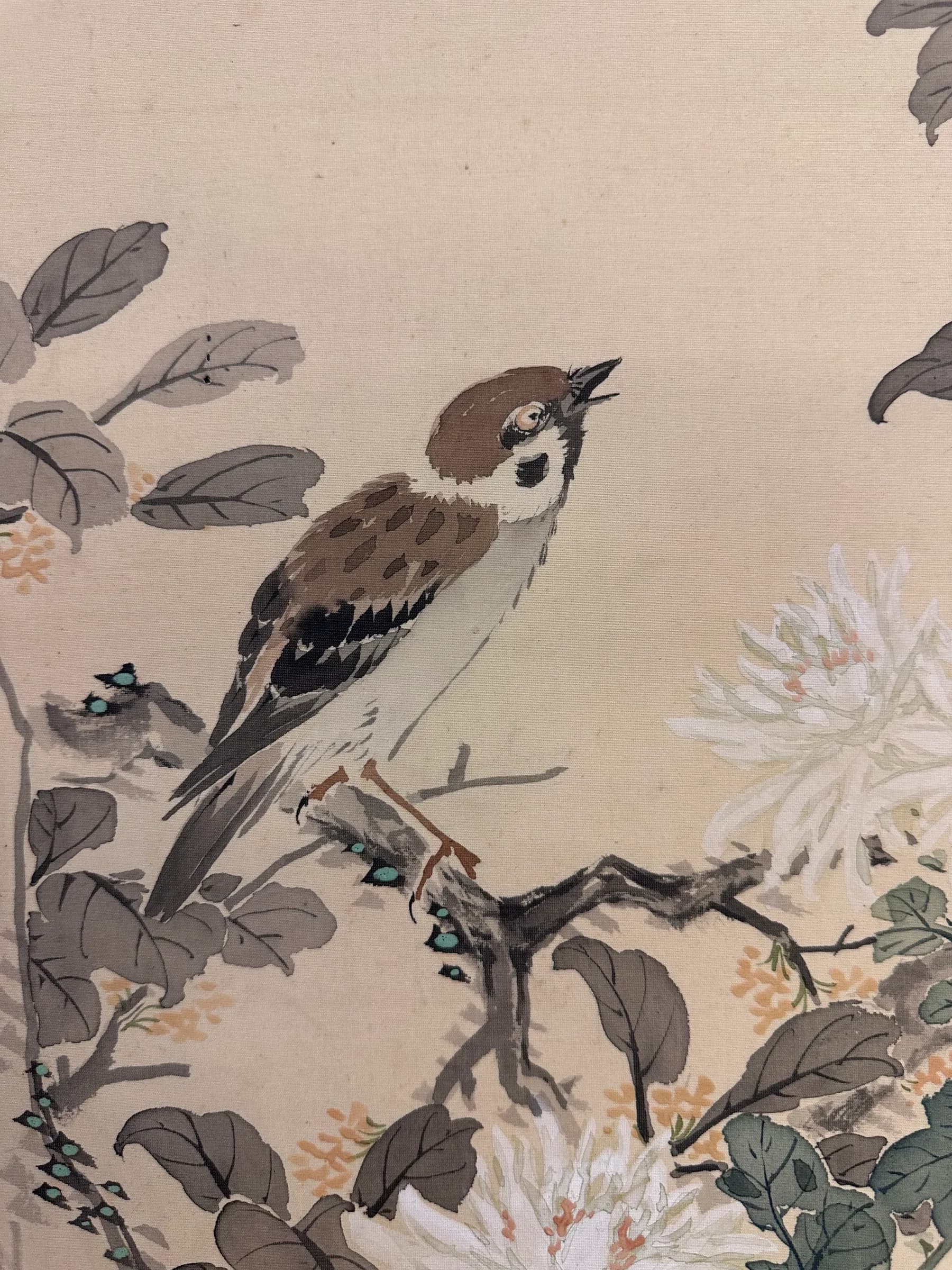
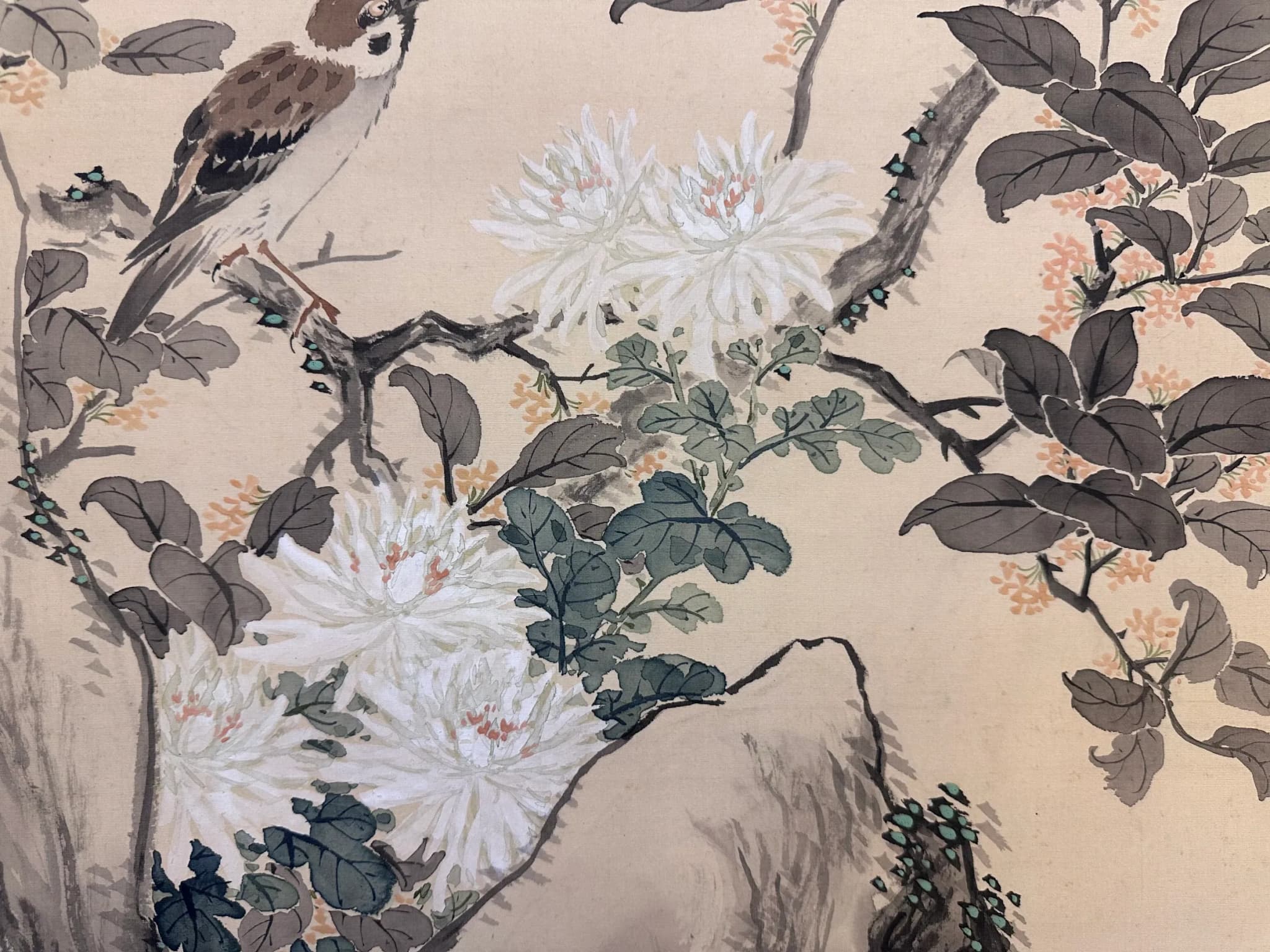
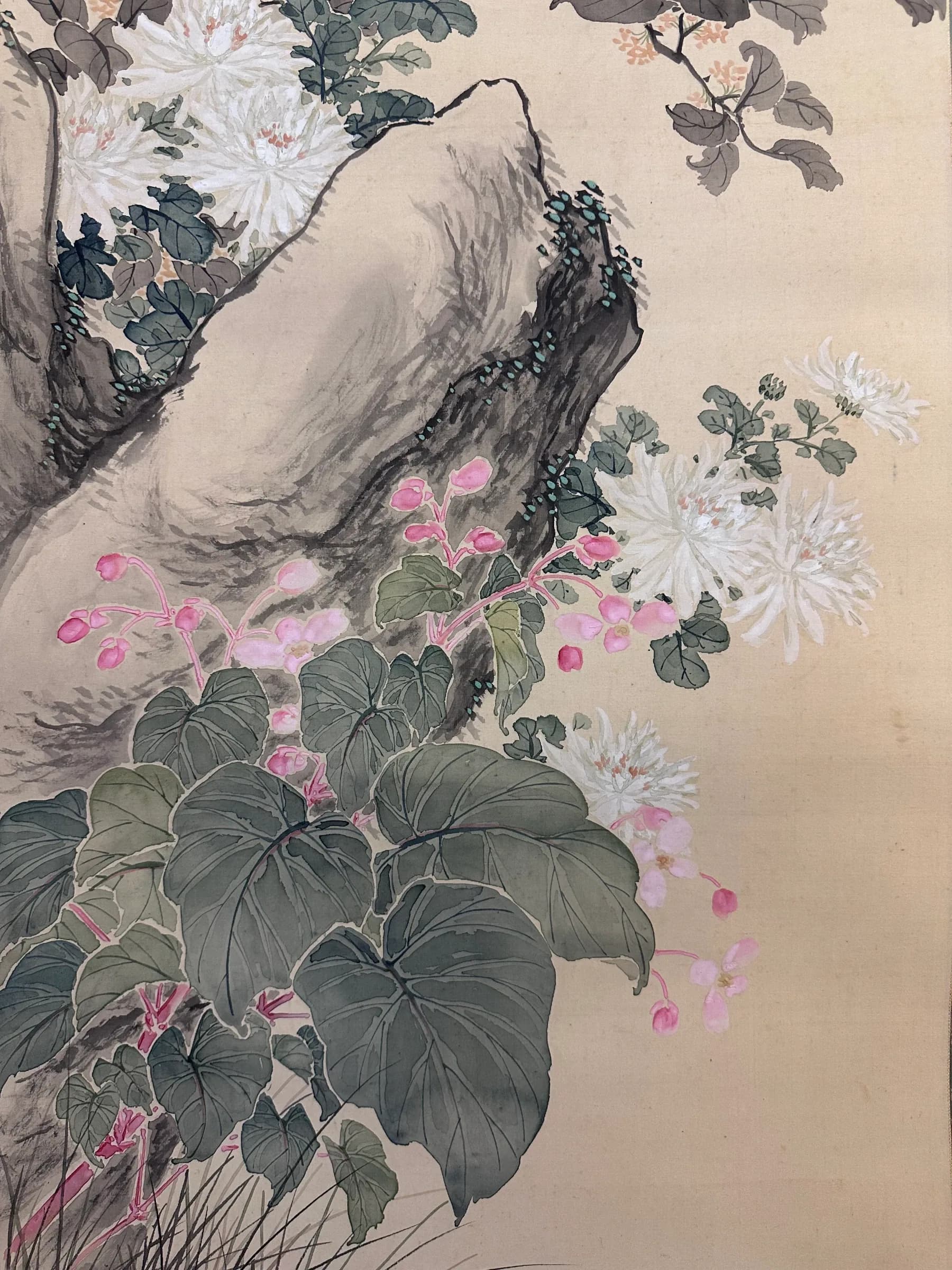
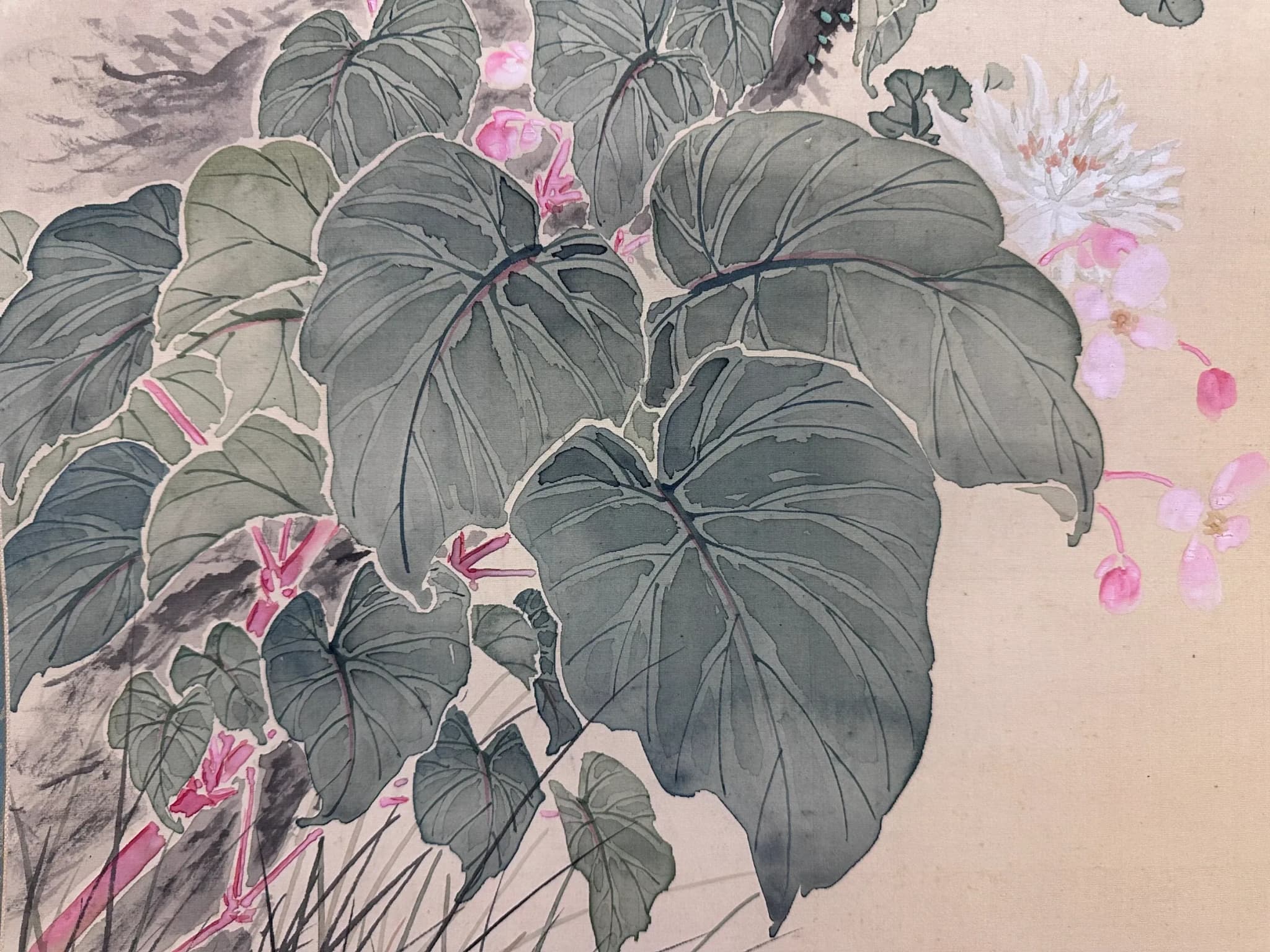
Autumn Flora and Pair of Sparrows
秋卉雙雀図
- Era
- Kindai (近代)
- Subject
- Birds and Flowers (花鳥)
- Period
- Taishō Period
- Date
- 1923
- Medium
- Hanging scroll; ink and color on silk
- Availability
- Not for sale
Description
Kanō Uhō was a seminal painter who guided Kyushu’s traditional literati art into the modern era. Early in his career, he trained under Hoashi Kyōu 帆足杏雨, a distinguished pupil of Tanomura Chikuden, while mastering Chinese classics and Japanese waka poetry to achieve the literati ideal of unifying poetry, calligraphy, and painting. A dedicated Zen practitioner, he studied at Bairin-ji Temple in Kurume and refined his technique under painter Moriyama Shōhan 守山湘颿 at Daiitoku-ji Temple in Nagasaki. Since 1906, Uhō resided in Tokyo and supported the painting academy of his fellow townsman Shirasu Shinka 白須心華. Uhō’s artistry became increasingly recognized in his later years, with work entering the collection of the Ministry of the Imperial Household.
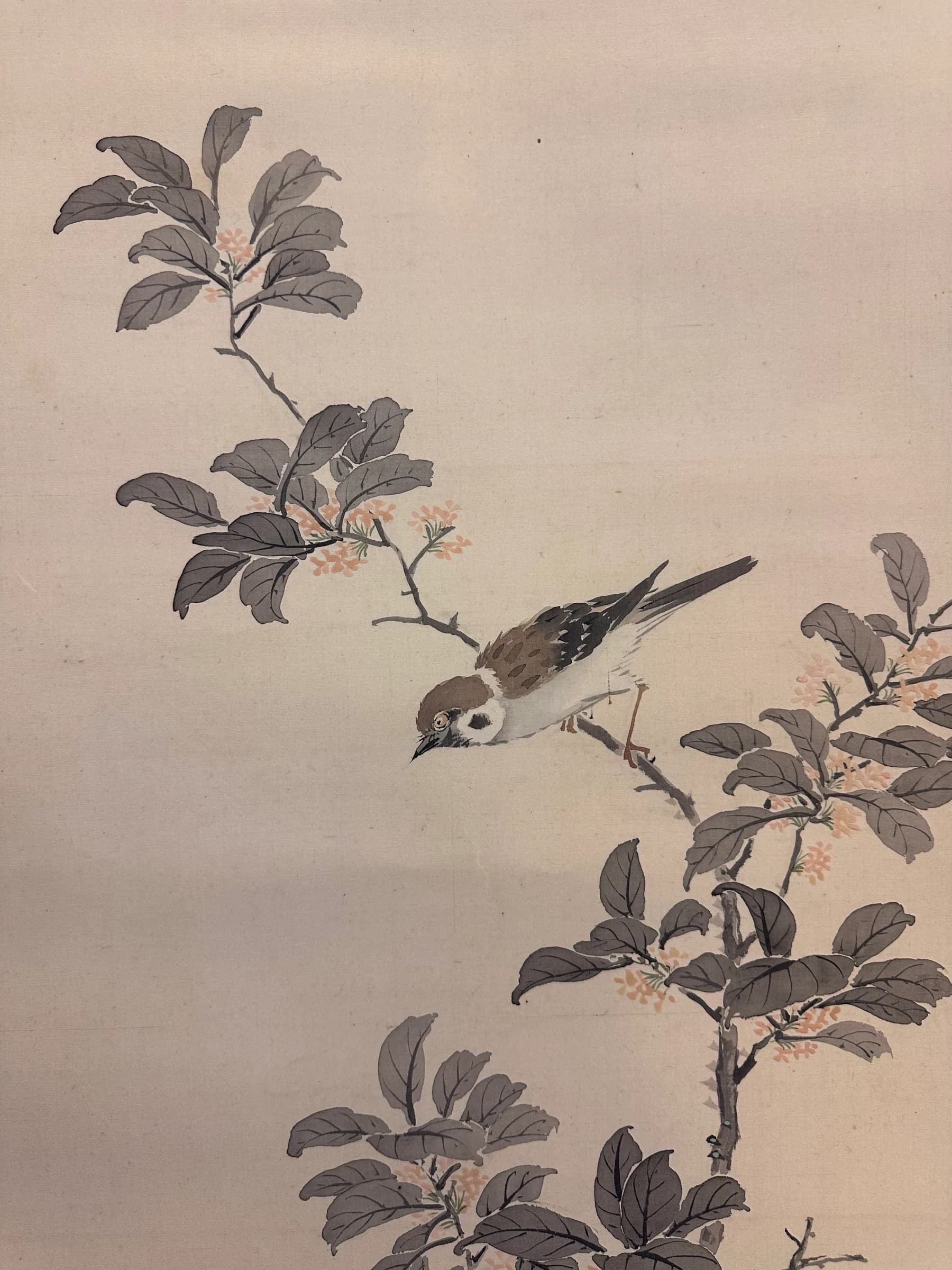
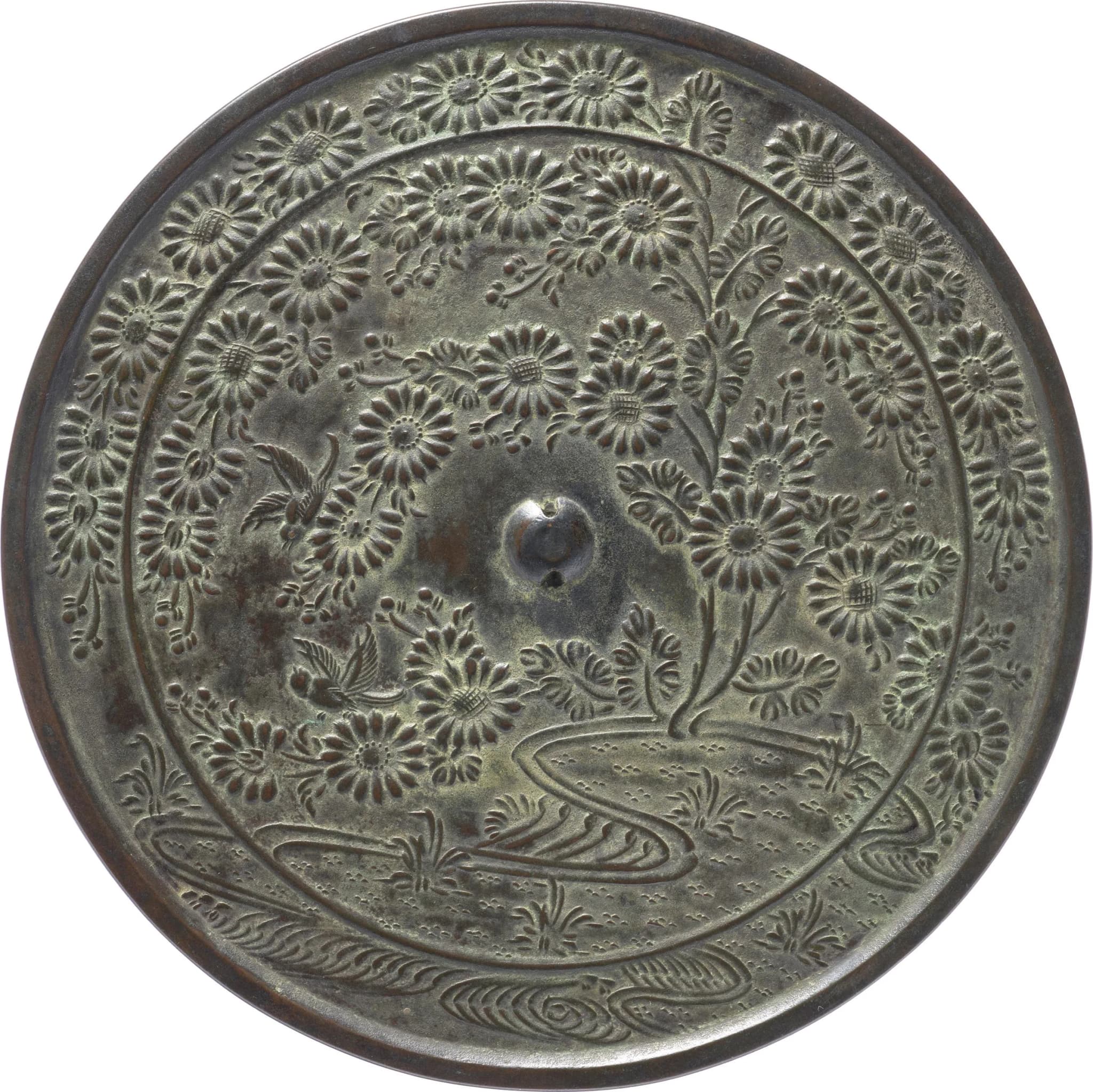
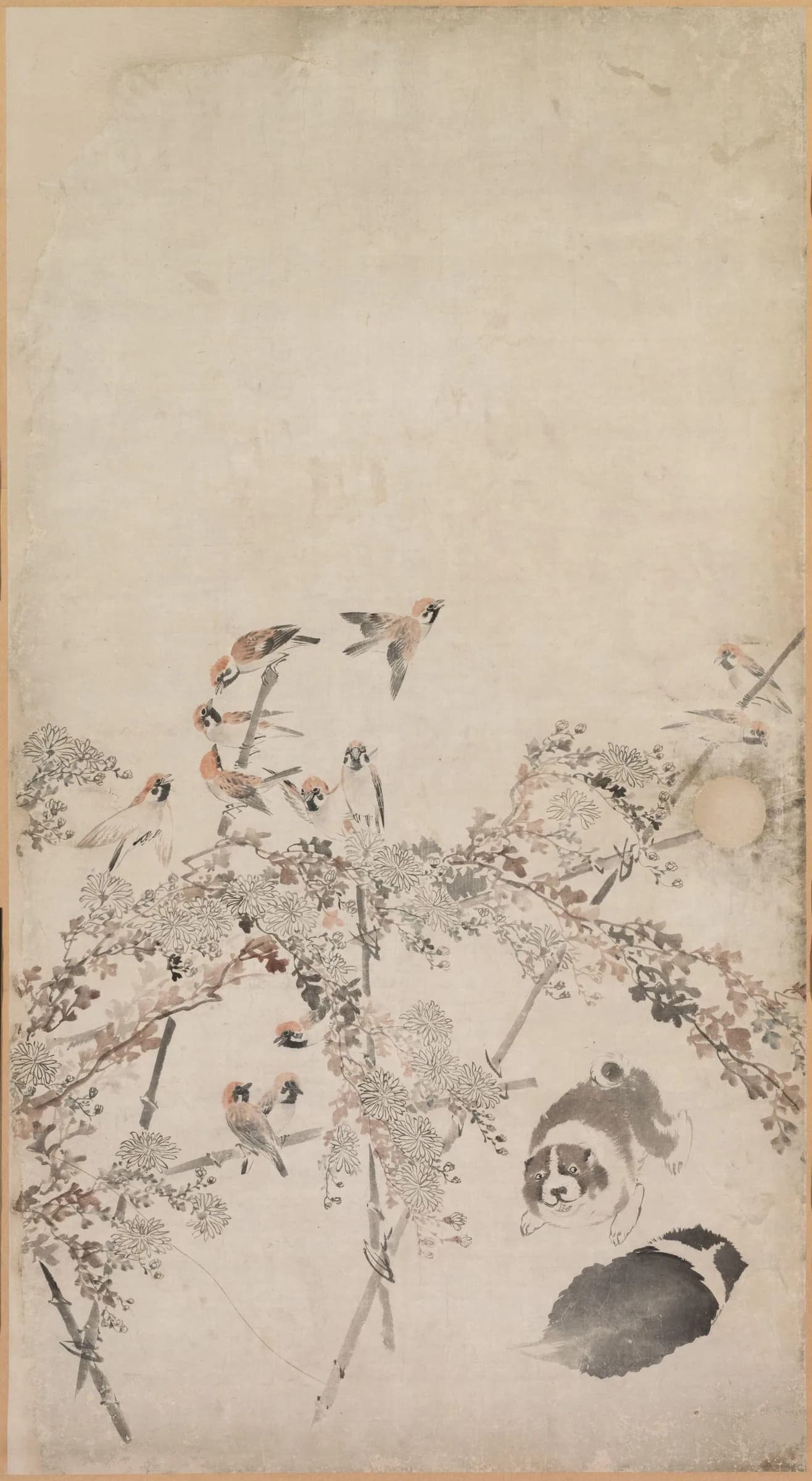
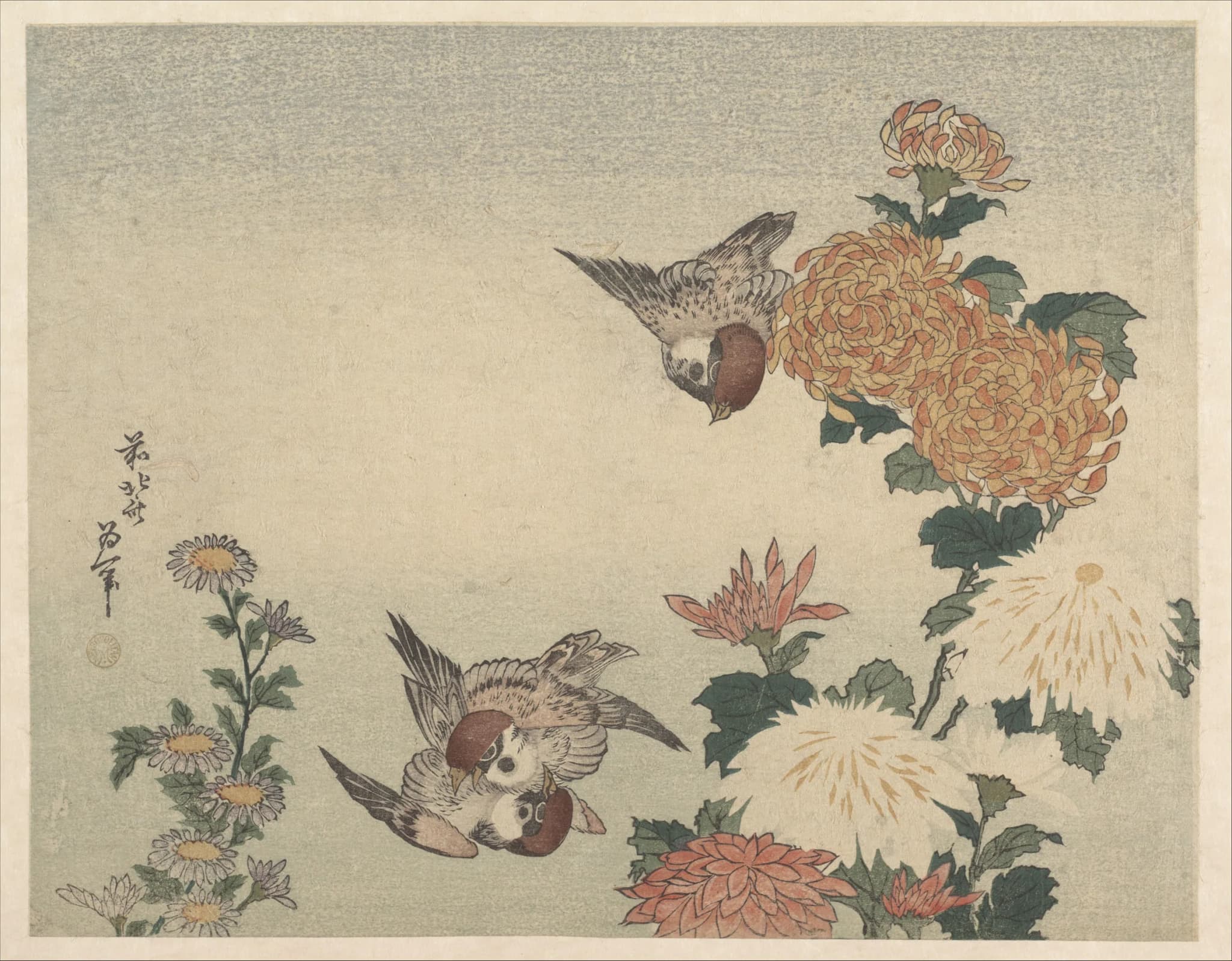
While sparrows are traditionally paired with bamboo in Chinese literati painting, combining them with chrysanthemums is a uniquely Japanese motif. Ever since the rise of Kokufu (indigenous) culture during the Heian period (794–1185), double sparrows amid chrysanthemum branches frequently decorated Japanese bronze mirrors 和鏡 used in Shinto rituals. By the Edo period (1603–1867), this subject evolved into a non-religious, purely decorative motif, as seen in Katsushika Hokusai’s woodblock prints and Nagasawa Rosetsu’s screens.
Uhō fully integrated this indigenous theme into the Nanga canon. In the Qing-dynasty tradition of pictorial rebuses, the chrysanthemum, a symbol of longevity, and sparrows, representing thriving descendants, combine to form an auspicious visual pun.
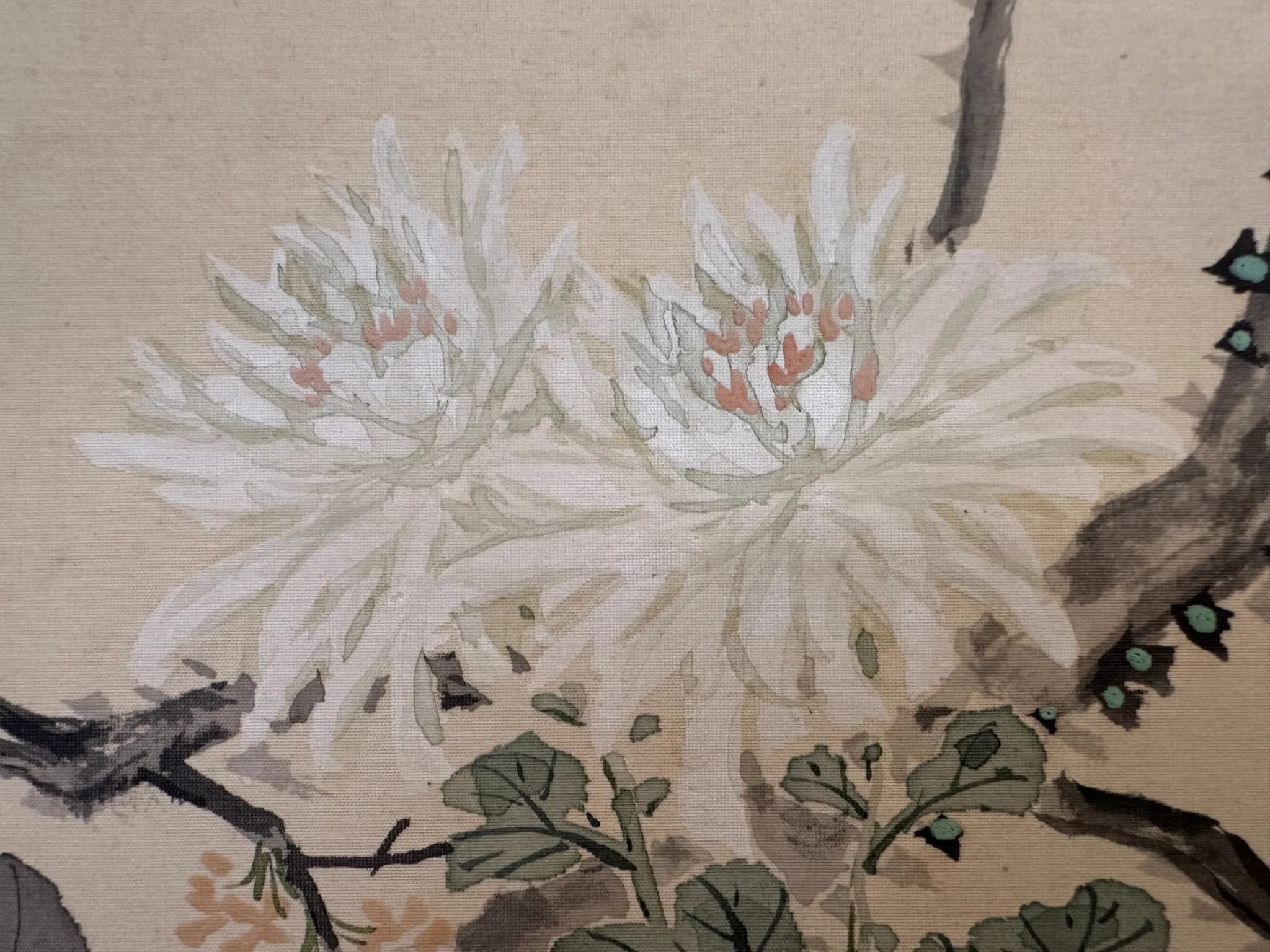
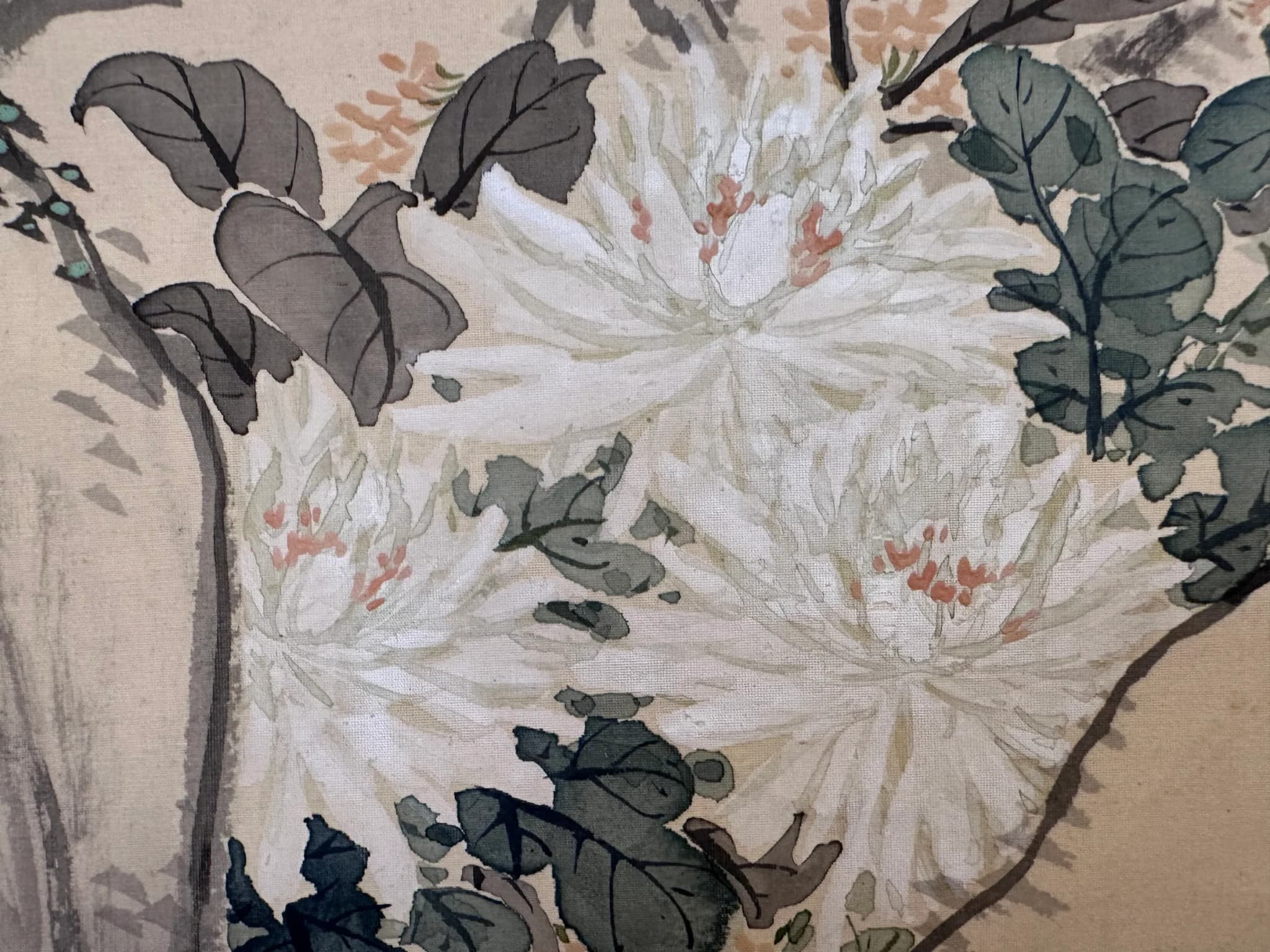
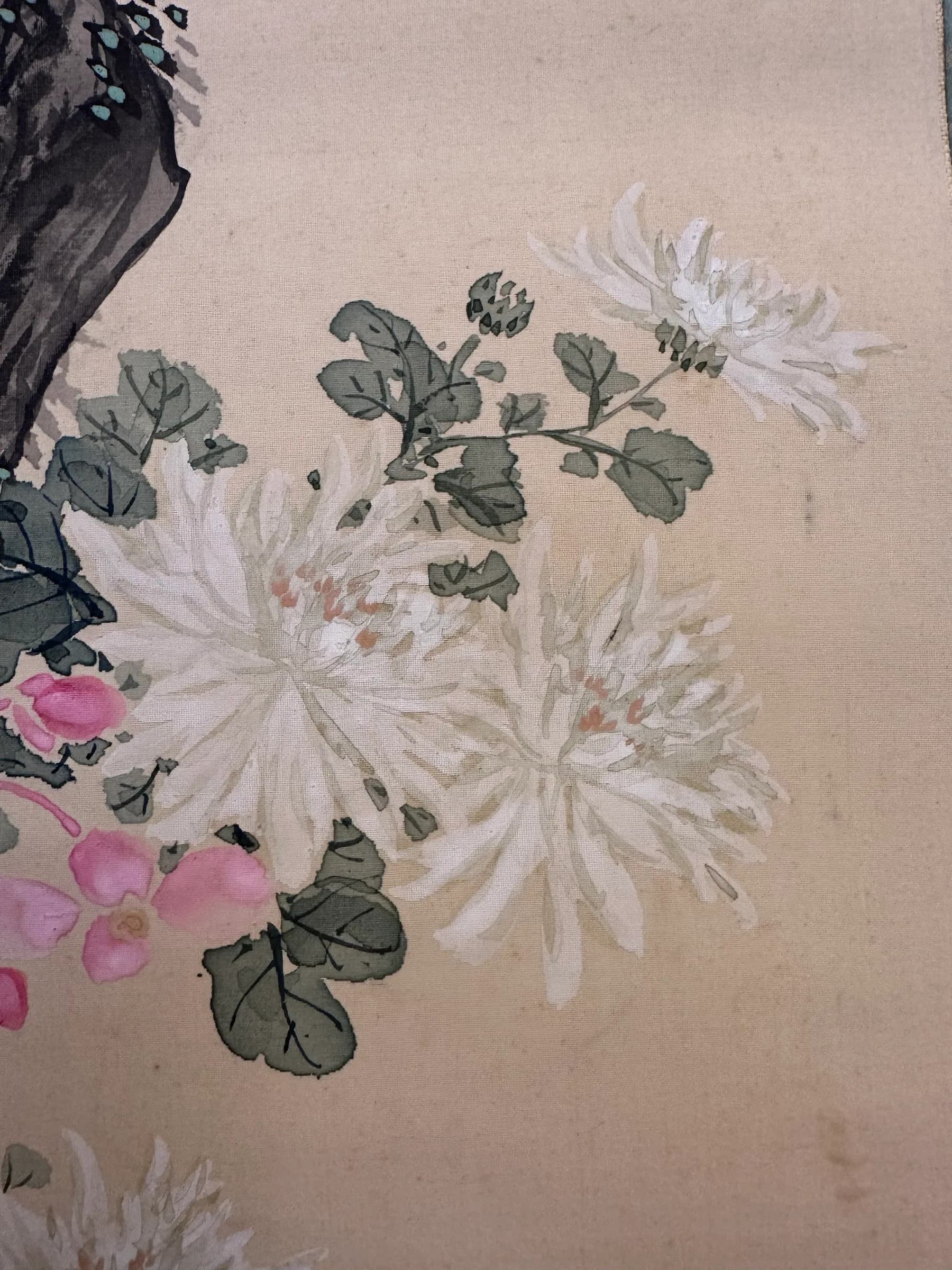
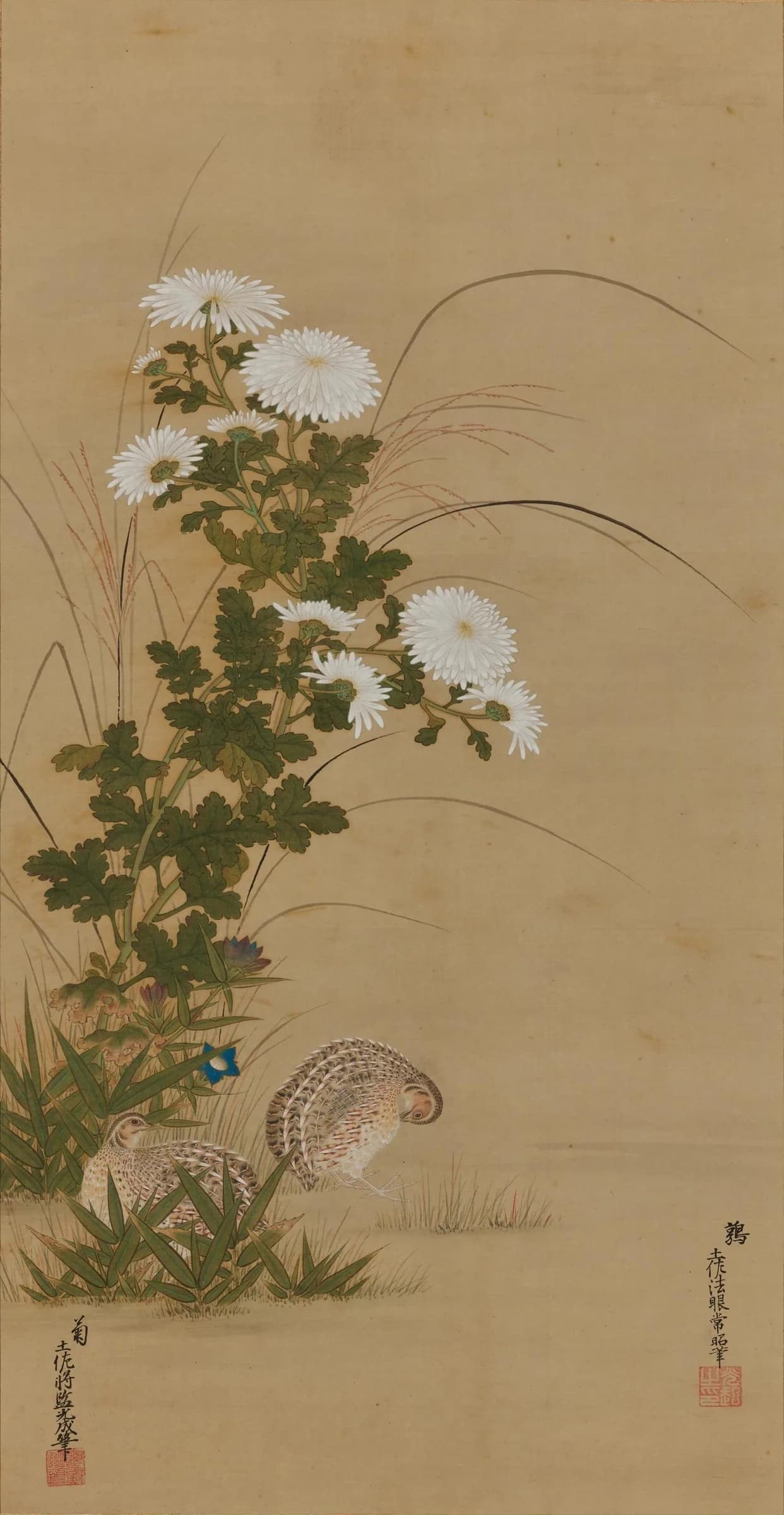
Stylistically, Uhō rendered the chrysanthemums using the “boneless” (mogu 没骨) technique, applying color washes directly without defining outline contours. Inherited from Qing painter Shin Nanpin, this method contrasts with the sharp ink outlines standard in traditional Japanese painting, such as the aforementioned screen by Rosetsu or other Rimpa, Tosa School paintings. Hokusai’s unusual application of the boneless method in his print, however, stems from his well-documented enthusiasm as a follower of the Nanpin School.
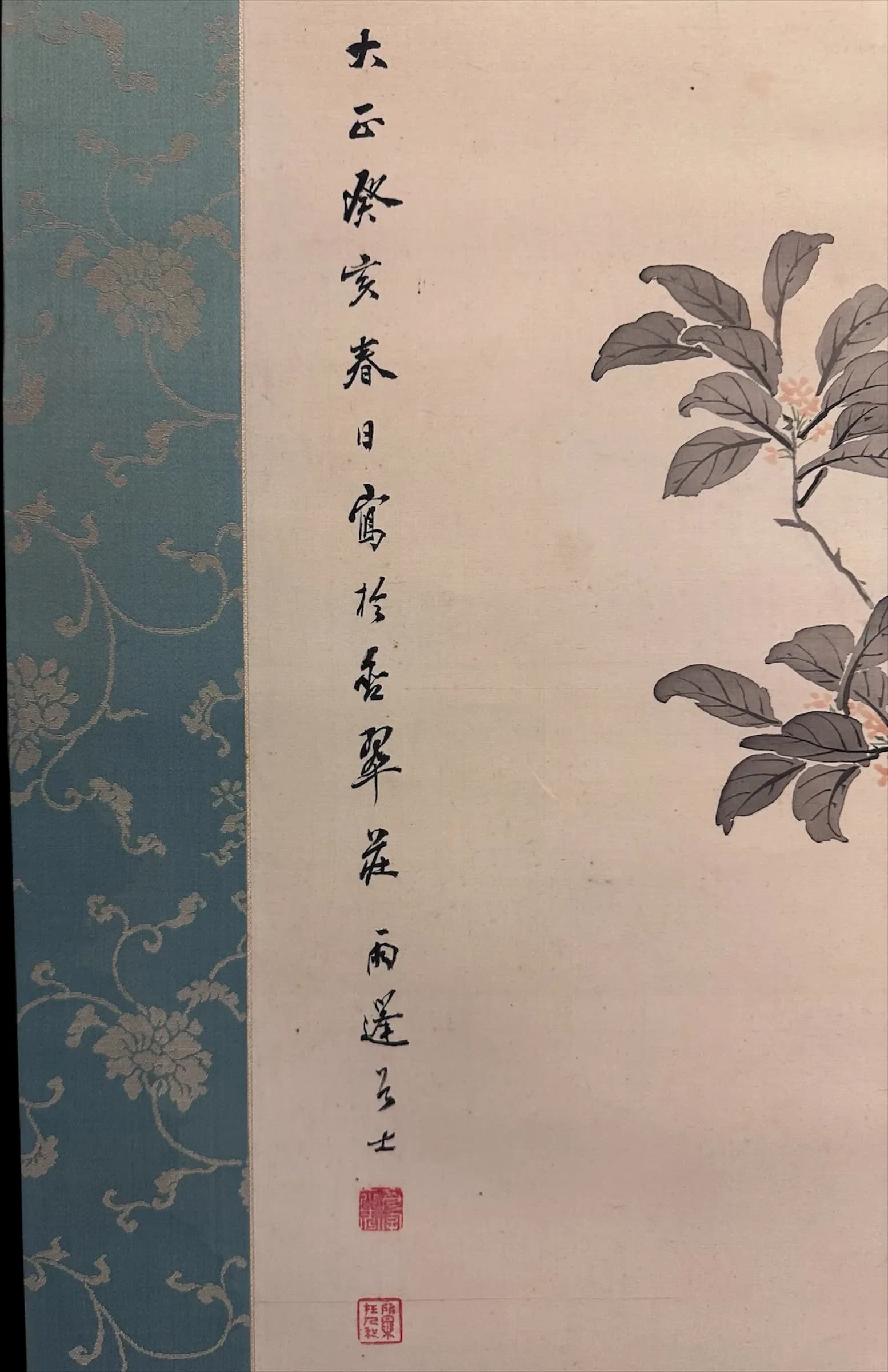
Painting inscription
大正癸亥春日寫於香翠荘 雨篷居士 (Painted on a spring day in the mizunotoi year of Taishō [1923] at the Fragrant Emerald Retreat—Hermit Uhō)
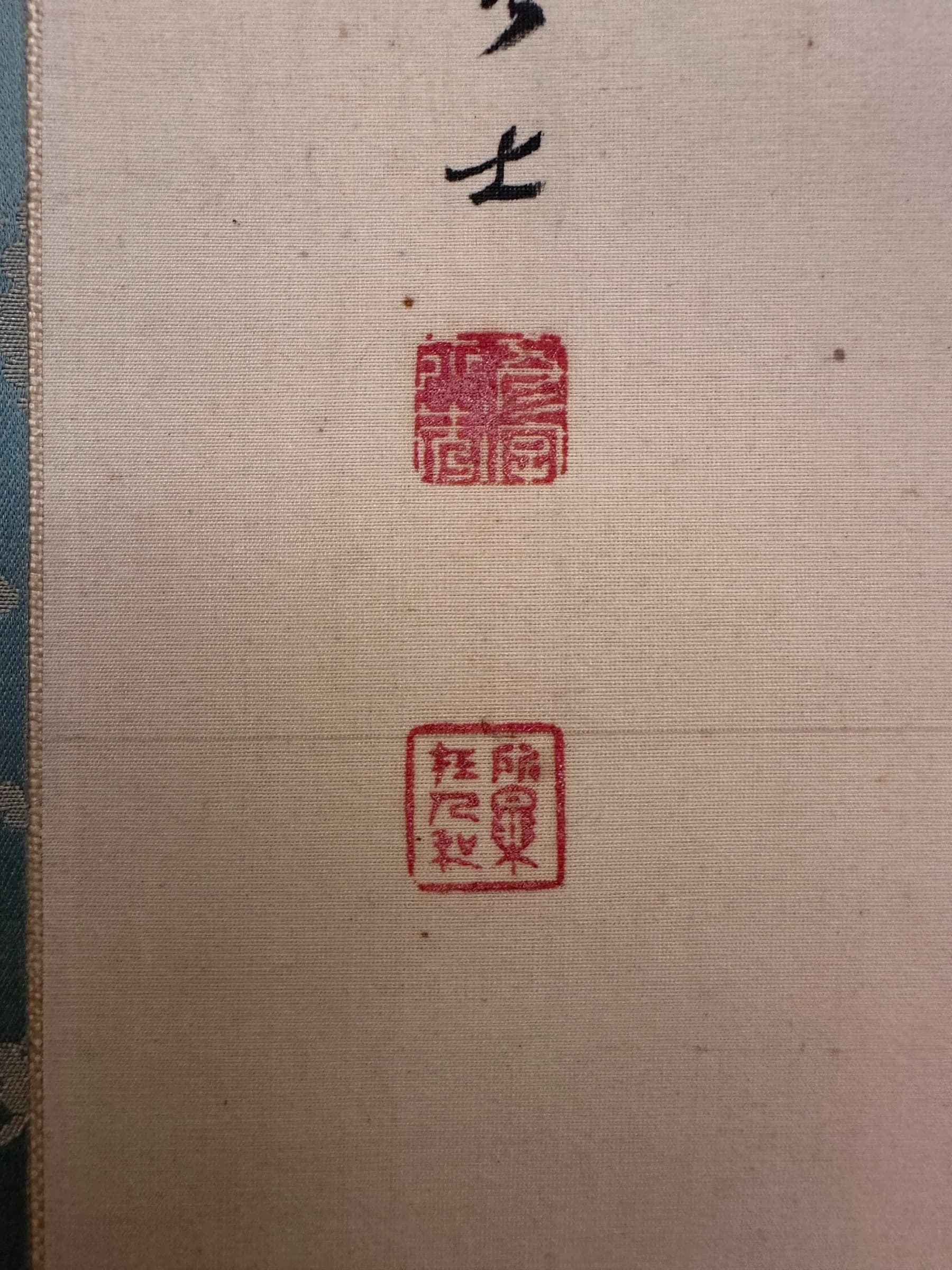
Seals
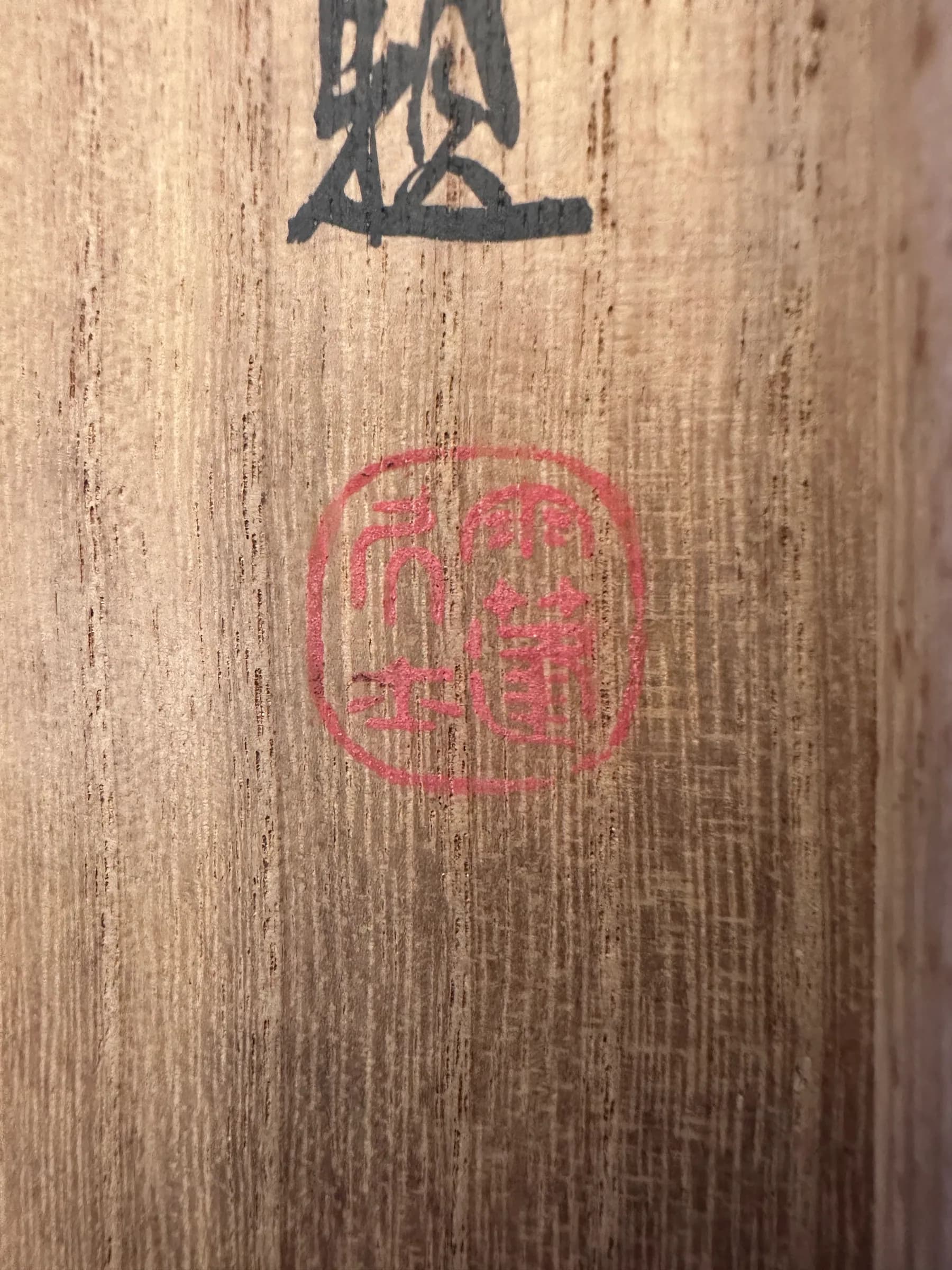
(square intaglio seal) Gen azana wa Shisū 彥字士秀; (square relief seal) Tanoshimu tokoro wa hito no wa ni ari 所楽在人和; (box squircle relief seal) Uhō koji 雨篷居士
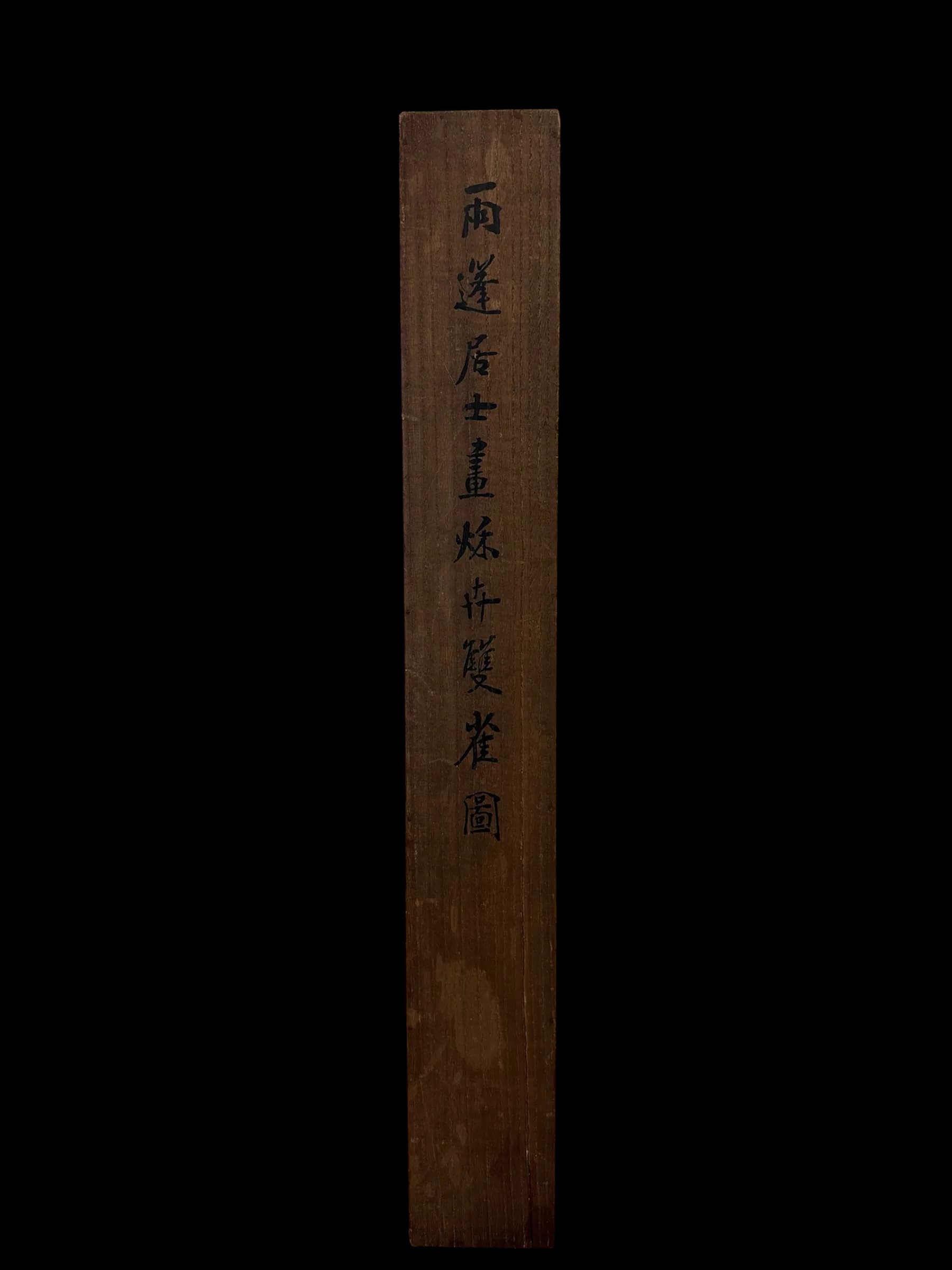
Box inscription
(front): 雨篷居士畫秌卉雙雀圖 (Autumn Flora and Pair of Sparrows Painted by Hermit Uhō)
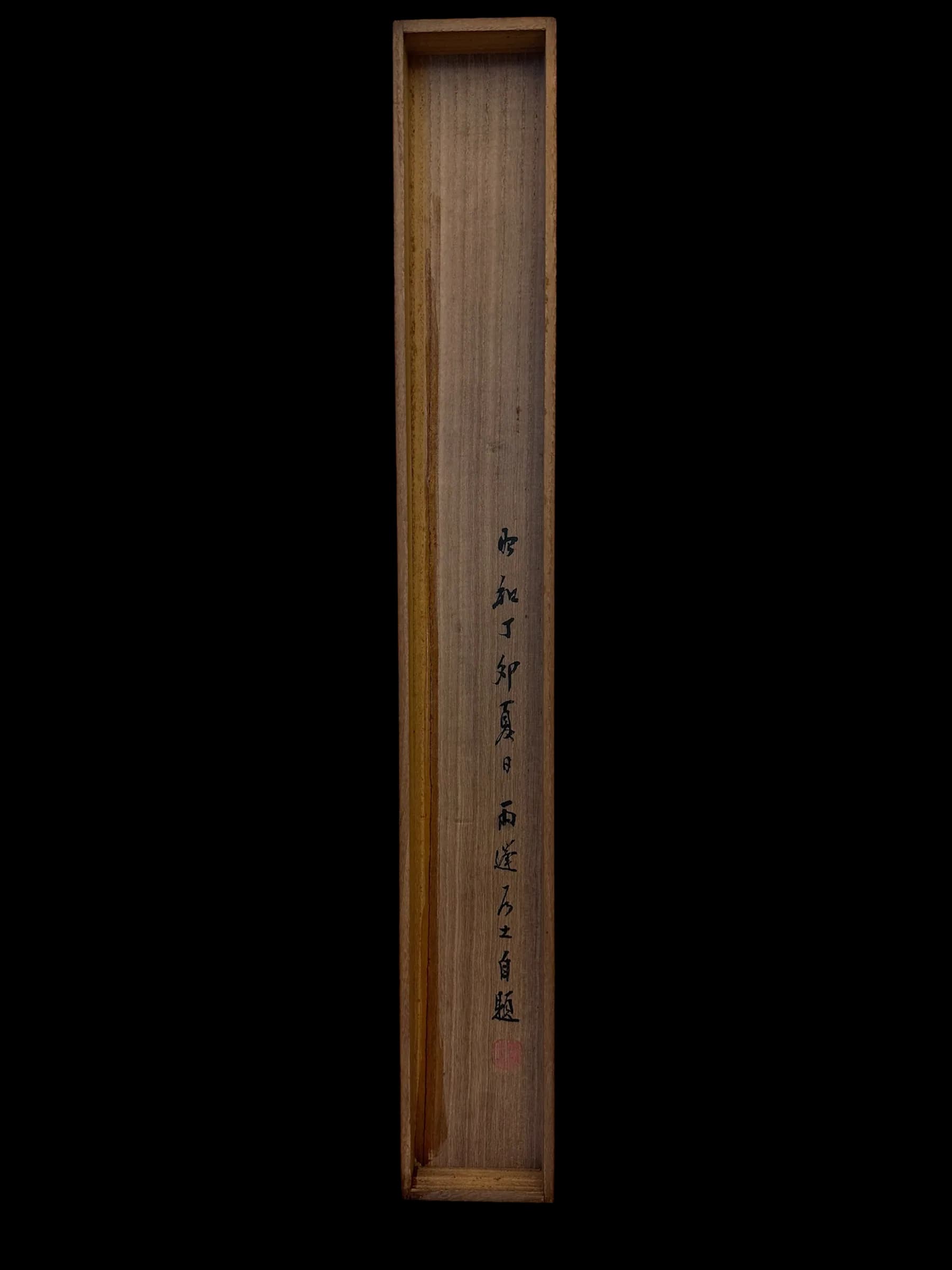
(verso): 昭和丁夘夏日 雨篷居士自題 (On a summer day in the hinotō year of Shōwa [1927]—self-inscribed by Hermit Uhō)