View 1 of 17
Murase Gyokuden (1852–1917)
村瀬玉田
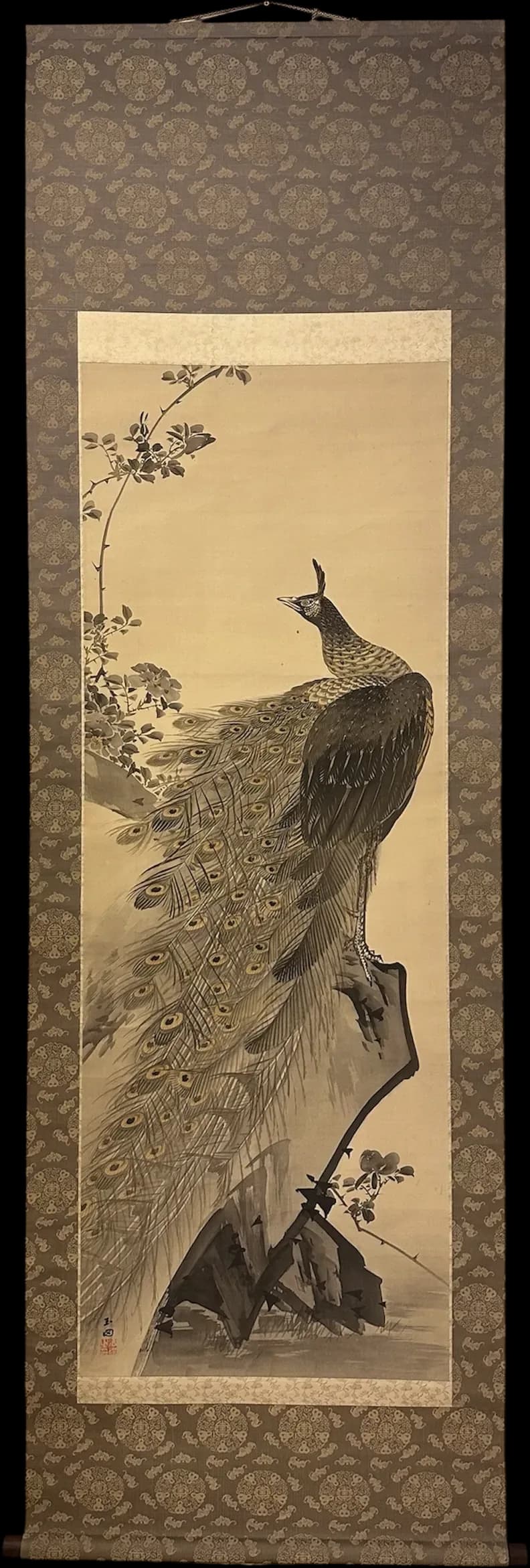
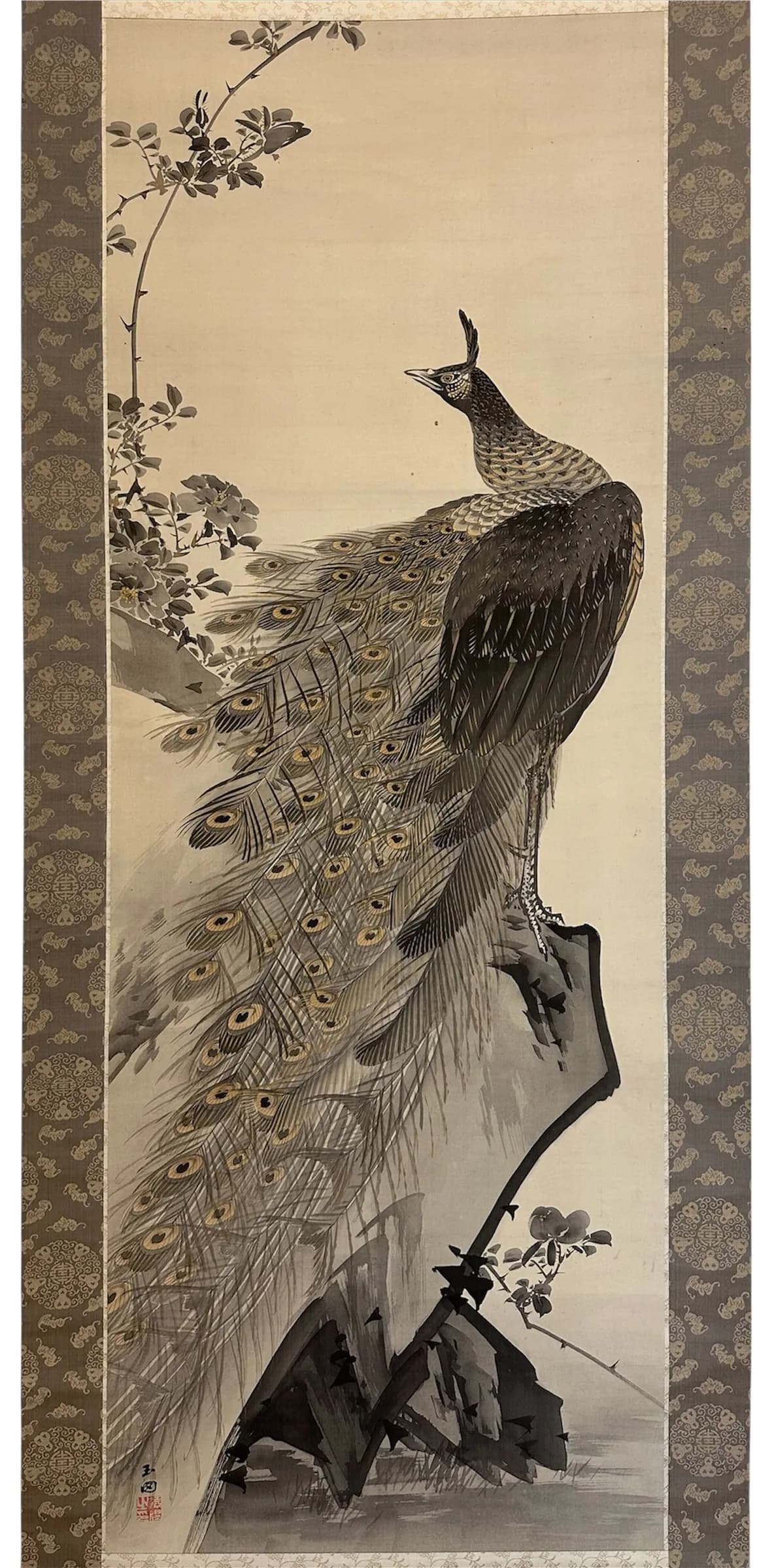
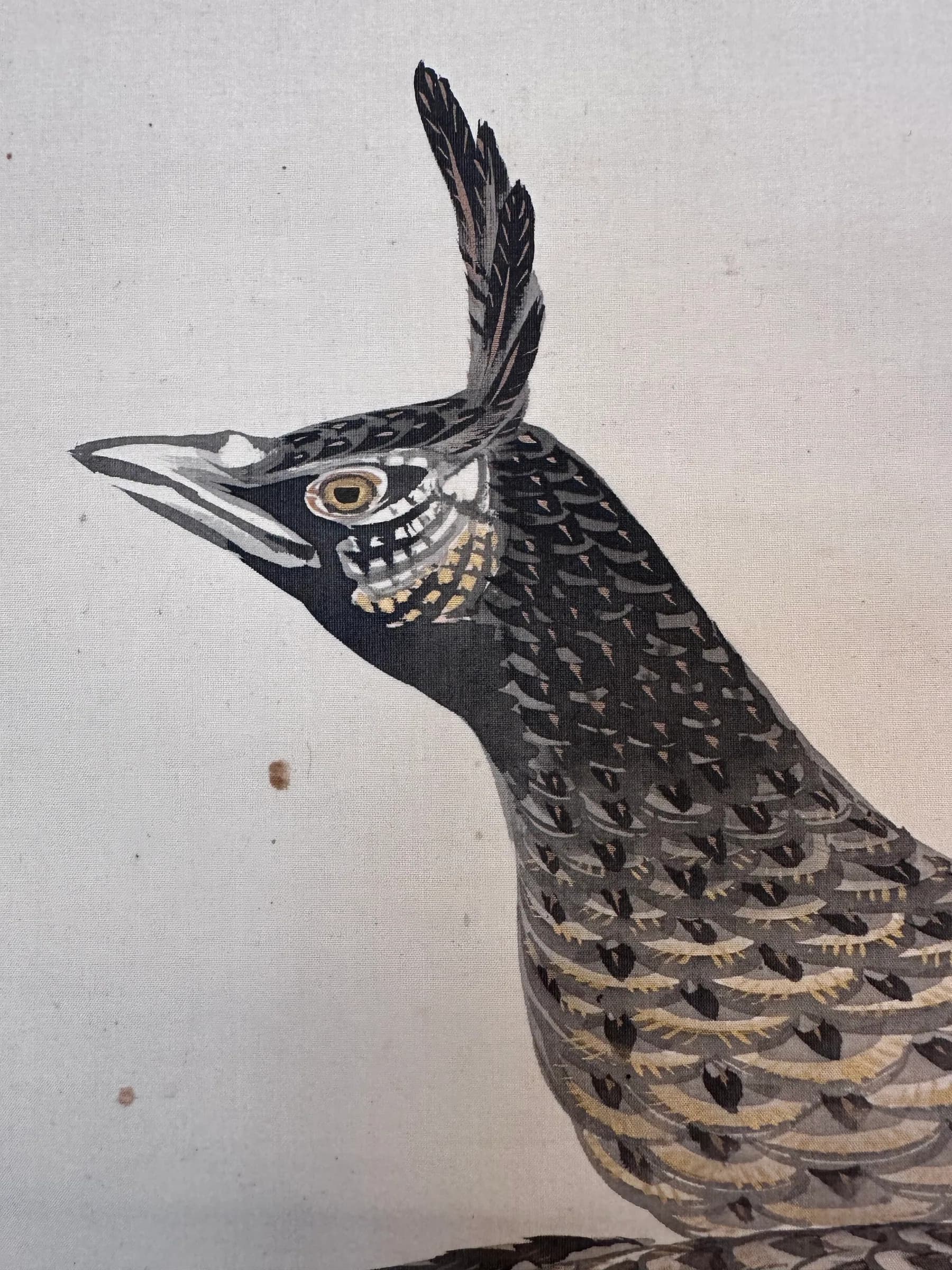
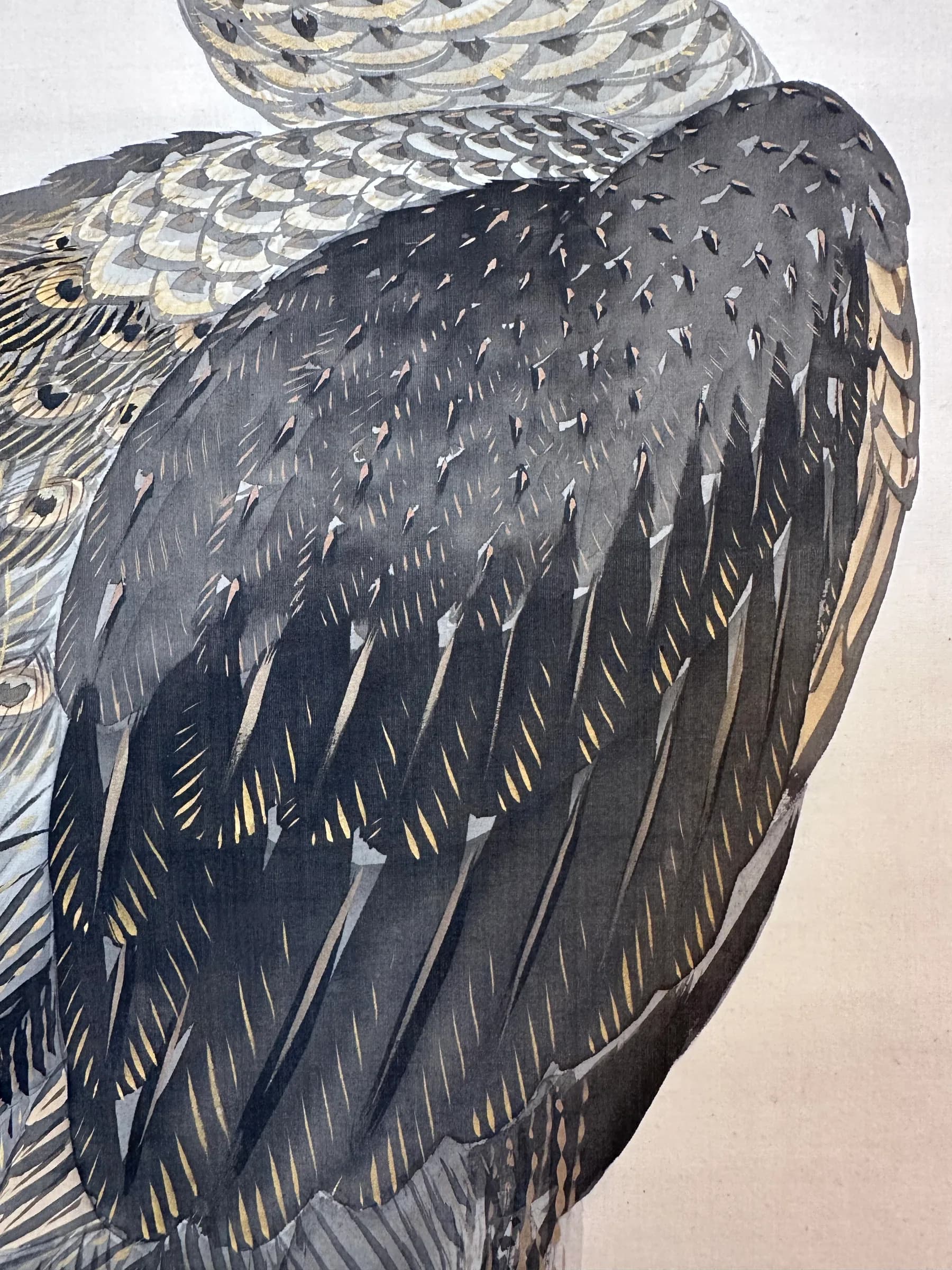
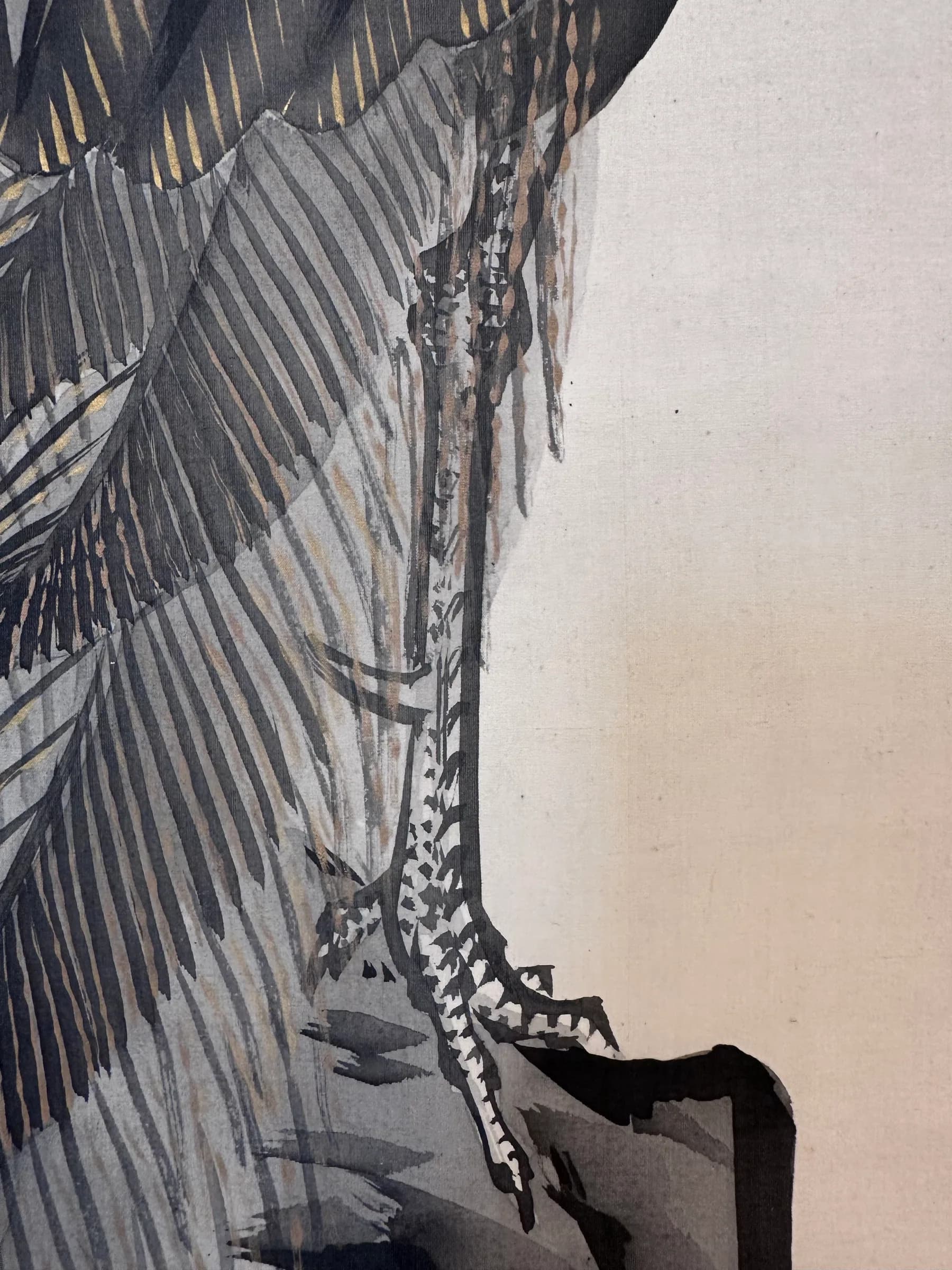
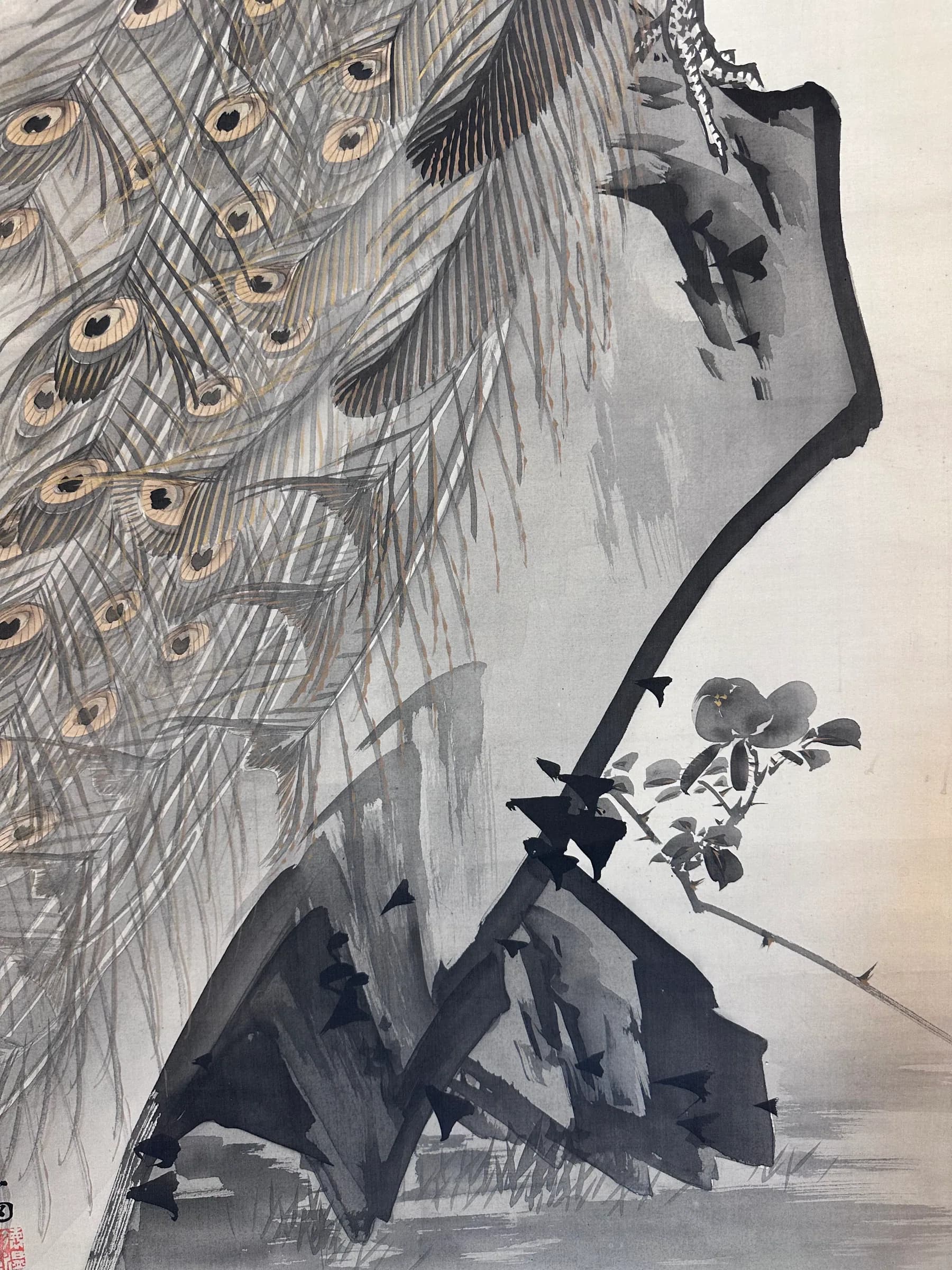
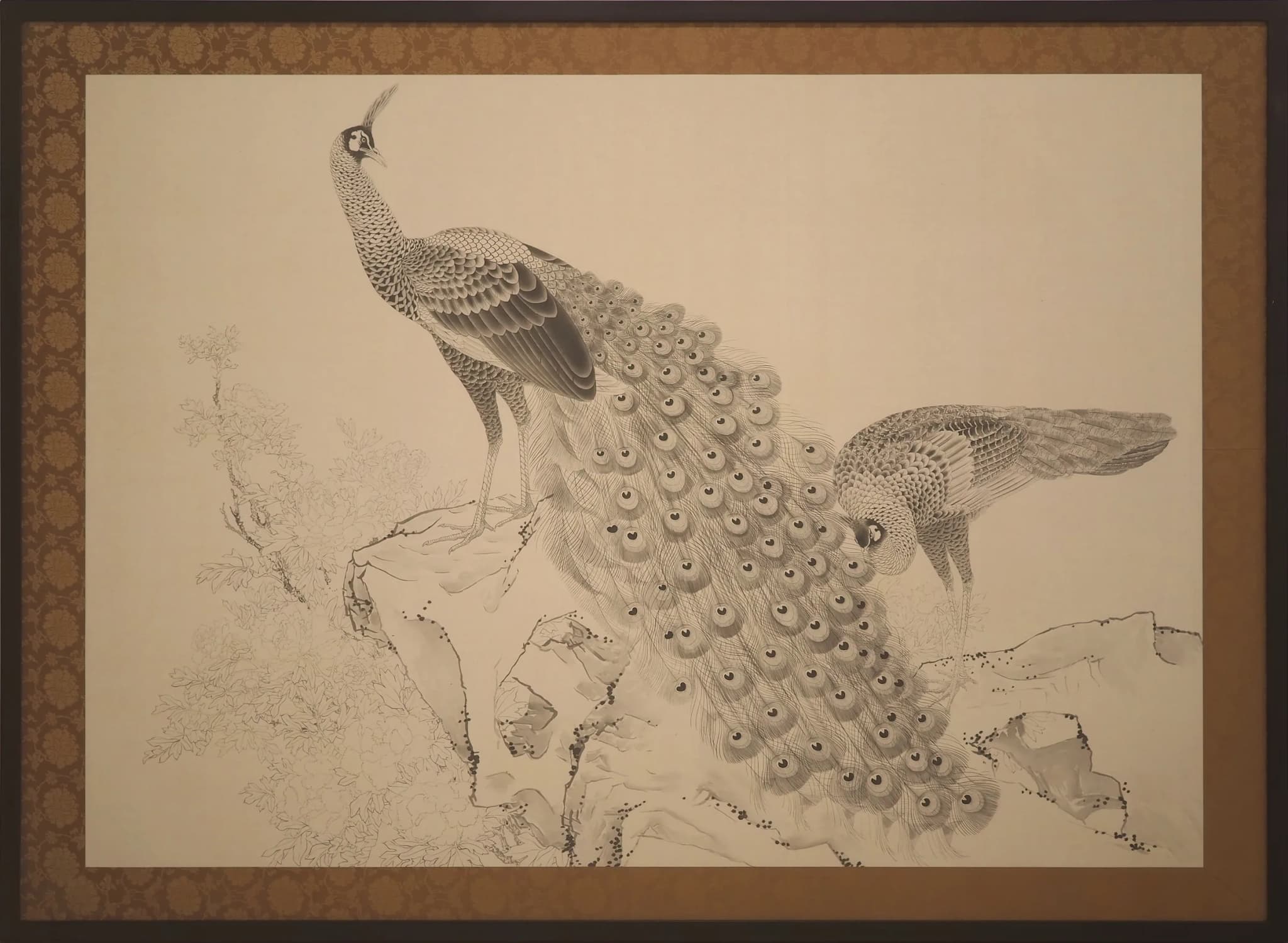
Peacock
孔雀図
- Era
- Kindai (近代)
- Subject
- Birds and Flowers (花鳥)
- Period
- Taishō Period
- Medium
- Hanging scroll; ink and color on silk
- Dimensions
- 50.4 × 138.8 cm (image); 65.6 × 207.2 cm (overall)
Description
Murase Gyokuden was an influential Japanese painter of the Maruyama-Shijo school celebrated for his highly realistic landscapes, birds, and flowers. Born in Kyoto, he began his formal training at age 13 under master Murase Soseki, who later adopted him, while also studying Sinology and classical poetry before embarking on extensive travels across Japan in his mid-twenties. His technical prowess earned him a position at the Kyoto Prefectural School of Painting in 1880 and a string of prestigious awards at national exhibitions throughout the 1880s. Gyokuden later relocated to Tokyo, where he achieved significant acclaim producing commissioned artwork for the Imperial Court and showcasing his talent on the global stage at the Paris (1900), St. Louis (1904), and Japan-British (1910) expositions.
In Buddhist iconography, peacocks symbolize the transformative power of the Dharma due to their legendary immunity to poisonous plants and animals. In Japan, they were depicted alongside the popular Esoteric deity Kujaku Myōō (Peacock Wisdom King) as early as the Heian period (794–1185). However, because peacocks are not native to Japan, they were rarely painted as standalone subjects until the Edo period.
This resurgence of interest was deeply tied to peacocks’ secular blessings of wealth, harmony, and promotion in rank favored by Qing literati. These concepts were introduced to Japan by the Chinese painter Shin Nanpin 沈南蘋 (1682–1760). The Maruyama-Shijō school, to which Murase Gyokuden belonged, inherited this preference from the Nanpin school. They transformed the peacock into a vehicle for elaborate, vivid plumage rendering, showcasing the school’s signature shasei (painting from life) tradition, a practice facilitated by the import of live peacocks through trade with the Chinese and Dutch at Nagasaki.
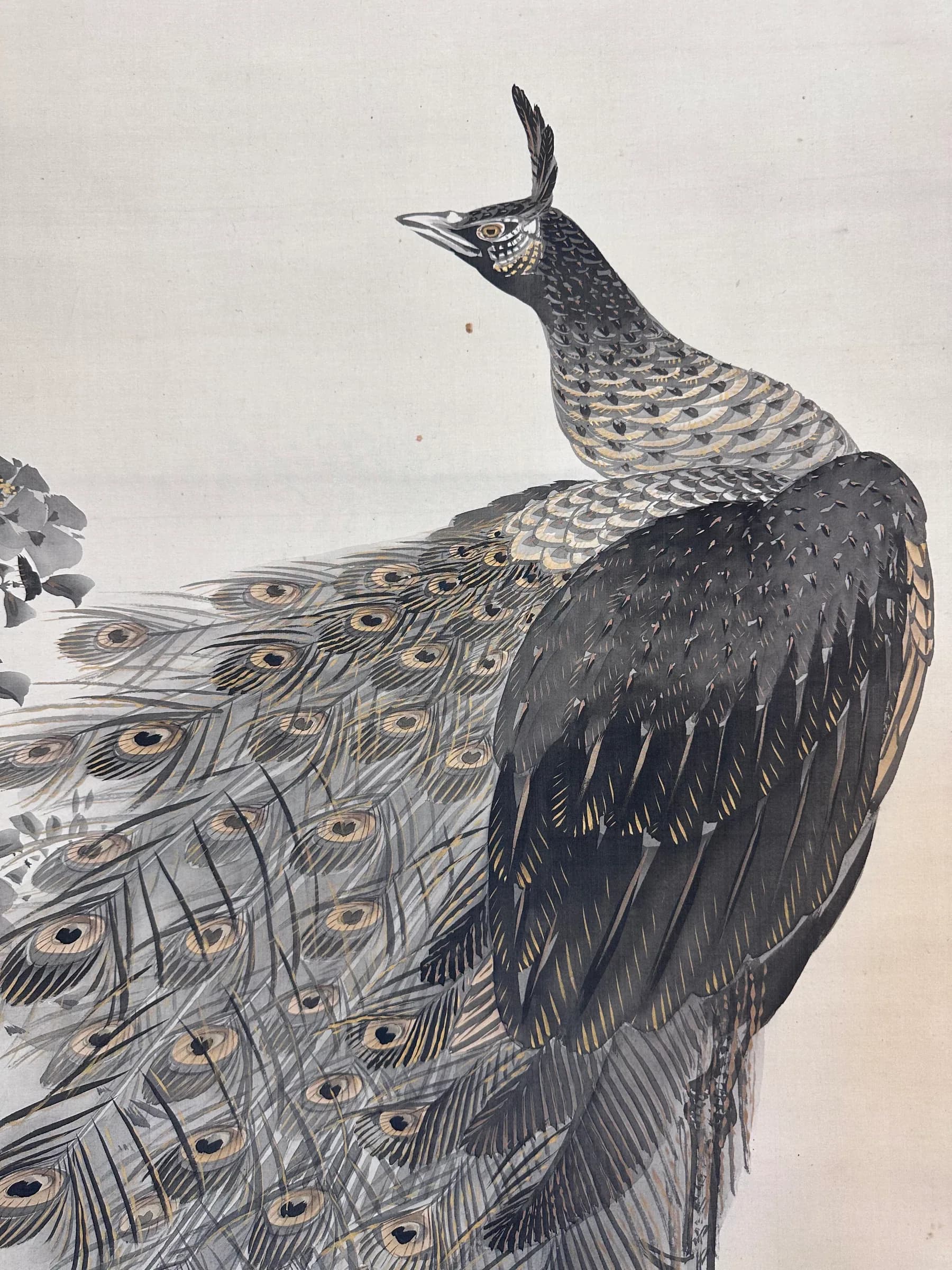
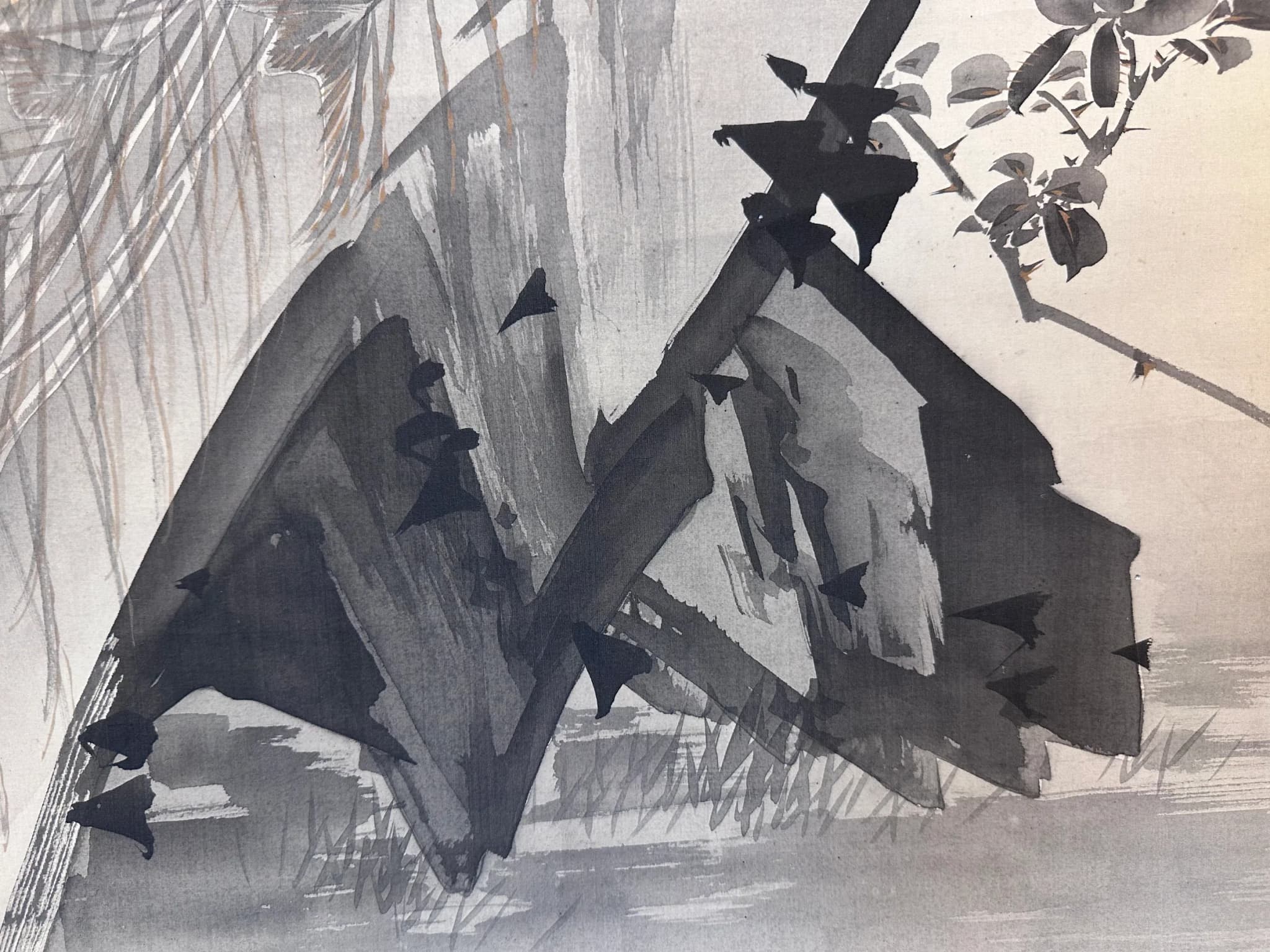
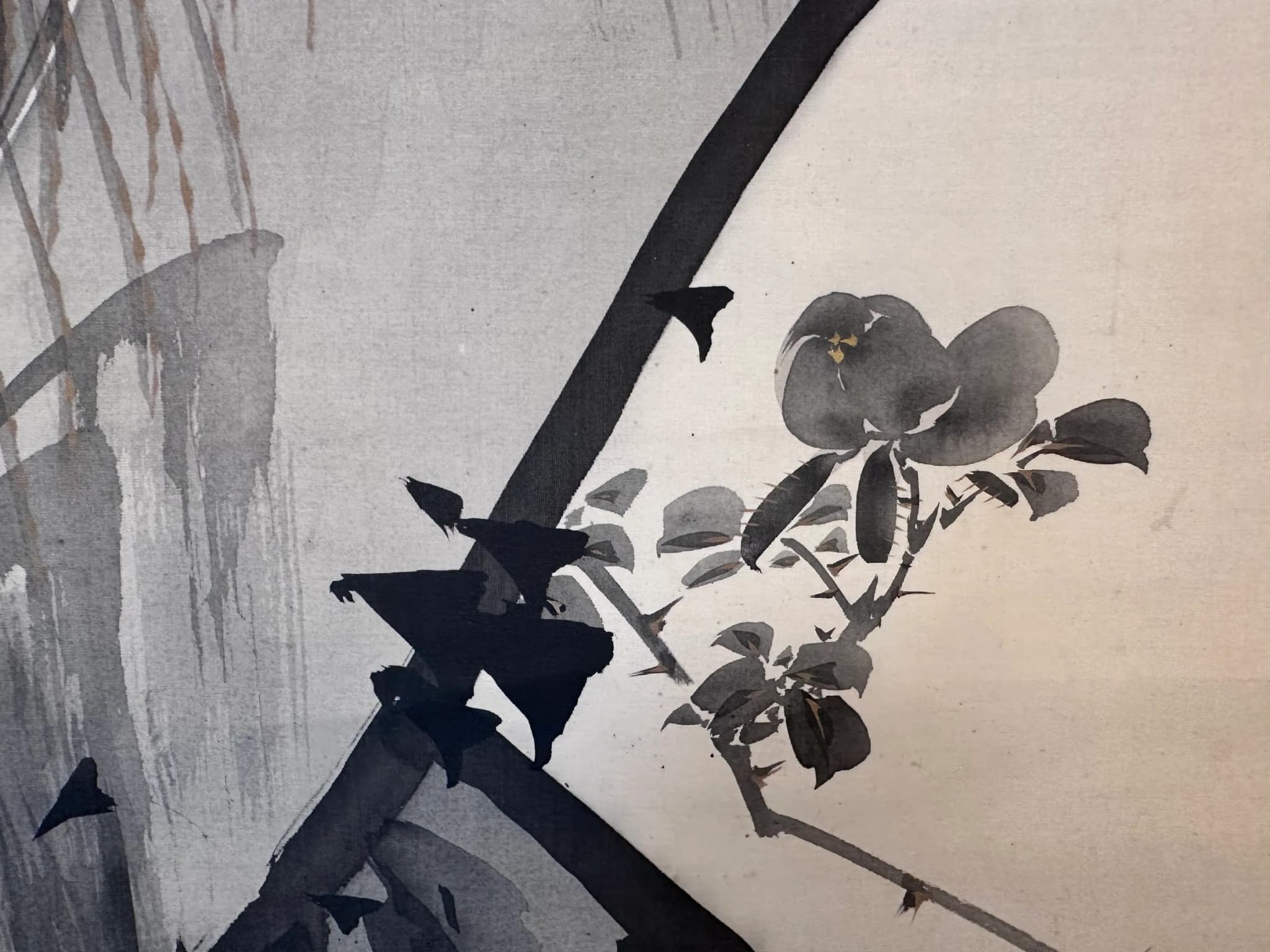
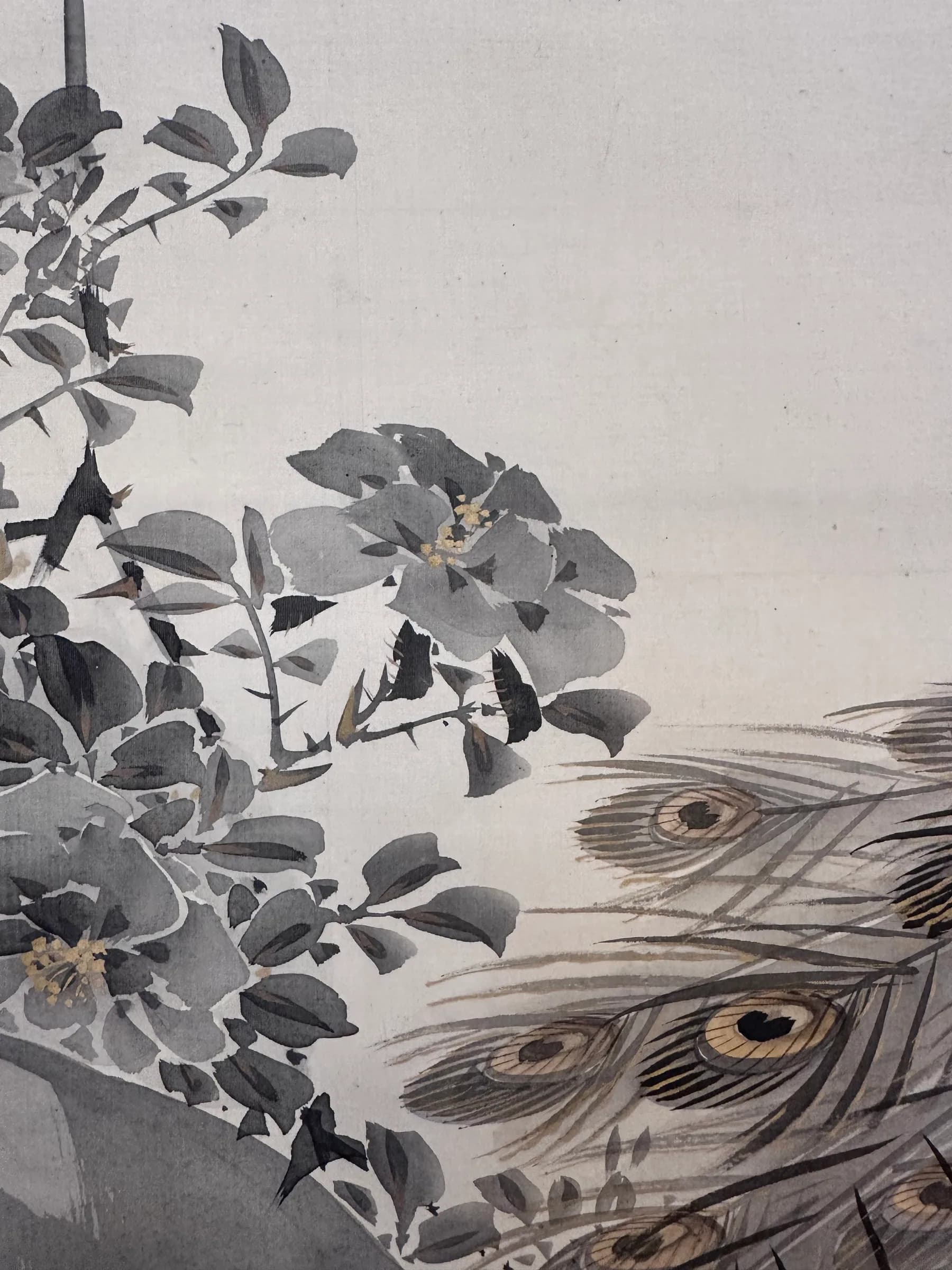
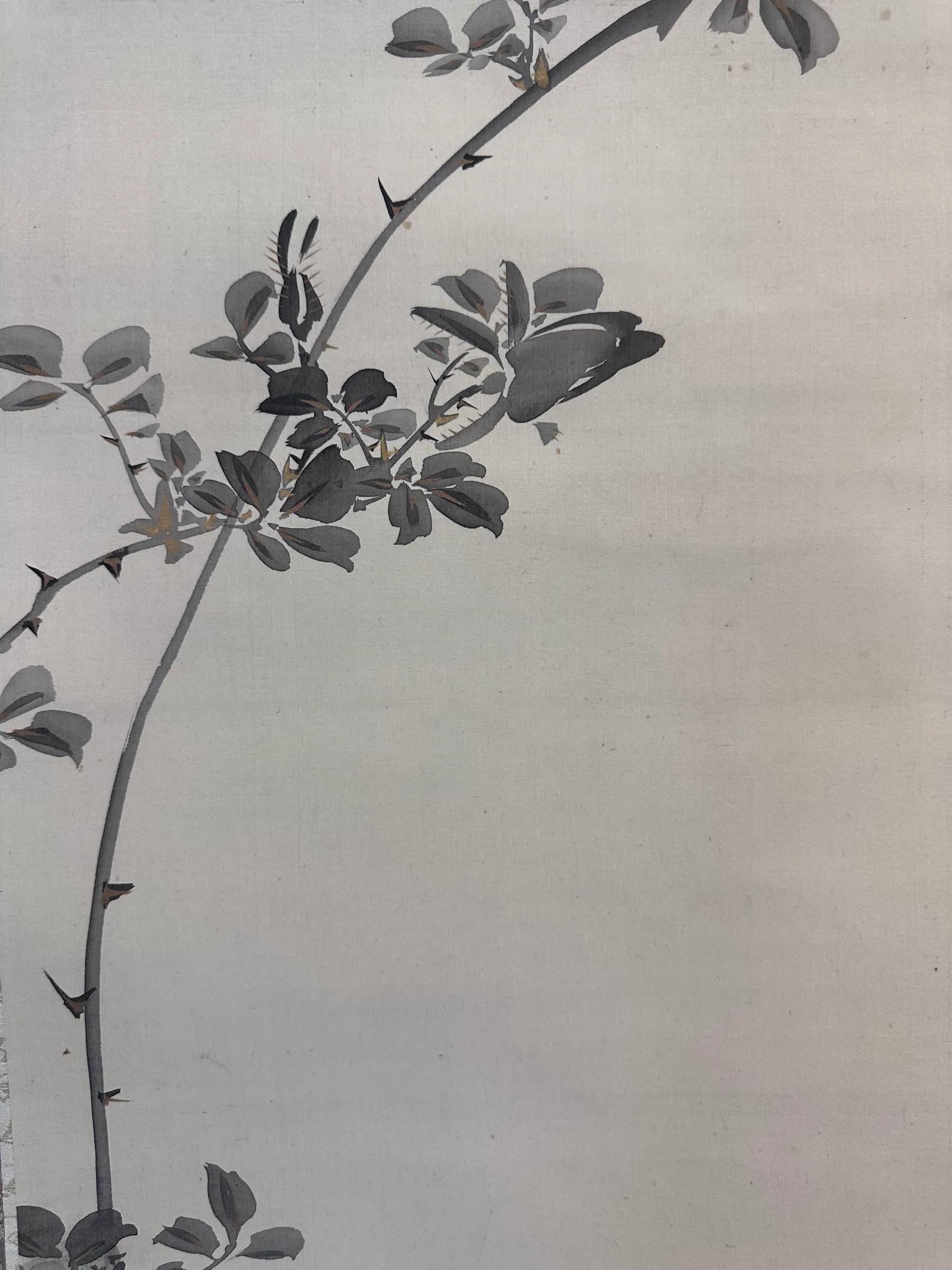
Gyokuden’s ink portrayal of the peacock should not be misconstrued as a literal depiction of a “black peacock” (a rare genetic mutation). Instead, it represents a sophisticated evolution of traditional Maruyama-Shijō technique. Research into the Shōkokuji copy of Maruyama Ōkyo’s Peonies and Peacocks reveals that Ōkyo initially used varying shades of ink to delineate the entire composition. These ink gradations were meant to complement heavy mineral pigments to create naturalistic, volumetric depth. Gyokuden’s monochromatic work can be interpreted as a brilliant variation of this tradition, elevating what was originally a foundational underdrawing procedure into an independent artistic medium with its own intrinsic aesthetic value.
Other extant ink peacocks by Gyokuden include a 1905 version collected by painter Kinoshita Seigai and a 1908 version collected by chemist Magaribuchi Kageaki, the latter recorded in The Collected Paintings of Gyokuden 玉田画集.
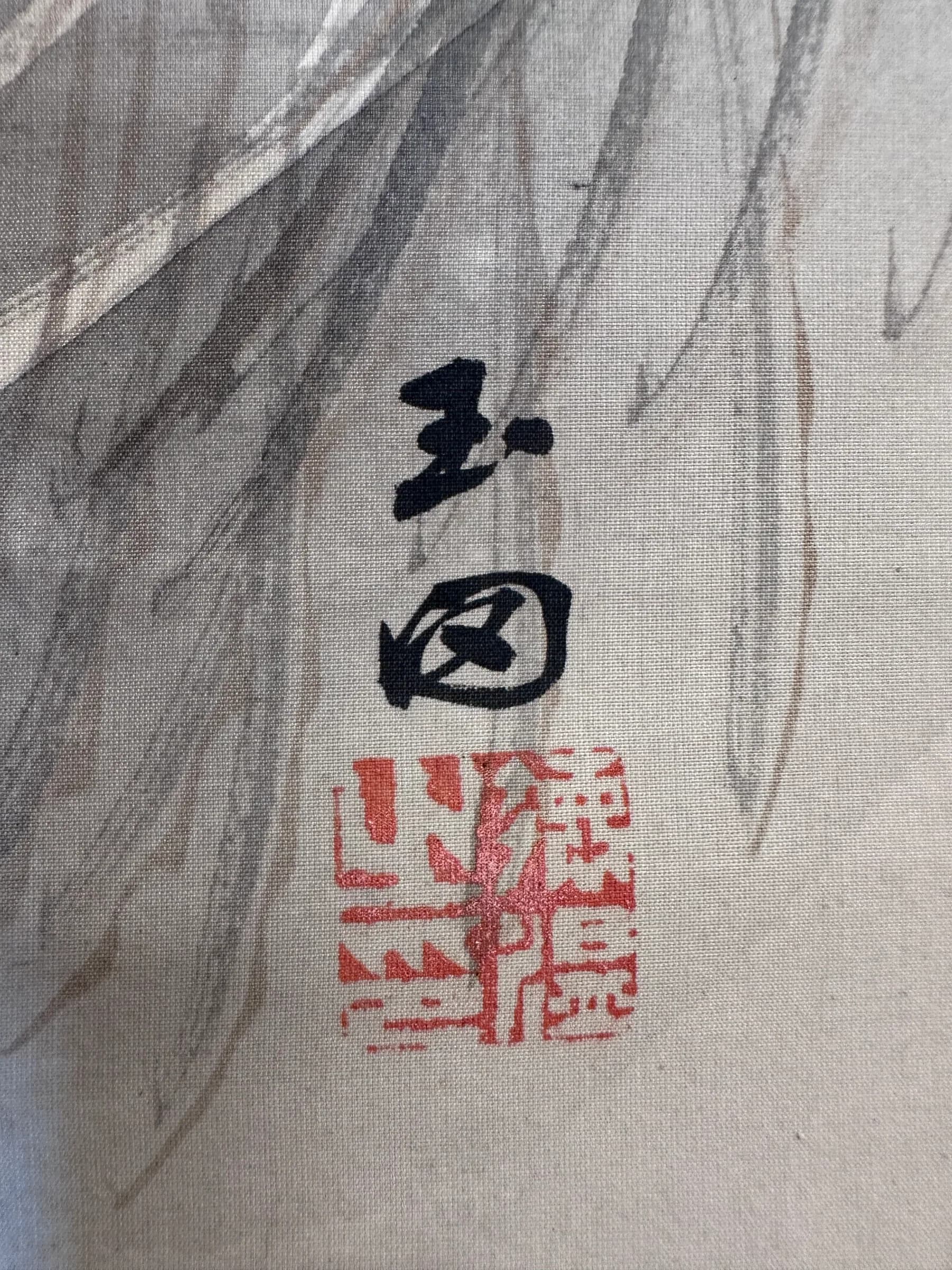
Painting inscription
玉田 (Gyokuden)
Seals
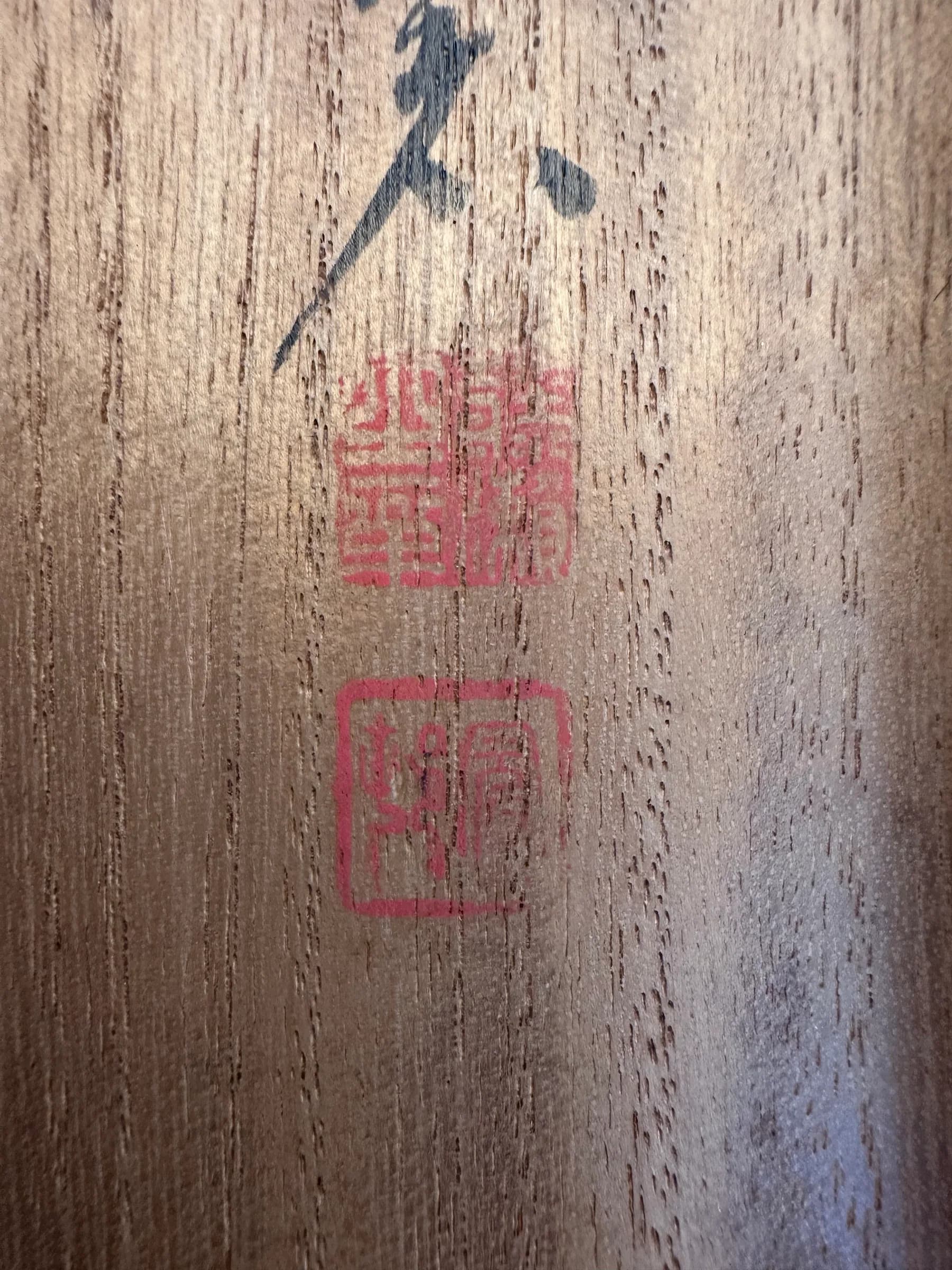
(square intaglio seal) Tokuon no in 徳温之印; (box square intaglio seal) Fujise no shō 藤瀬之章 (box square relief seal) Kanson 冠邨
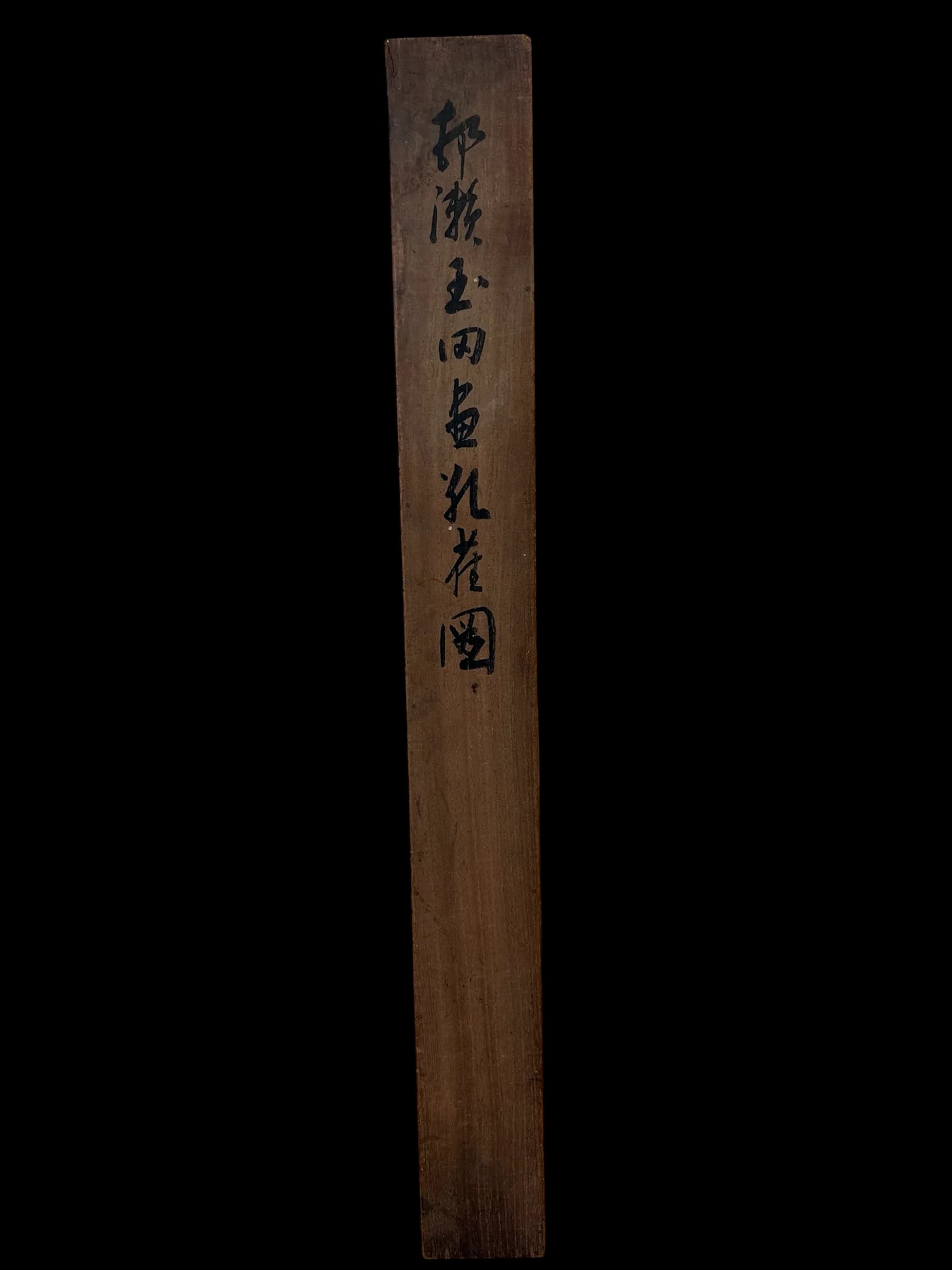
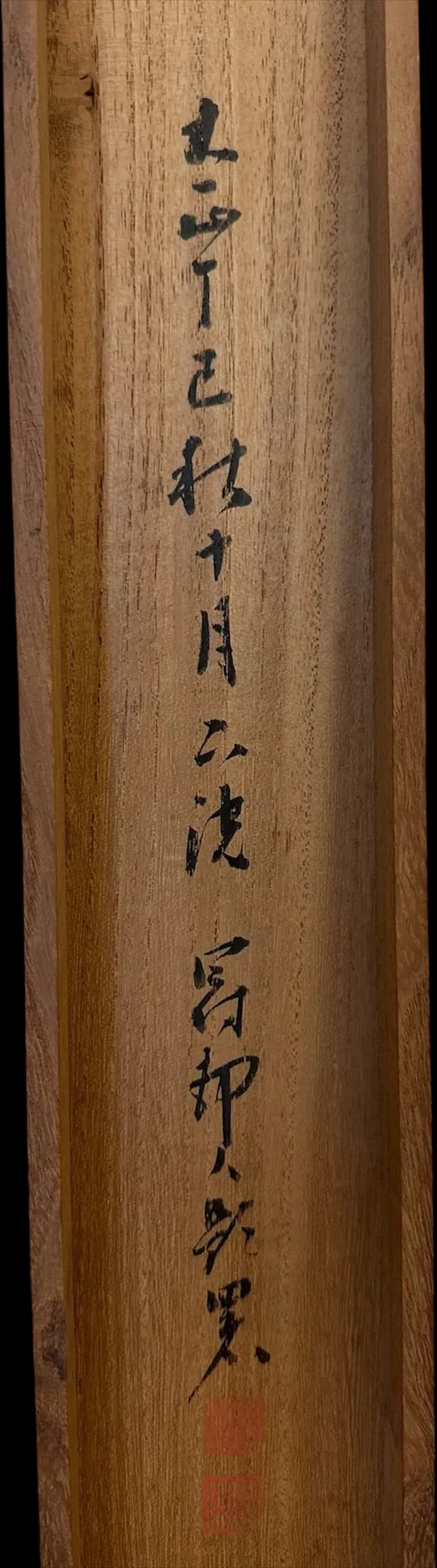
Box inscription
(front): 邨瀬玉田画孔雀図 (Peacock painted by Murase Gyokuden)
(verso): 大正丁巳秋十月下浣 冠邨人題署 (The last ten days of October, autumn of Taishō hinotomi year [1917]—inscribed by Fujise Kanson)
Fujise Kanson 藤瀬冠邨 (1875–1951) was a Nanga painter active from the Meiji to early Showa period. His connection with Gyokuden is unclear, but he inscribed this box of this painting shortly after Gyokuden passed away on October 12.
Accessories and documentation
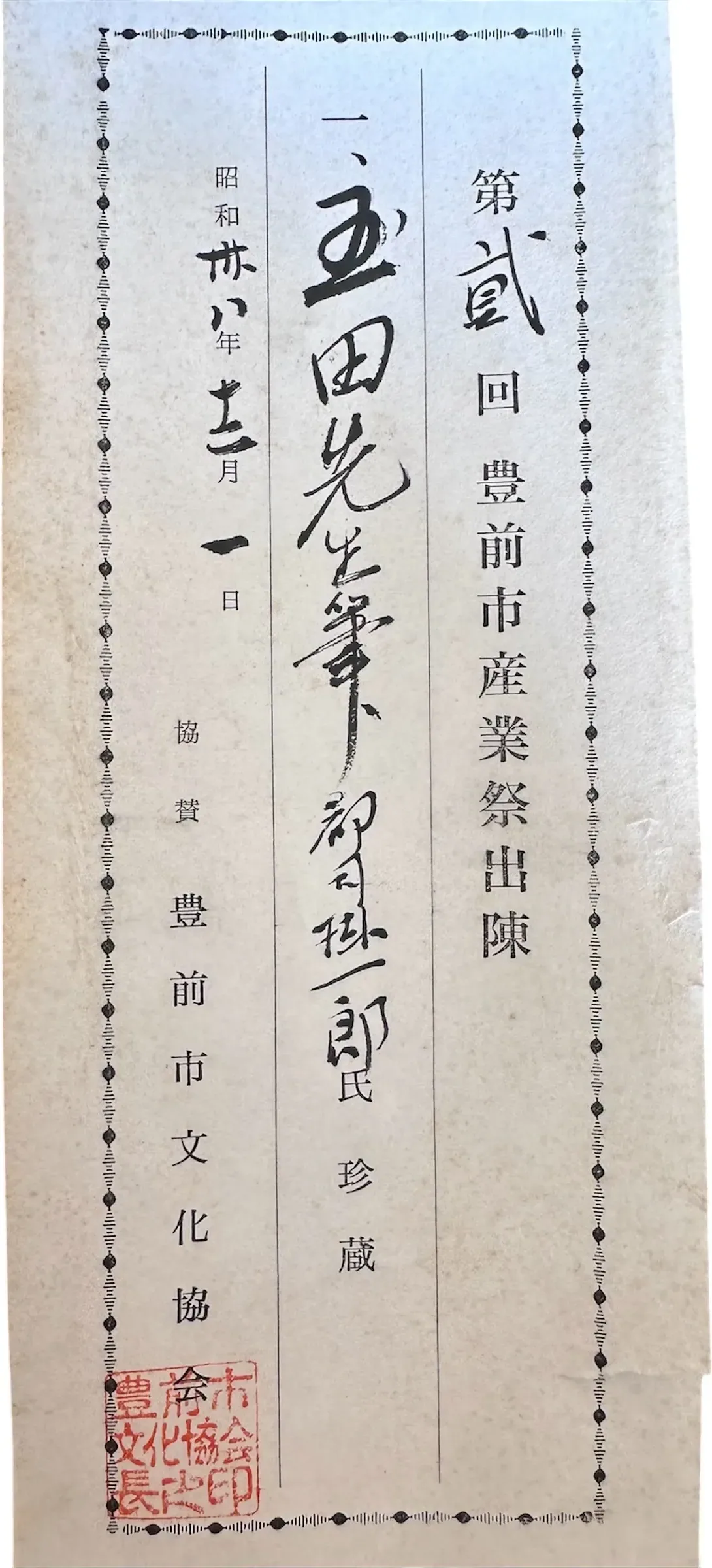
第貳回豊前市産業祭出陳 玉田先生筆 郡司掛一郎珍蔵 昭和卅八年十二月一日 協賛 豊前市文化協会 (Exhibited at the 2nd Buzen City Industrial Festival. By Master Gyokuden. From the collection of Gunjikake Ichirō. December 1, Shōwa 38 [1963]. Supported by Buzen City Cultural Association)
Gunjikake Ichirō was a sake maker based in Buzen City.