
View 1 of 13
Shirasu Shinka (1870–1939)
白須心華
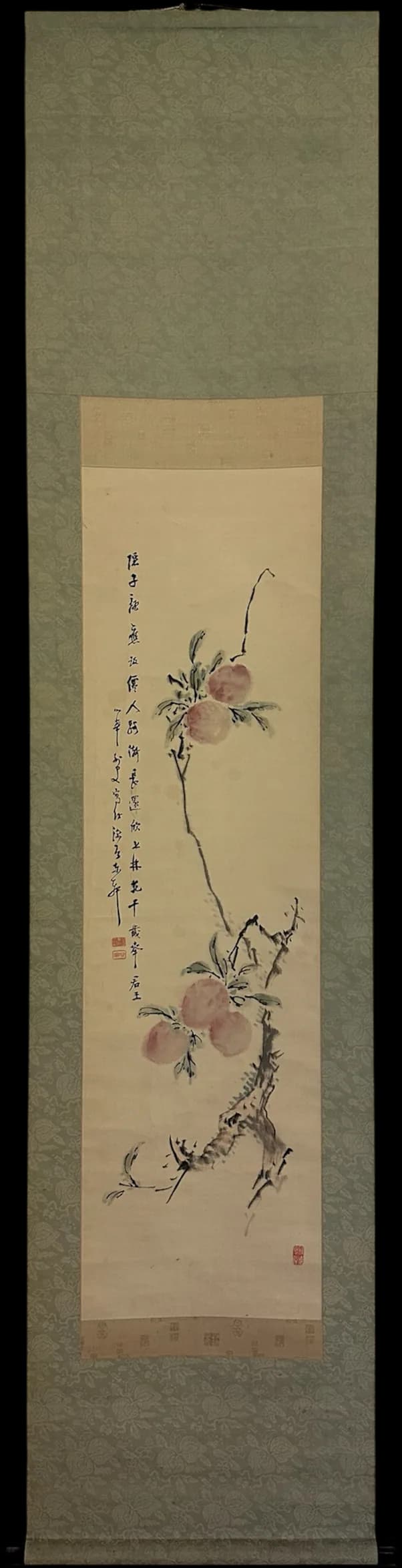
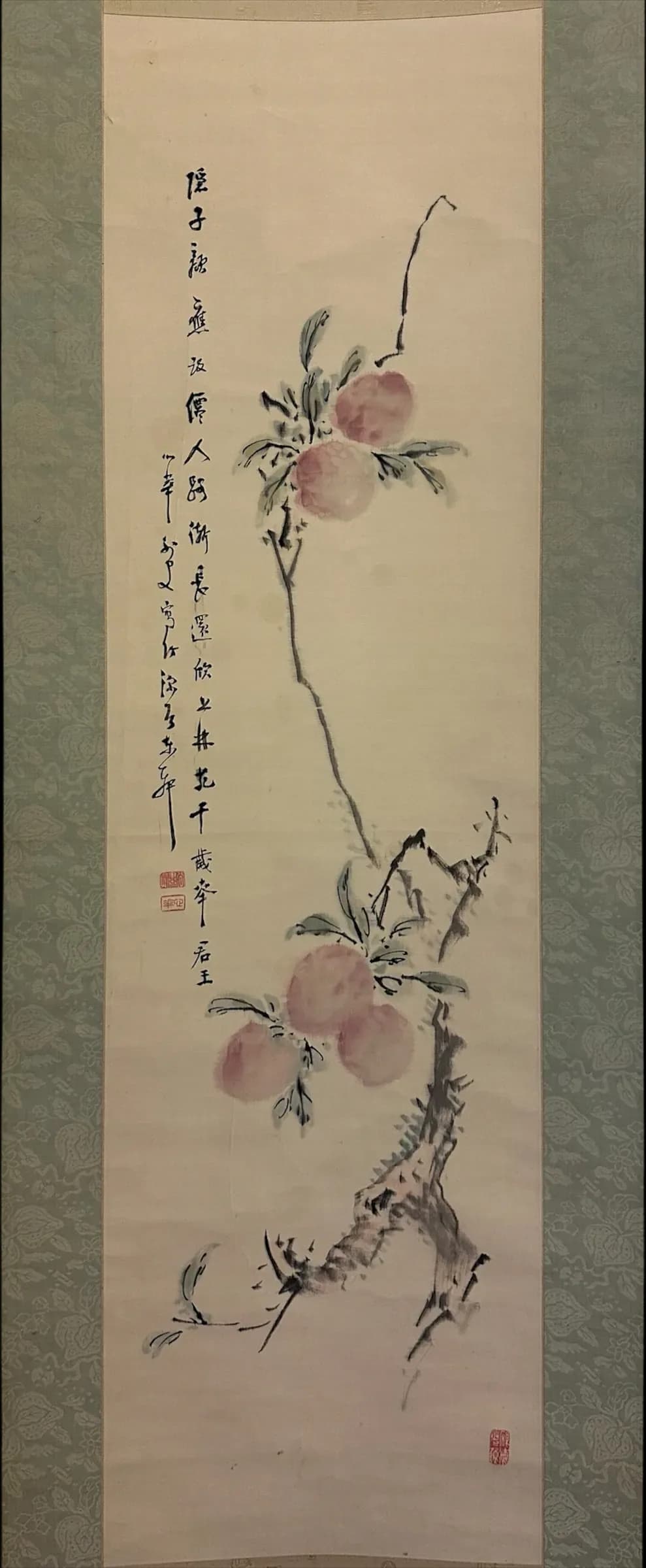
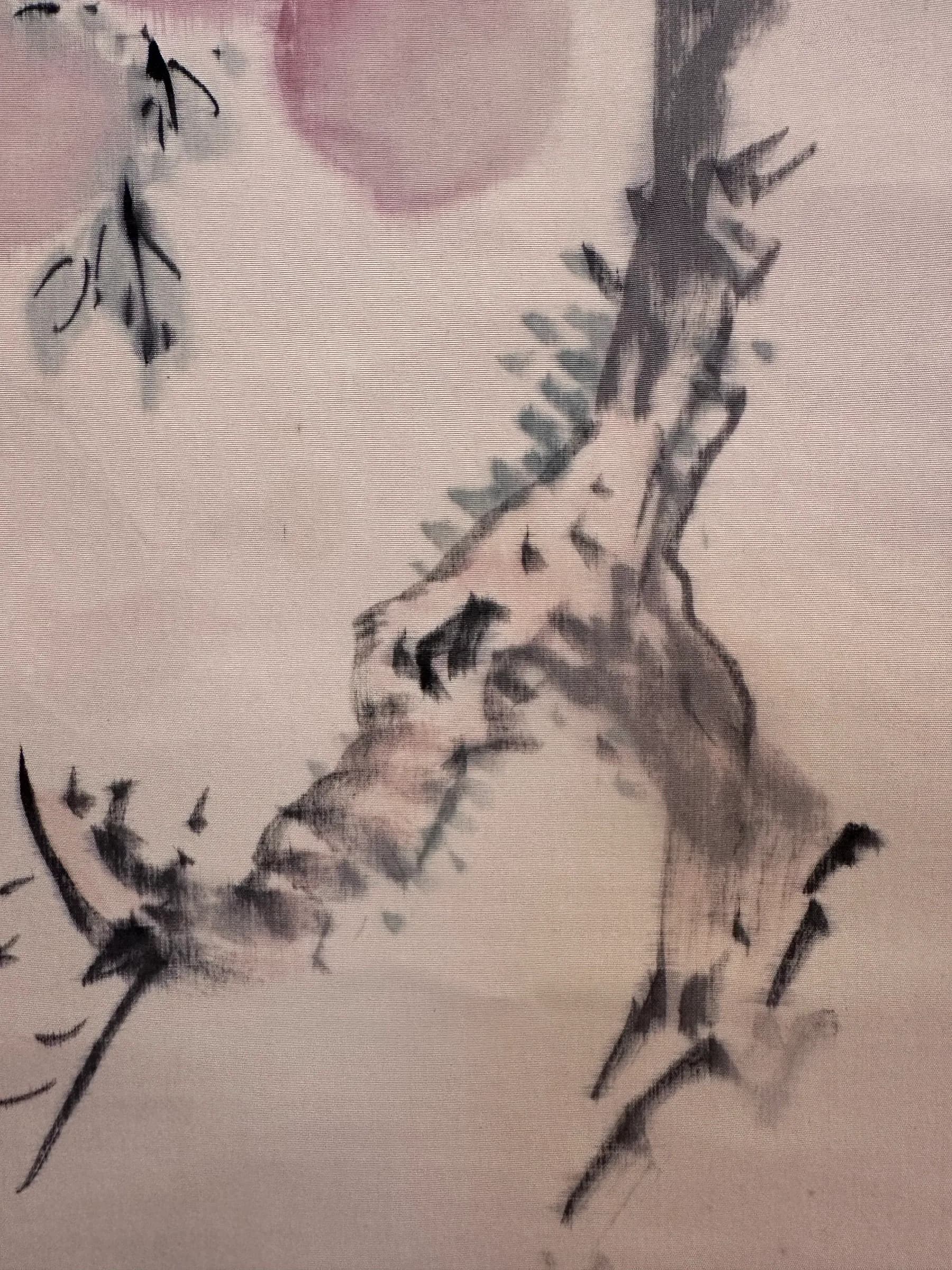
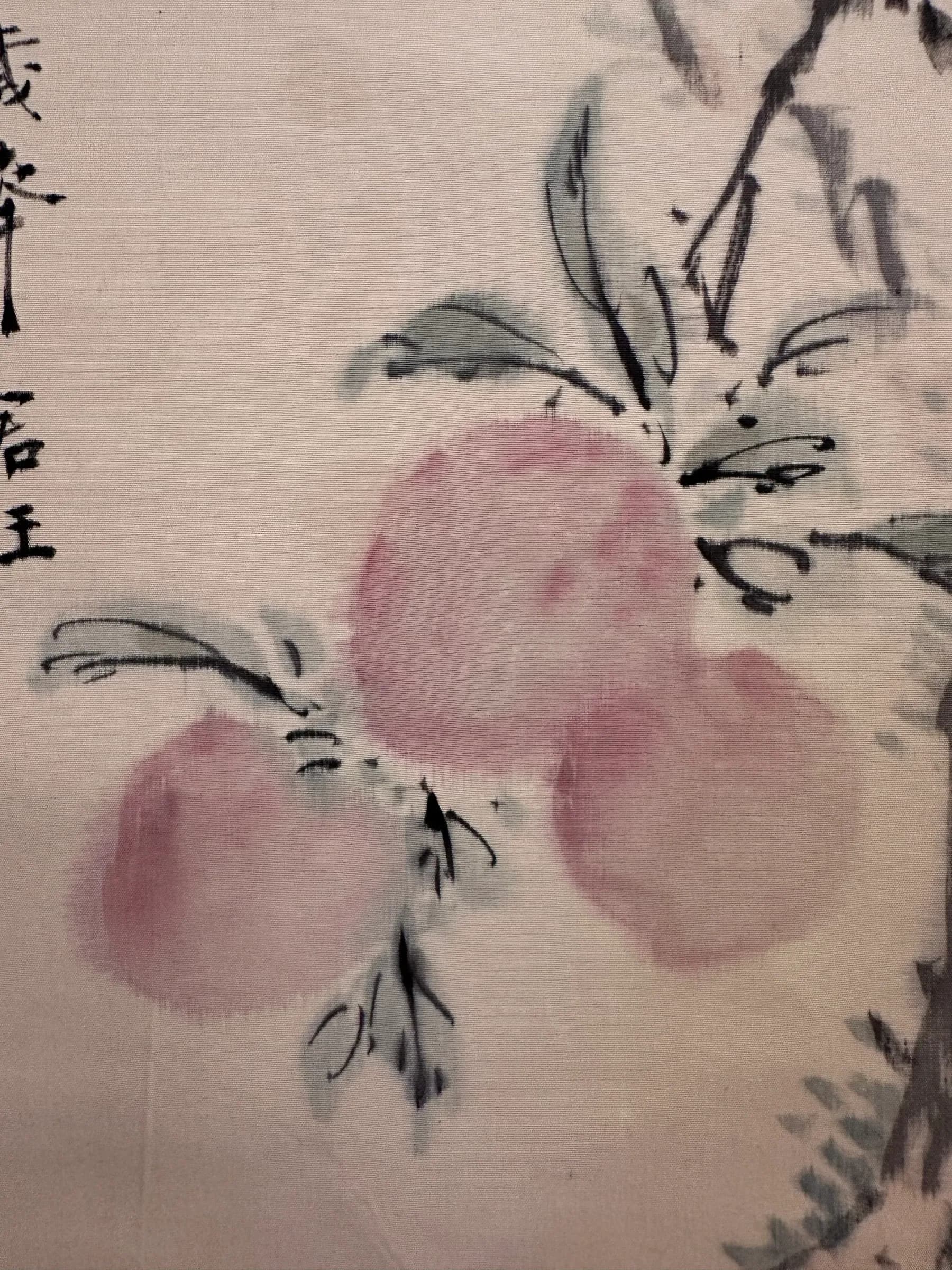
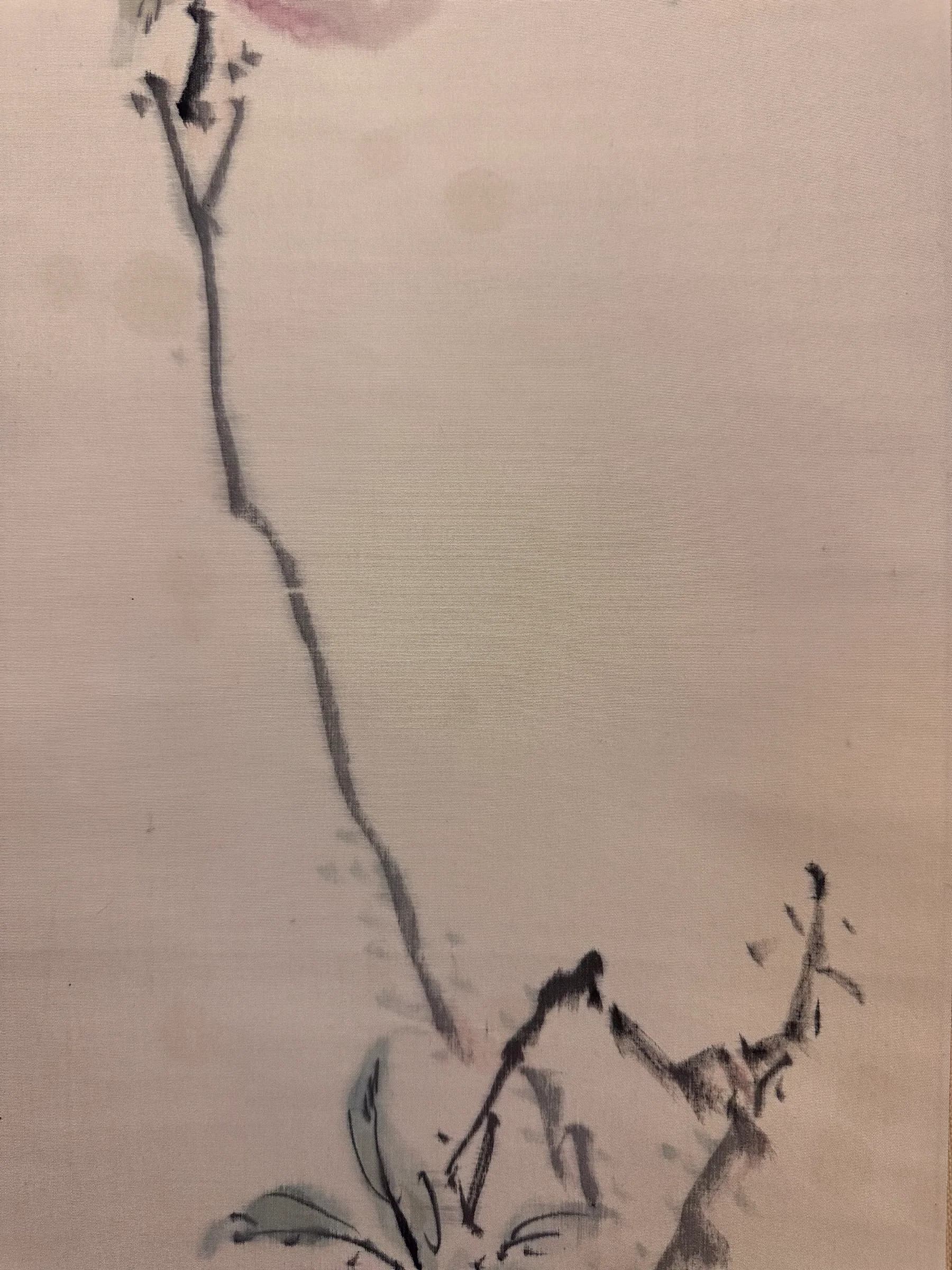
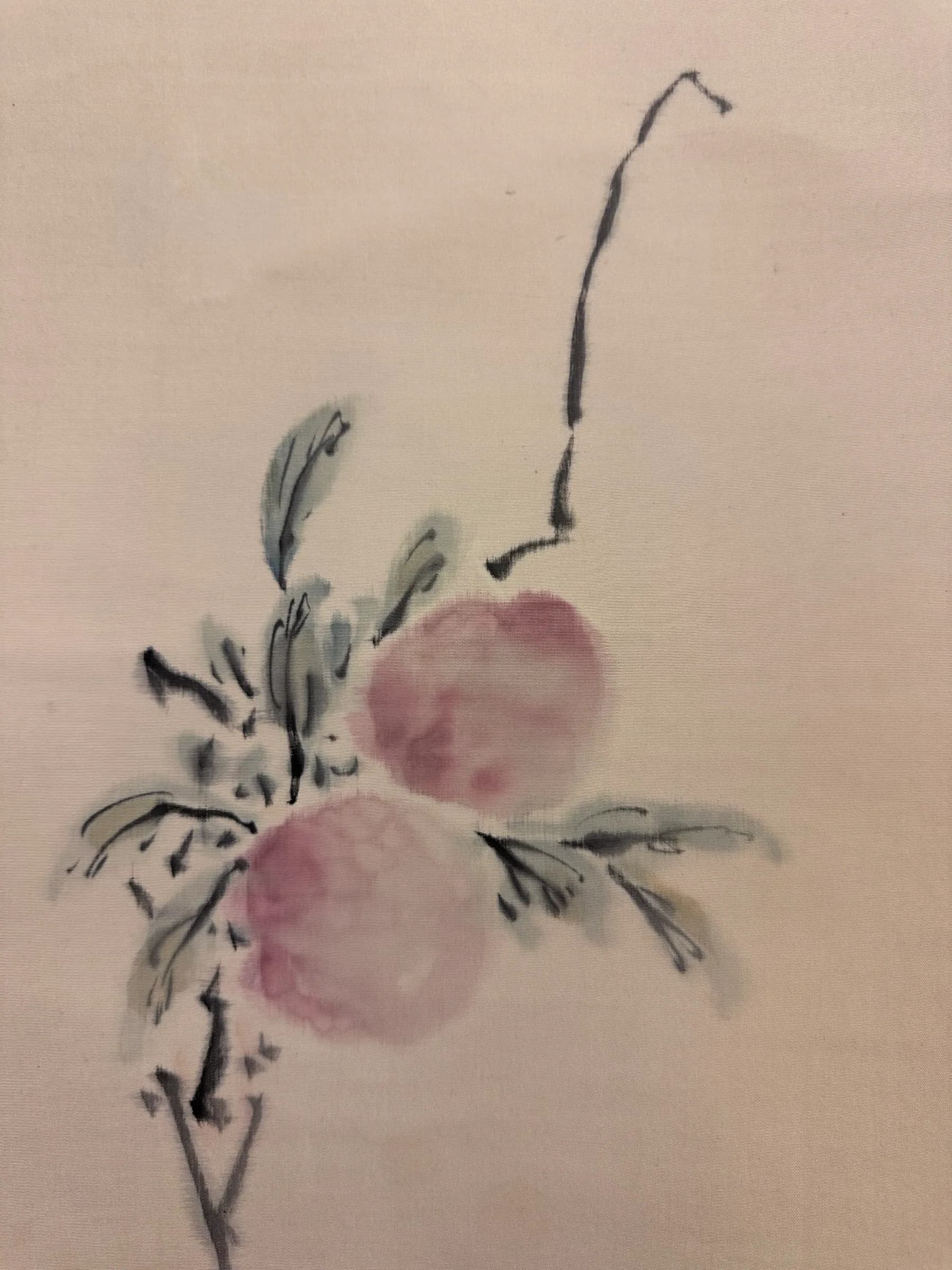
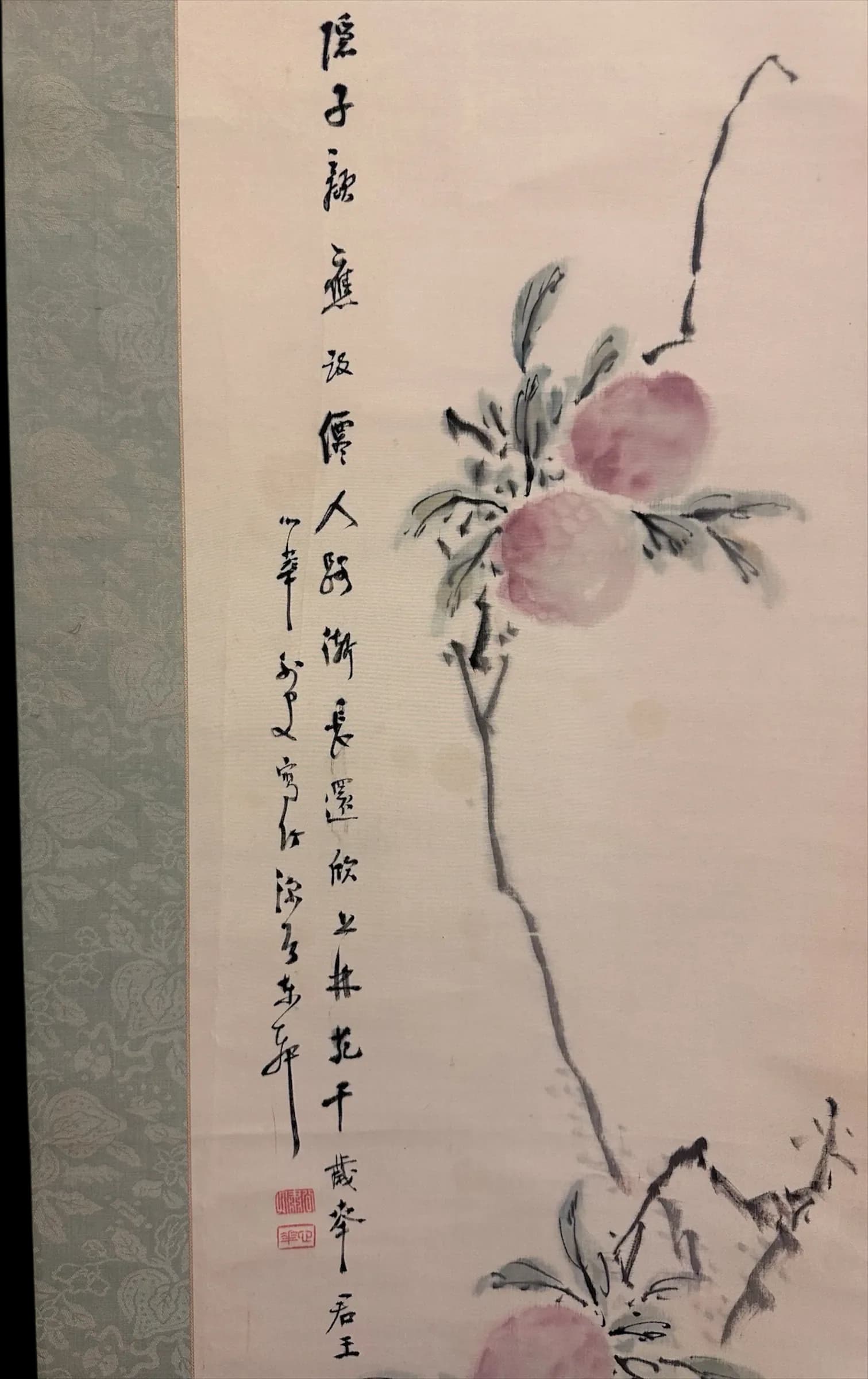
Ink and Color Painting of a Broken Branch of Immortal Peaches
設色折枝僊桃圖
- Era
- Kindai (近代)
- Subject
- Birds and Flowers (花鳥)
- Period
- Shōwa Period
- Date
- 1929
- Medium
- Hanging scroll; ink and color on silk
- Dimensions
- 30.3 × 106.7 cm (image); 43.7 × 190.0 cm (overall)
- Availability
- Available
Description
Shirasu Shinka was a prominent modern Nanga painter of the Tanomura lineage. As the fourth son of Confucian scholar Shirasu Goen 白須梧園, he initially pursued a bureaucratic path in the Imperial Japanese Navy, serving in the Imperial Japanese Navy General Staff during the First Sino-Japanese War and Russo-Japanese War before retiring in 1908 to focus wholeheartedly on painting. He was a member of the Shinbikai Painter Association 真美会 since 1905. In 1906, he opened his own painting academy in Tokyo. He spent his last years in Beppu, Kyūshū, where he dedicated himself to the flourishing Bungo Nanga 豊後南画 tradition pioneered by Tanomura Chikuden.
Shinka’s elegant palette and ethereal style perfectly align with Daoist themes of longevity, immortality, and transcendent grace, beautifully echoing the painting's subject of divine peaches. This imagery directly evokes the classic myth of the Queen Mother of the West, a supreme Daoist goddess residing in the mystical Kunlun Mountains. In her celestial garden grow immortal peaches that bestow eternal youth and cosmic spiritual power. According to the Stories of Emperor Wu of Han, the Queen Mother once gifted the emperor five of these sacred fruits. After eating them, the emperor carefully saved the pits, prompting the goddess to ask why. When he replied that he wished to plant them because they were so delicious, the Queen Mother smiled and remarked, “These trees only bear fruit once every three thousand years, and they cannot survive in earthly soil.”
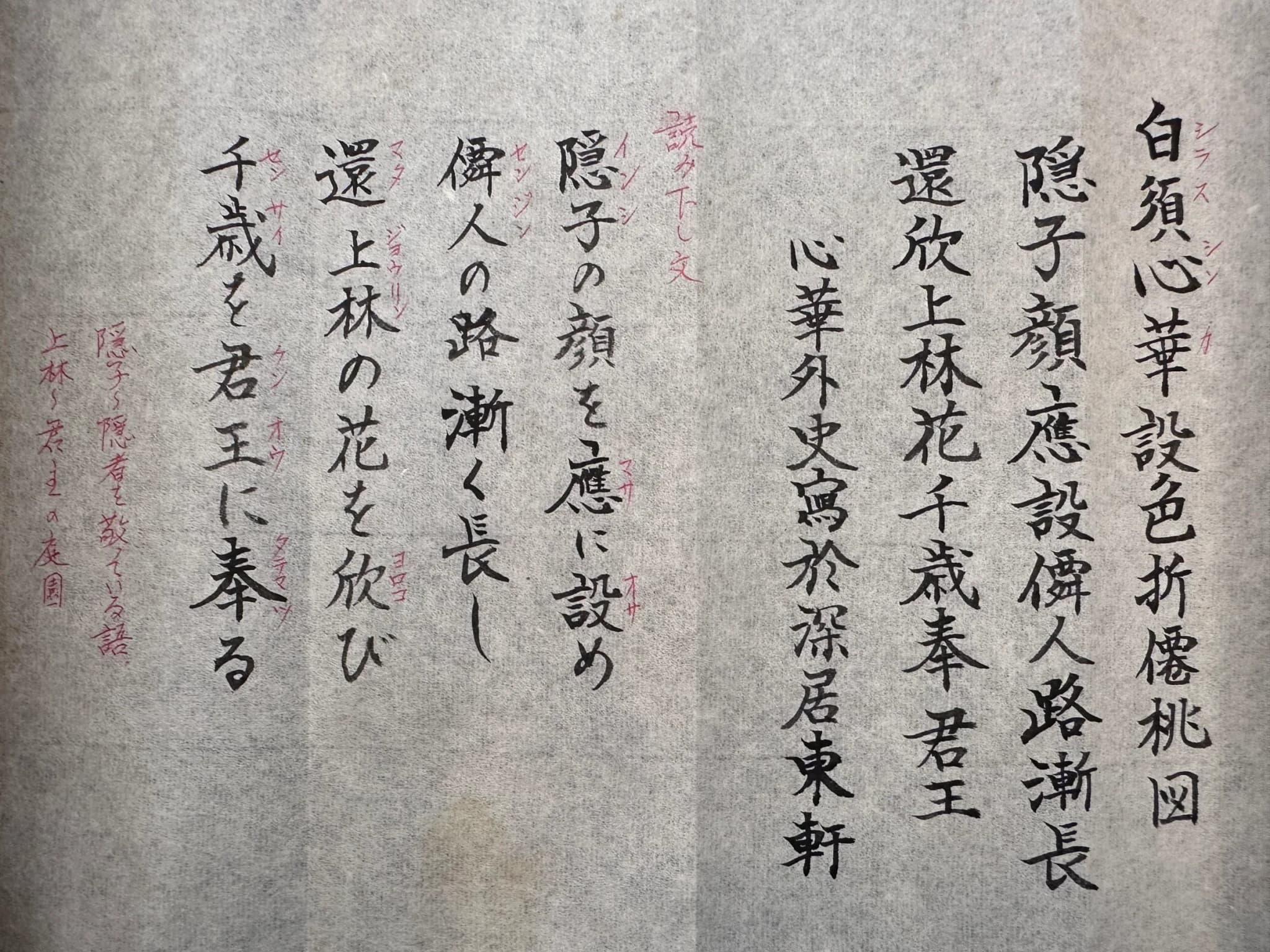
In the inscription, Shinka quotes a poem composed by the Tang chancellor Li Jiao 李嶠 in the early spring of 710 AD. The verse was written during a grand banquet hosted by Emperor Zhongzong at the Shanglin Garden, which had been reconstructed on the historic foundations of the original imperial garden built by Emperor Wu. Through his poetry, Li Jiao cleverly offered his own sovereign what Emperor Wu could never truly attain: the opportunity to feast on “immortal” peaches and enjoy a glorious reign of a thousand years.
Painting inscription
隱子顏應改
僊人路漸長
還欣上林苑
千歳奉君王
The hermit’s countenance is about to be renewed,
And the road an immortal walks becomes long and winding.
Yet how joyful it is in the Shanglin Garden,
To have [these peaches] be offered to the Sovereign for a thousand years.
心華外史寫於深居東軒 (Painted by Shinka, the unofficial historian, at the east pavillion of the Deep Residence)
Boxed characters are a tentative reading of the inscription.
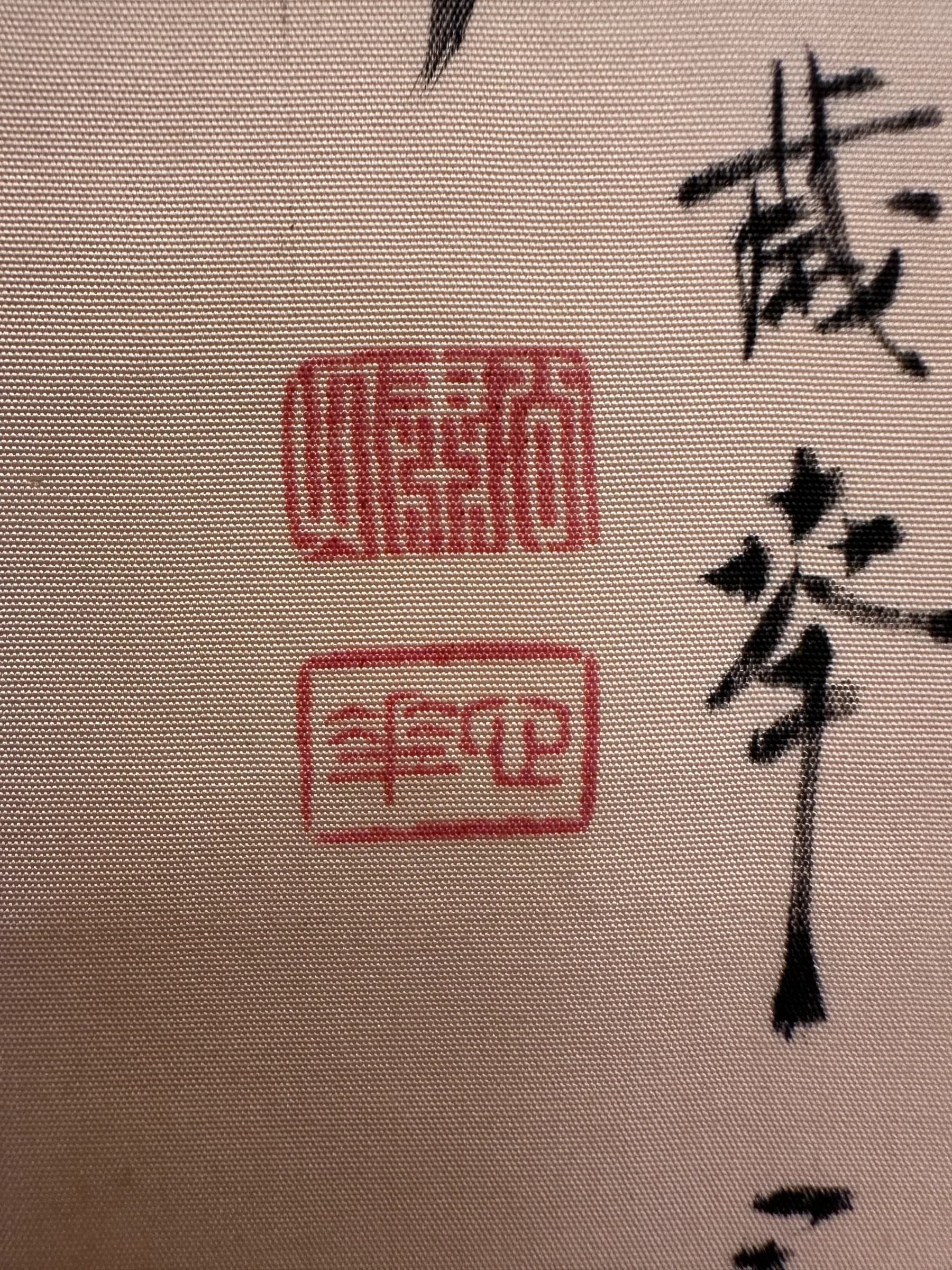
Seals
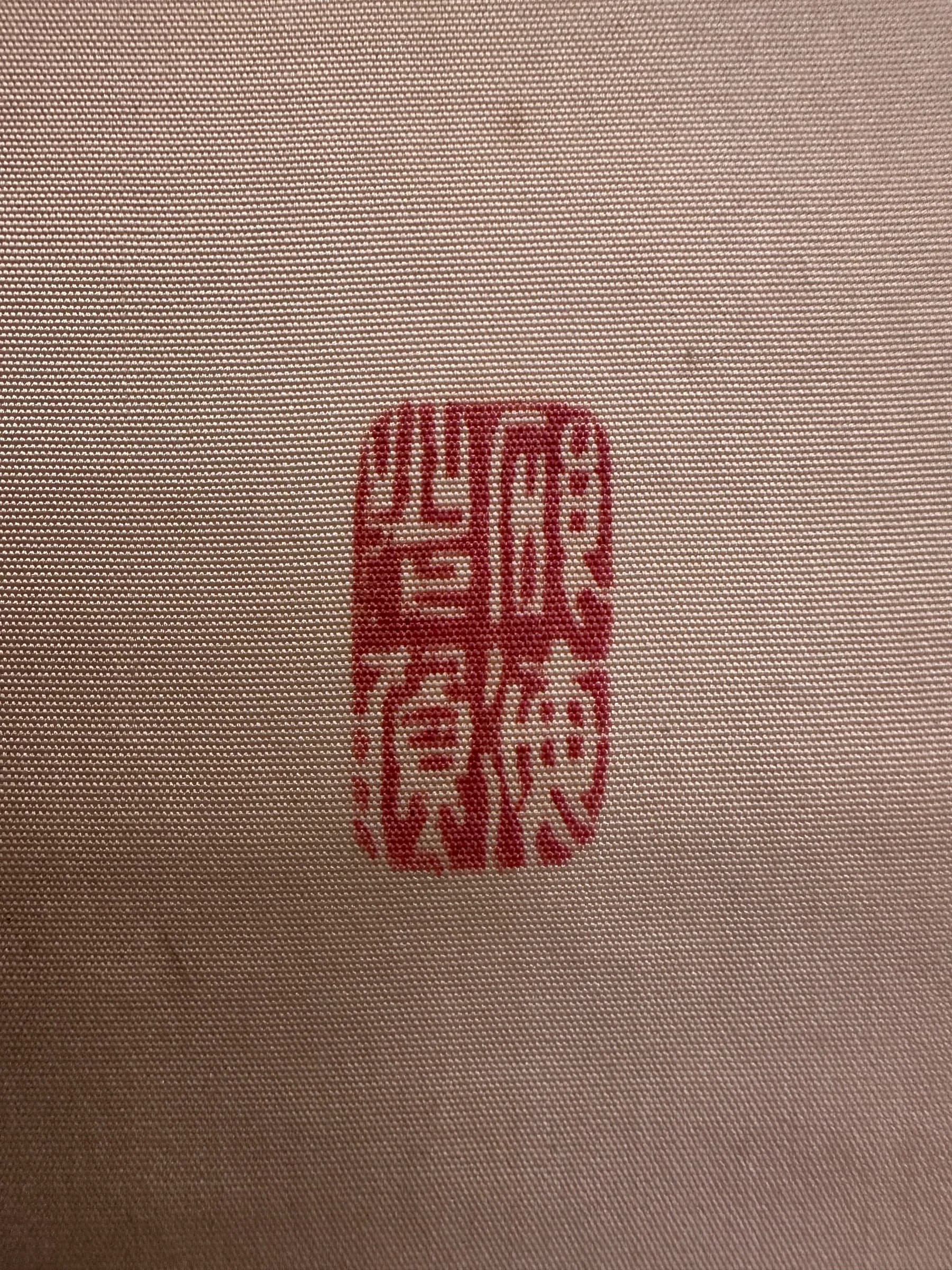
(rectangular intaglio seal) Kōshuku fu 公肅父; (rectangular relief seal) Shinka 心華; (yūin: rectangular intaglio seal) kenkai kōkon 硯海光痕; (box rectangular intaglio seal) Kōshuku fu 公肅父; (box rectangular relief seal) Shinka 心華
Boxed characters are a tentative reading of the impression.
Box inscription
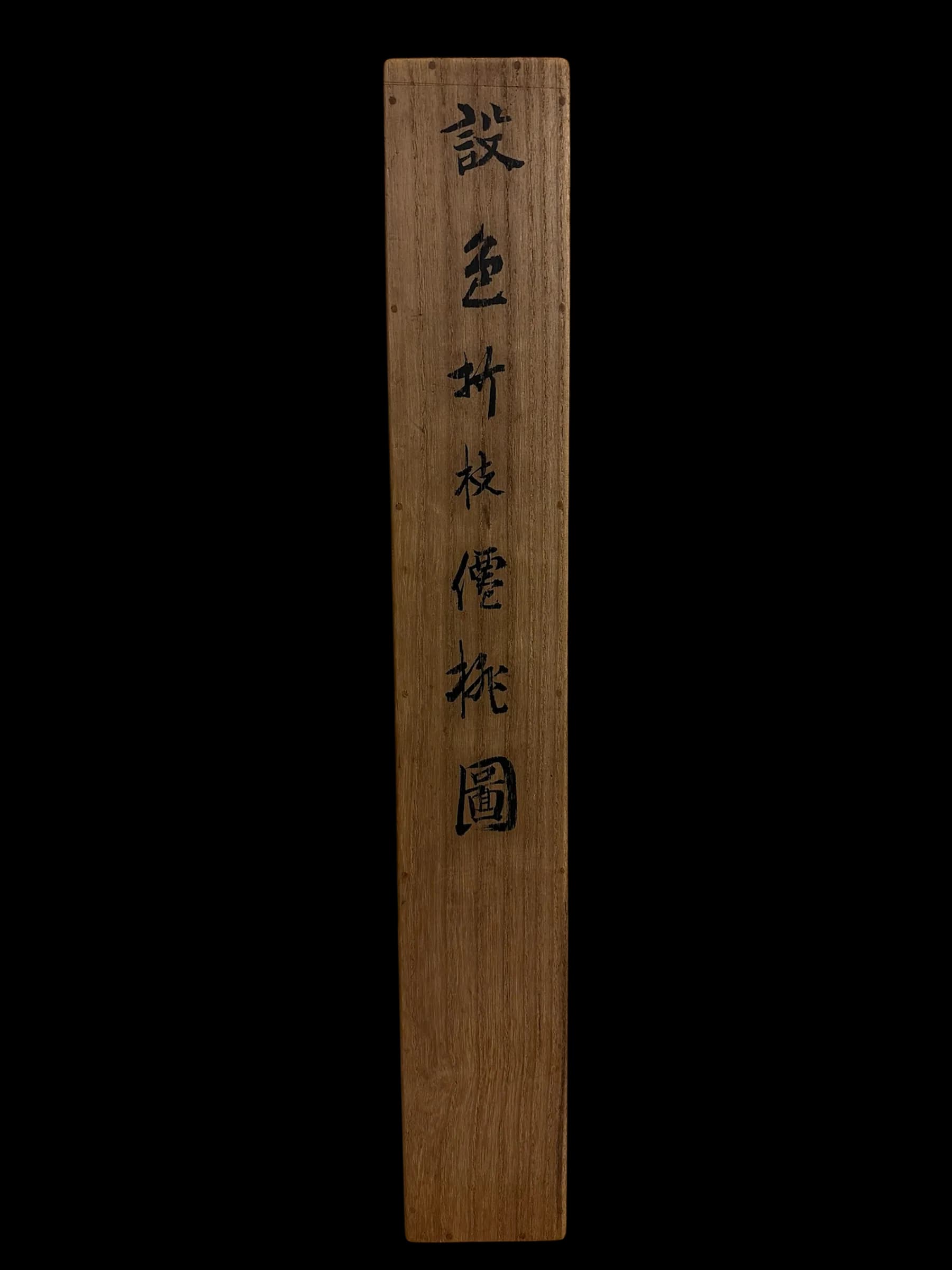
(front): 設色折枝僊桃圖 (Ink and Color Painting of a Broken Branch of Immortal Peaches)
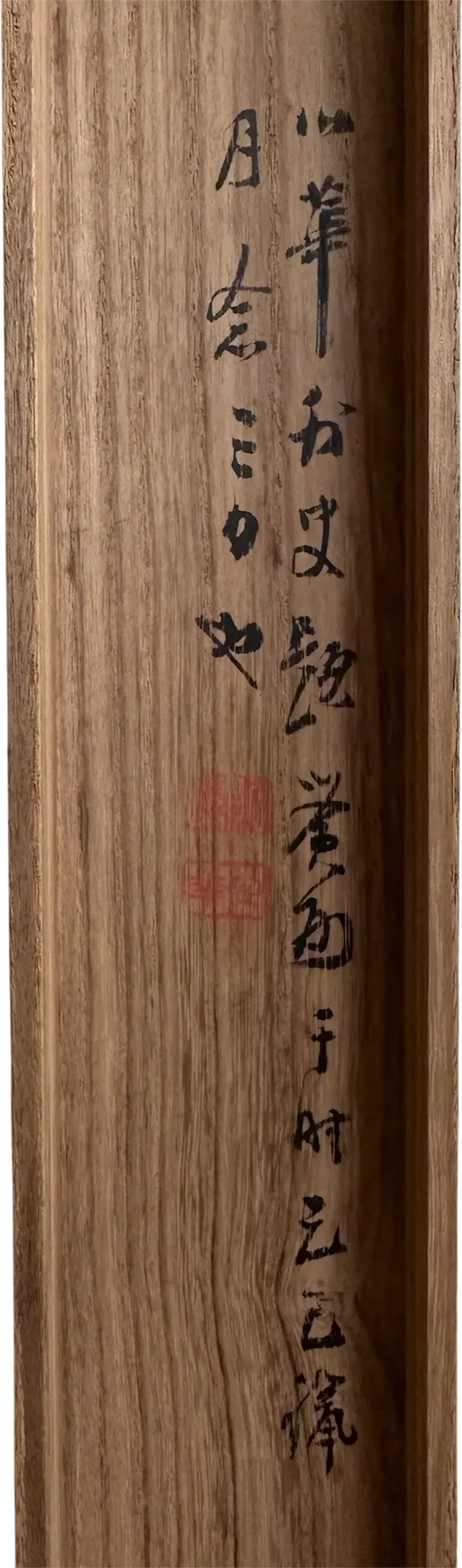
(verso): 心華外史題簽面于時己巳臘月念三日也 (Inscribed on the title slip by Shinka, the unofficial historian, on December 23 of the tsuchinotomi year [1929])
Accessories and documentation
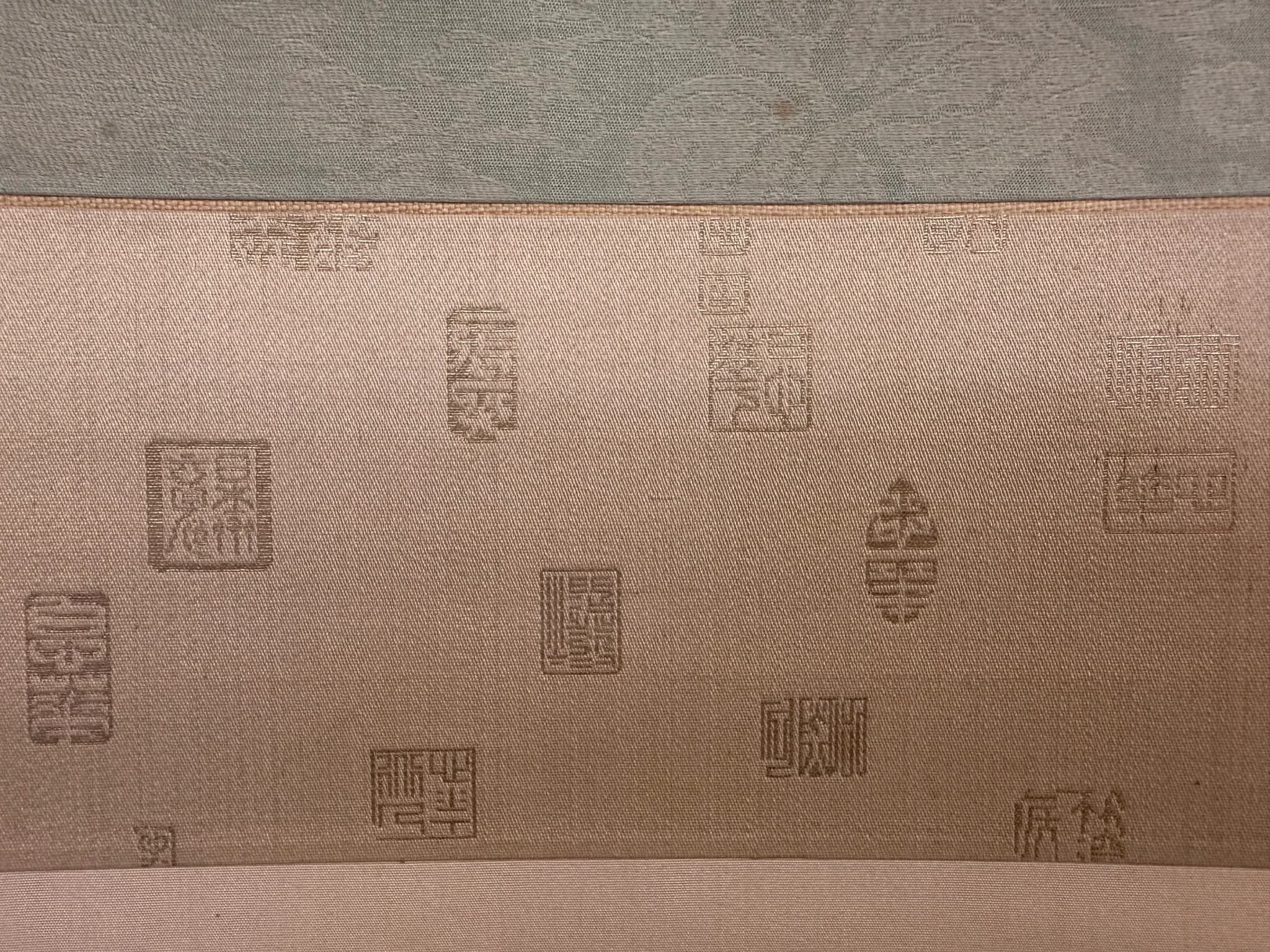
Mounting decorated with Shinka's seals.
A Japanese reading of the poetic inscription.