
View 1 of 13
Sawa Sanseki (1772–1853)
澤三石
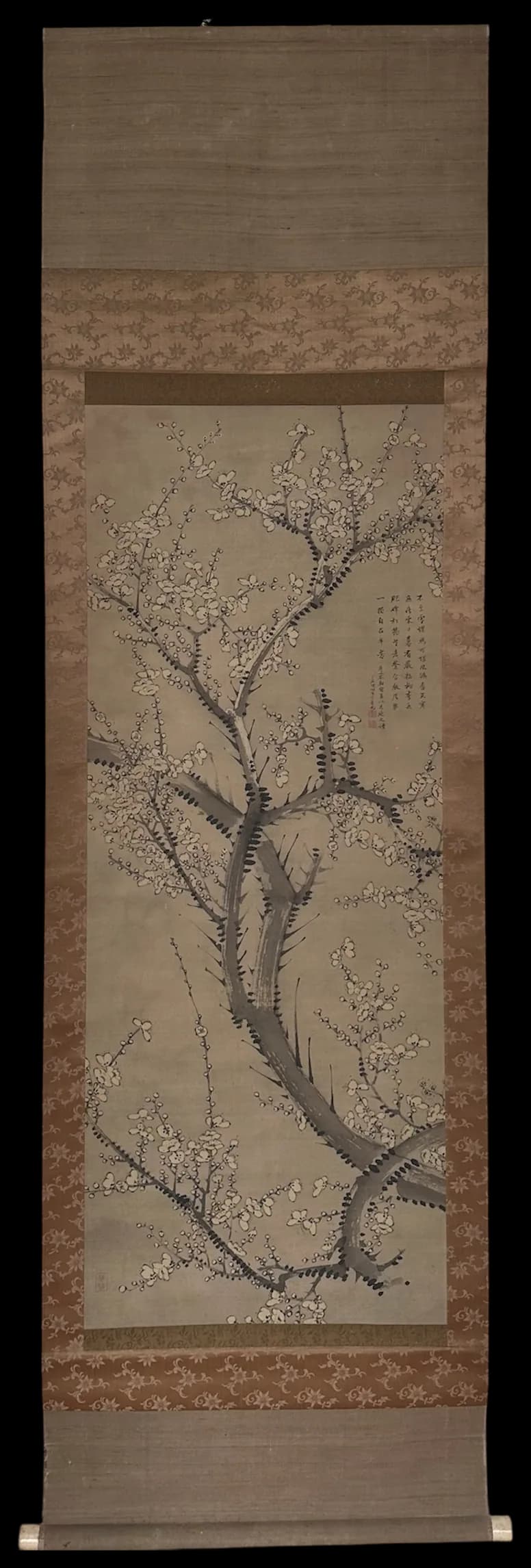
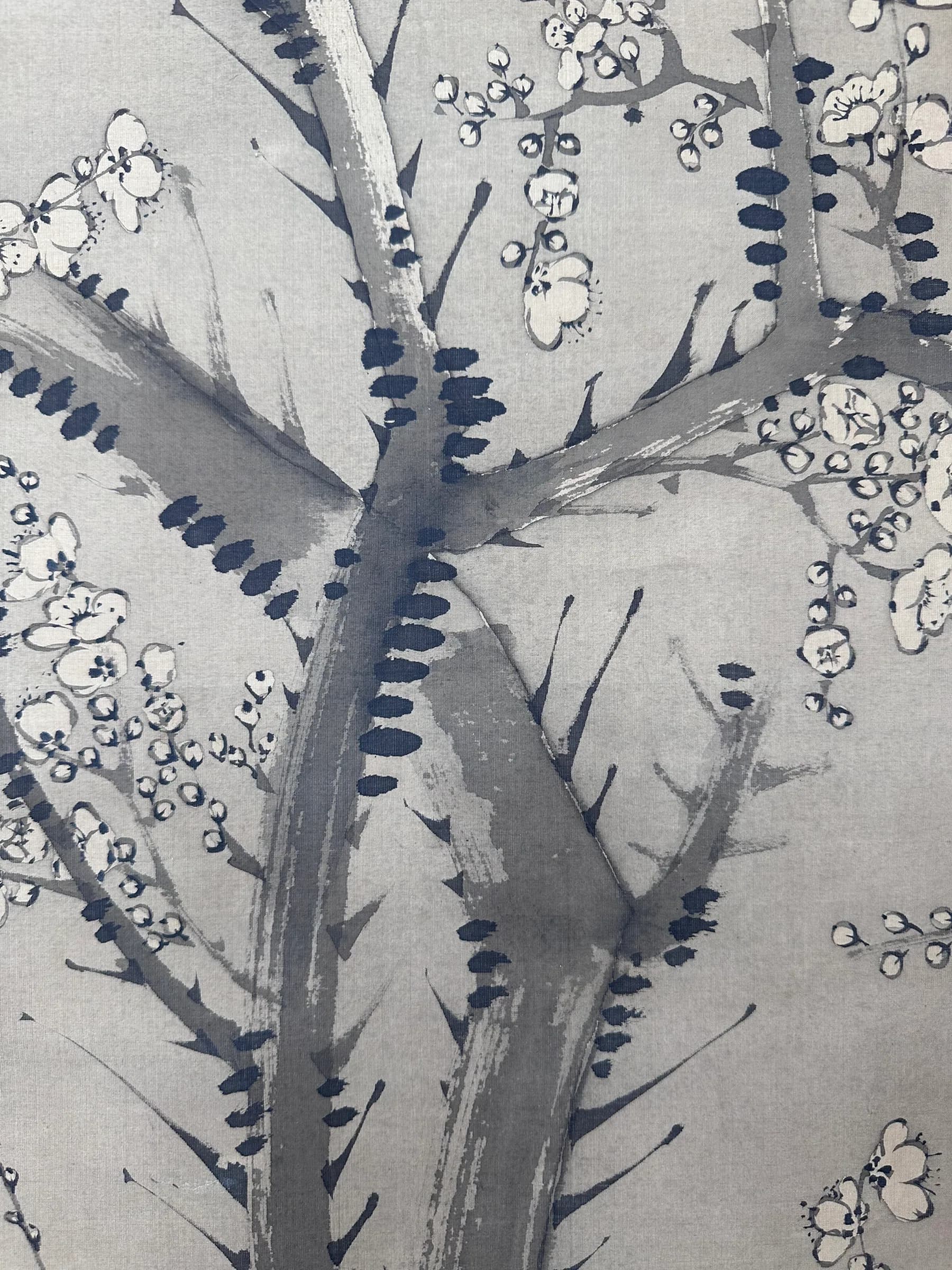
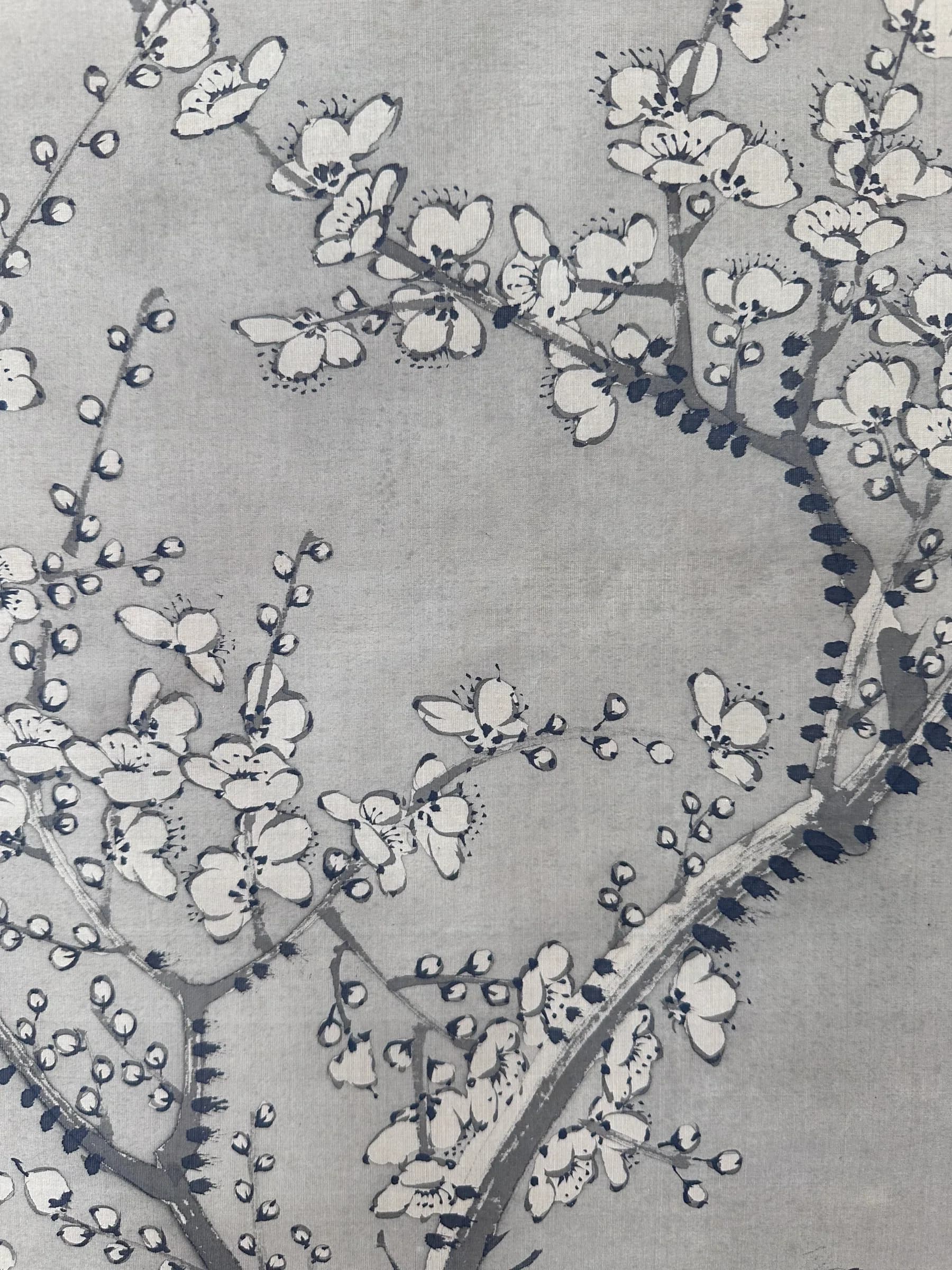
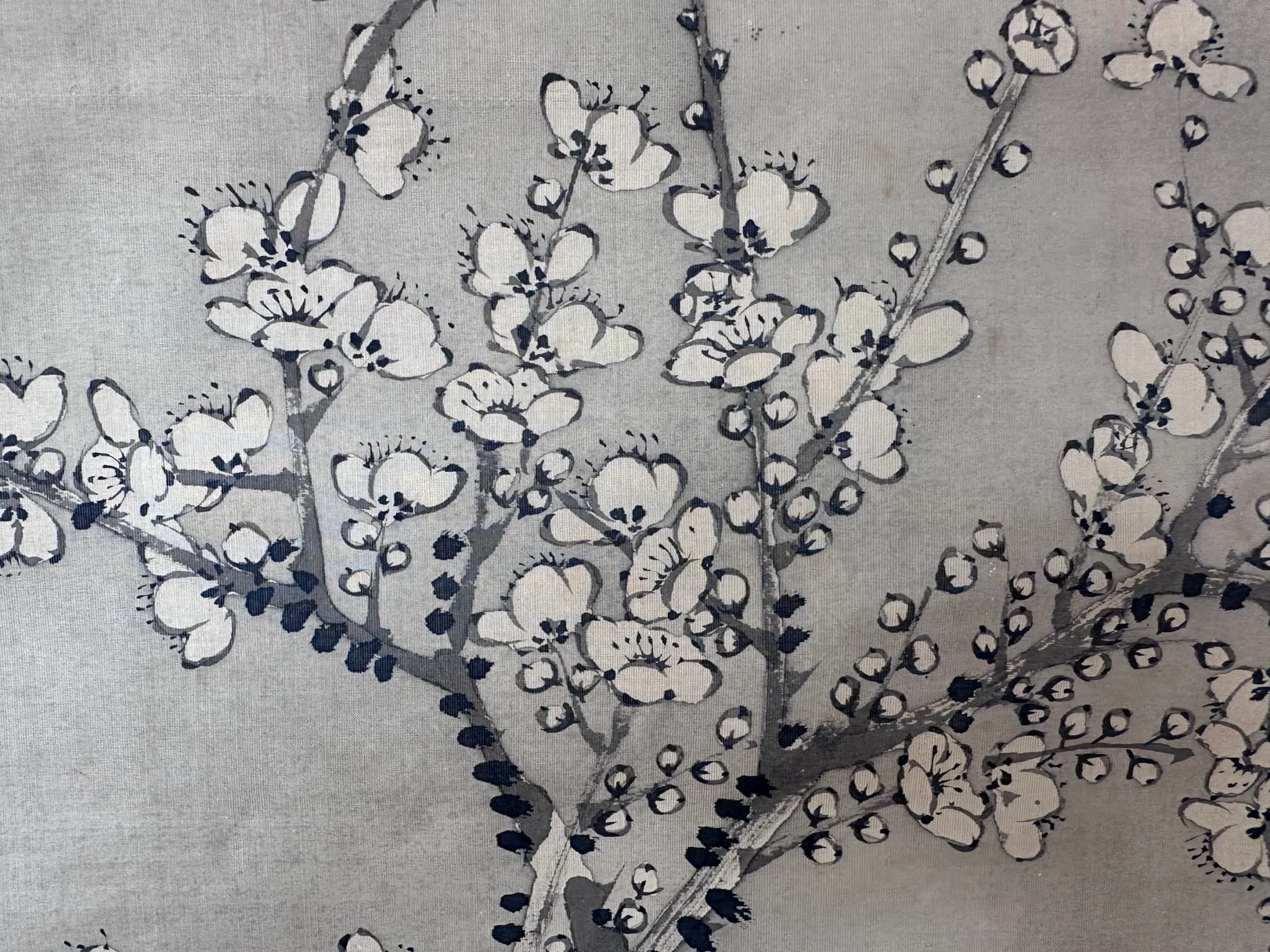
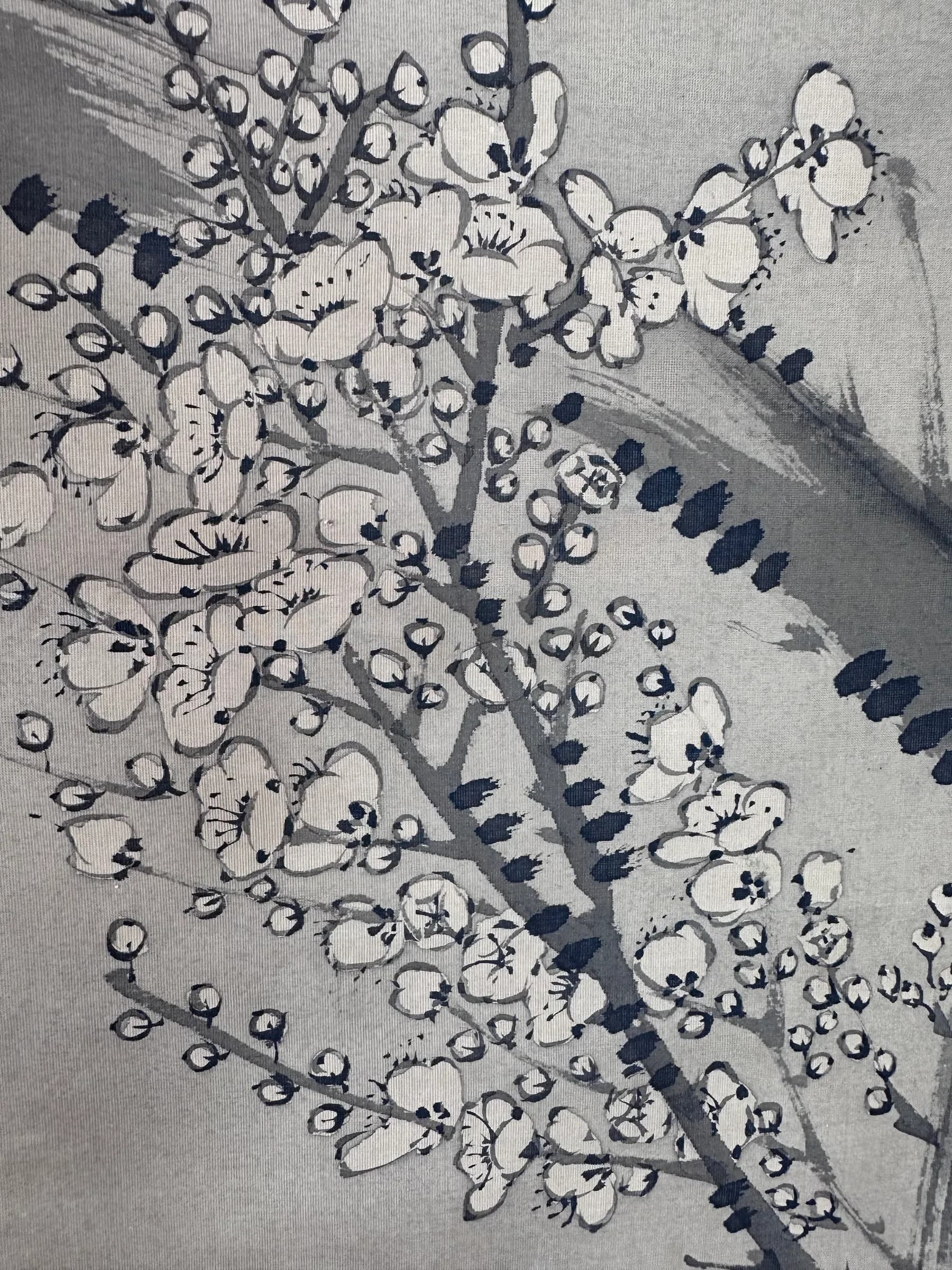
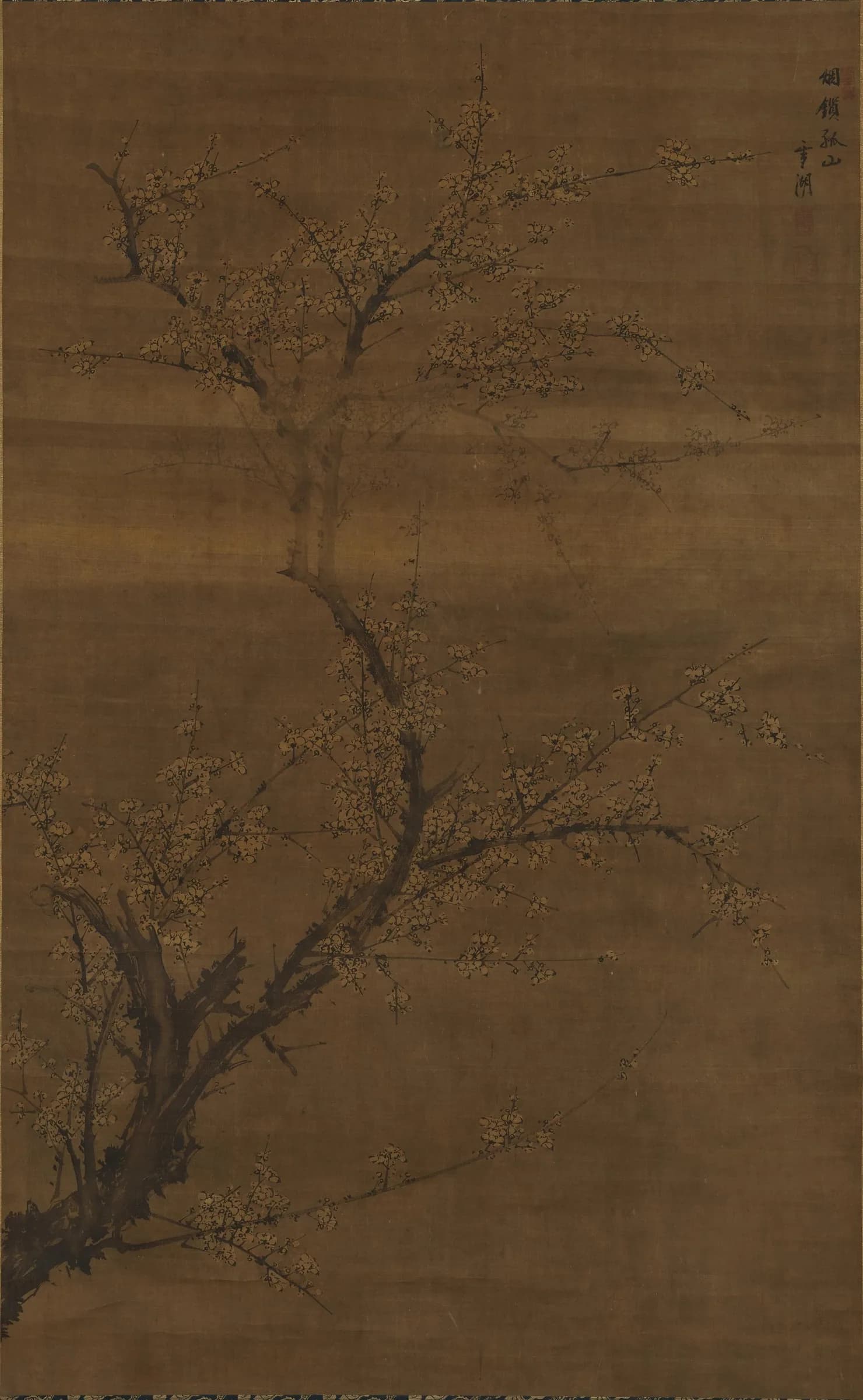
Plum Blossoms
墨梅図
- Era
- Kinsei (近世)
- Subject
- Birds and Flowers (花鳥)
- Period
- Edo Period
- Date
- 1850
- Medium
- Hanging scroll; ink and color on silk
- Availability
- Available
Description
Sawa Sanseki was a distinguished high-ranking samurai of the Hiroshima Domain who ascended to the role of Toshiyori 年寄 (senior counselor) in 1831, the same year Asano Naritaka 浅野斉粛 assumed leadership of the domain. While this appointment marked the pinnacle of Sanseki’s political career and signaled his status as lord Naritaka’s most trusted retainer, the subsequent decade was fraught with instability. The administration faced compounding crises, including the immense financial burden of Naritaka’s marriage into the Shogunal family and the devastating impact of the Tenpō Famine (1833–1837). As the domain’s leadership struggled to implement reforms, internal factionalism deepened, likely leading to Sanseki’s loss of political standing. By 1843, he had retired from official service, dedicating his remaining years to the refined, introspective practice of calligraphy and painting.
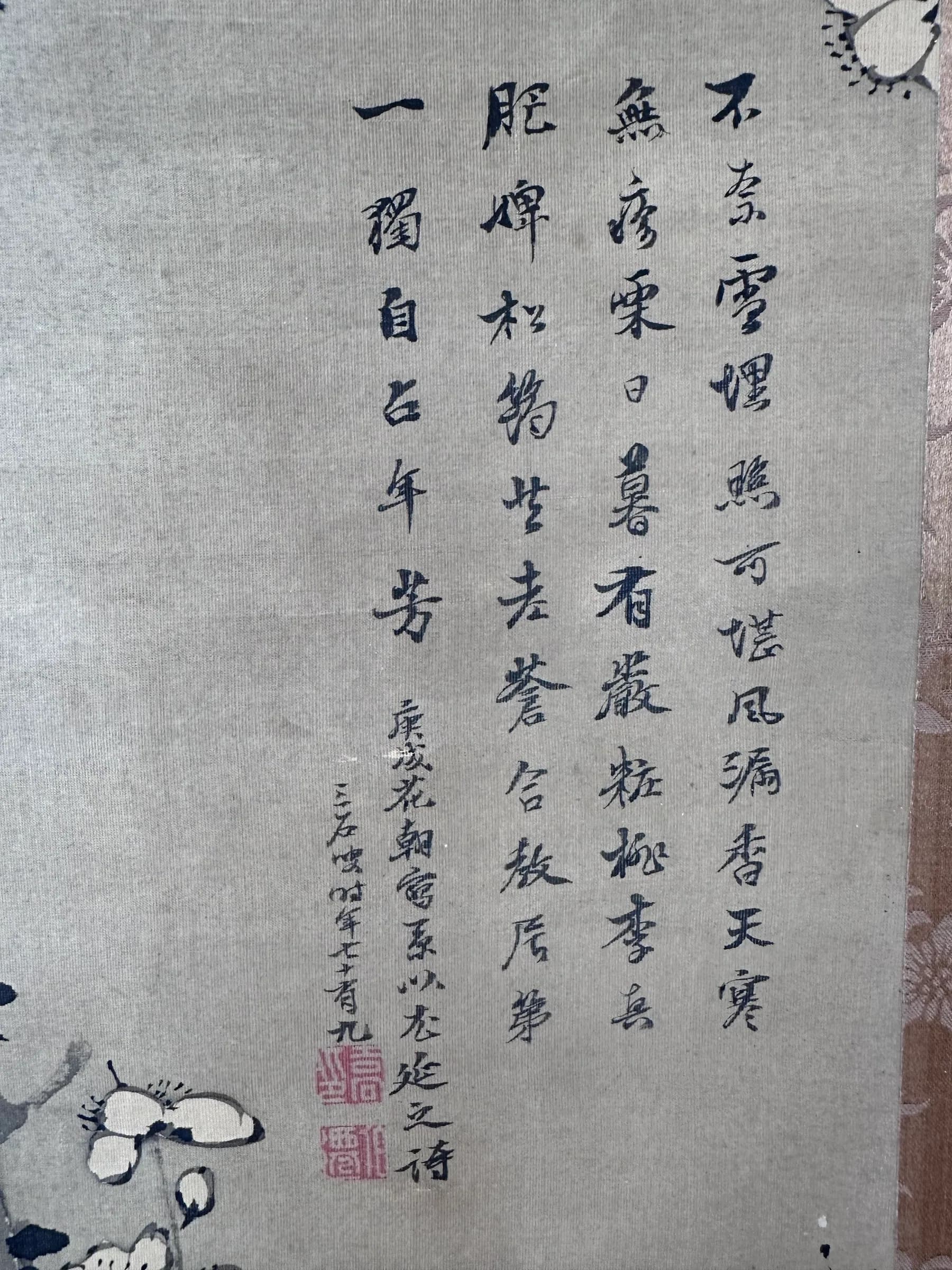
Against this backdrop of political displacement, Sanseki utilized the plum blossom as a sophisticated vehicle for self-vindication, transforming a traditional literati subject into a manifesto of his unyielding moral integrity. By depicting the winter-blooming branch, he signaled that he remained unsullied by the era’s factionalism, asserting that his devotion to the domain remained as resilient as a blossom in the frost. This defiant reclamation of character, channeling the solitary grace of a statesman whose ambitions were thwarted, is crystallized in the painting’s inscription of Southern-Song intellectual You Mao’s 尤袤 (1127–1194) poem, which elevates the plum’s “weathered integrity” above opportunistic seasonal flowers to proclaim a solitary victory of virtue:
The snow cannot bury its inner glow,
Yet the wind cannot contain its escaping scent.
Though the sky is freezing, it shows no sign of frailty;
As the sun sets, it maintains its solemn, elegant grace.
The peach and plum are but coarse, fleshy handmaidens;
Only with the pine and bamboo does it share its weathered integrity.
It rightfully deserves the foremost rank,
Claiming the year's first beauty all for itself.
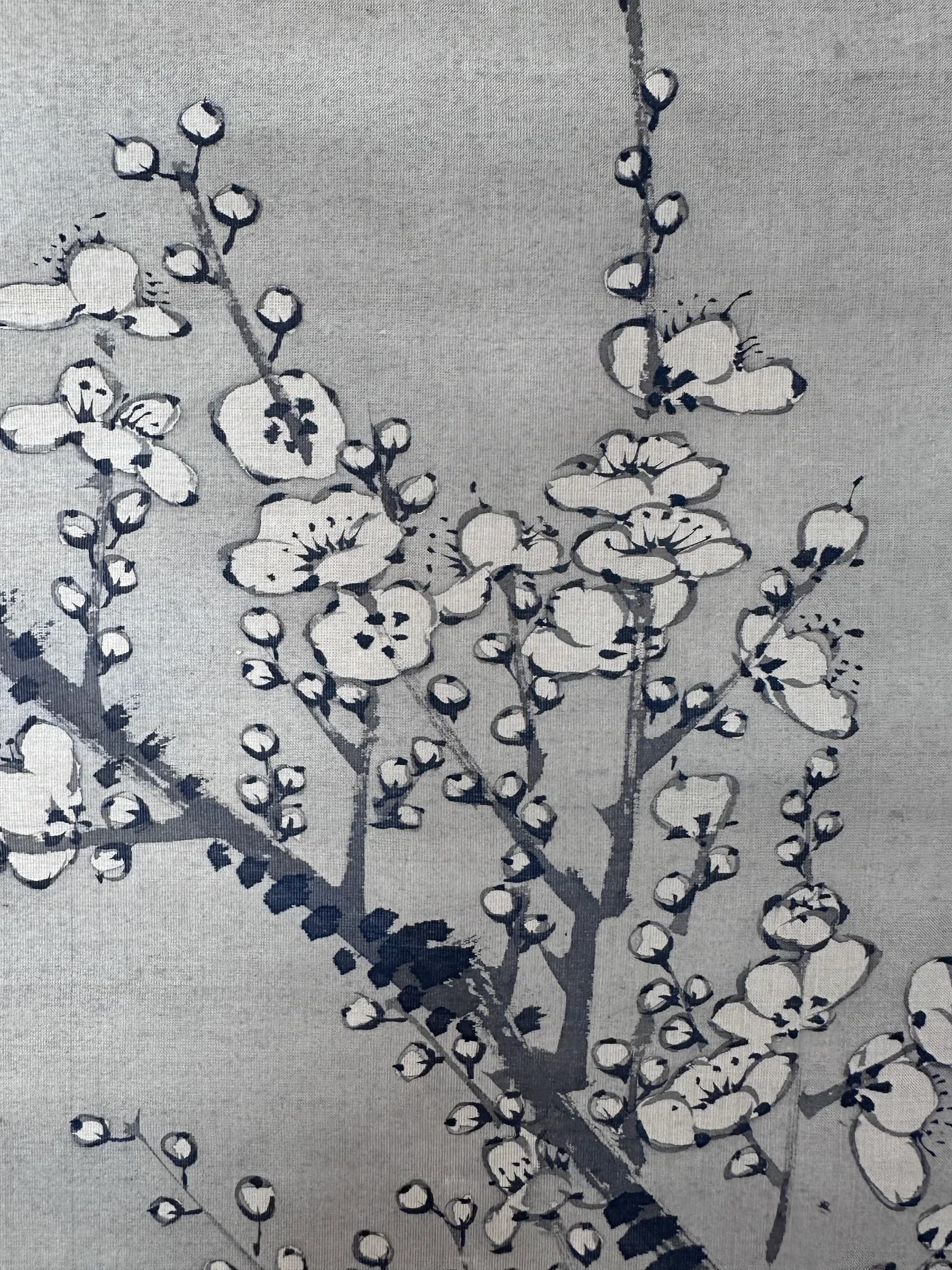
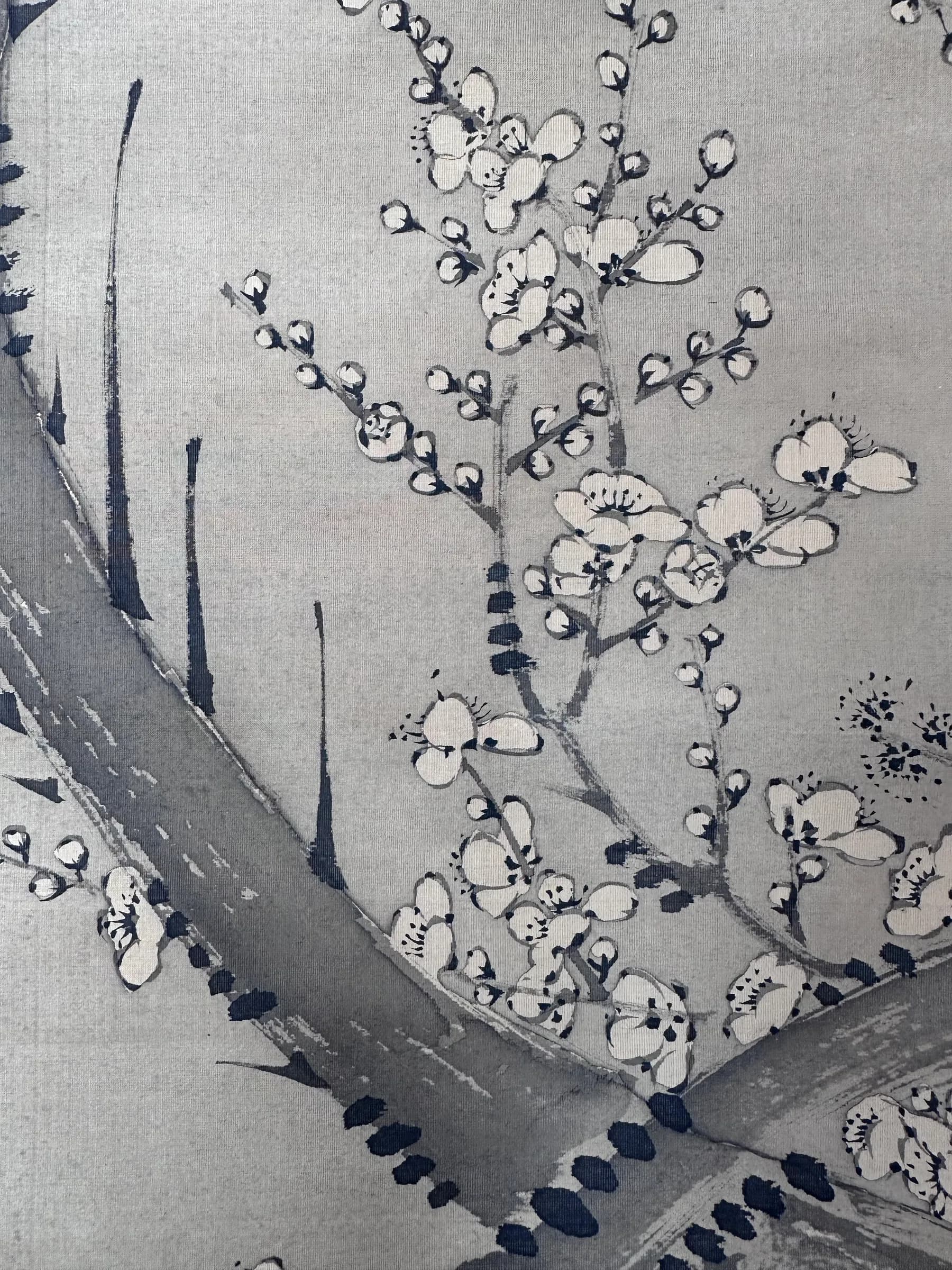
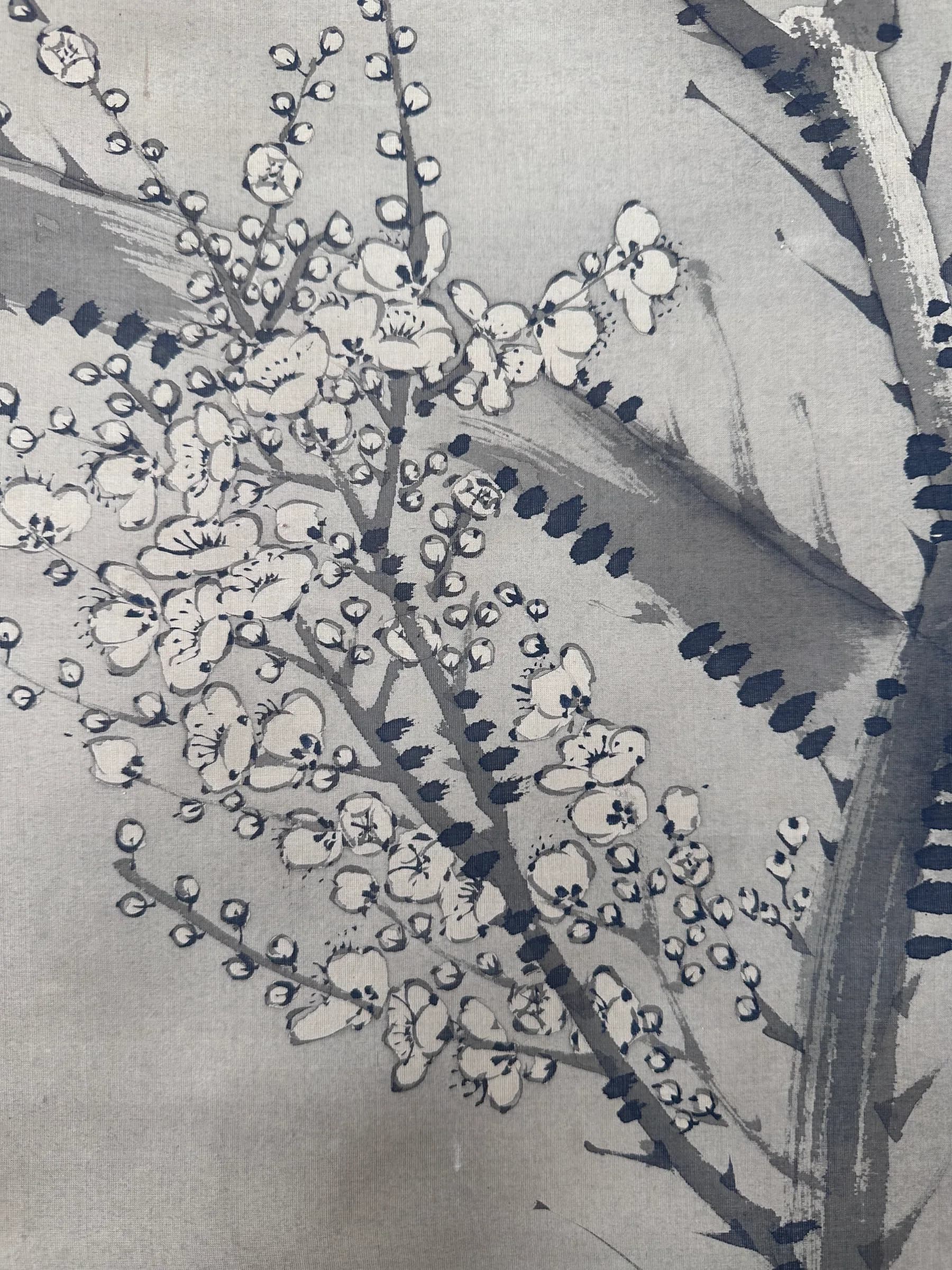
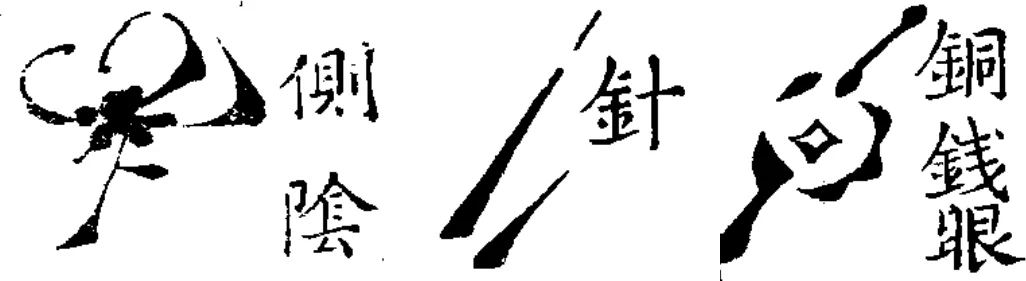
Beyond its personal significance, this work also reflects the Domain’s flourishing literati culture, as a result of a comprehensive Neo-Confucianization of its educational system in the mid-Edo period under the widespread sinophile trend among samurai class. Within this context, Sanseki’s stylistic choices consciously engage with continental models, paying tribute to the Ming painter Liu Xuehu 劉雪湖. His Plum Blossom Manual of Liu Xuehu 劉雪湖梅譜, a widely circulated handbook on plum-blossom painting imported and reprinted in Japan by the early eighteenth century, clearly informs Sanseki’s approach, as seen in the close correspondence between his renderings and the manual’s prescribed forms such as lateral shading 側陰, needle 針, and copper coin eye 銅錢眼.
Painting inscription
不奈雪埋照
可堪風漏香
天寒無疹粟
日暮有嚴粧
桃李真肥婢
松筠共老蒼
合教居第一
獨自占年芳
The snow cannot bury its inner glow,
Yet the wind cannot contain its escaping scent.
Though the sky is freezing, it shows no sign of frailty;
As the sun sets, it maintains its solemn, elegant grace.
The peach and plum are but coarse, fleshy handmaidens;
Only with the pine and bamboo does it share its weathered integrity.
It rightfully deserves the foremost rank,
Claiming the year's first beauty all for itself.
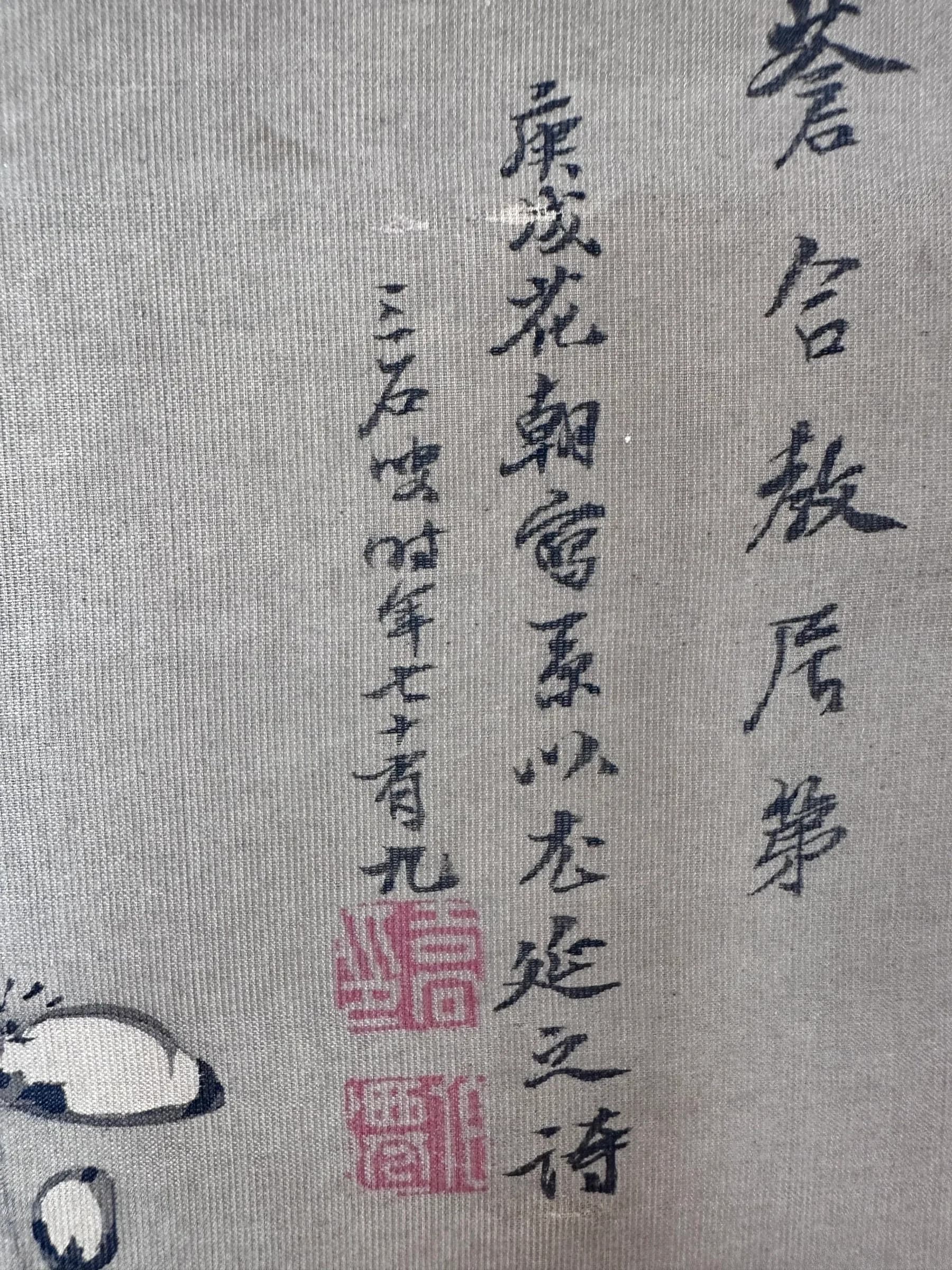
庚戌花朝寫系以尤延之詩 三石叟時年七十有九 (Painted during the Flower Festival of the kanoe-inu year [1850] with an accompanying poem by You Maozhi—Sanseki the elder at the age of seventy-nine)
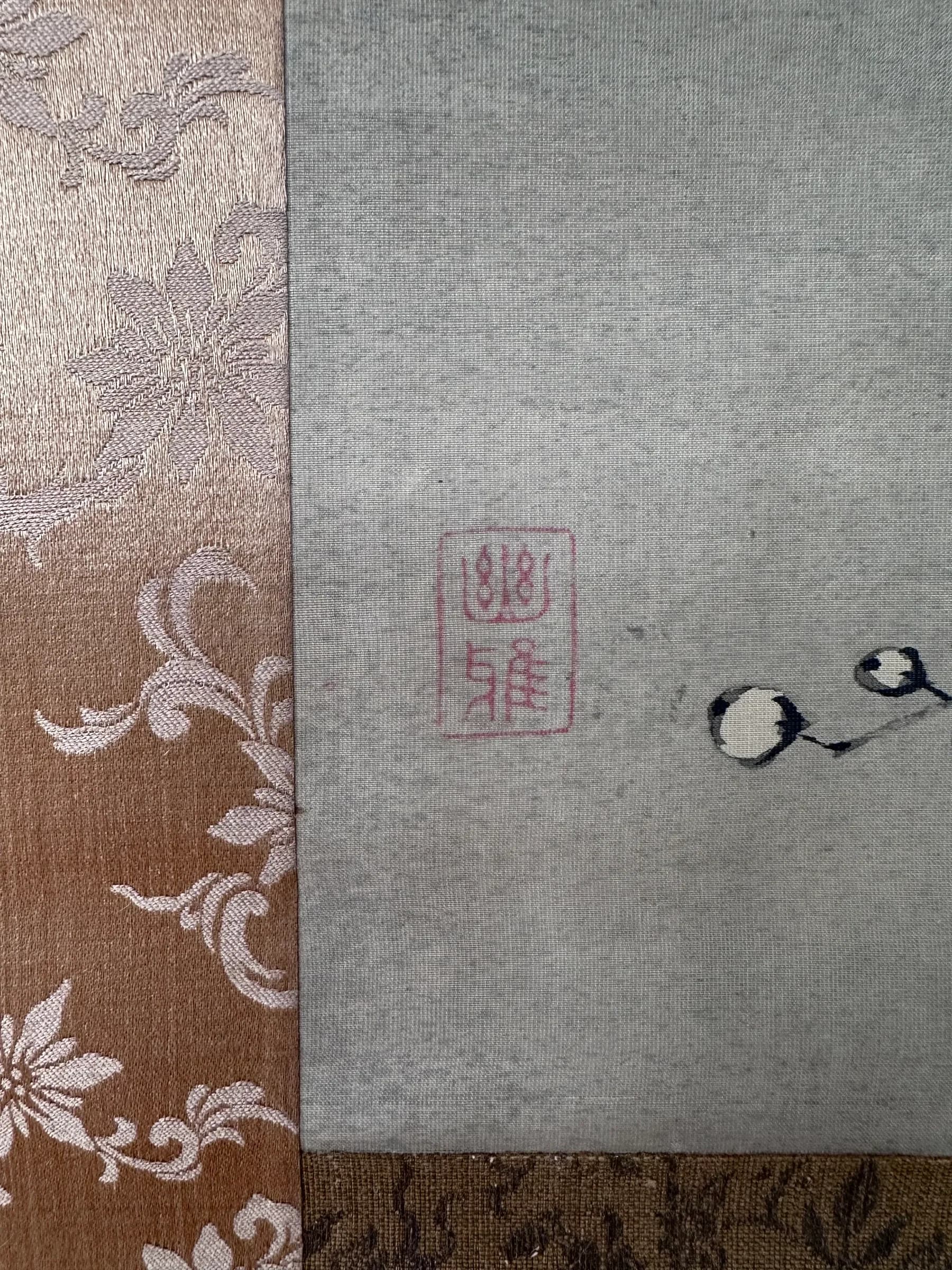
Seals
(square intaglio seal) Kyō in 喬印; (square intaglio seal) Hakusen 伯遷; (rectangular relief seal) yūga 幽雅
Sanseki was likely named in honor of the late-Tang poet Zhang Qiao (Chō Kyō) 張喬, with whom he shared the exact same given name (Kyō) and courtesy name (Hakusen). This deliberate naming contrasts with his deep affinity for Song-dynasty poetry, epitomizing the dramatic evolution of mid-Edo samurai culture.