
View 1 of 13
Rai Shihō (1823–1889)
頼支峰
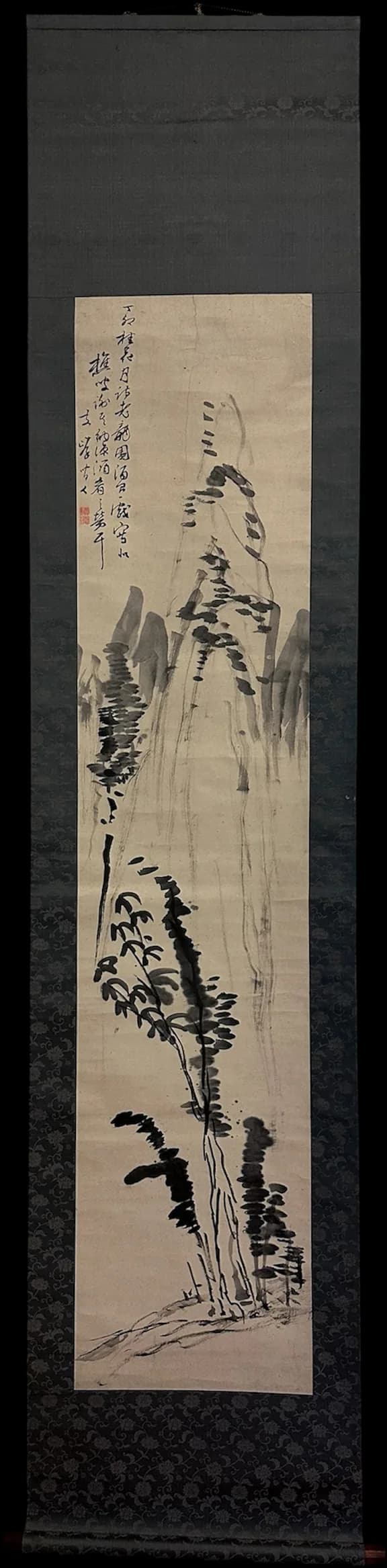
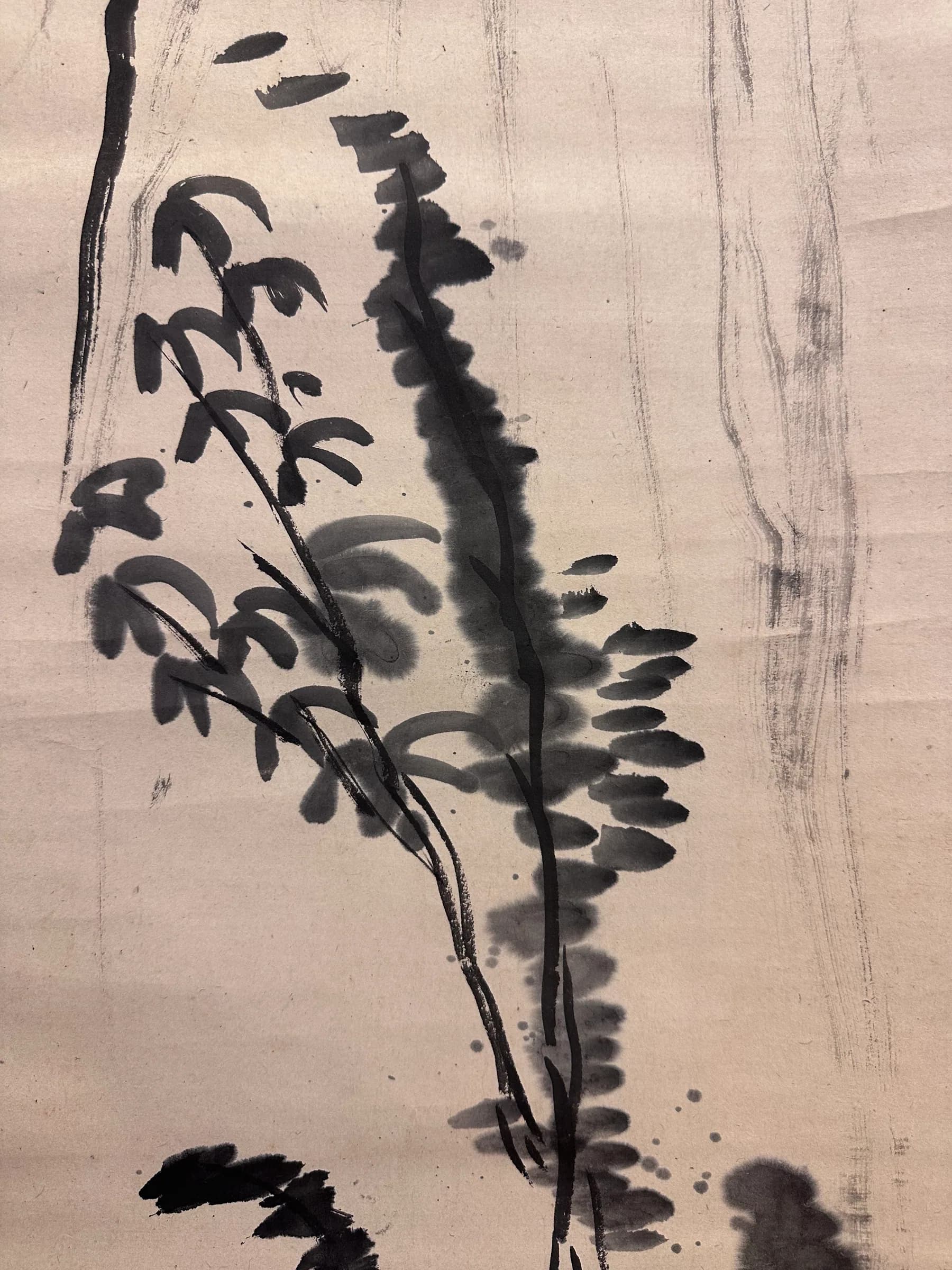
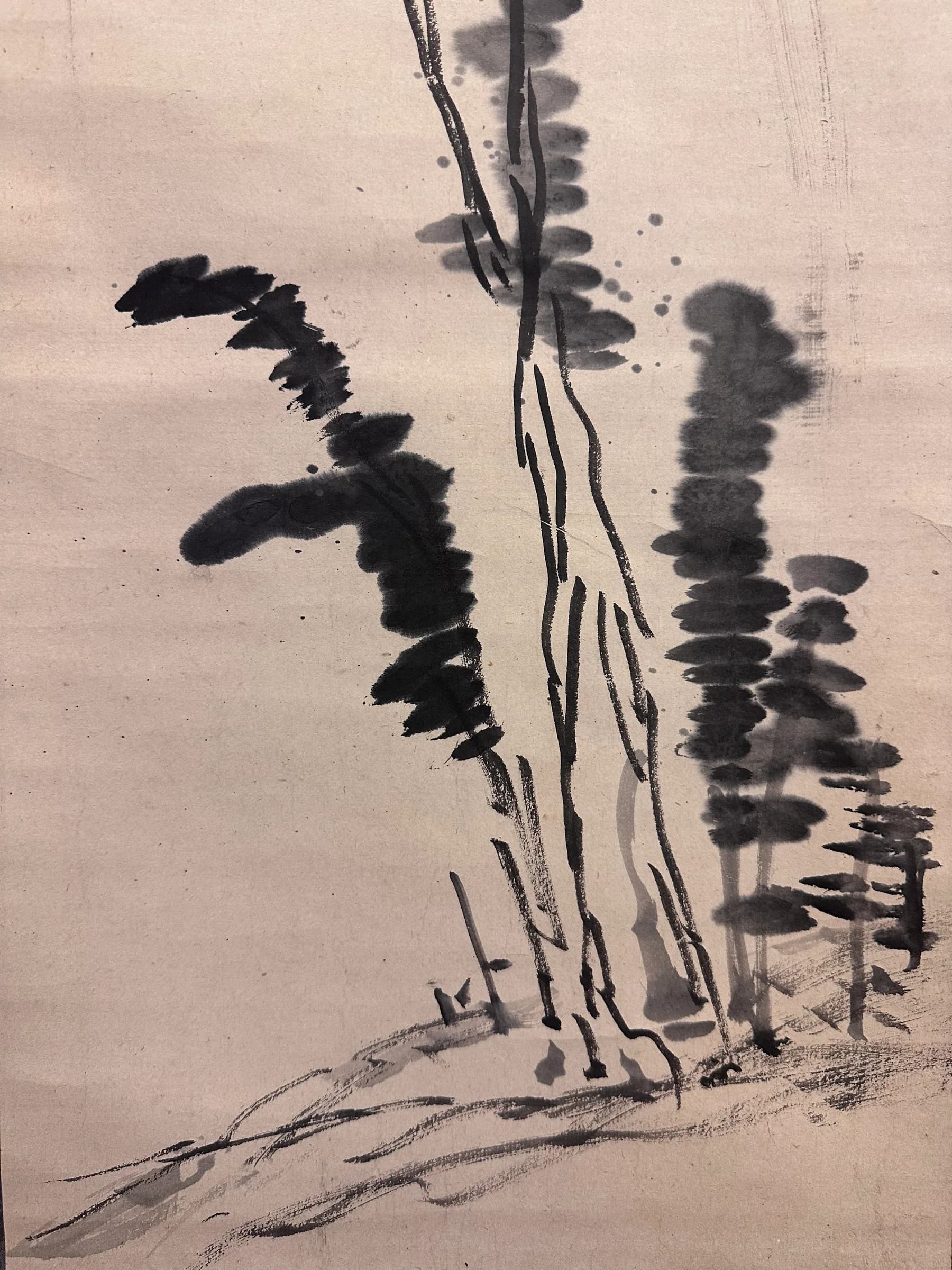
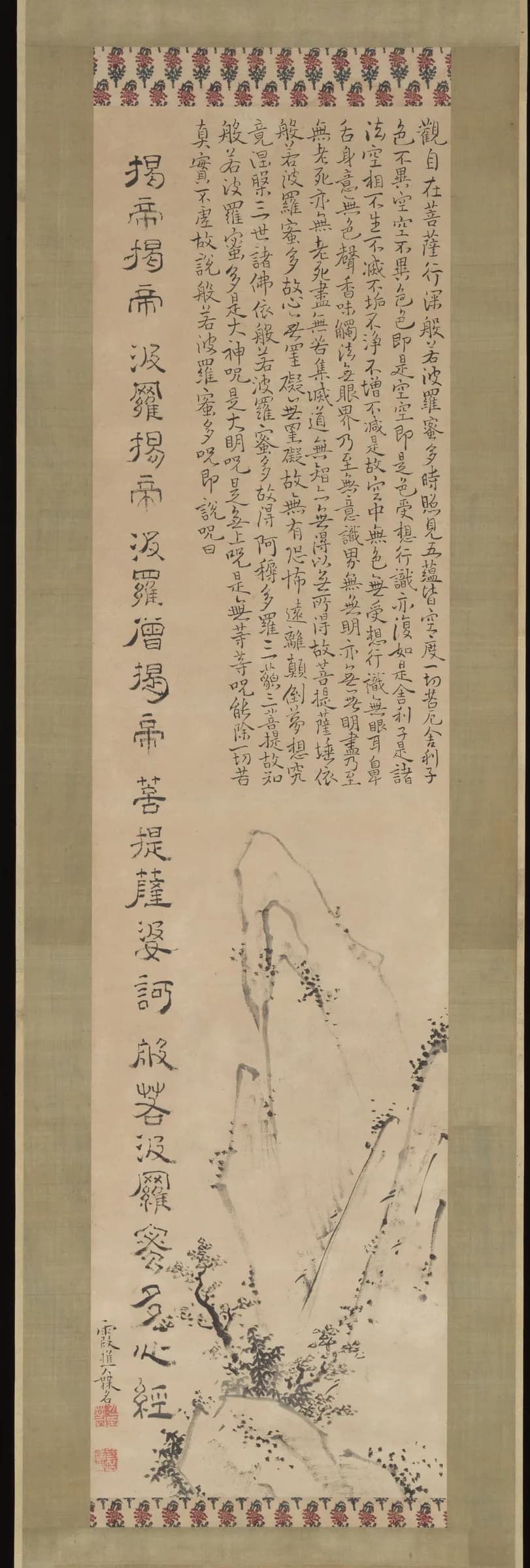
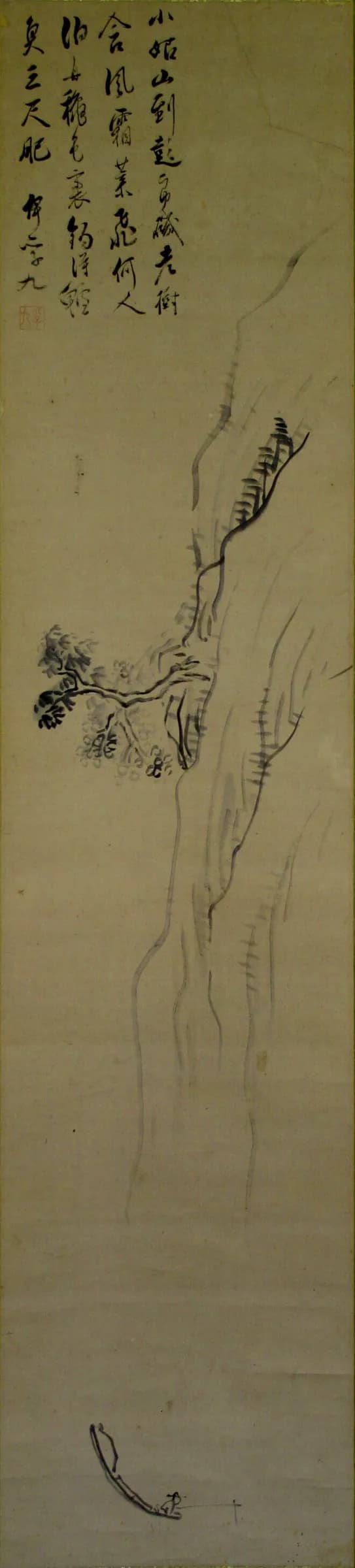
Ink Wash Landscape
水墨山水図
- Era
- Kinsei (近世)
- Subject
- Landscape (山水)
- Period
- Edo Period
- Date
- 1867
- Medium
- Hanging scroll; ink and color on silk
- Dimensions
- 29.8 × 136.5 cm (image); 42.1 × 189.0 cm (overall)
- Availability
- Available
Description
Rai Shihō was a prominent scholar and the second son of the legendary late-Edo Confucian intellectual Rai San’yō 頼山陽 (1781–1832). After his father passed away when Shihō was only ten, he pursued his education under his eldest brother in Hiroshima before traveling to Edo to complete his Confucian studies at the prestigious Shōheikō 昌平黌 academy under the patronage of his father’s disciples. In his early thirties, Shihō instructed at an academy in Suibara, Echigo Province. He then managed his father’s private school in Kyoto. Following the Meiji Restoration, he returned to Shōheikō academy as an associate professor. He eventually resigned to spend his remaining years living leisurely in Kyoto, where he compiled an annotated edition of his father’s famous historical text, Nihon Gaishi 日本外史.
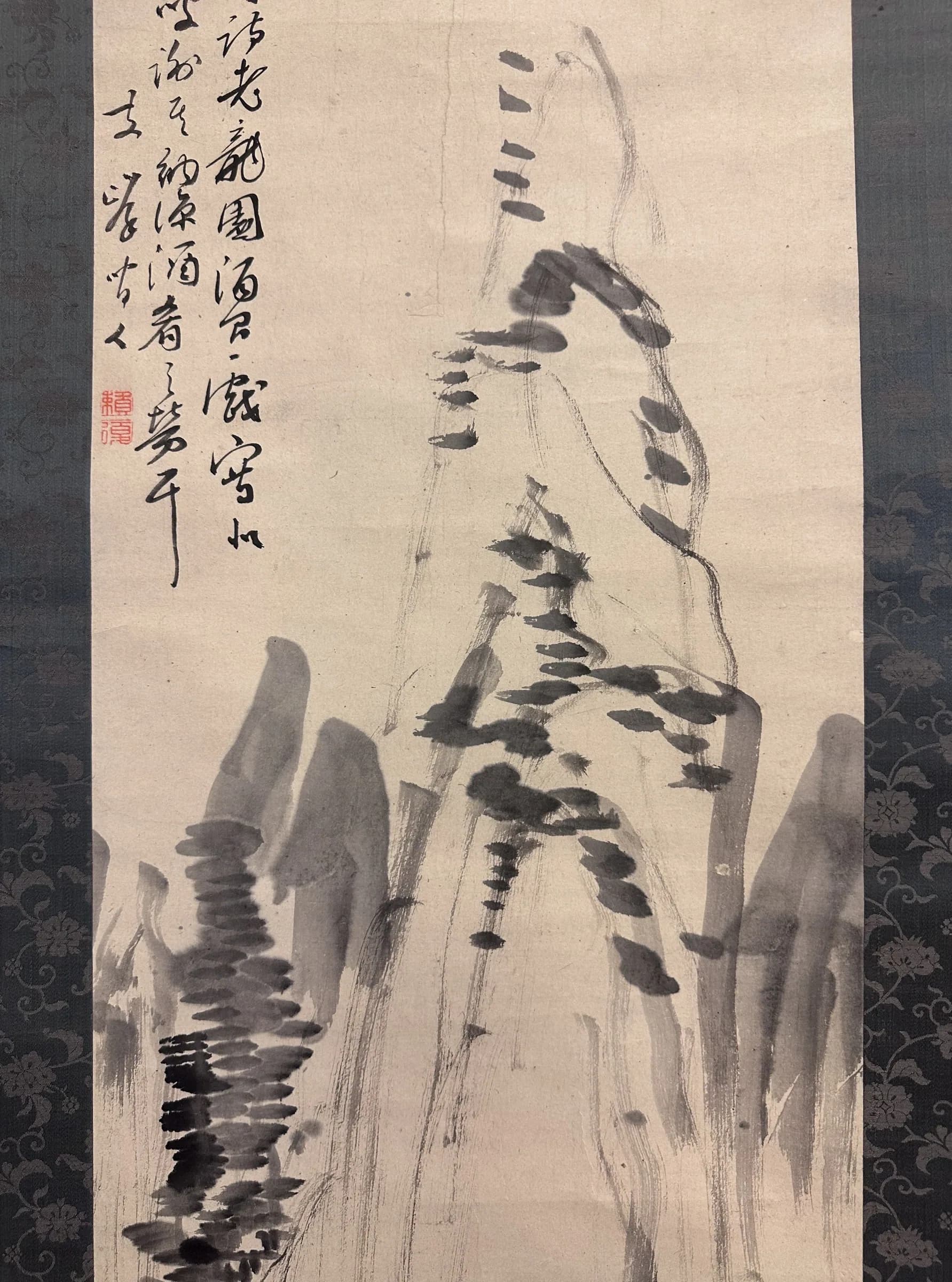
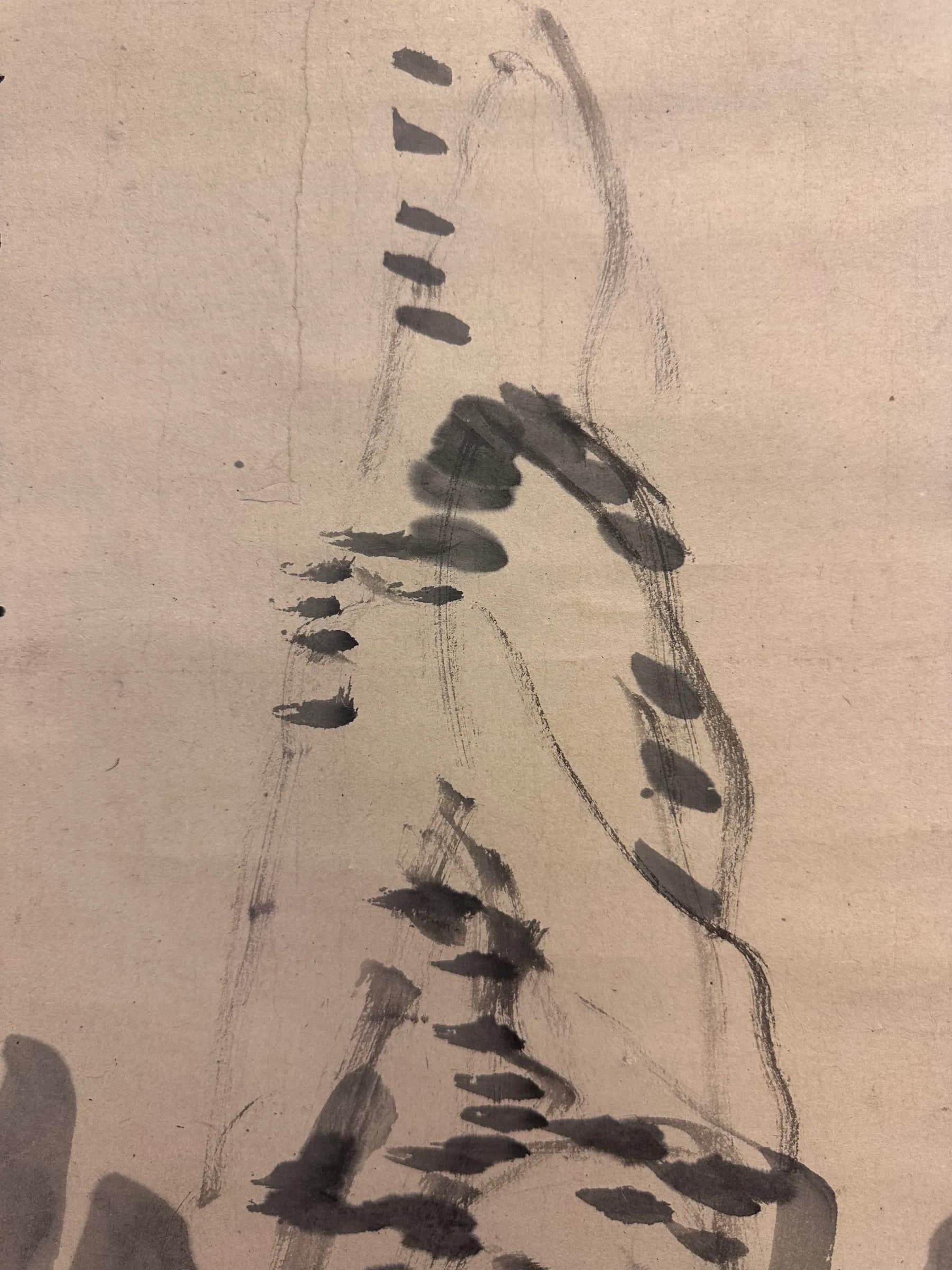
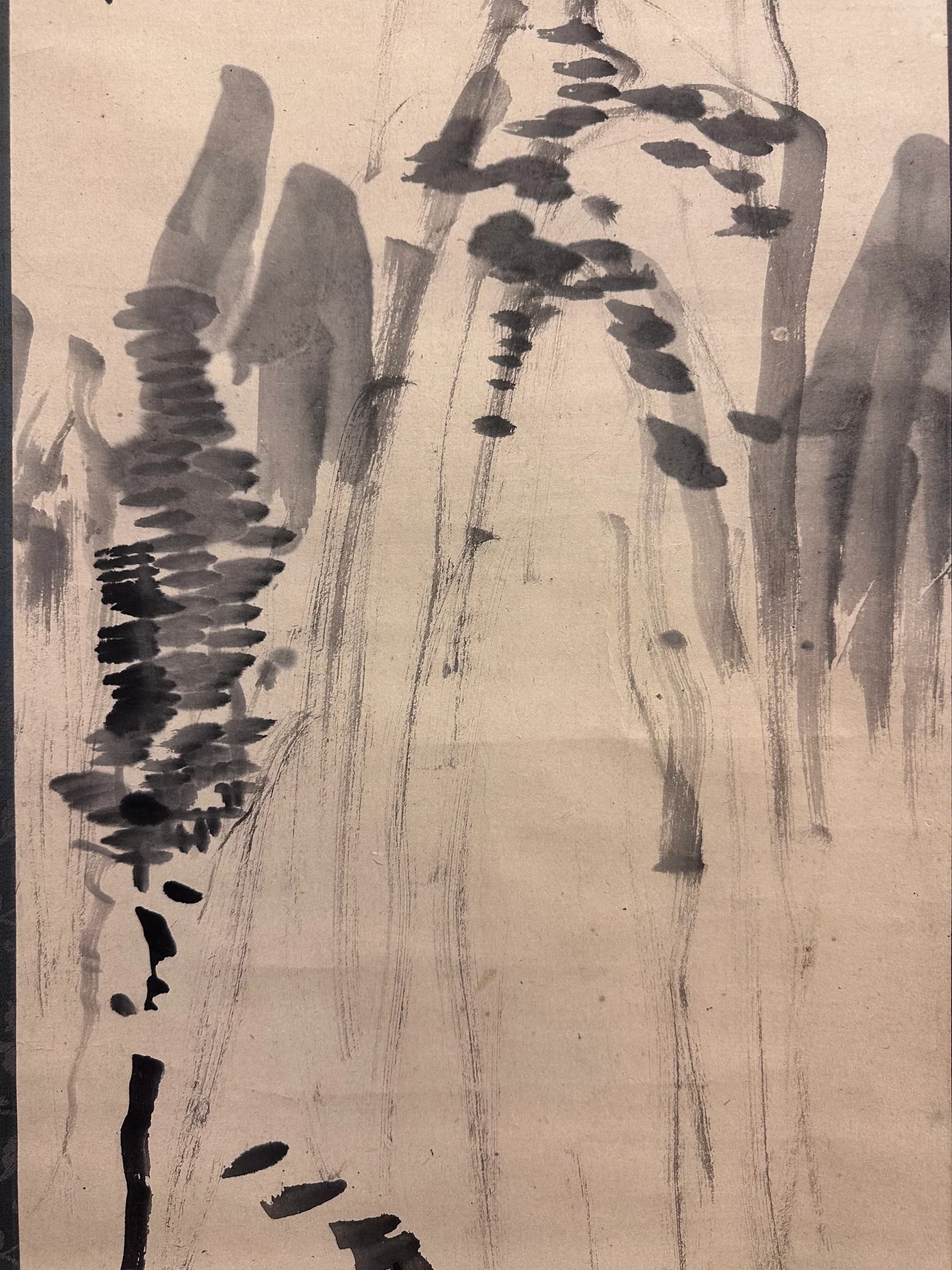
This freehand brushwork showcases Shihō’s mastery of Nanga (literati painting), drawing inspiration from the pioneering master Ike no Taiga 池大雅 (1723–1776) and Taiga’s Chinese muse, I Fukyū 伊孚九 (1698–1774). The composition embraces a deliberate simplicity and elegant flatness, achieved through flattened perspective and a minimal reliance on traditional texture strokes. Shihō’s landscape exhibits a more unrestrained quality, however, a spontaneity perhaps fueled by alcohol.
This stylistic kinship was a natural evolution of a multi-generational family legacy. The Rai family’s ties with Taiga originated with Shihō’s grandfather, Rai Shunsui 頼春水 (1746–1816), who composed postscripts for Taiga’s art. Shihō’s father, San’yō, wrote a praise for Taiga’s landscapes and a biography for Taiga’s wife (both recorded in San’yō Ikō 山陽遺稿). Shihō’s visual alignment with Taiga’s style is the corollary of his family culture and a vibrant testament to the enduring popularity of Chinese literati painting in Japan.
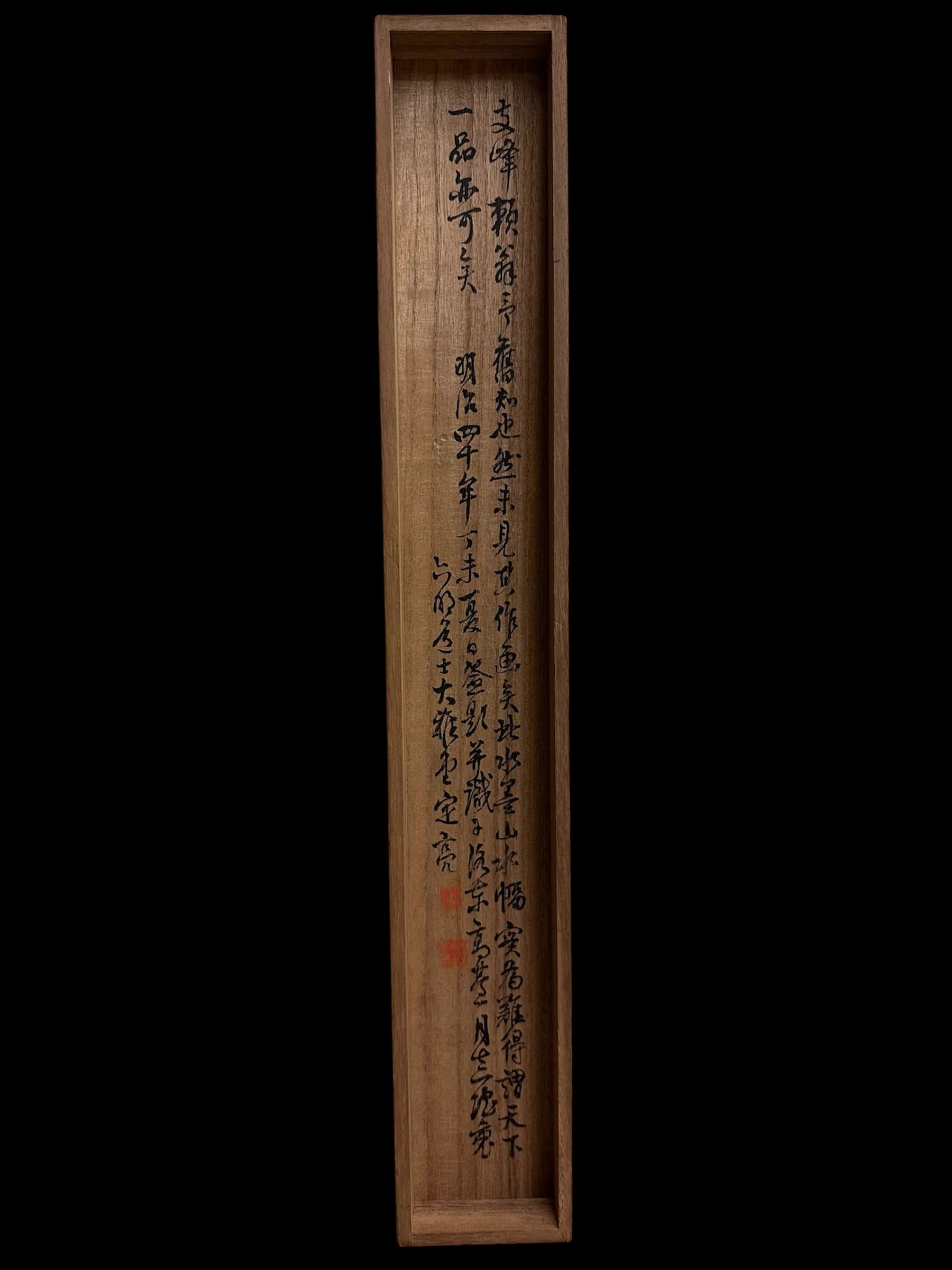
In the box inscription, Taigadō Teiryō 大雅堂定亮 (1839–1910) lauded Shihō’s landscape as a “peerless masterpiece under heaven.” Similarly, this appraisal should be contextualized within Teiryō’s own family lineage. Teiryō’s grandfather, Taigadō Geppō 大雅堂月峰 (1760–1839), was a student of Ikeno Taiga and constructed the Taigadō Hall to preserve his master’s works within the Sōrin-ji temple in eastern Kyoto, where he served as the abbot. Starting with Geppō, the Taigadō lineage of painting monks dedicated their lives to upholding Taiga’s aesthetic ideals. Because Teiryō’s own artistic standards were rooted in the heritage of Taiga and I Fukyū, he instantly recognized and validated the profound echo of their brushwork in Shihō’s composition. His high appraisal stands as an authoritative endorsement from the ultimate keepers of the Taiga tradition.
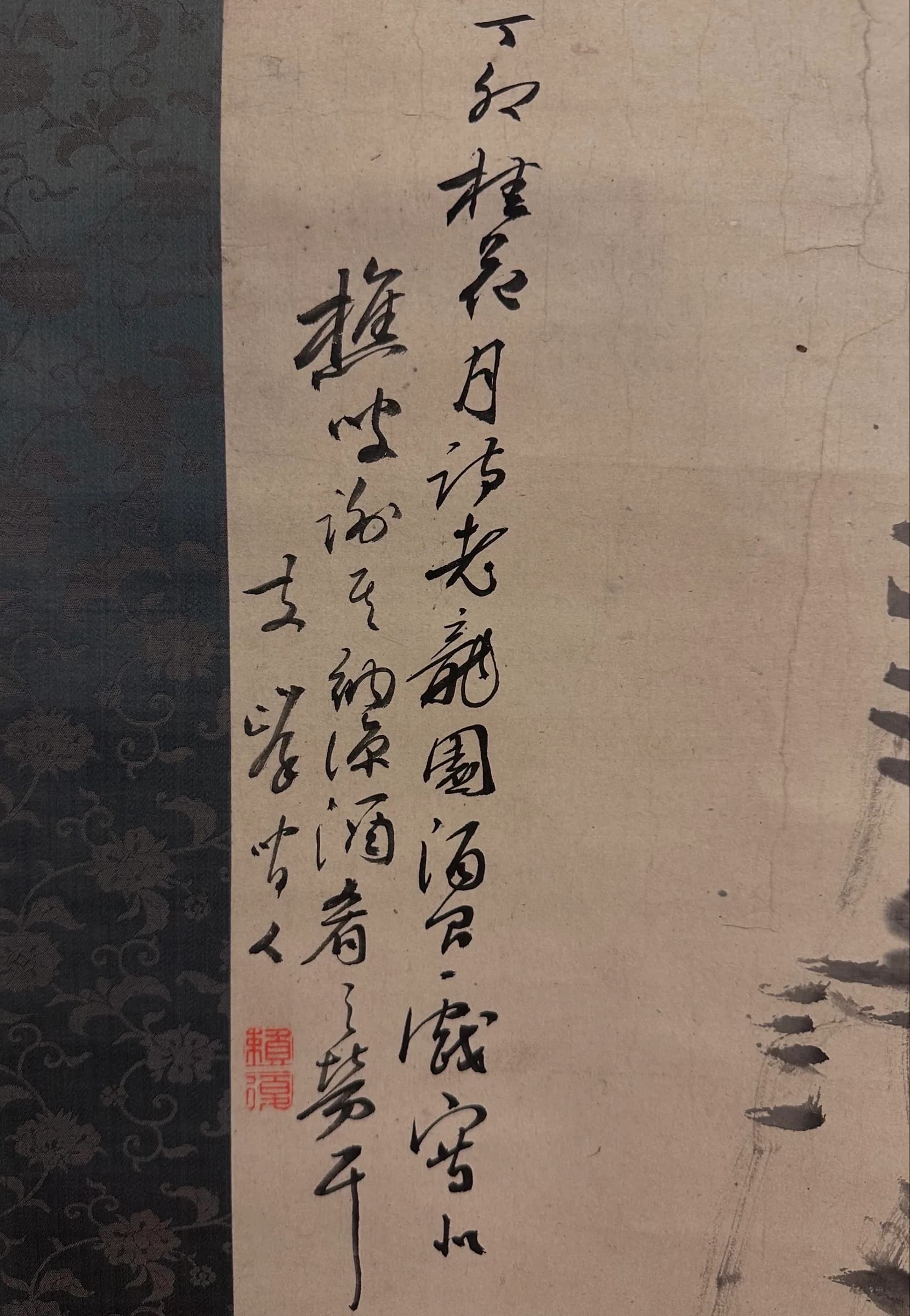
Painting inscription
丁卯桂花月詩老龍園酒間戯寫似樵叟謝其納凉酒肴之勞耳 支峰間人 (In the osmanthus month of the hinotō year [between August and September of 1867], [I was] writing poems at the Old Dragon Garden. While drinking, [I] playfully painted this for the Old Woodcutter to express my gratitude for his summer cooling wine and delicacies—subordinate peasant Shihō)
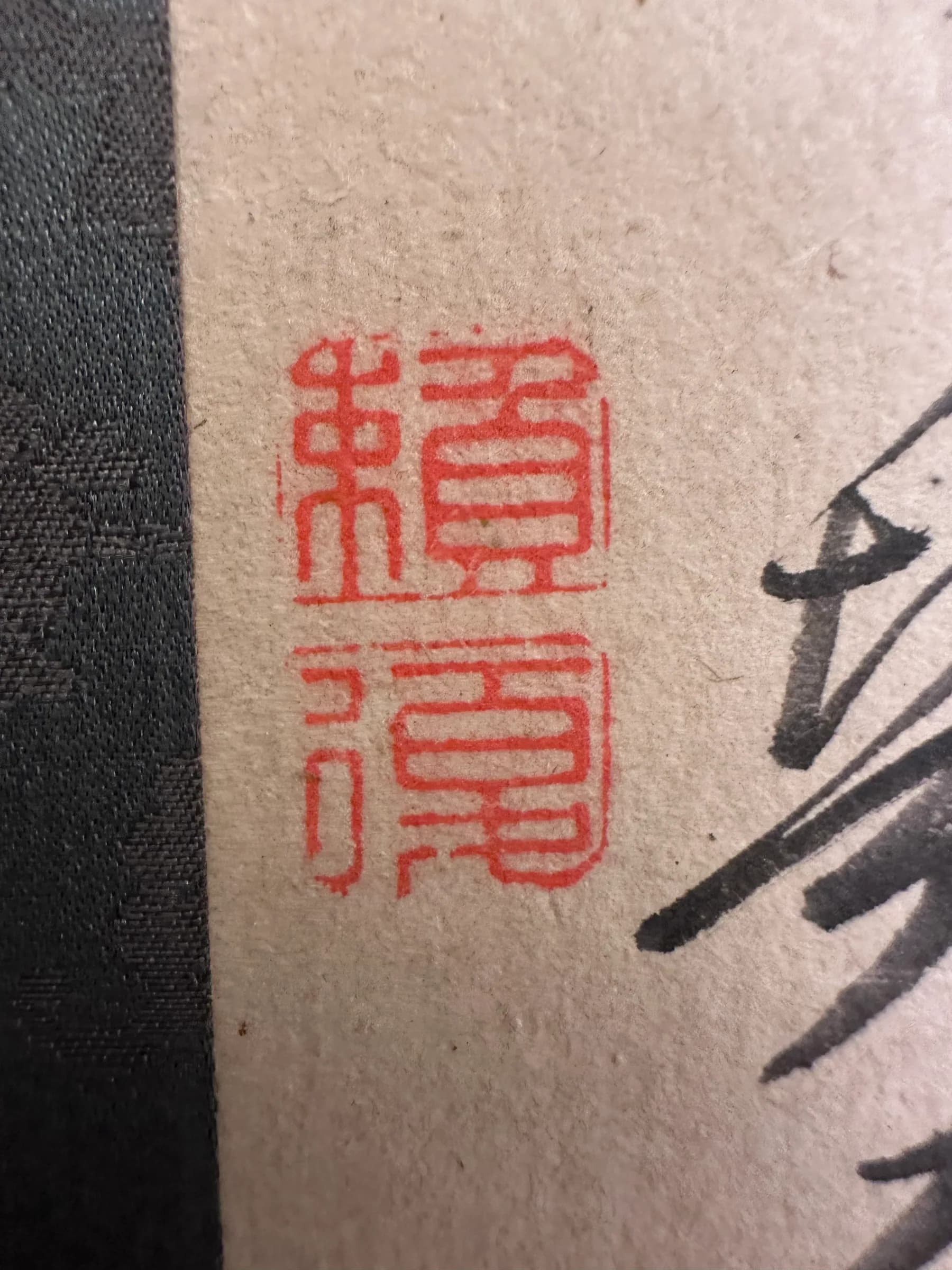
Seals
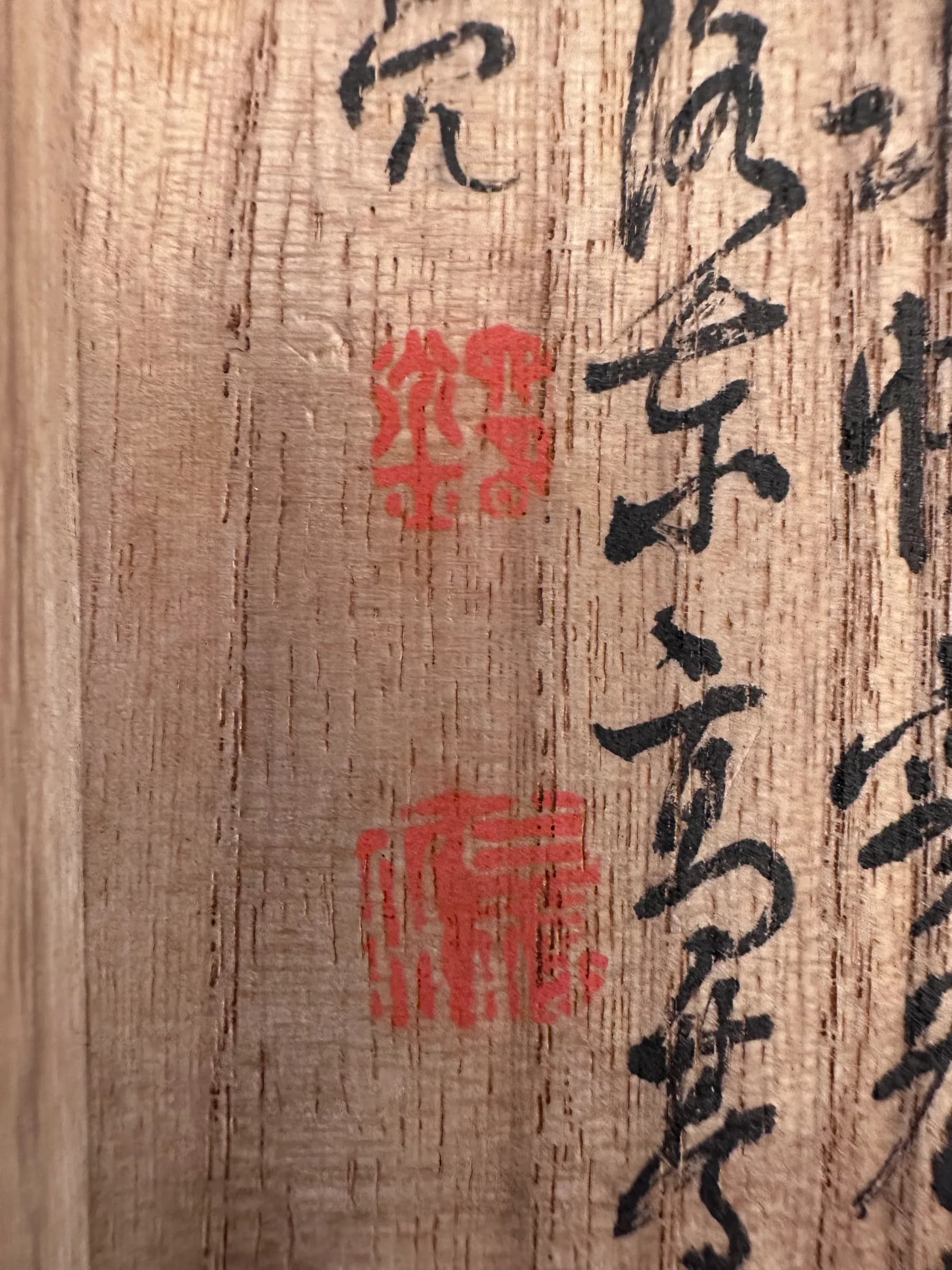
(rectangular relief seal) Rai Fuku 頼復; (box square relief seal) Rokumyō dōshi 六明道士; (box square intaglio seal) Hyakuroku fu 百禄父
Boxed characters are a tentative reading of the impression.
Box inscription
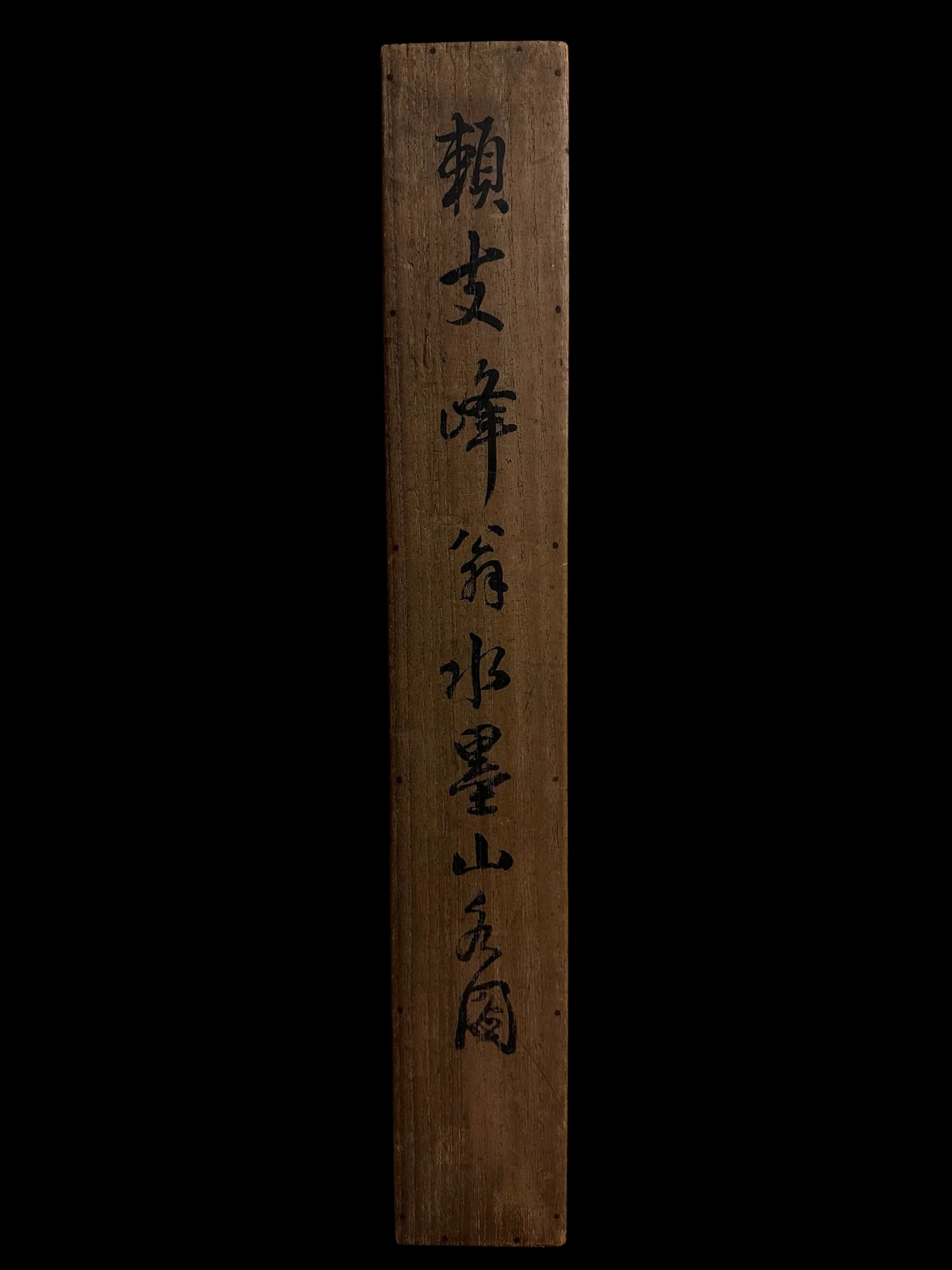
(front): 頼支峰翁水墨山水図 (Ink Wash Landscape by master Rai Shihō)
(verso): 支峰頼翁予舊知也然未見其作矣此水墨山水幅實爲難得謂天下一品亦可矣 明治四十年丁未夏日簽題並識於洛東高臺月真院衷 六明道士大雅堂定亮 (Master Rai Shihō was an old acquaintance of mine, yet I had never before seen his work. This ink wash landscape scroll is truly rare and precious; to call it a peerless masterpiece under heaven would be entirely fitting. Inscribed and authenticated on a summer day in the 40th year of Meiji, the hinotohitsuji year [1907], at Gesshin-in of Kōdai-ji in eastern Kyoto—monk Rokumyō, Taigadō Teiryō)
Much of the lands that once belonged to the Sōrin-ji temple were also confiscated by the government for the expansion of the government-sponsored project of Maruyama Park starting in 1886. It was under this historical context that Taigadō Hall was demolished in either 1903 or 1905.
Boxed characters are a tentative reading of the inscription.