View 1 of 13
Watanabe Kaiko (1842–1915)
渡部解古
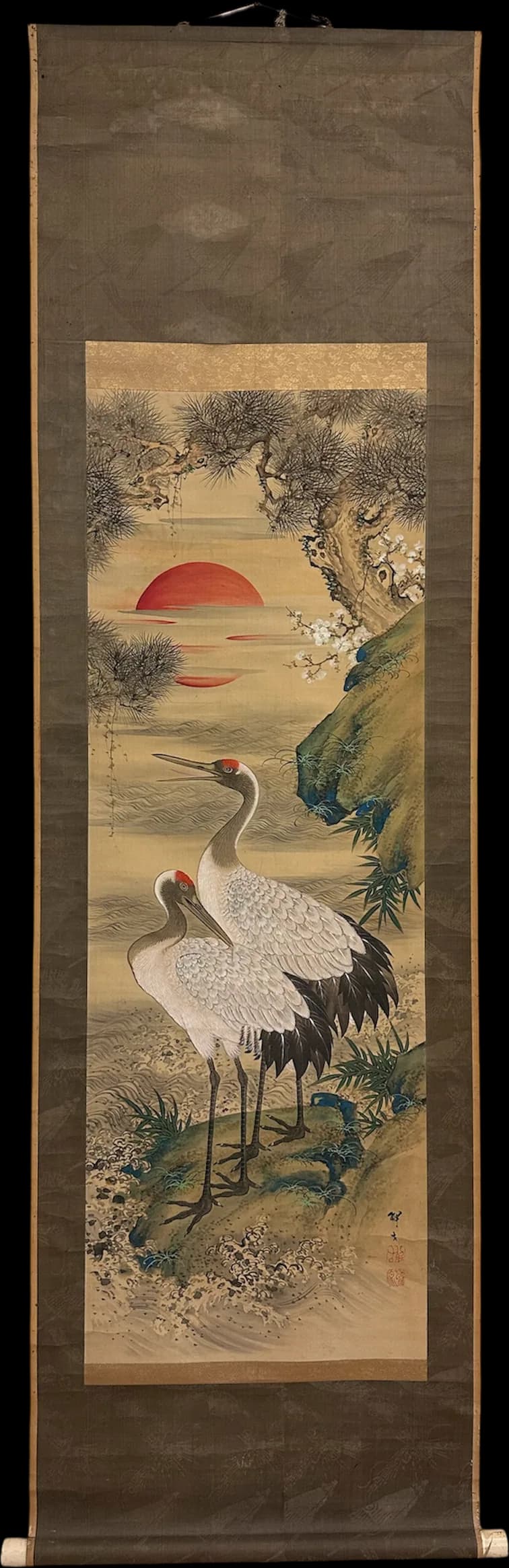
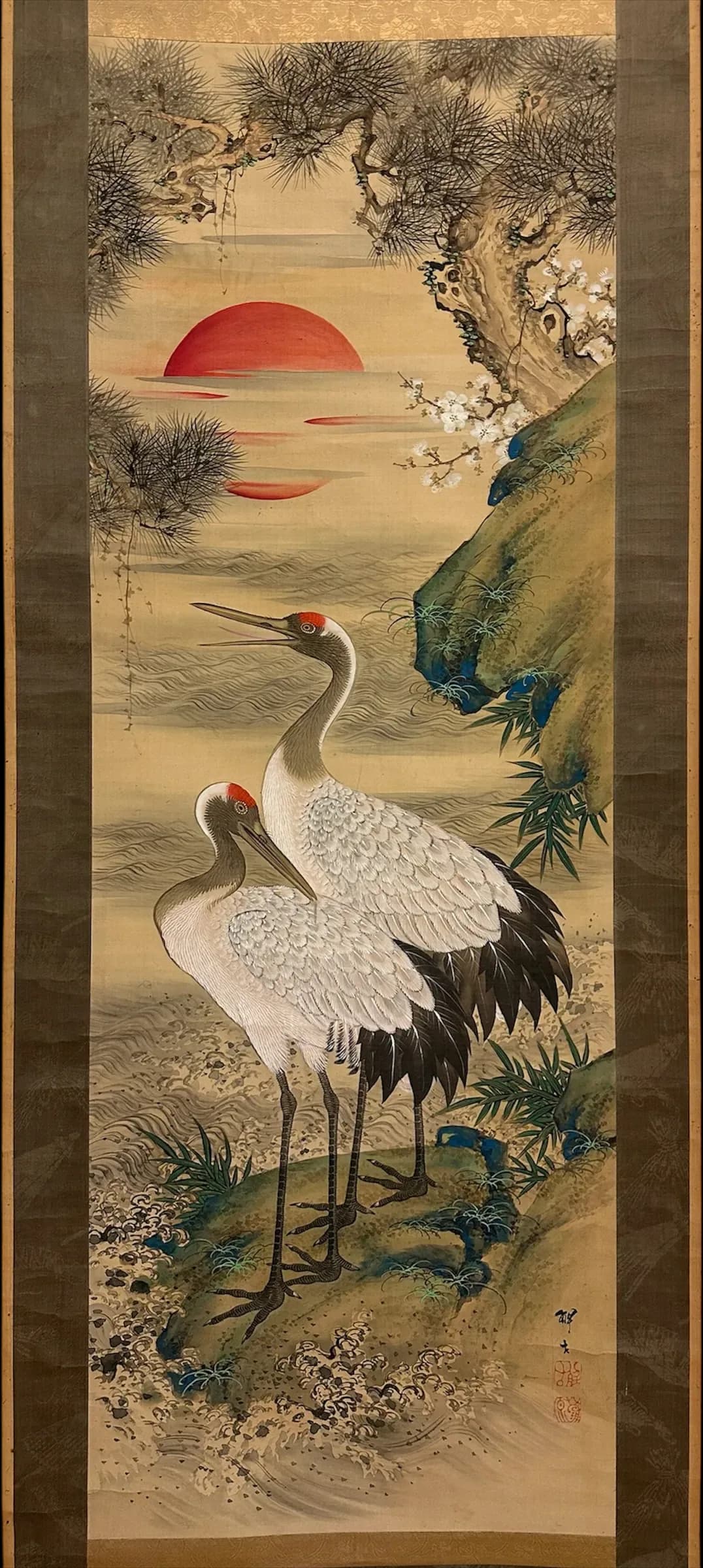
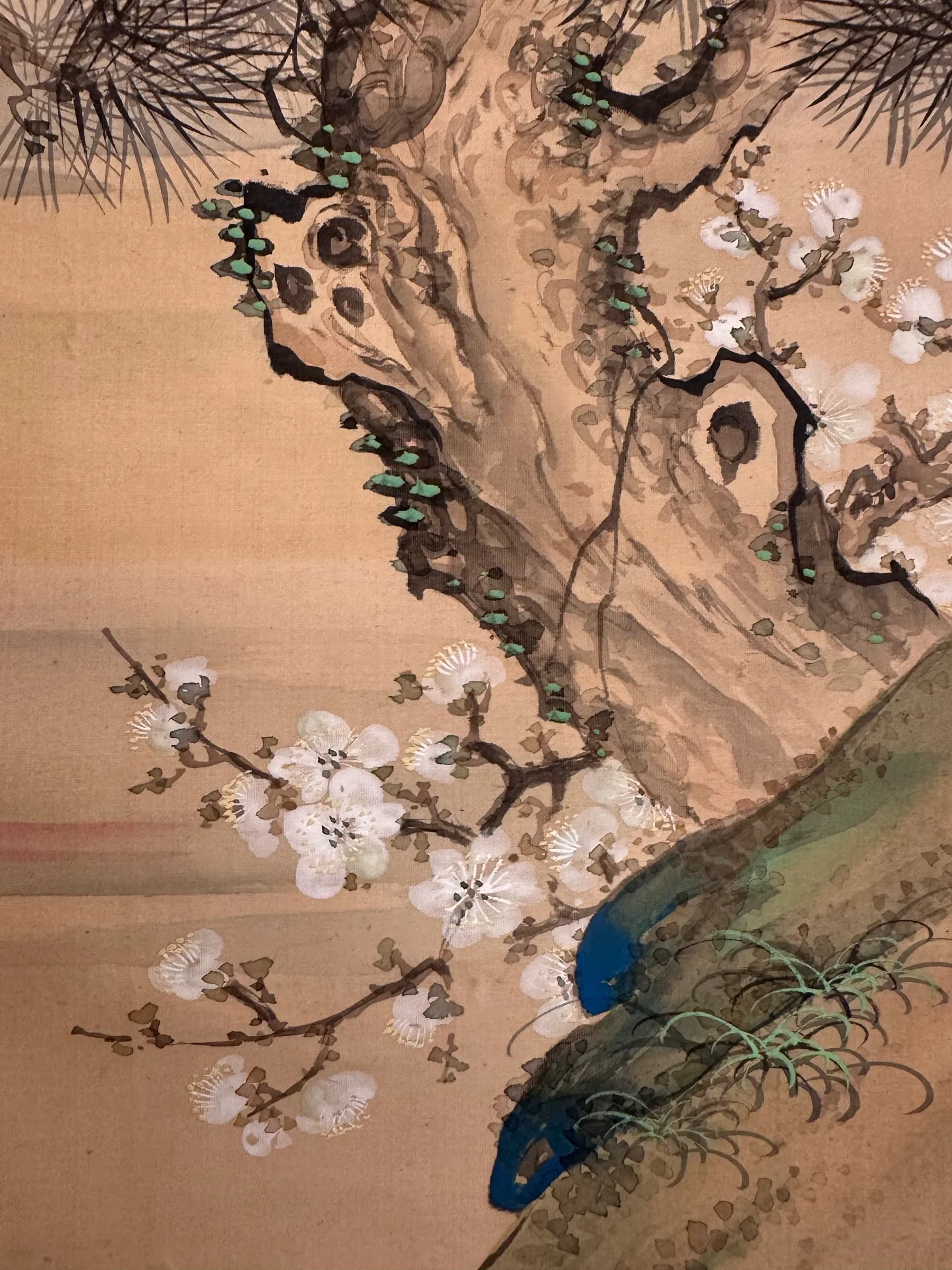
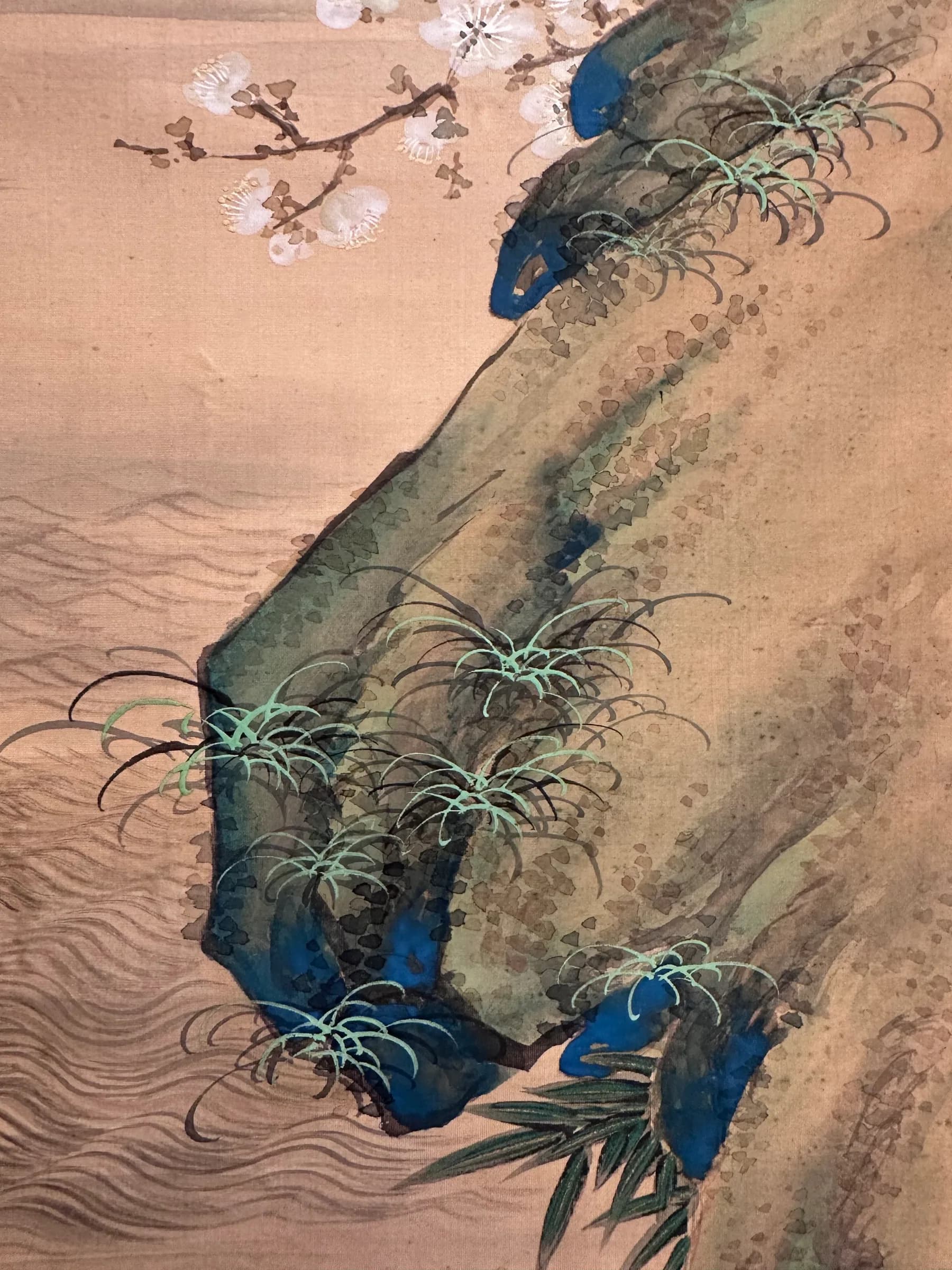
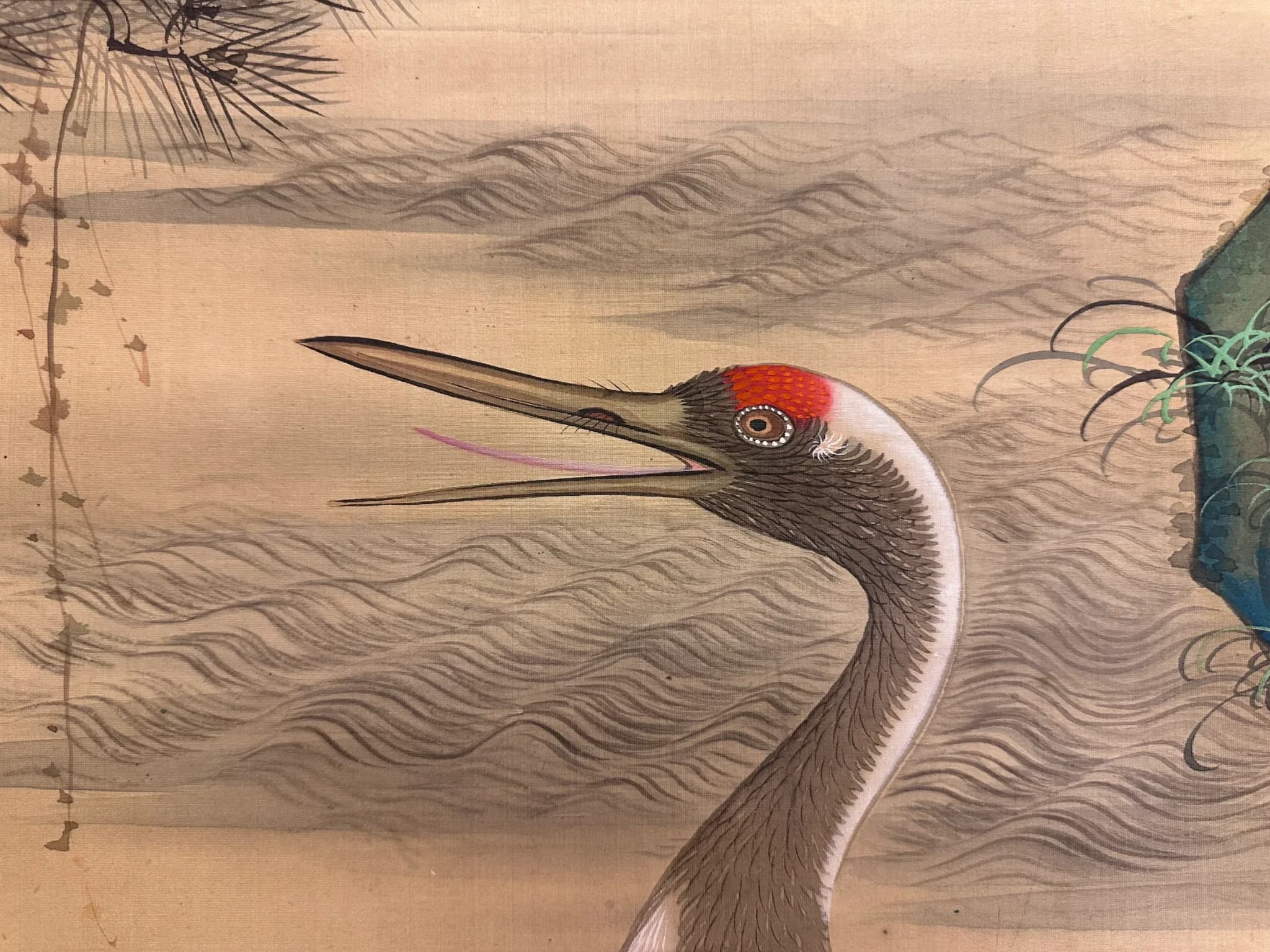
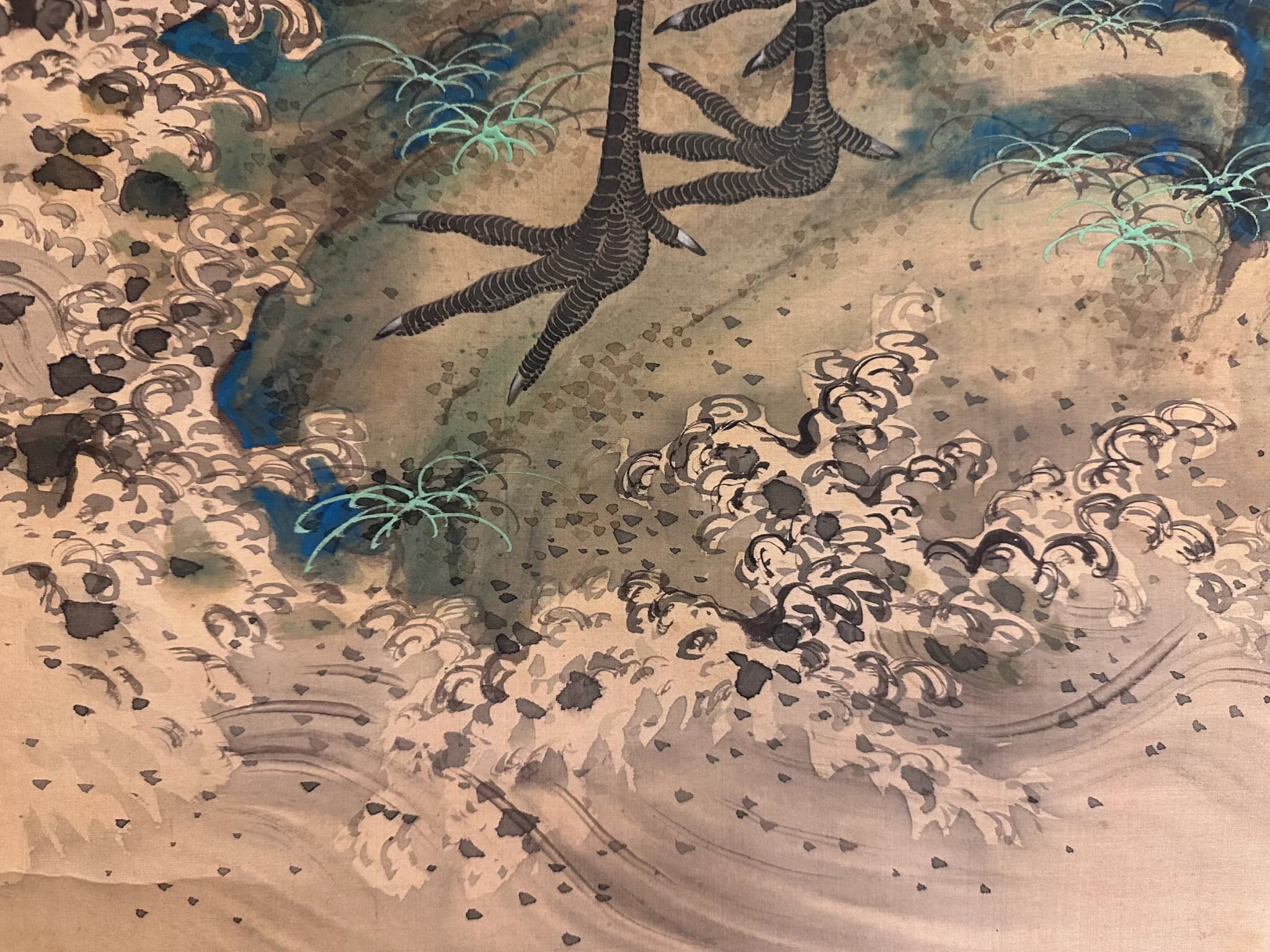
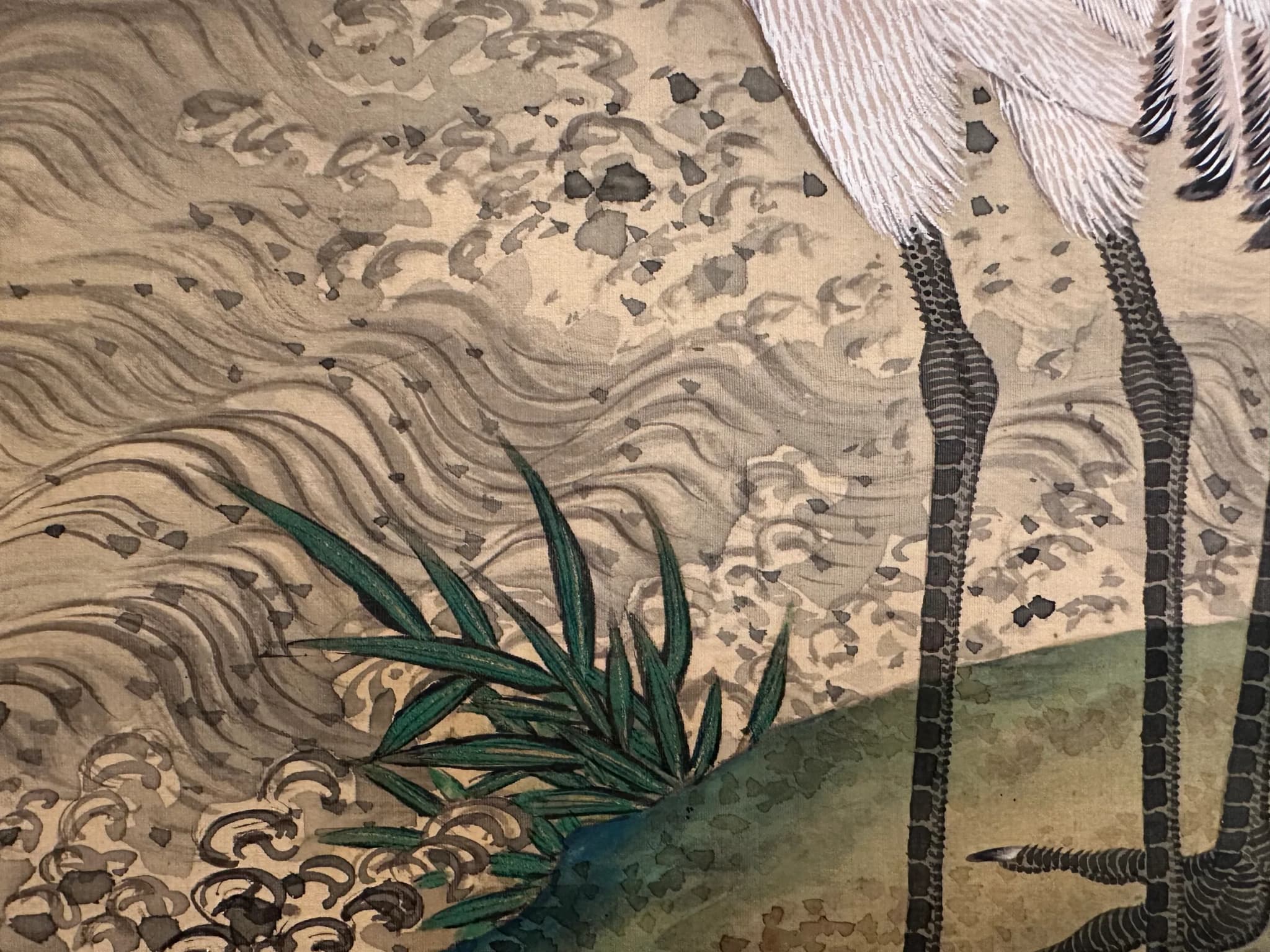
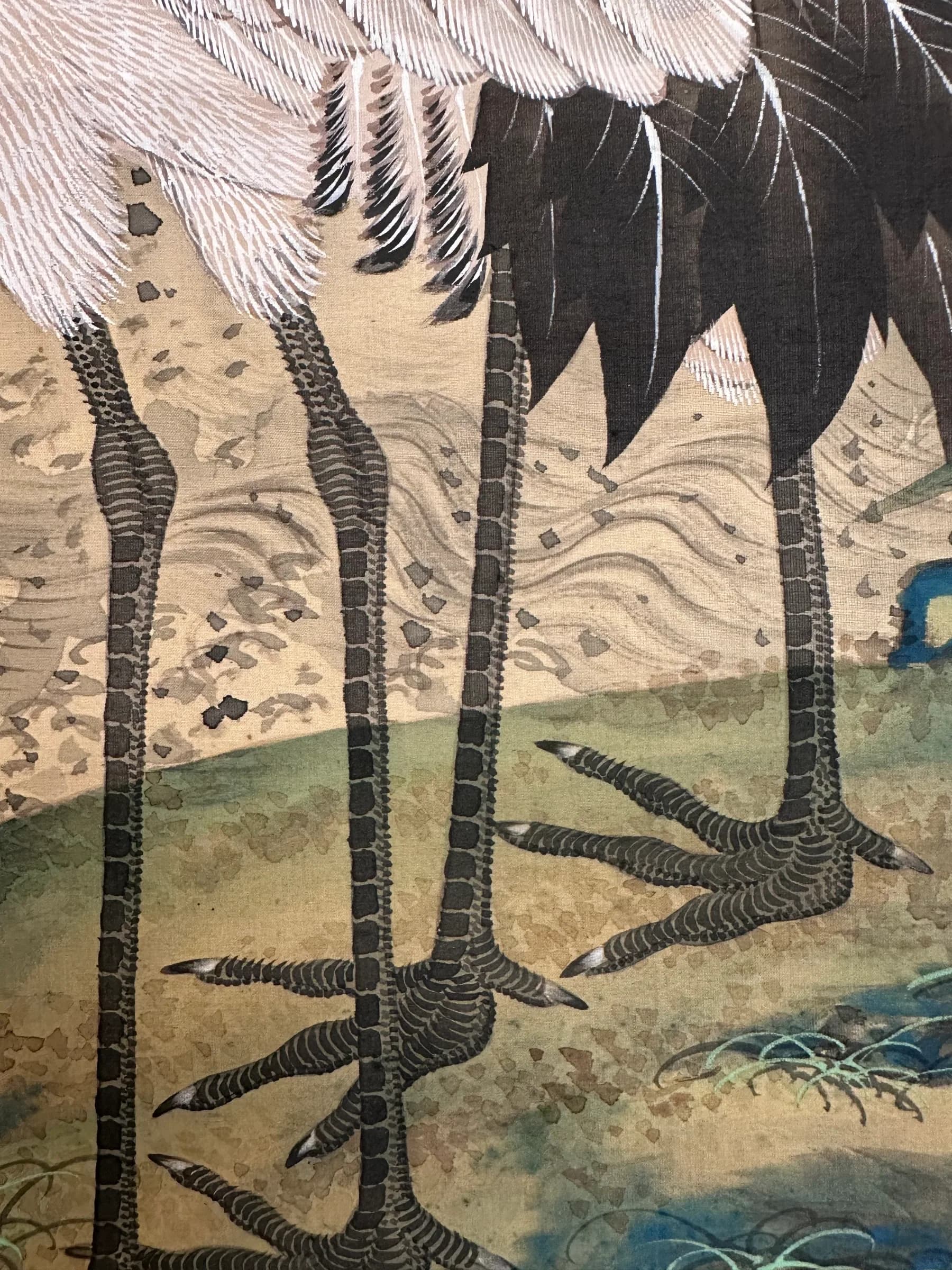
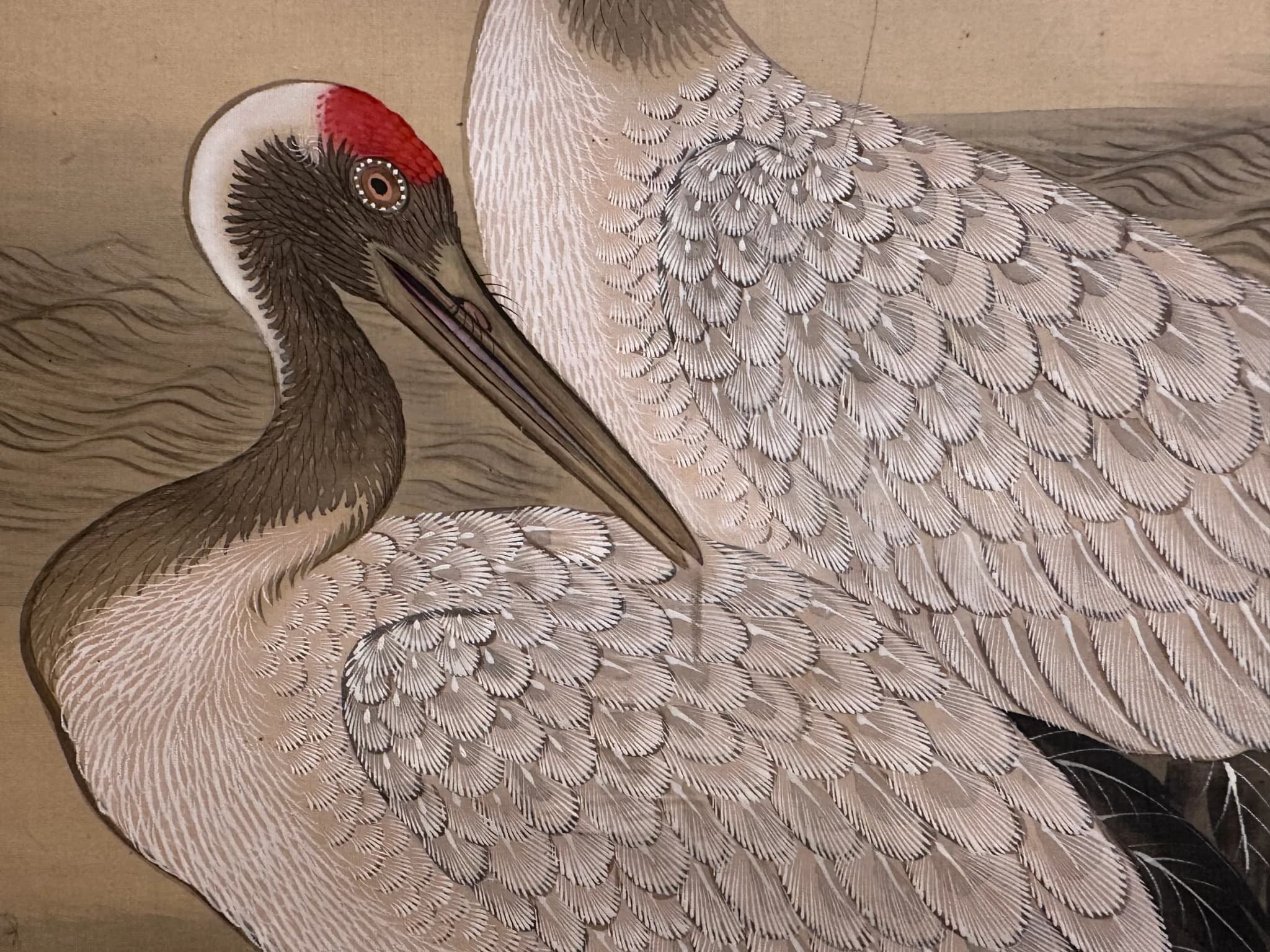
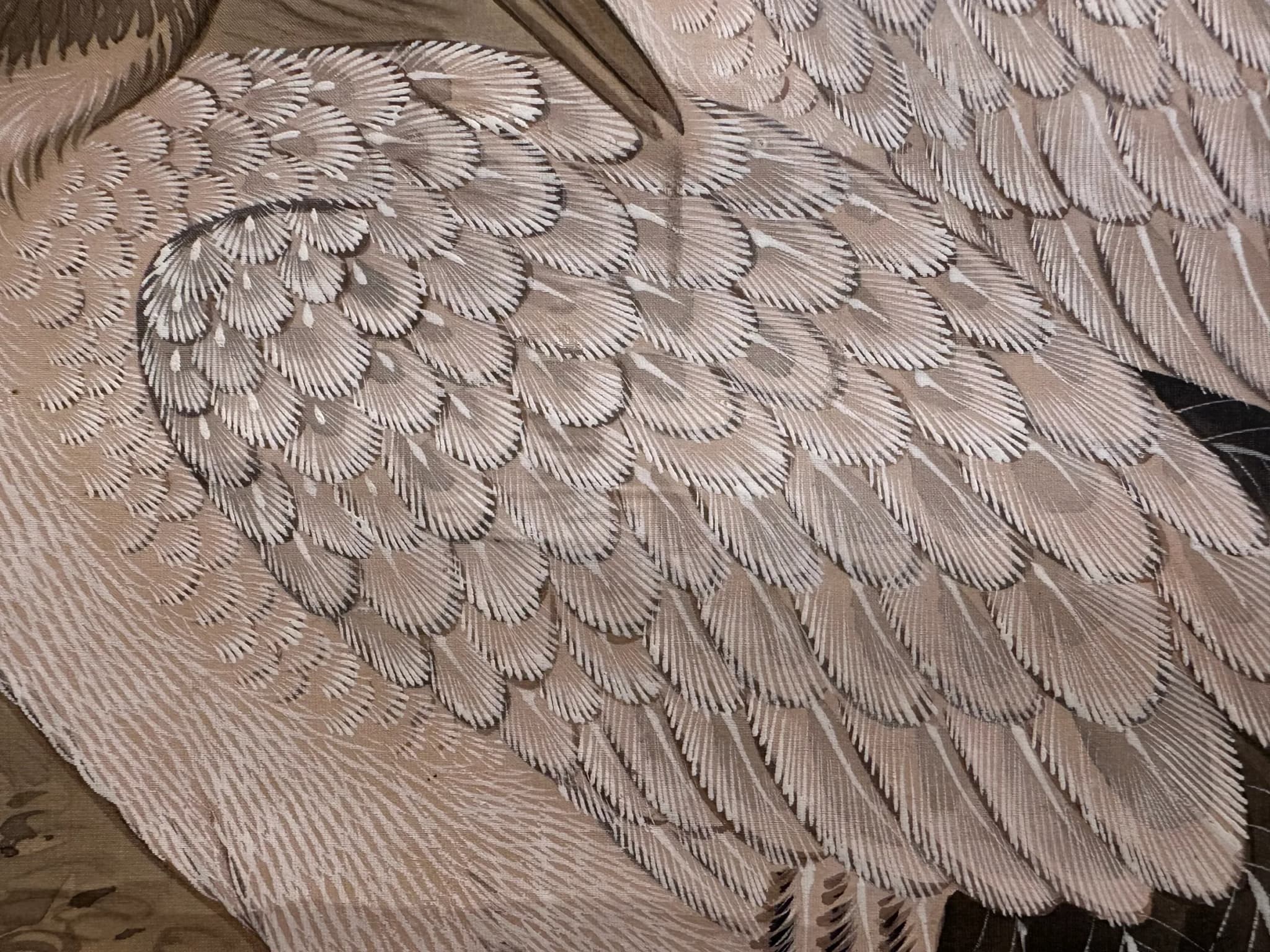
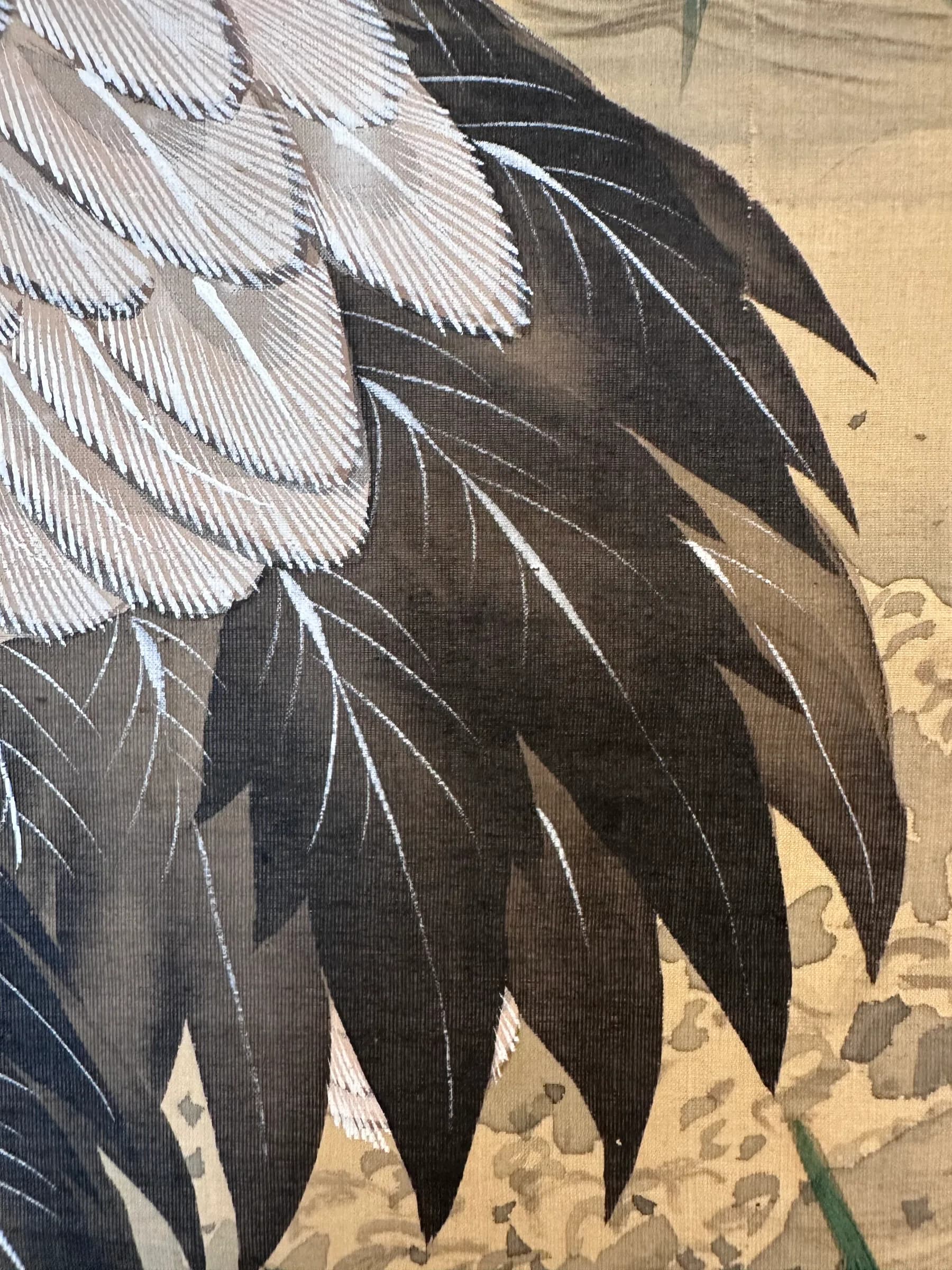
Cranes with Rising Sun
旭日双鶴之図
- Era
- Kindai (近代)
- Subject
- Birds and Flowers (花鳥)
- Period
- Taishō Period
- Medium
- Hanging scroll; ink and color on silk
- Dimensions
- 42.1 × 119.9 cm (image); 55.5 × 181.9 cm (overall)
- Availability
- Available
Description
Watanabe Kaiko was a prominent Nihonga artist active from the late-Edo to Taisho period. Trained under literati painter Hasegawa Rankei 長谷川嵐渓, he was skilled at painting from nature and was particularly celebrated for his bird-and-flower paintings. His international breakthrough occurred at the 1889 Paris Exposition Universelle, where his meticulous work, One Hundred Varieties of Plants and Fruits, made him one of the only two Japanese-style painters to be honored at the event.
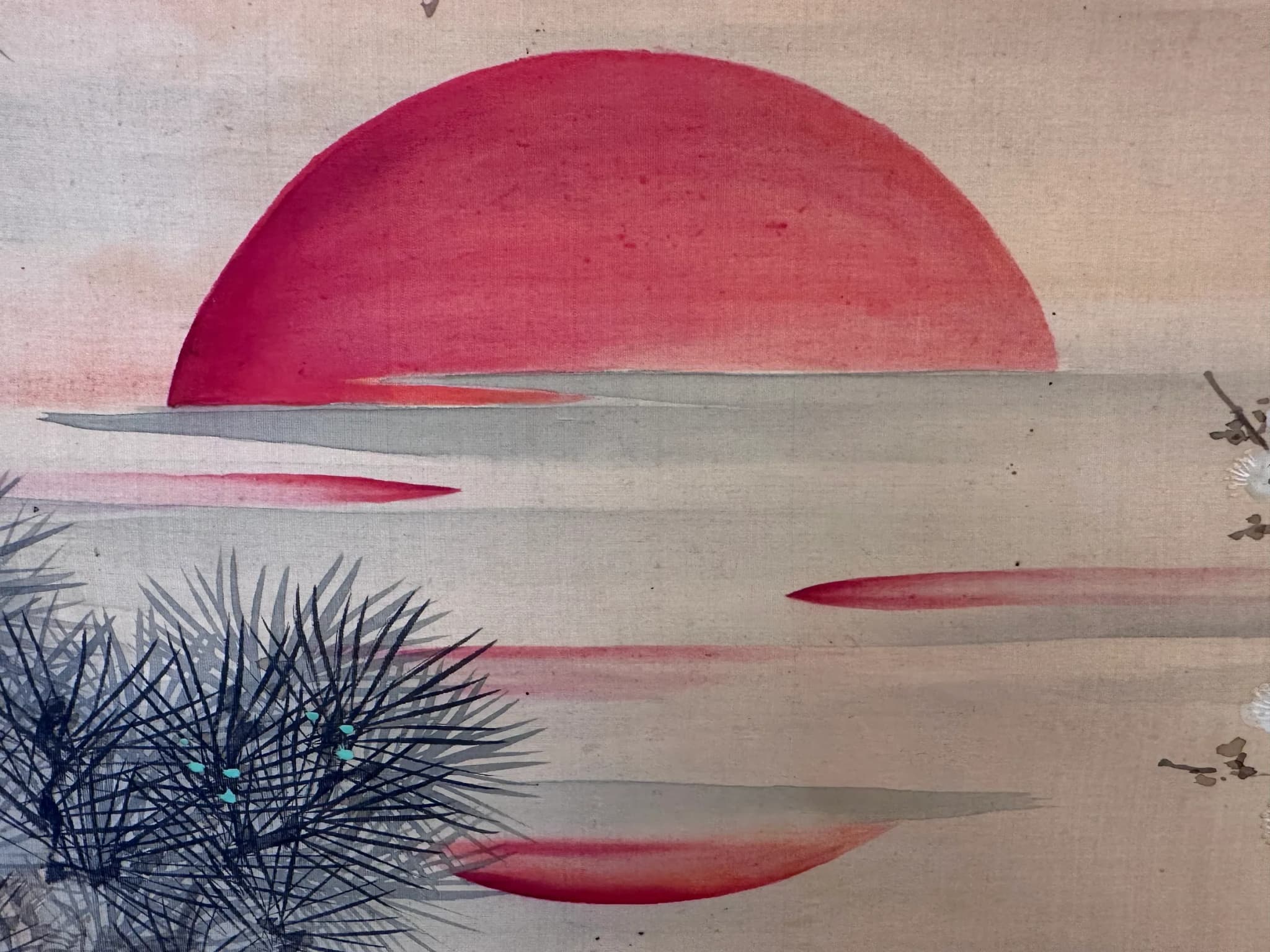
In Japanese iconography, cranes serve as enduring symbols of longevity and auspice. According to exhibition records of the Watanabe family artistic lineage, Kaiko revisited the subject multiple times. While two extant versions share striking similarities in composition and posture, and a third mirrors the “blue-and-green” landscape style, the specific work discussed here features a unique treatment of clouds. This technique—applying a thin layer of ink to evoke a misty atmosphere—recalls the Nanpin-style pioneered by Shin Nanpin 沈南蘋. Kaiko was a member of the Japan Art Association 日本美術協会 since 1901, the “Old School” faction that championed the preservation of traditional aesthetics against the more radical “New School” of the Japan Visual Arts Academy 日本美術院 which sought to modernize Nihonga through Western techniques. These stylistic experiments suggest Kaiko was navigating his own middle path toward a modern Japanese identity.
September 1909 marked the pinnacle of Kaiko’s career when he was invited to the Korean Imperial Court to perform a live painting session 席画 in the presence of Emperor Gojong. Records indicate a staggering display of virtuosity: Kaiko completed five major paintings in a mere six hours (including a ninety-minute lunch break). Among these was his celebrated Picture of Two Cranes, for which the Emperor bestowed upon him a ceremonial silver cup. However, this moment of personal triumph was shadowed by the weight of history: within a year of this session, the Korean Empire was annexed by Japan following the assassination of prime minister Ito Hirobumi. Consequently, this imagery of the rising sun and cranes carries a threefold weight: classical ideals of longevity, a symbol of Kaiko’s individual success, and a silent witness to the dawning era of Japanese colonial expansion.
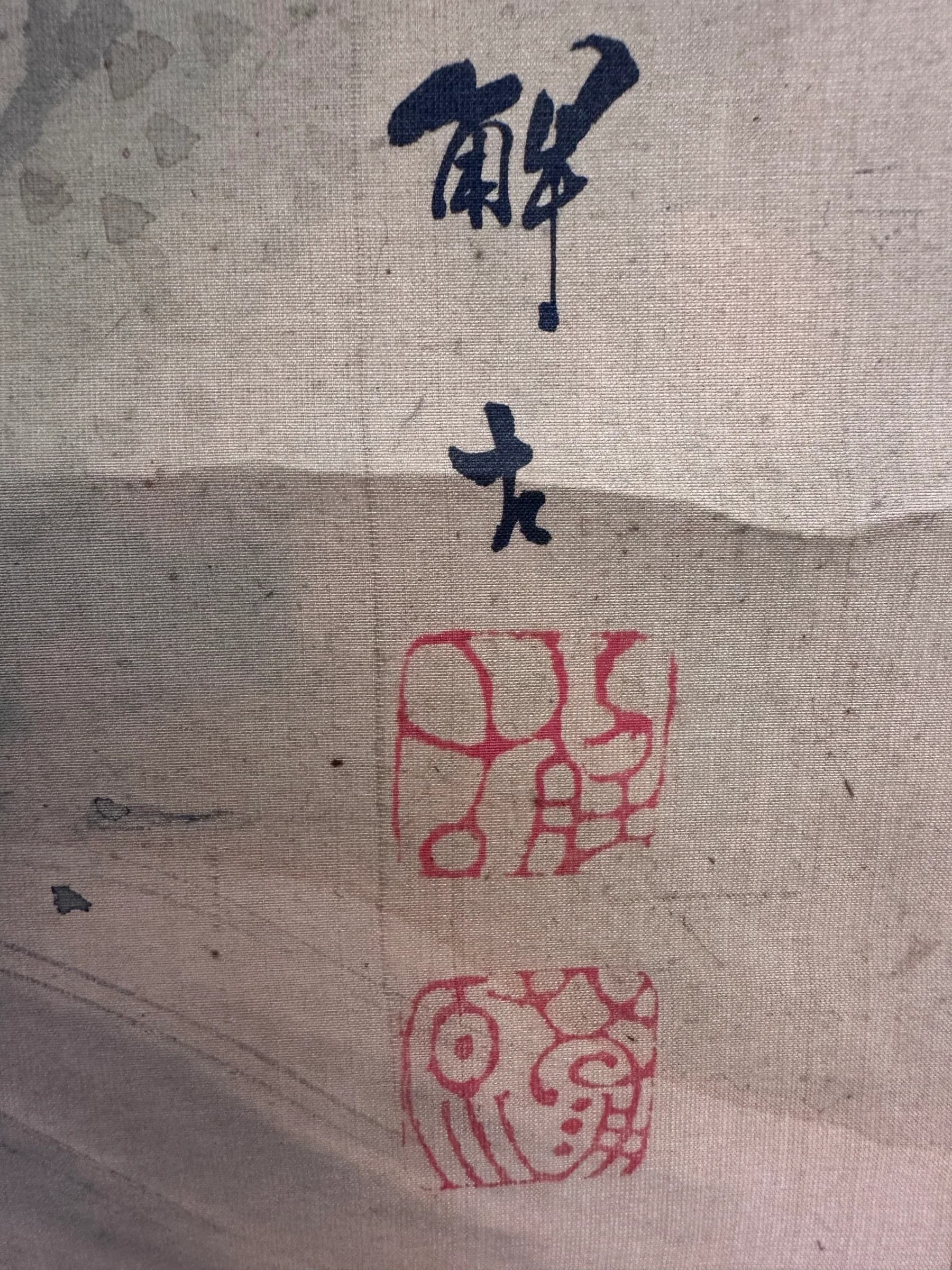
Painting inscription
解古 (Kaiko)
Seals
(square relief seal) Kaiko 解古; (square relief seal) Hohan 蒲原