View 1 of 13
Kurobe Nenge (1856–1933)
黒部拈華
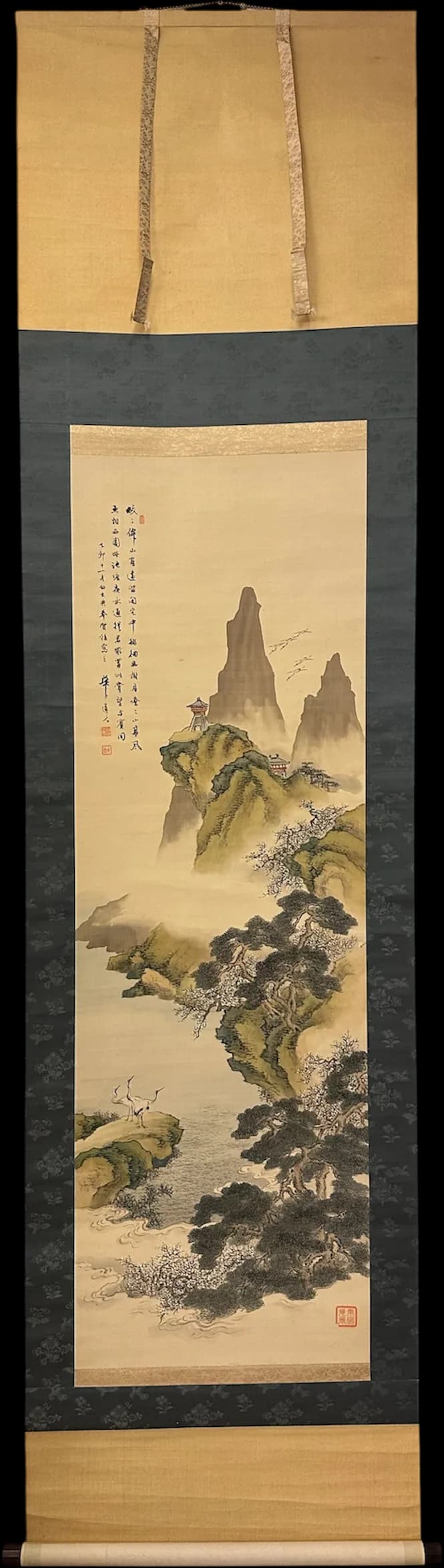
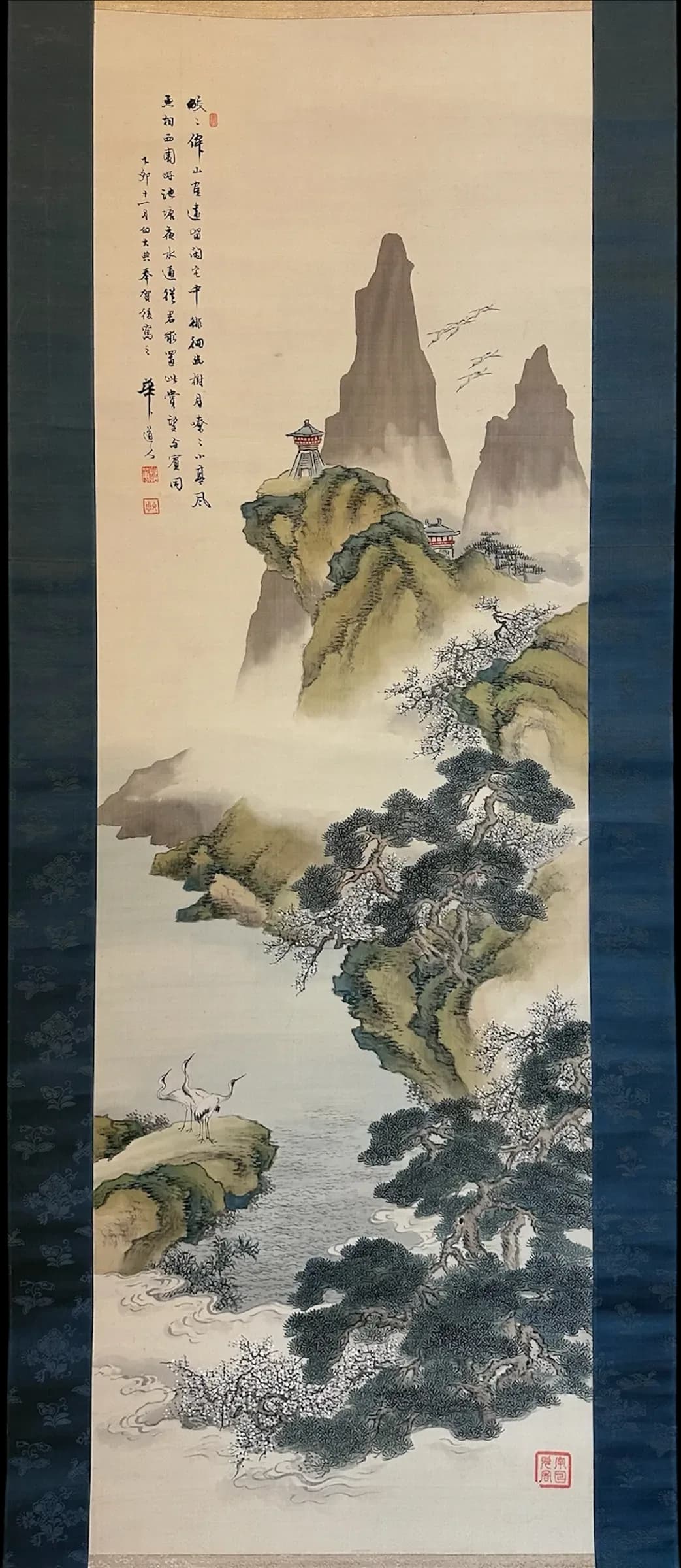
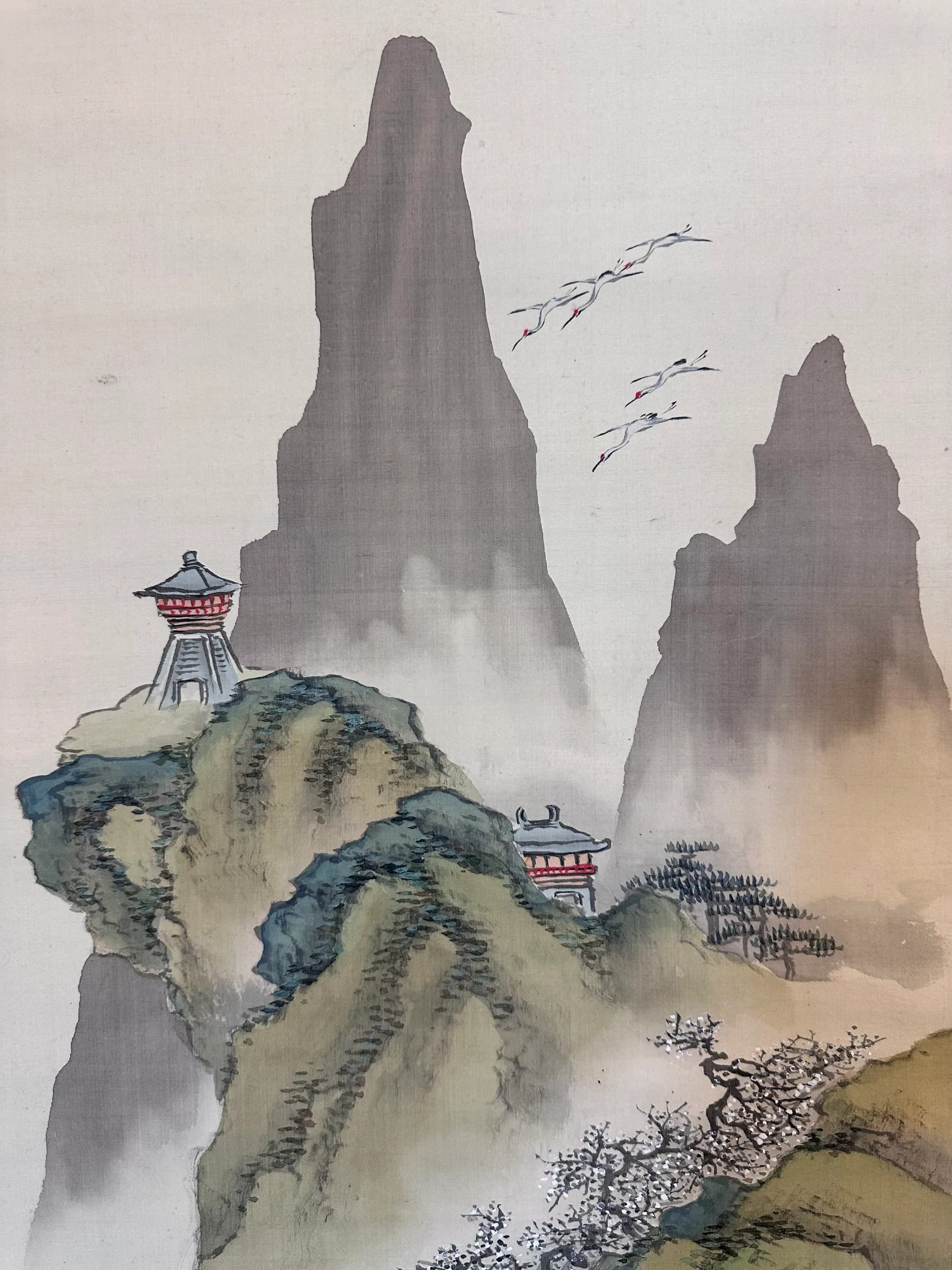
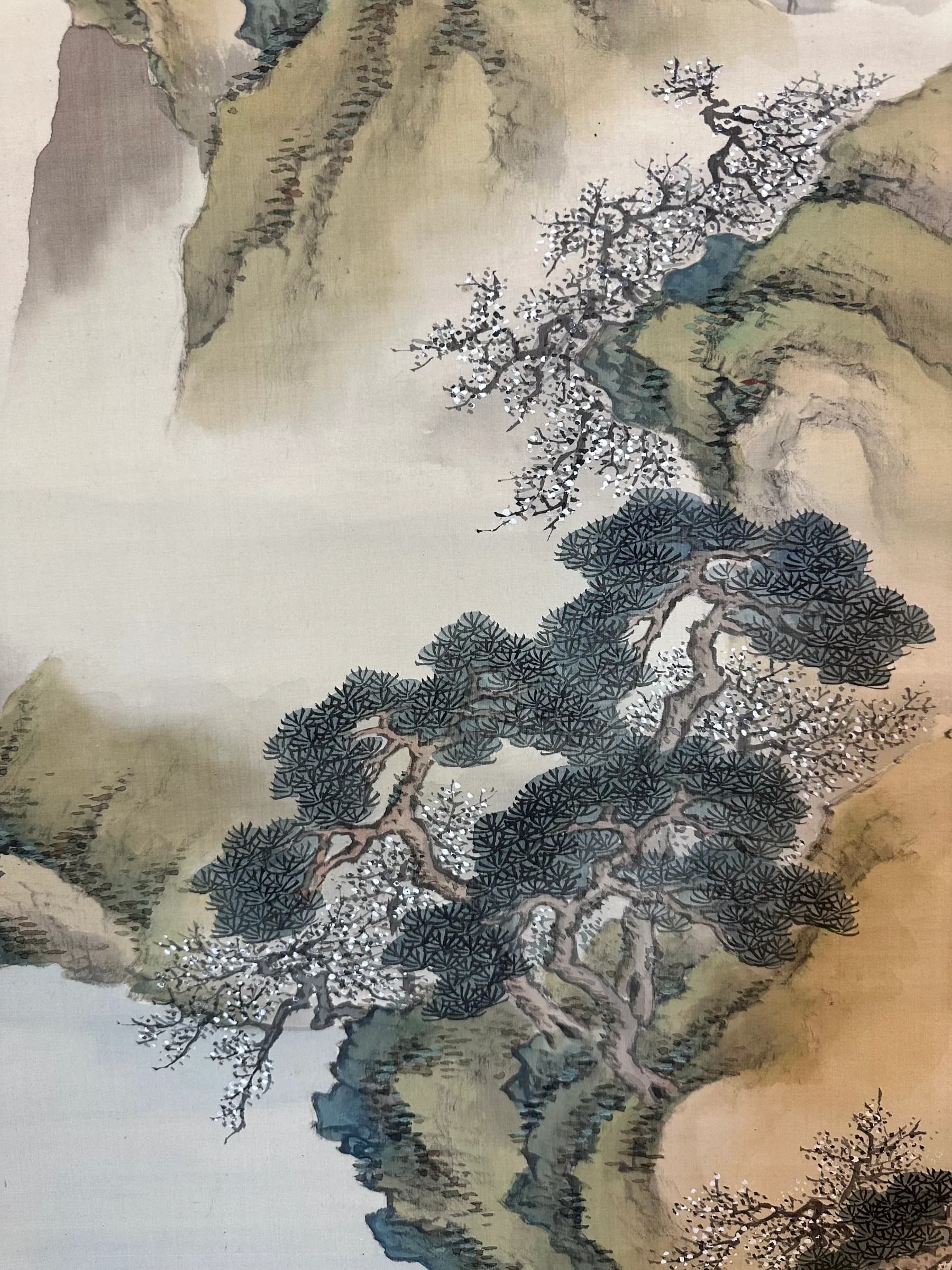
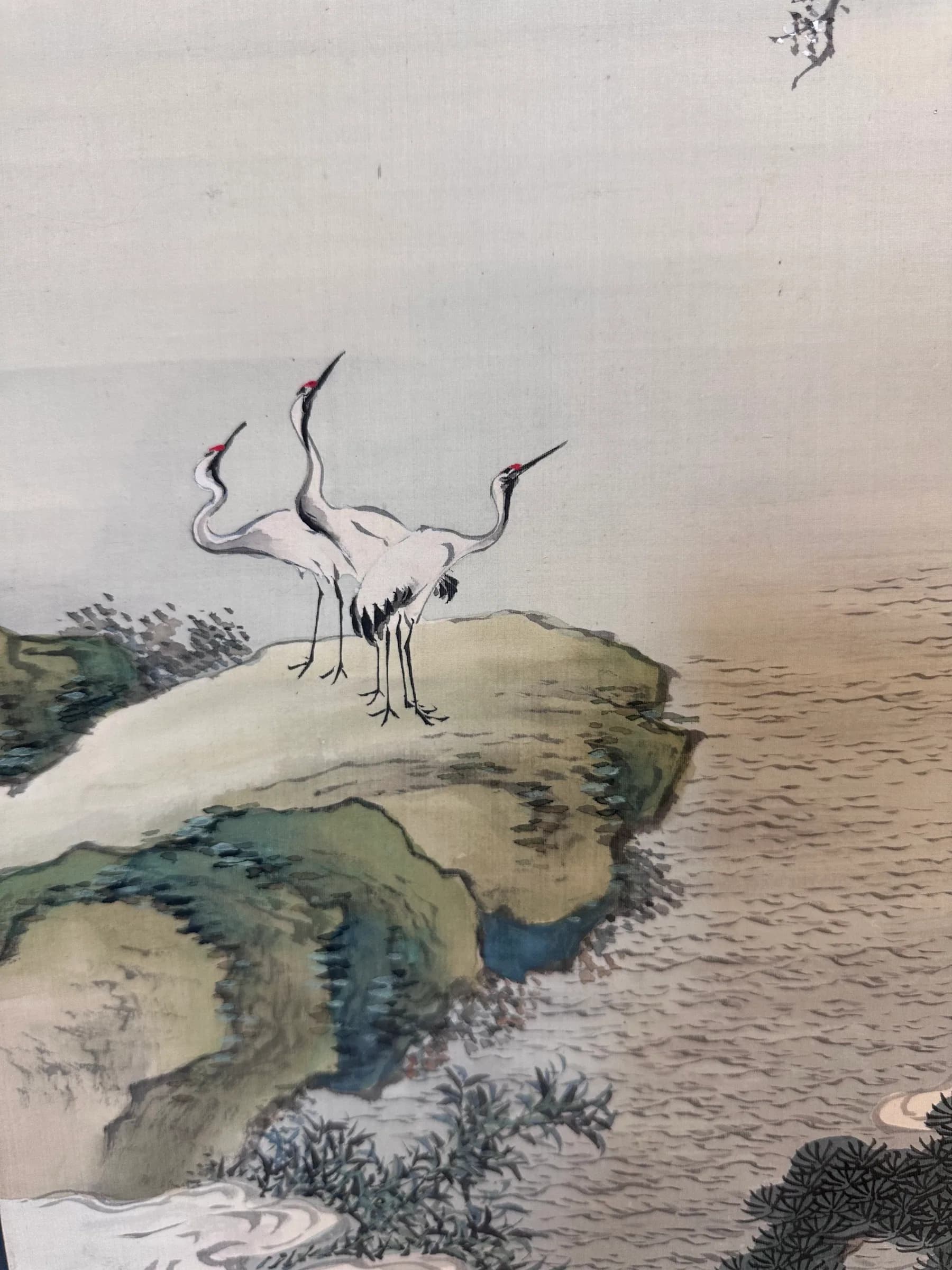
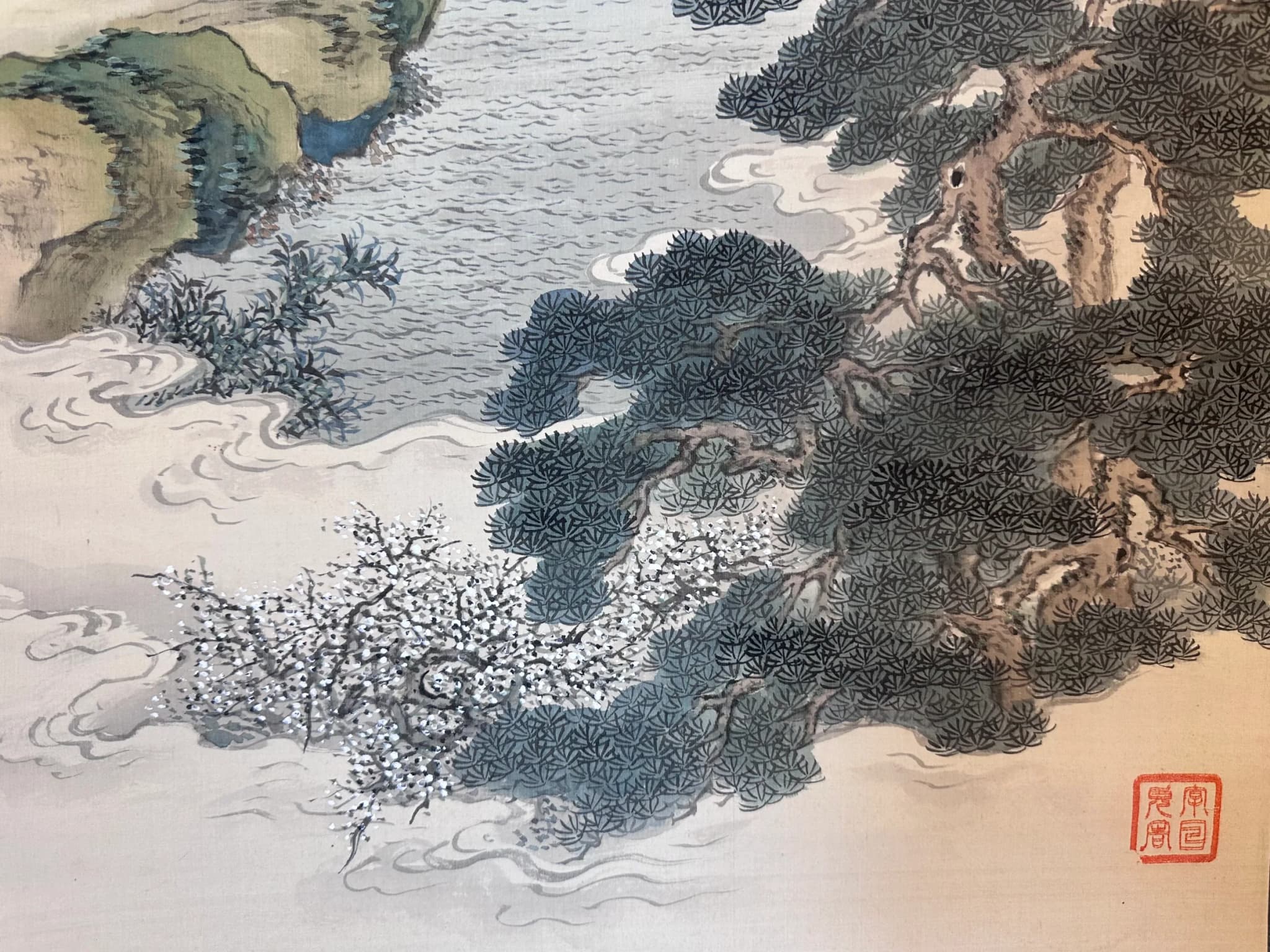
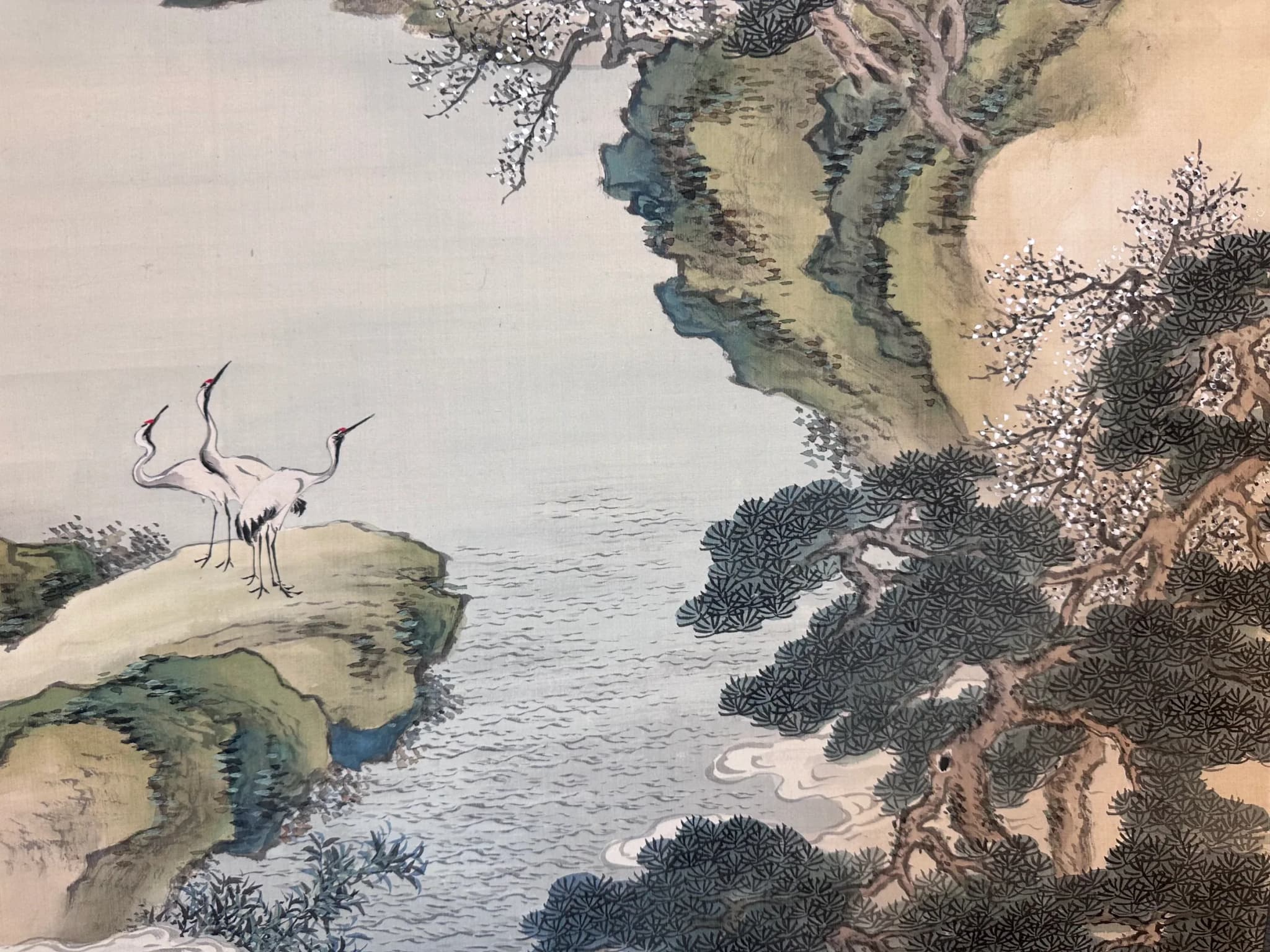
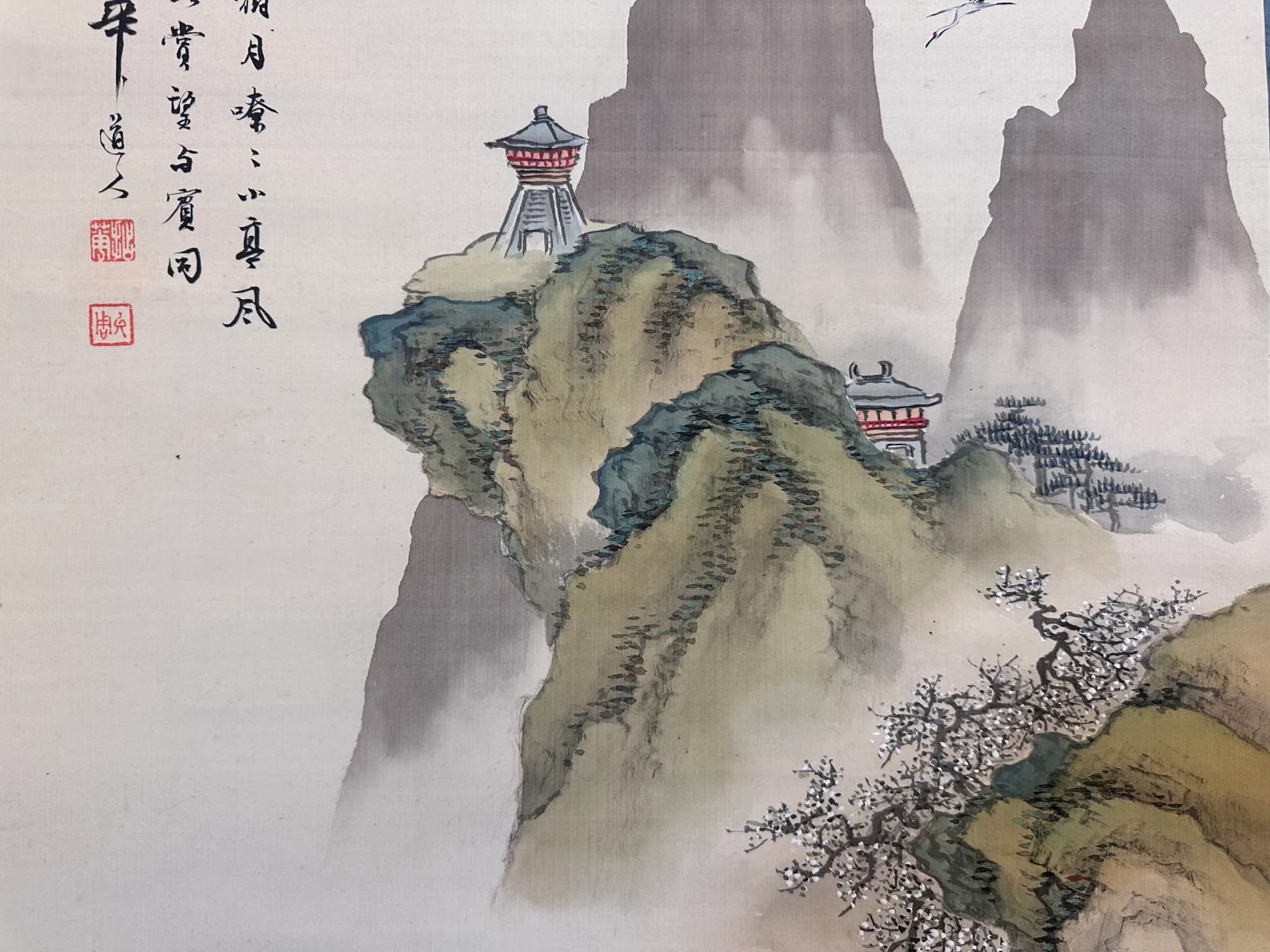
Blue-Green Landscape of Hōrai in Auspicious Mist
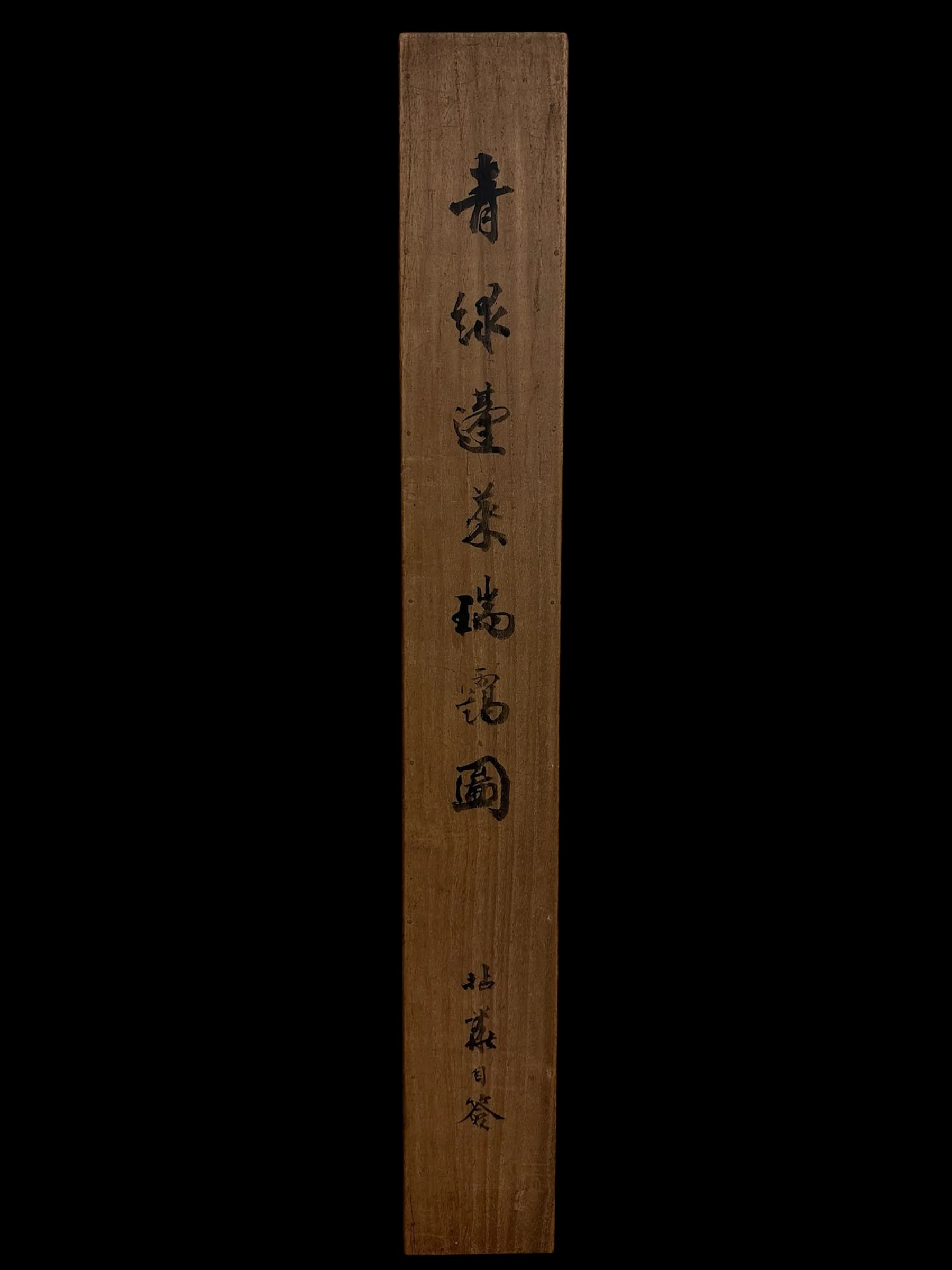
青緑蓬莱瑞靄図
- Era
- Kindai (近代)
- Subject
- Landscape (山水)
- Period
- Taishō Period
- Date
- 1915
- Medium
- Hanging scroll; ink and color on silk
- Dimensions
- 41.6 × 127.6 cm (image); 55.5 × 217.4 cm (overall)
Description
Kurobe Nenge was a Nanga painter active from the Meiji to the early Shōwa periods. Very little information about him can be found today. Records indicate that he studied under an eclectic mix of prominent masters, including Hine Taizan 日根対山, Tazaki Sōun 田崎草雲, Watanabe Shōka 渡辺小華, and an obscure Chinese painter named either Li Shaoyi 李紹儀 or Li Xiaomei 李小梅, about whom no further information is known. However, Nenge was mentioned multiple times in prestigious rankings of renowned painters at his time. He also held membership in the Imperial Painting Association 帝国絵画恊会. These demonstrate that Nenge was, in fact, a highly influential painter of his era, whose significant artistic achievements were almost entirely lost to the passage of time.
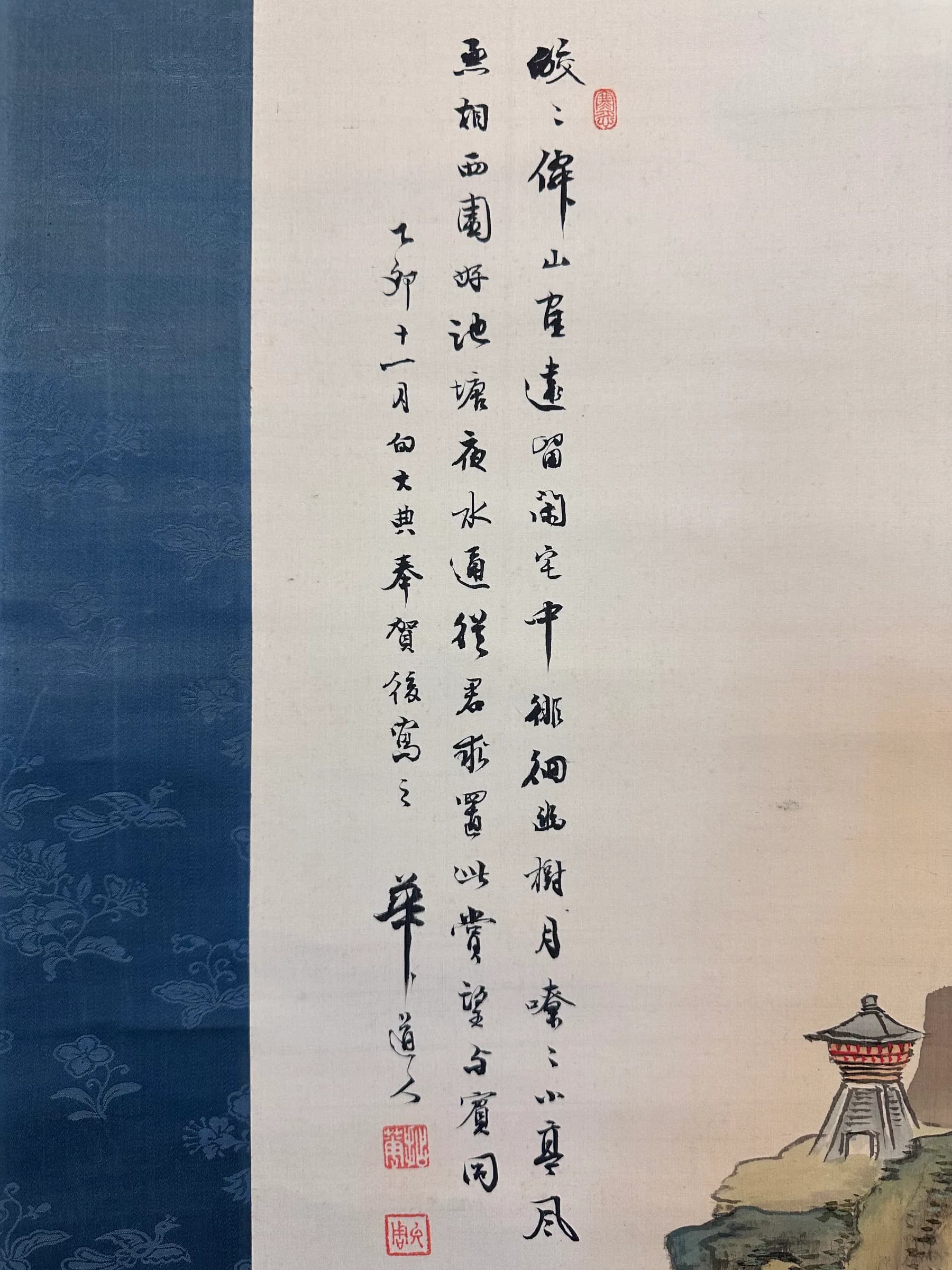
At the upper-left space, Nenge inscribed a five-character regulated verse by the Tang-dynasty poet Zhang Ji 張籍 (772–830), titled “Harmonizing with the poem of Pei, Minister of Works, Requesting a Pair of Cranes from Bai, Deputy Minister of Justice” 和裴司空請刑部白侍郎雙鶴. Zhang Ji originally composed it to persuade legendary poet Bai Juyi 白居易 (772–846) to give his pair of cranes to their mutual friend Pei Du 裴度 (765–839). Nenge reimagines Pei Du’s West Garden as the Daoist paradise Mount Hōrai where Bai Juyi’s cranes are envisioned living carefreely, finding true companionship and sanctuary among the celestial peaks.
Painted shortly after Nenge attended in person Emperor Taishō’s coronation ceremony in November 1915, this landscape transforms a traditional literati motif into a sophisticated political manifesto. Mount Hōrai’s symbolism of immortality celebrates perennial national prosperity under the new sovereign, while the specific narrative of guiding the cranes to an idealized home aligns with the imperialist, pan-Asianist sentiment of early twentieth-century Japan, positioning the nation as the rising beacon and ultimate sanctuary of East Asia.
Painting inscription
皎々僲山隺
遠留閑宅中
徘徊幽樹月
嘹々小亭風
丞相西園好
池塘夜水通
從君求置此
賞望与賓同
Bright and pure white are the cranes from the immortal mountains,
Living far away in your tranquil, idle estate.
They pace back and forth beneath the moonlit, secluded trees,
Their clear cries echo in the wind around the small pavilion.
The Grand Chancellor’s West Garden is magnificent,
Where the night waters flow freely through interconnected ponds.
He begs of you to allow them to be placed there,
So that he may admire and enjoy their beauty together with his guests.
乙卯十一月旬大典奉賀後寫之 華道人 (In November of the kinotō year [1915], painted after respectfully offering congratulations at the grand ceremony [of Emperor Taishō’s enthronement]—Hermit Ke)
Seals
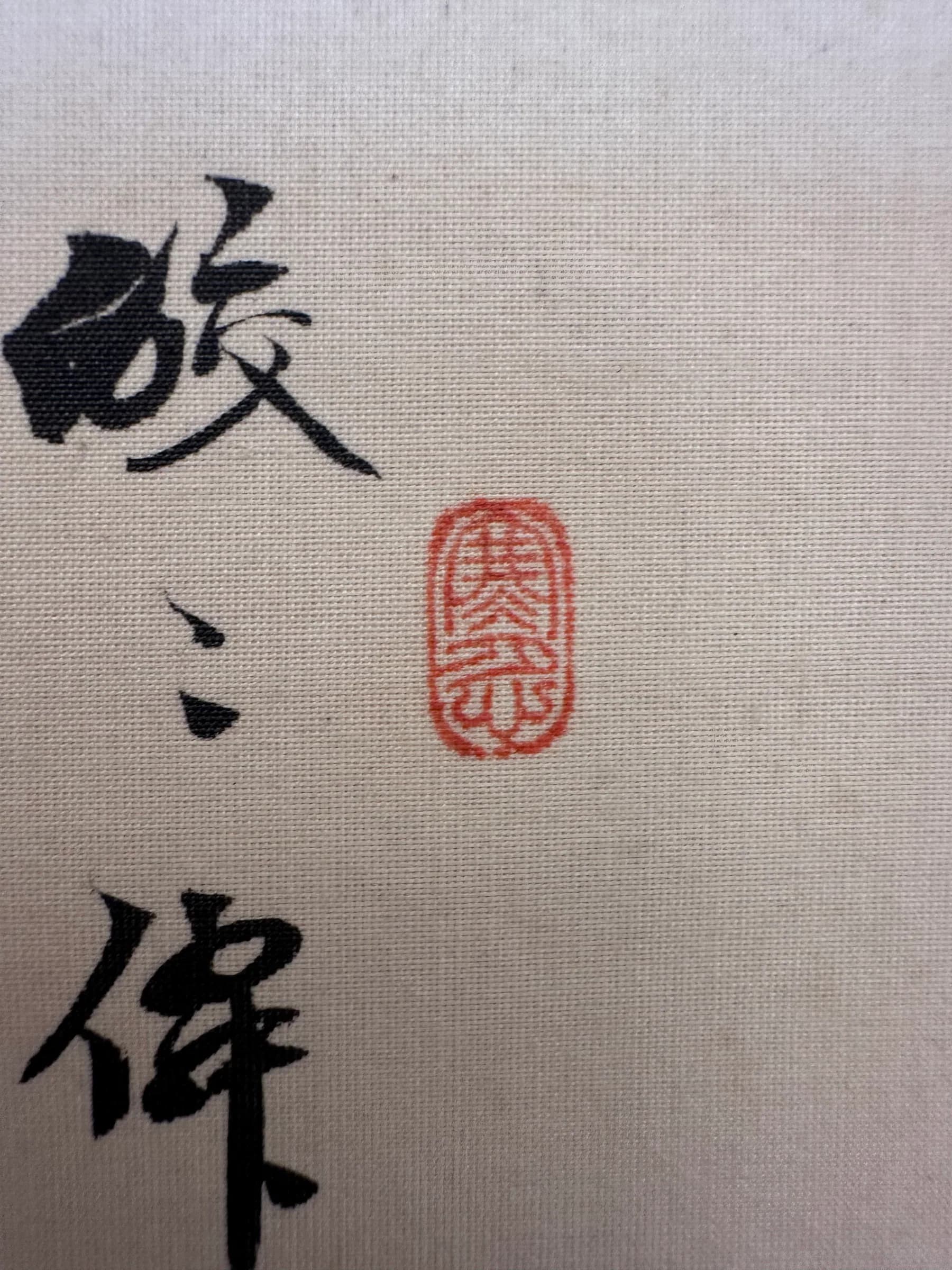
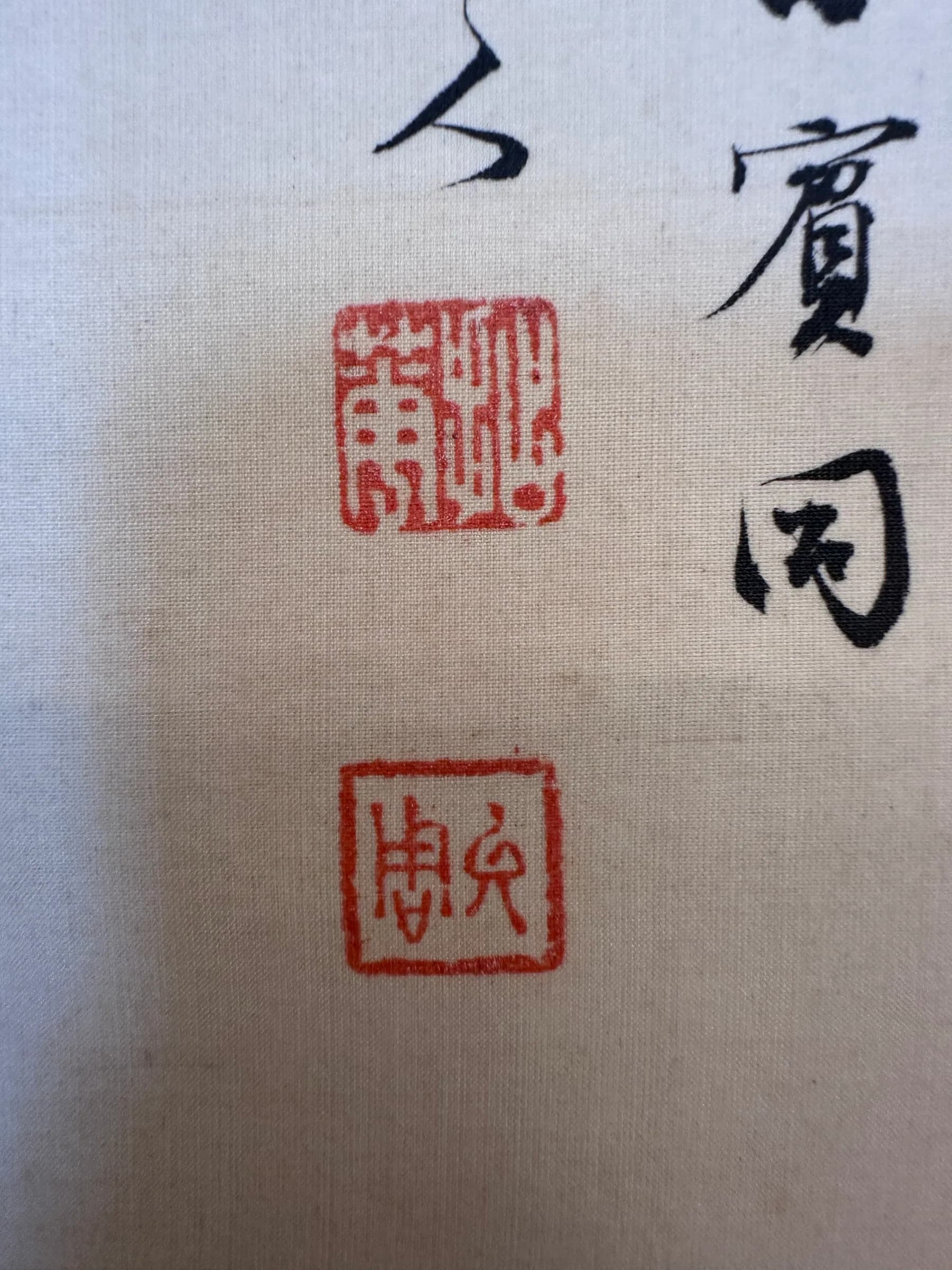
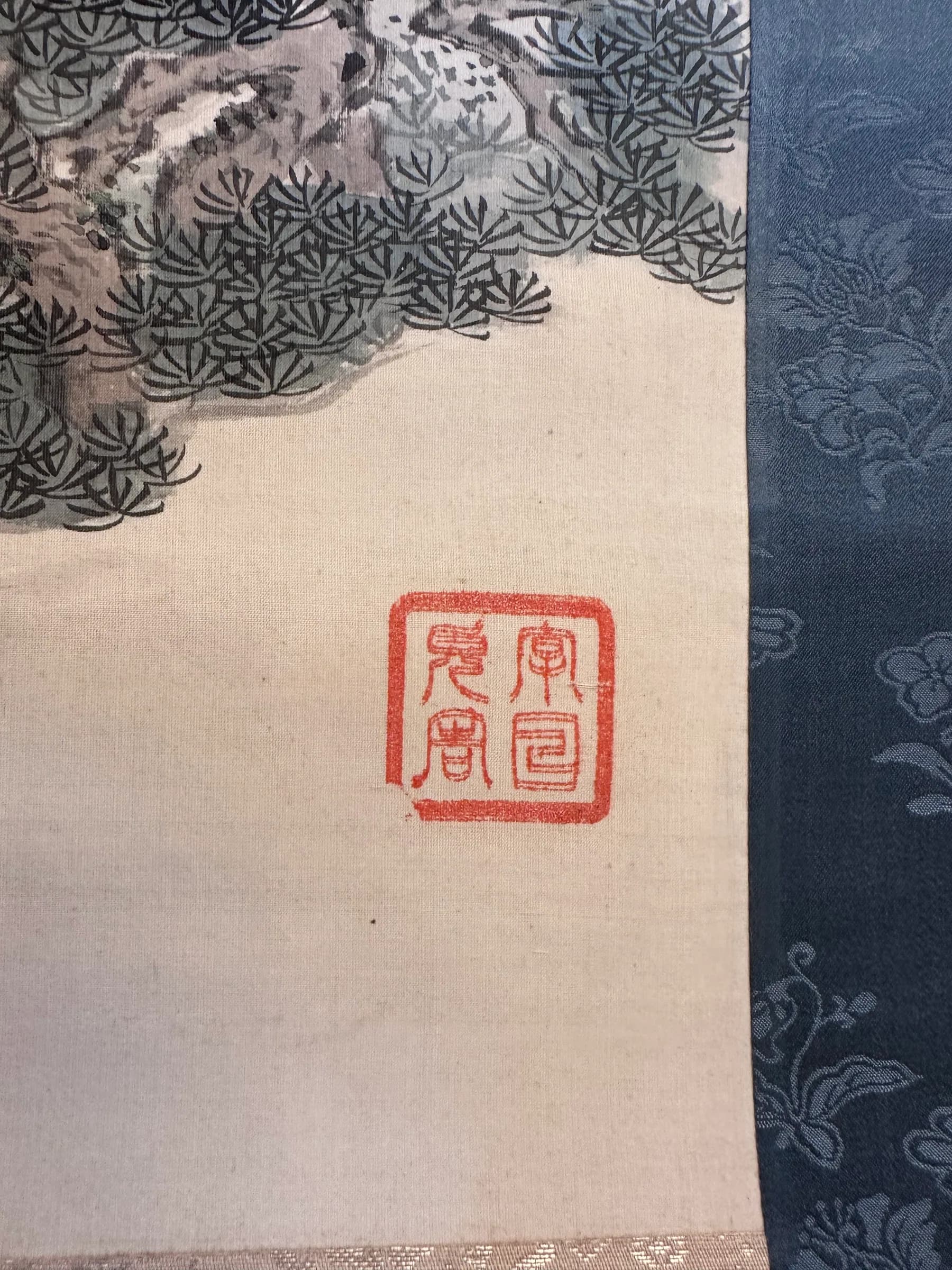
(kanbōin 関防印: oval relief seal) kanshinobu 寒忍; (square intaglio seal) Nenge 拈華; (square relief seal) Inshū 允周; (yūin: square relief seal) azana iwaku Inshū 字曰允周
Box inscription
(front): 青緑蓬莱瑞靄圖 拈華自簽 (Blue-Green Landscape of Hōrai in Auspicious Mist, self-inscribed by Nenge)