
View 1 of 19
Mori Kinseki (1843–1921)
森琴石
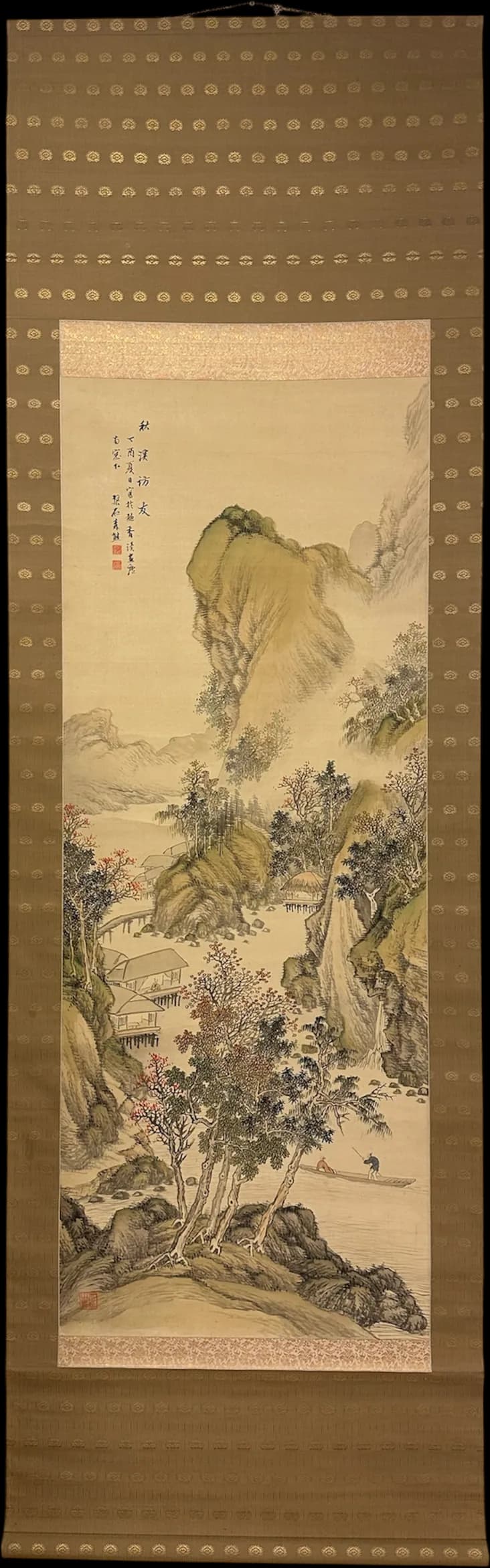
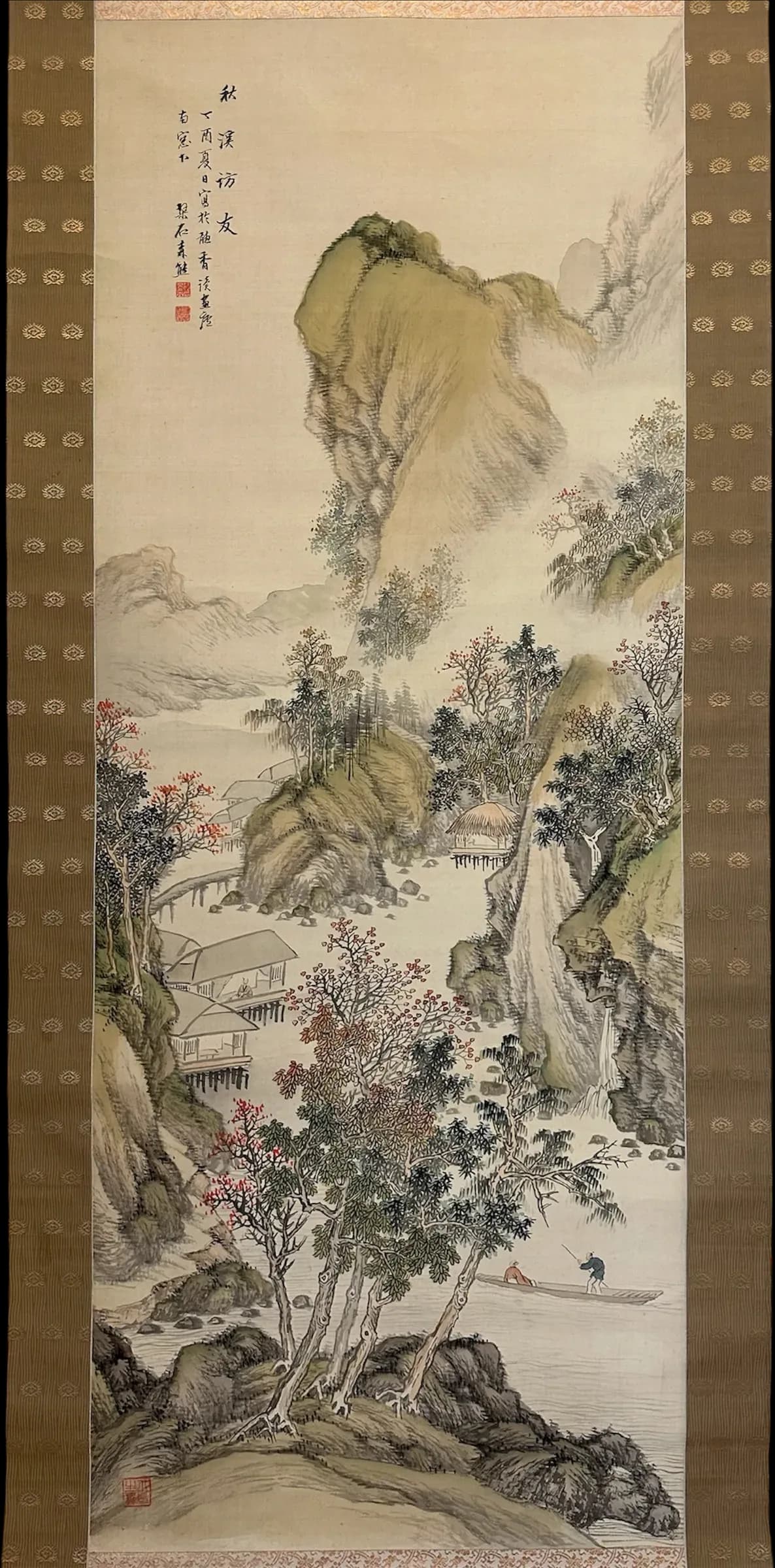
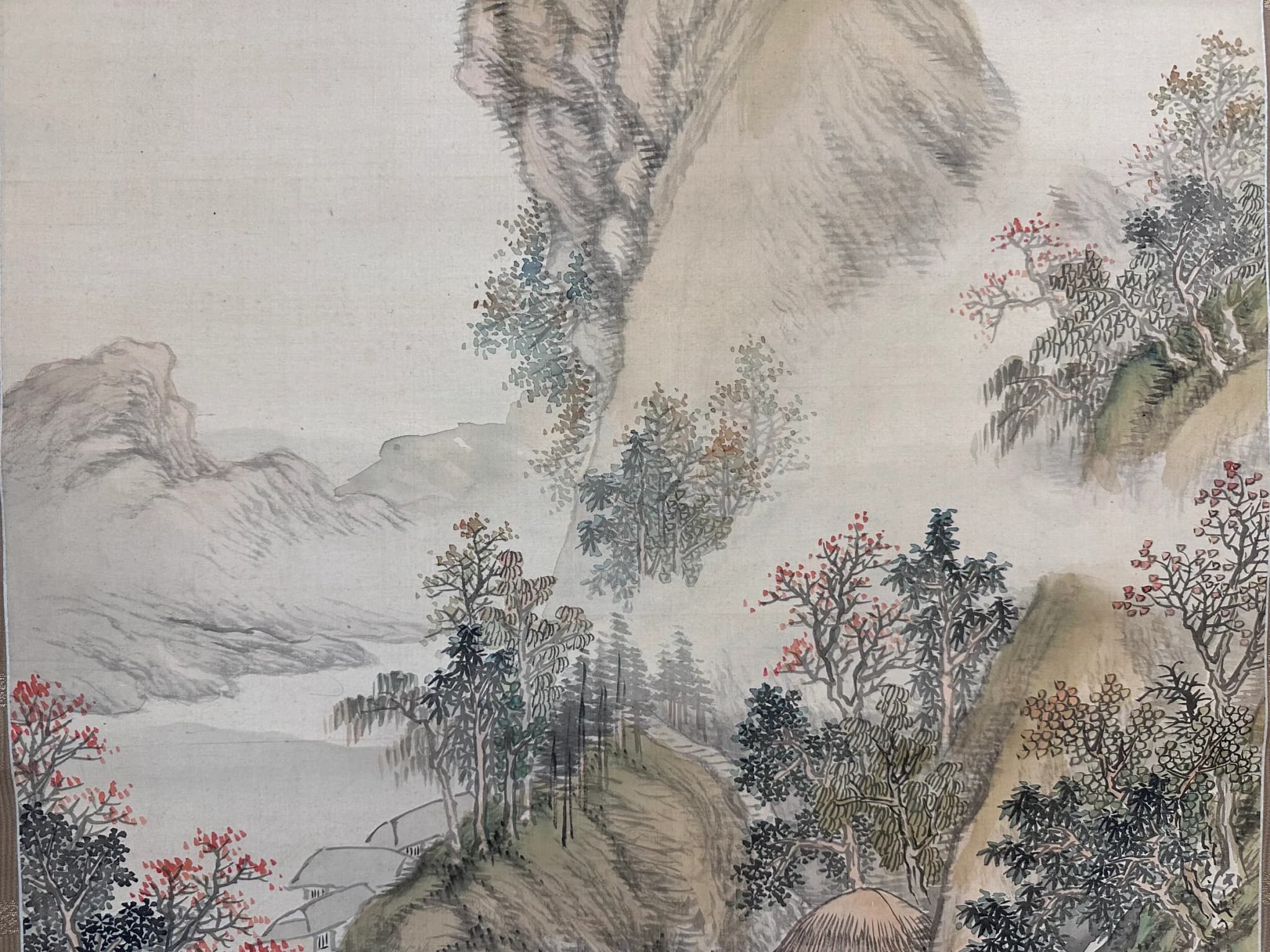
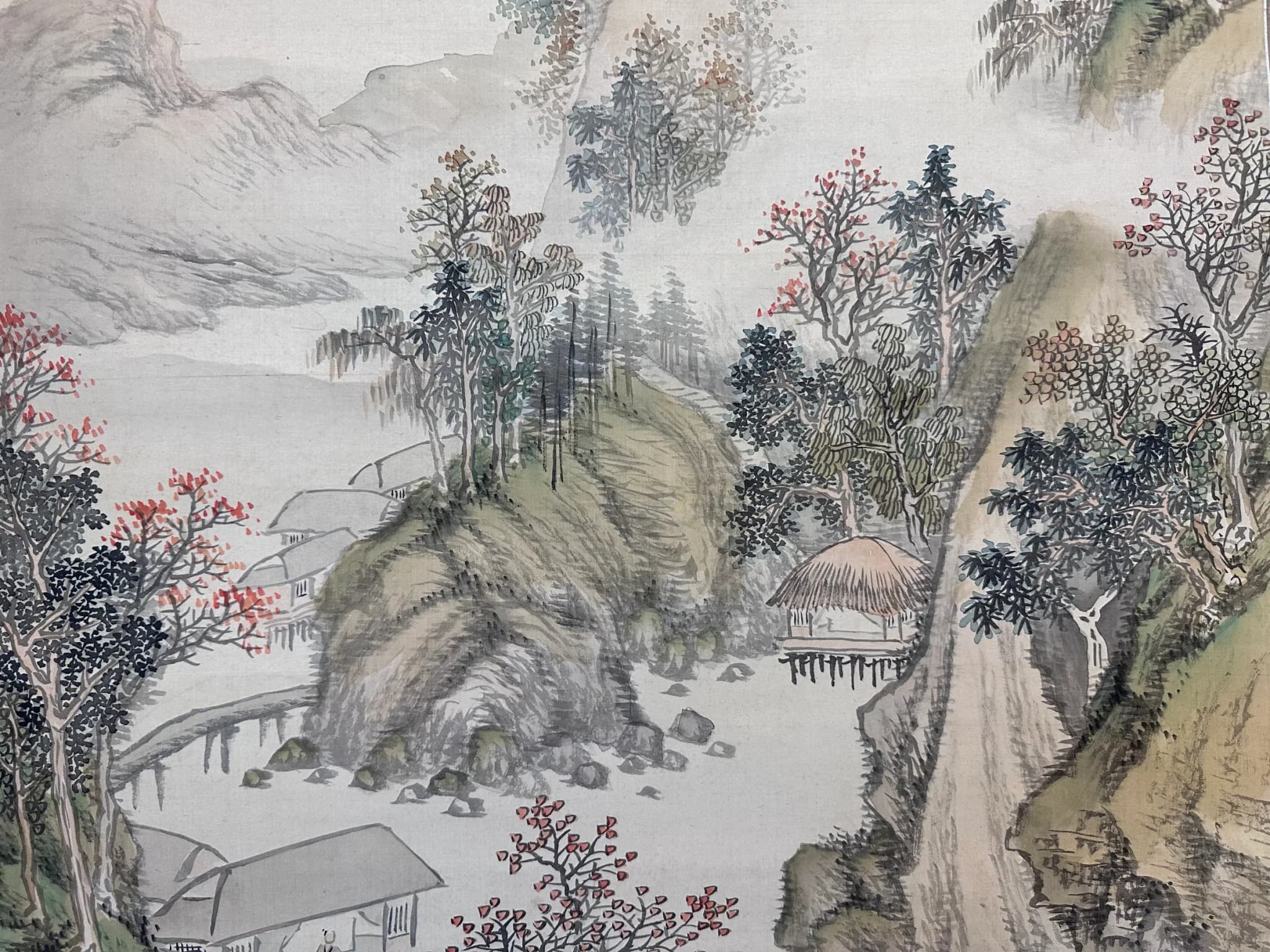
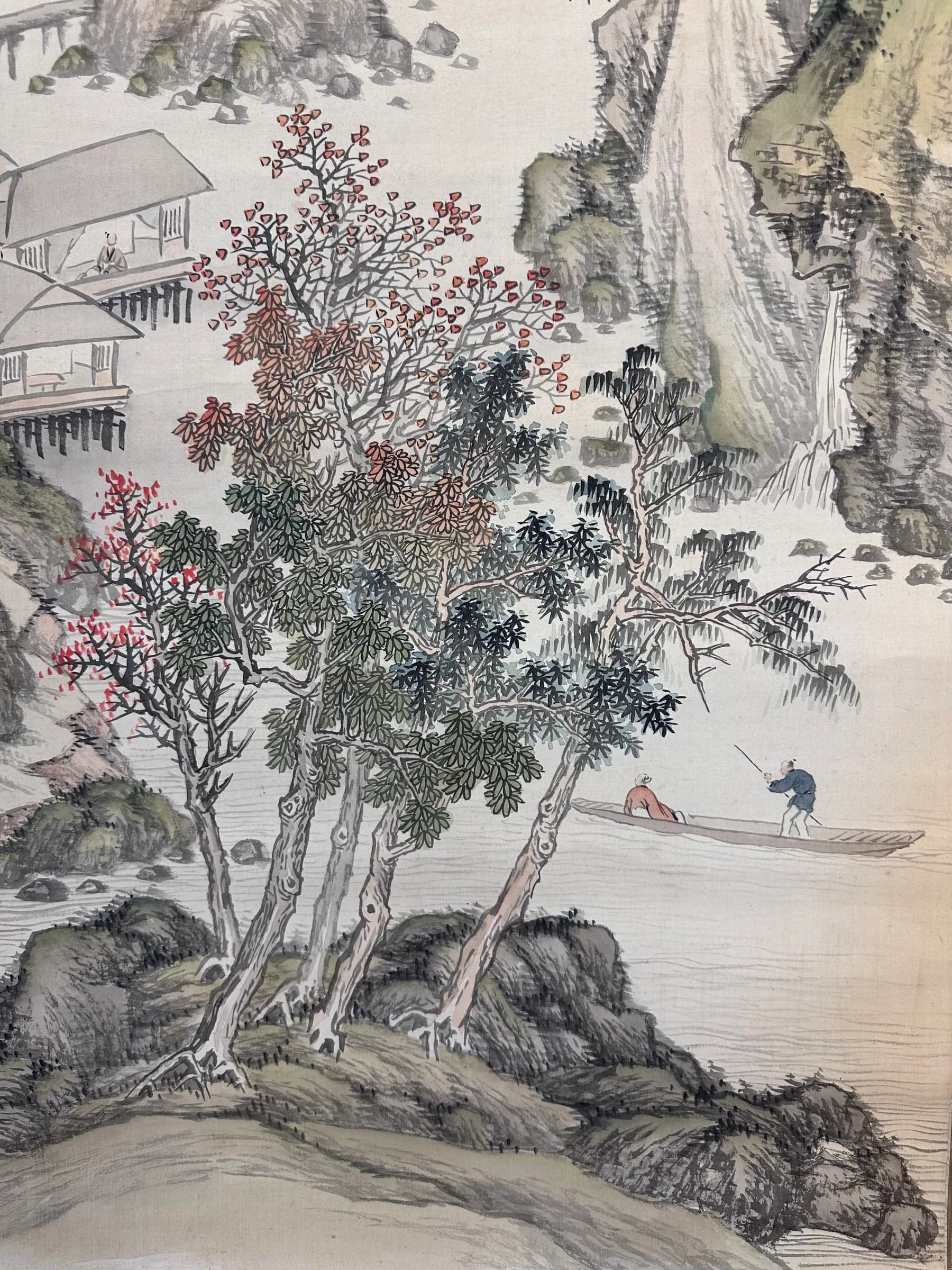
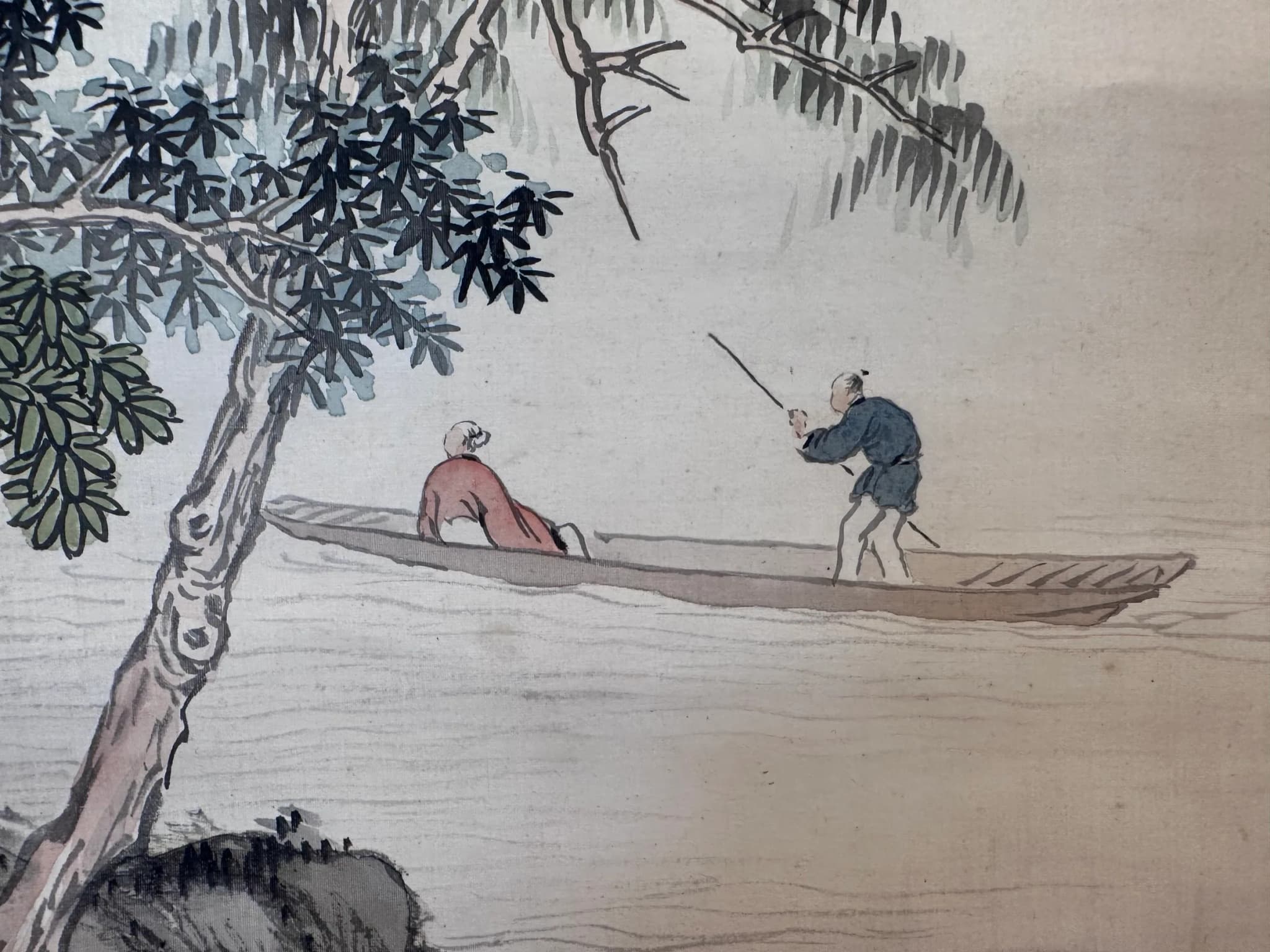
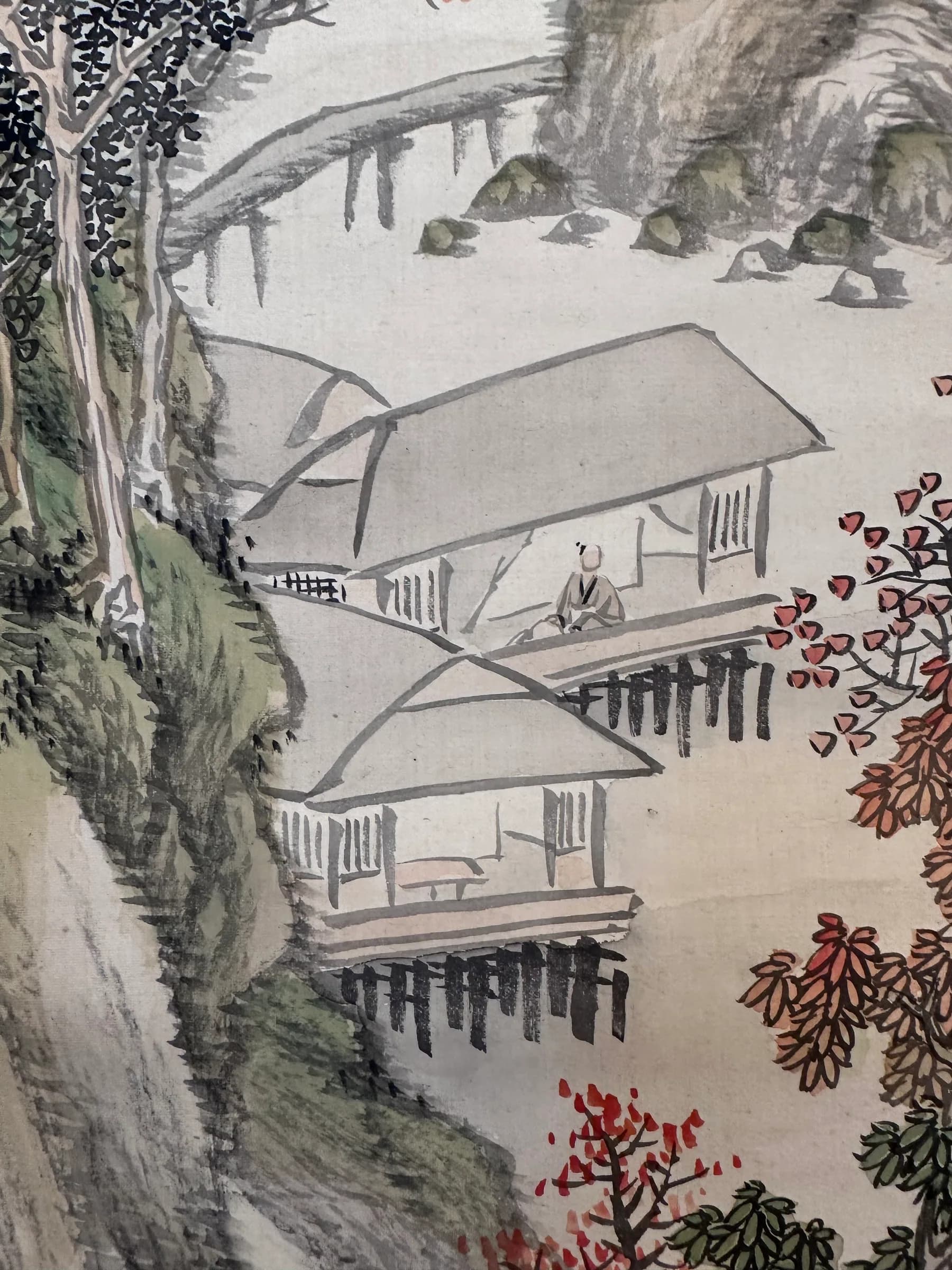
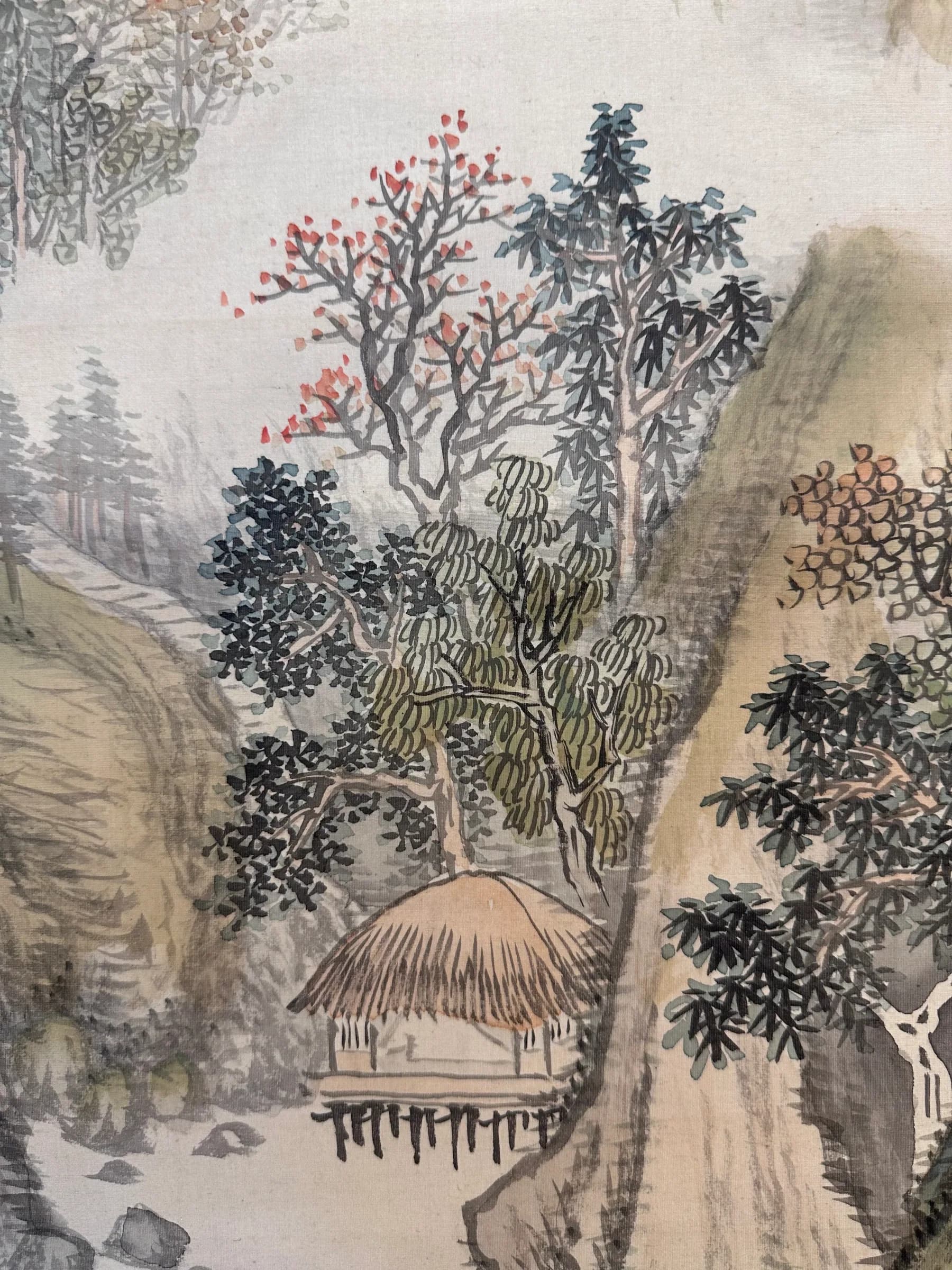
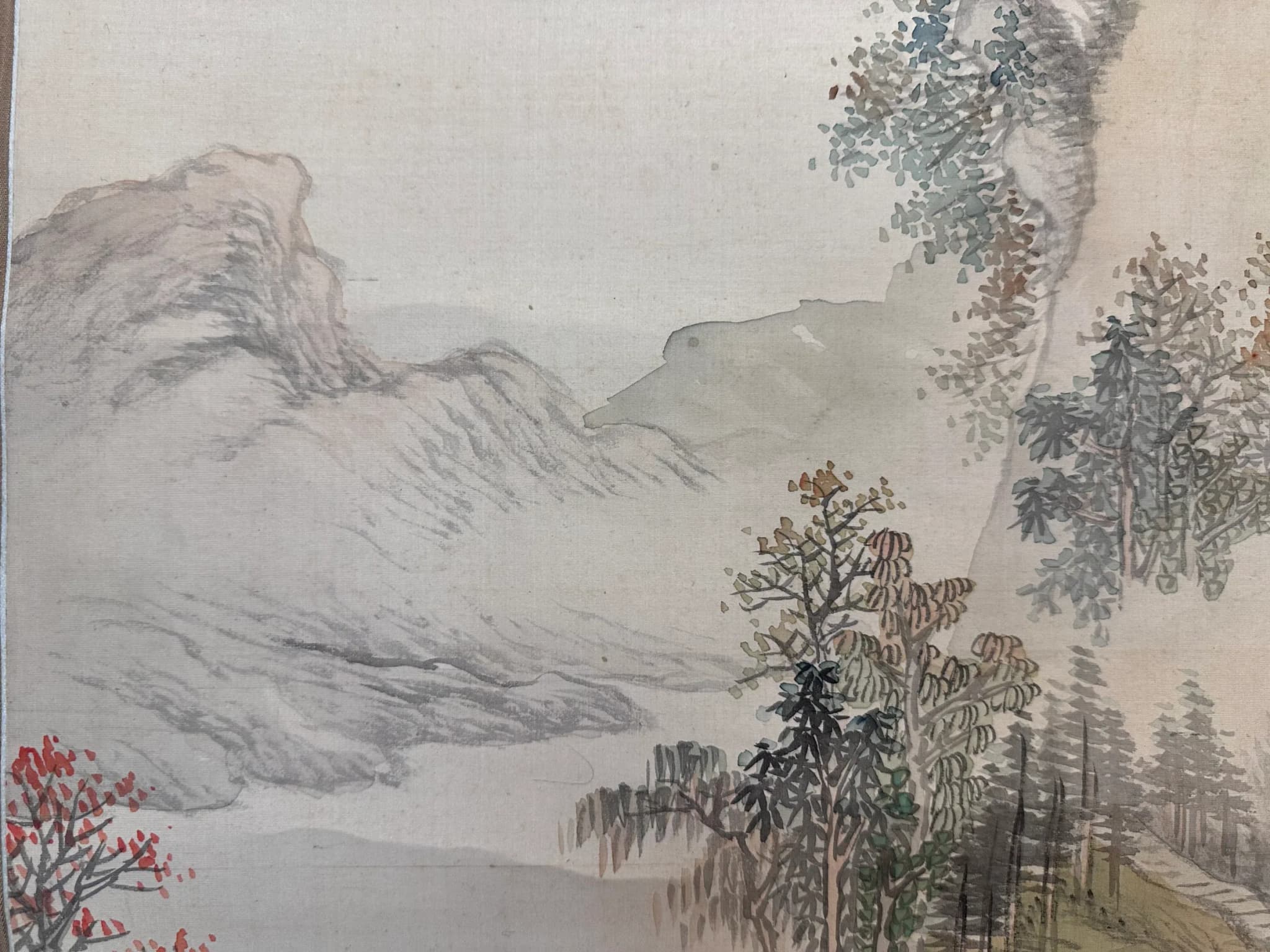
Visiting a Friend by an Autumn Stream
秋渓訪友図
- Era
- Kindai (近代)
- Subject
- Landscape (山水)
- Period
- Meiji Period
- Date
- 1897
- Medium
- Hanging scroll; ink and color on silk
- Dimensions
- 50.7 × 131.8 cm (image); 65.7 × 208.0 cm (overall)
Description
Mori Kinseki was a preeminent Osaka-based Nanga painter and pioneering copperplate engraver who emerged as the central figure of Osaka’s late Meiji and early Taisho art circles. At an early age, he received classical Nanga training under Kanaoka Kinjō 鼎金城 and Ninchōji Seison 忍頂寺静村 while cultivating a deep Sinological foundation under scholars like Mega Yūshō 妻鹿友樵 and Takagi Taizō 高木退蔵. After studying under oil painter Takahashi Yuichi 高橋由一 in Tokyo, Kinseki operated under the studio name Kyōsendō 響泉堂 as Osaka’s premier copperplate artist, producing over a hundred maps, textbook illustrations, and scientific prints—an exceptional cross-disciplinary path for a literati painter. Since 1877, he established close intellectual ties with visiting Qing dynasty painters such as Hu Tiemei 胡鉄梅 and Hu Gongshou 胡公寿, developing a distinctive Nanga style that integrated dense Chinese brushwork with Western perspective and compositional rigor. Honored as the titan of Osaka Nanga, Kinseki solidified his status in 1913 as the first Osaka-based painter appointed as a juror for the official Ministry of Education Art Exhibition (Bunten).
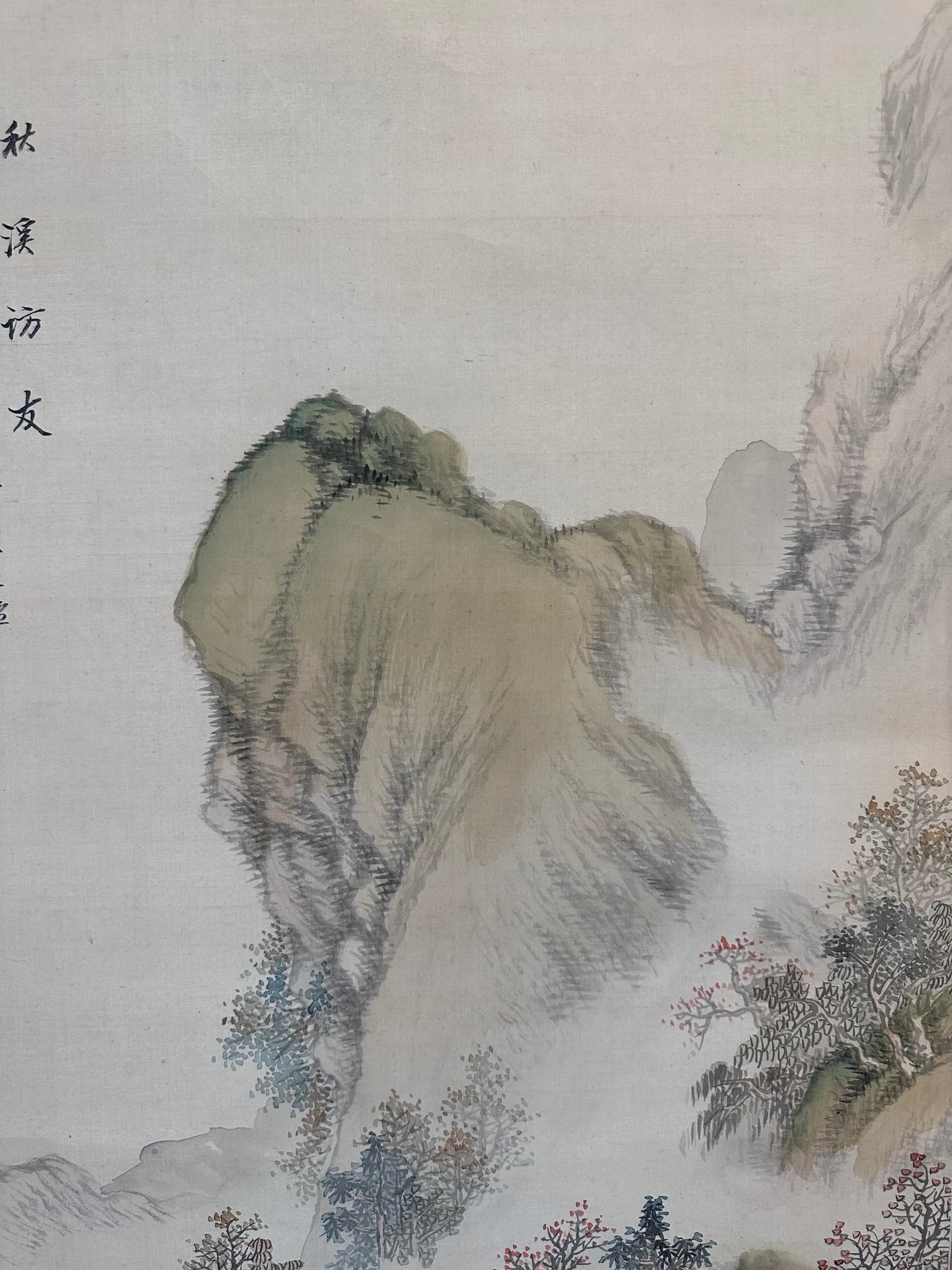
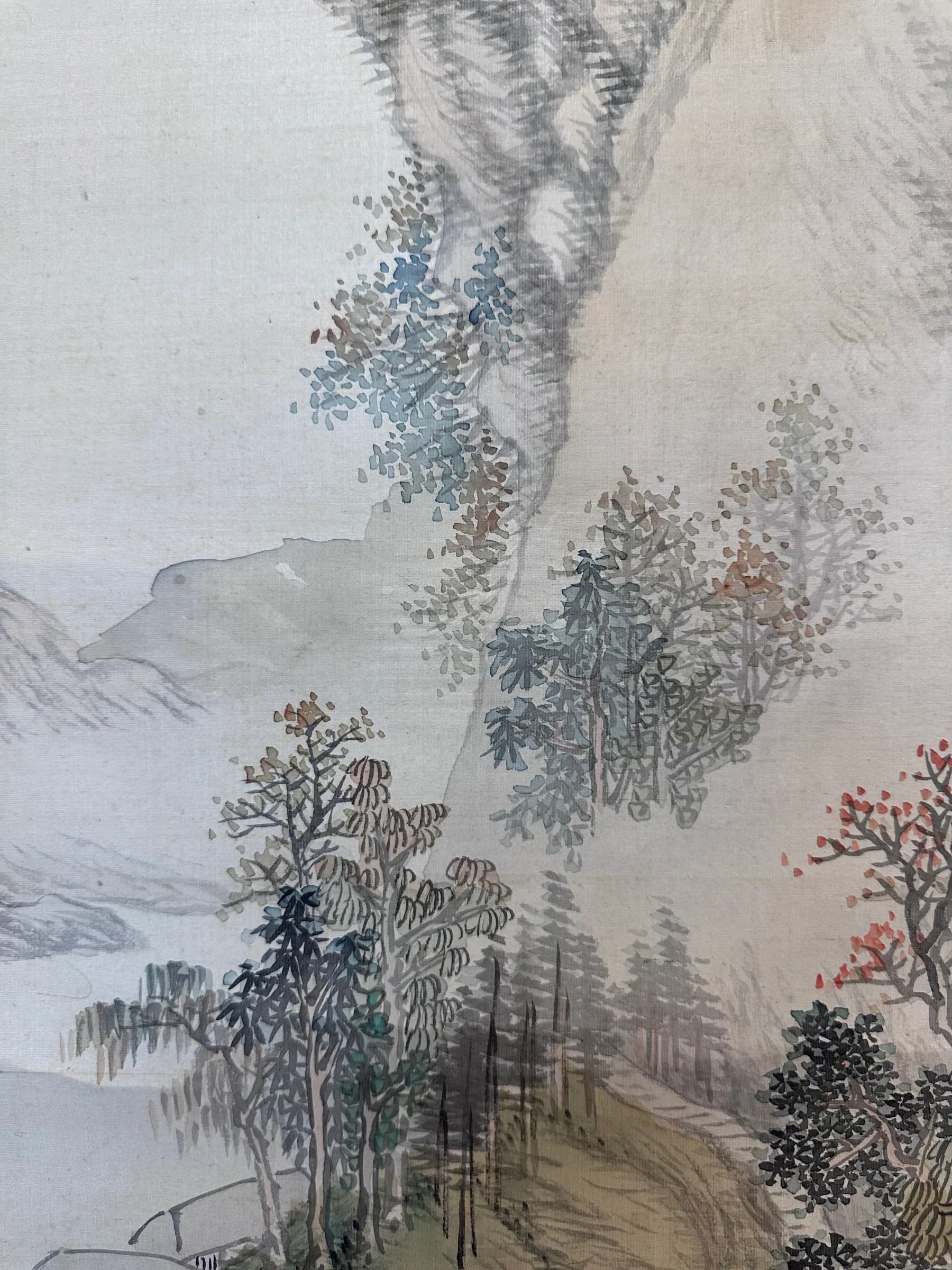
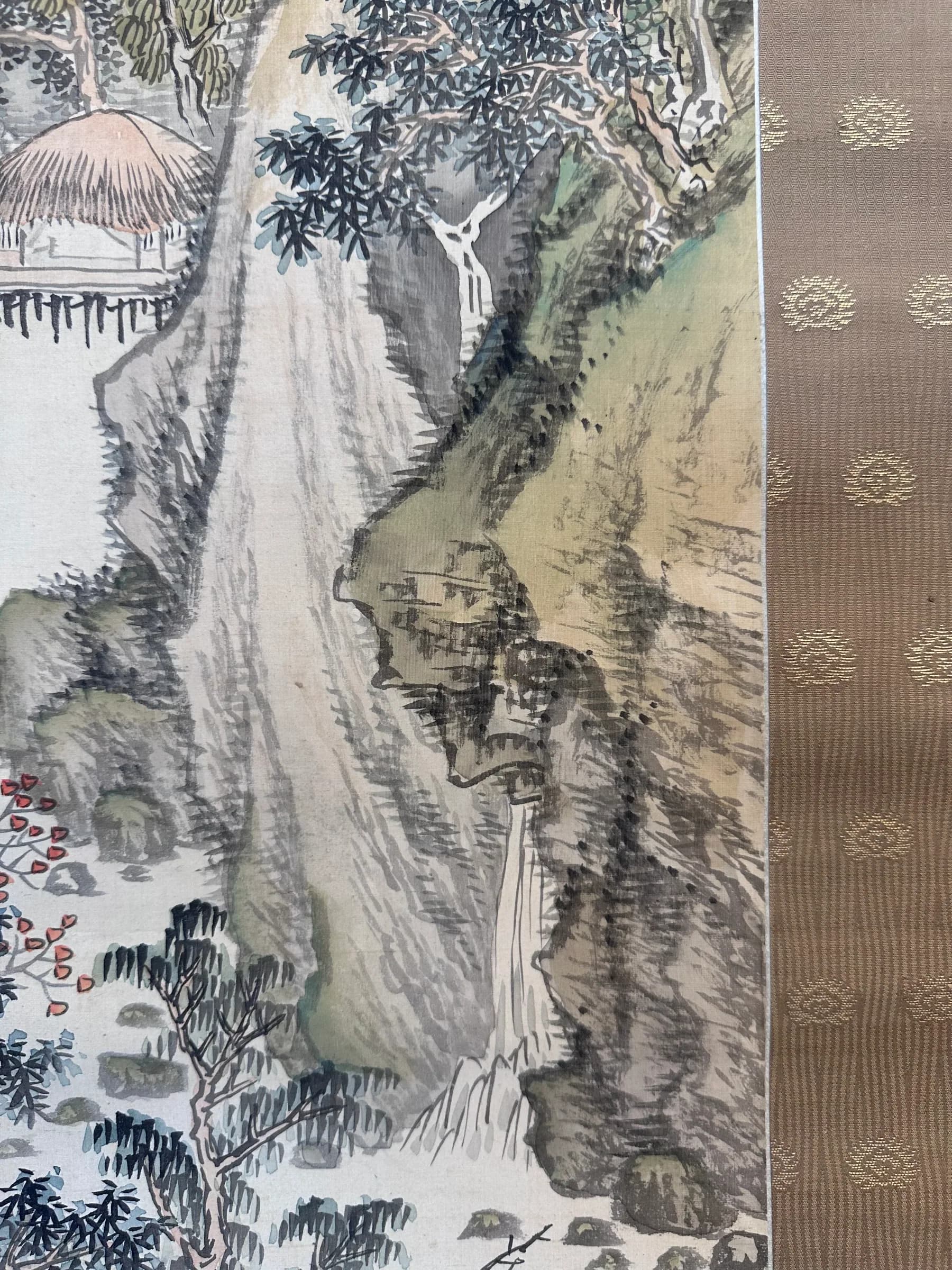
Visiting friends in mountain retreats is a classic motif in literati painting, encapsulating the scholar-gentry’s ideals of reclusion, quiet camaraderie, and spiritual communion with nature. This ethos is vividly captured in the Yuan dynasty Daoist poet Ma Zhen’s 馬臻 verse “On a Painting of Visiting a Friend in Autumn Streams” 題溪山訪友圖: The stream breeze blows through tall pines,/ Autumn shadows lie thin on the stone path./ Below walks a seeker of tranquility,/ Leaning on a cane, gazing into the wooded ravine 溪風吹長松 石路秋影薄 下有尋幽人 支筇注林壑. Kinseki inherits this poetic vision in this painting, setting a visitor in a skiff being ferried toward thatched waterside pavilions amidst crisp, autumn-tinted foliage. Stylistically, Kinseki’s modeling of the craggy rock faces reveals a distinct debt to his aforementioned friend Hu Tiemei, incorporating fine, pale-ink pointed moss dots and delicate brushwork traceable to the Qing orthodox lineage of the Four Wangs. As a principal patron and host for Tiemei and other expatriate Qing painters in Kansai, Kinseki leveraged these firsthand exchanges to absorb mainland literati techniques directly from overseas artists. At the close of the nineteenth century, when the rapid rise of Western-style painting destabilized traditional art circles, this connection enabled Kinseki to anchor his practice firmly in the Nanga path and champion its preservation.
Painting inscription
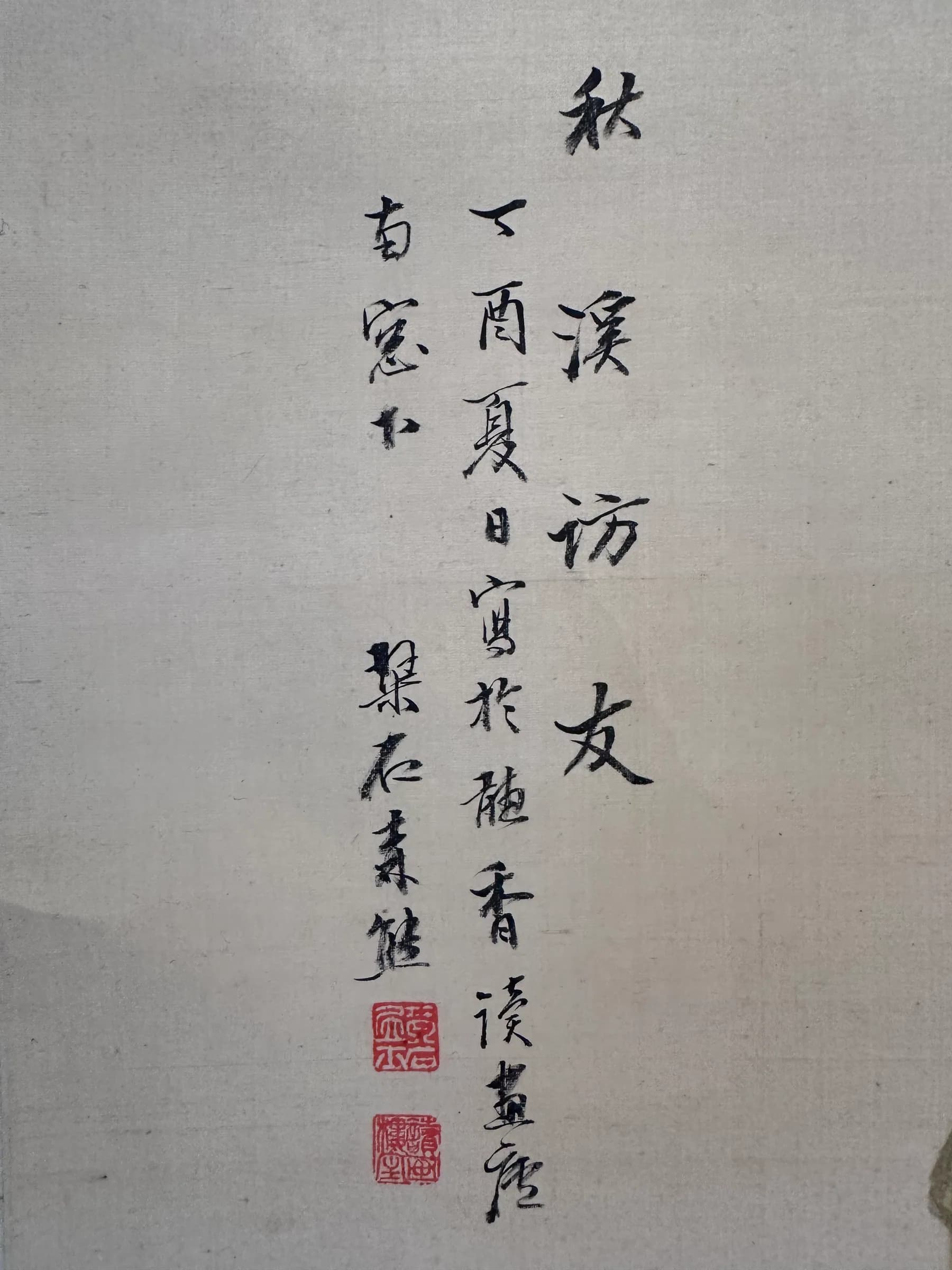
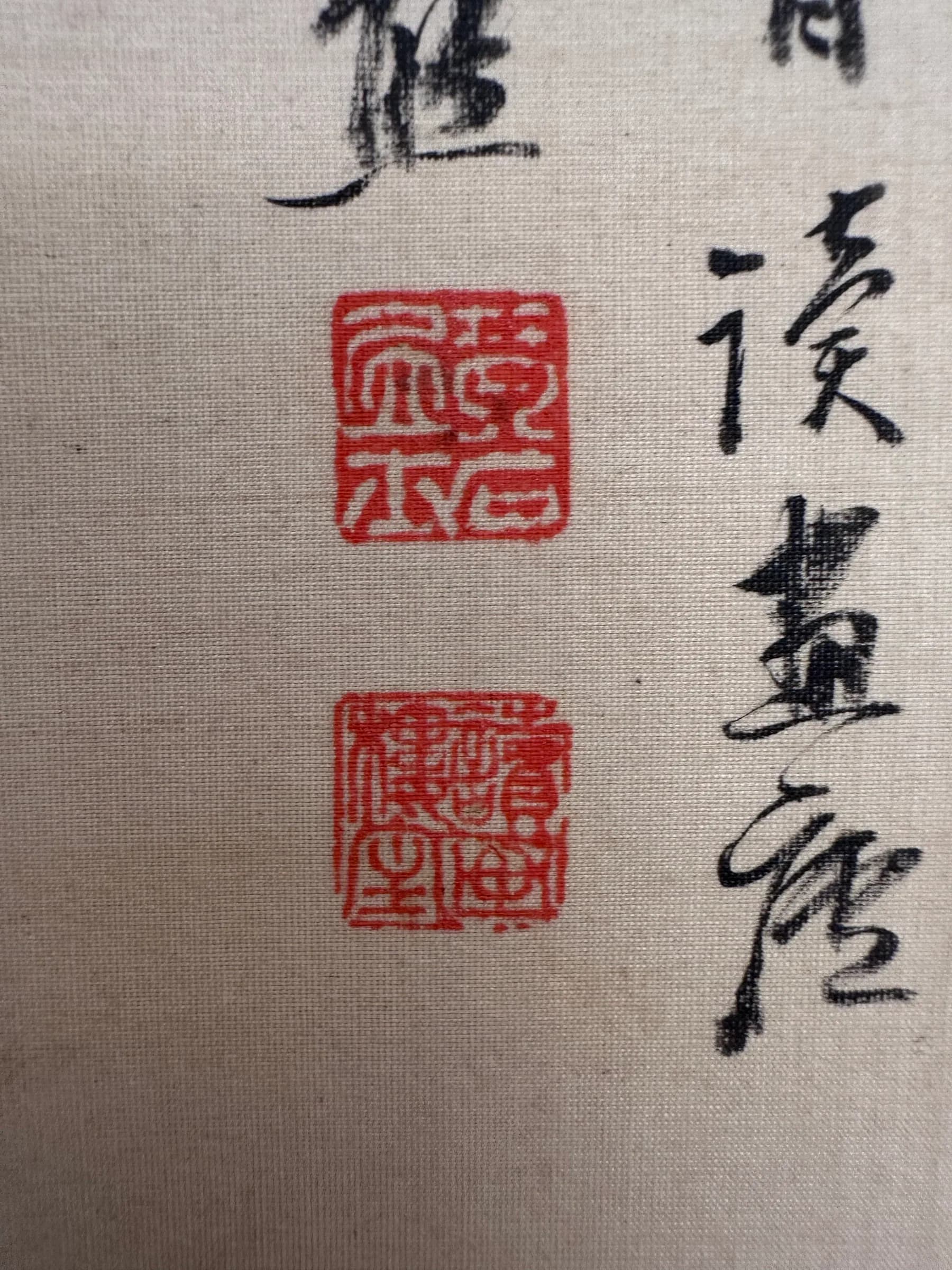
秋溪訪友 丁酉夏日寫於聽香讀畫庵南窓下 琹石森熊 (Visiting a Friend by an Autumn Stream. Painted under the south window of the Studio for Listening to Fragrance and Reading Paintings on a summer day in the hinototori year [1897]—Kinseki, Mori Yū)
Seals
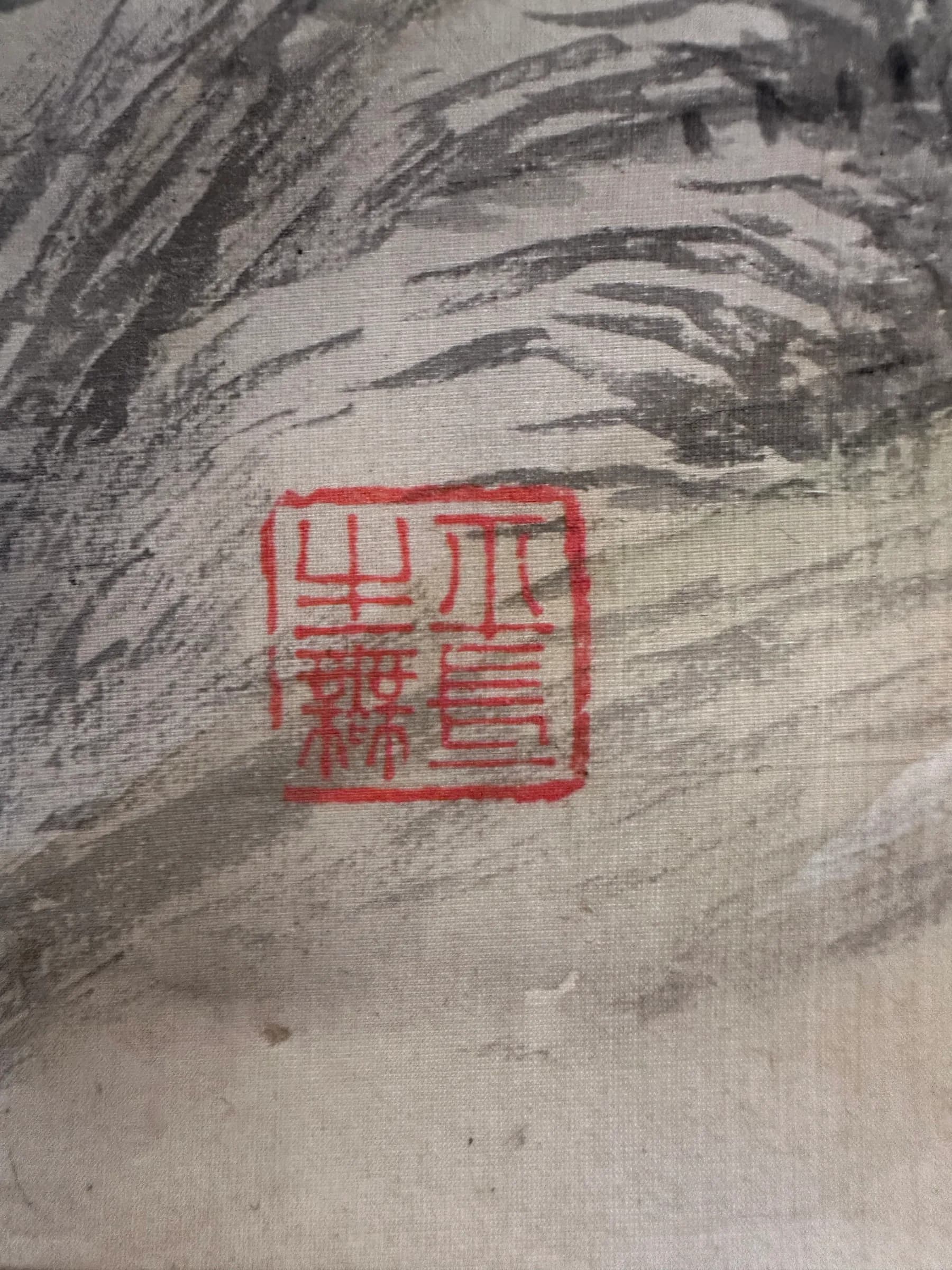
(square intaglio seal) Kinseki koji 琴石居士; (square relief seal) Dokugarō shu 讀画樓主; (yūin: square relief seal) heijō isshō nashi 平長一生無; (kanbōin: box rectangular relief seal) 一飽不易得 ippō wa eyasukarazu; (box square intaglio seal) 琴石長壽 Kinseki chōju; (box square relief seal) 聽香讀画 chōkyō dokuga
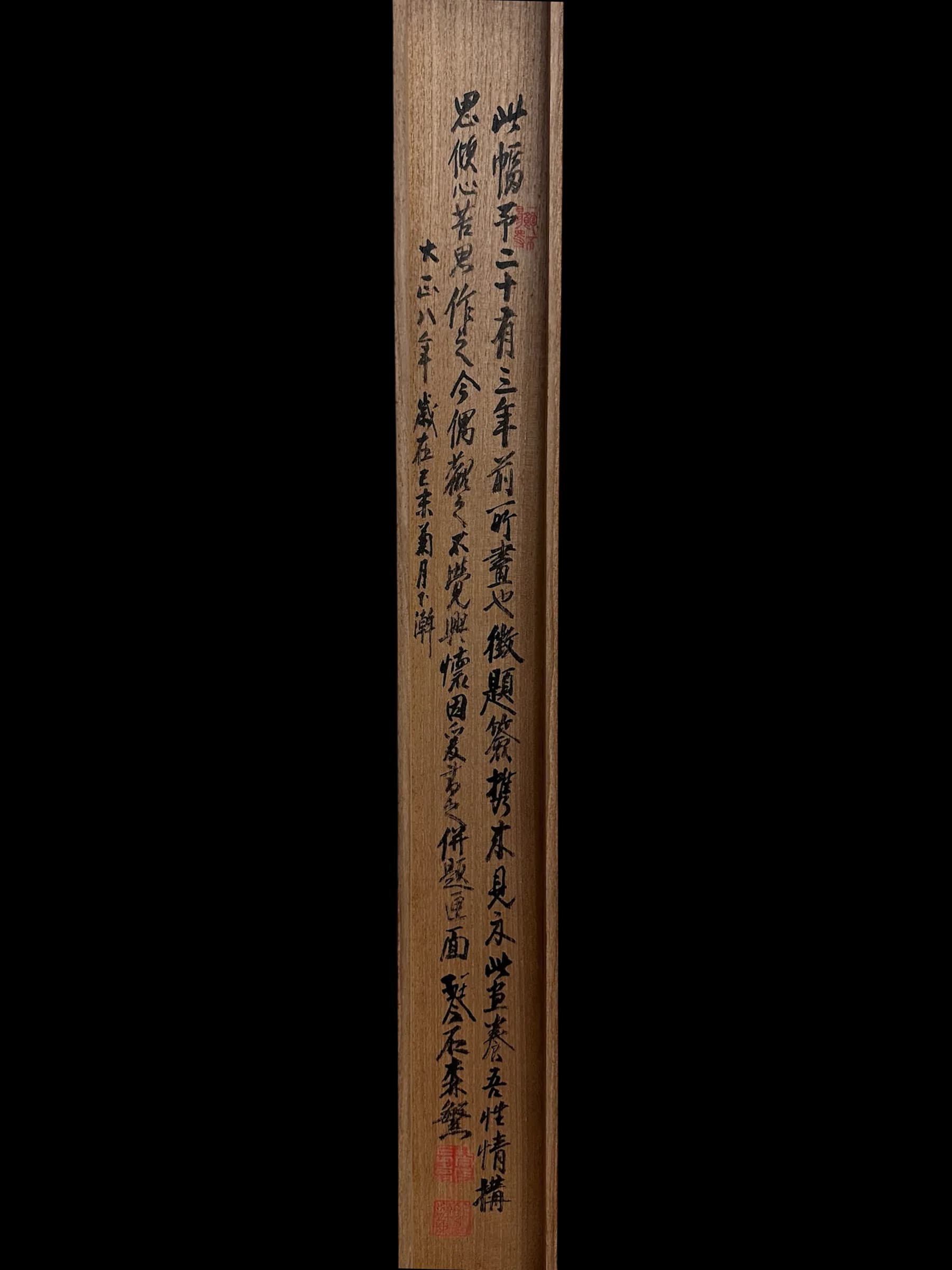
Box inscription
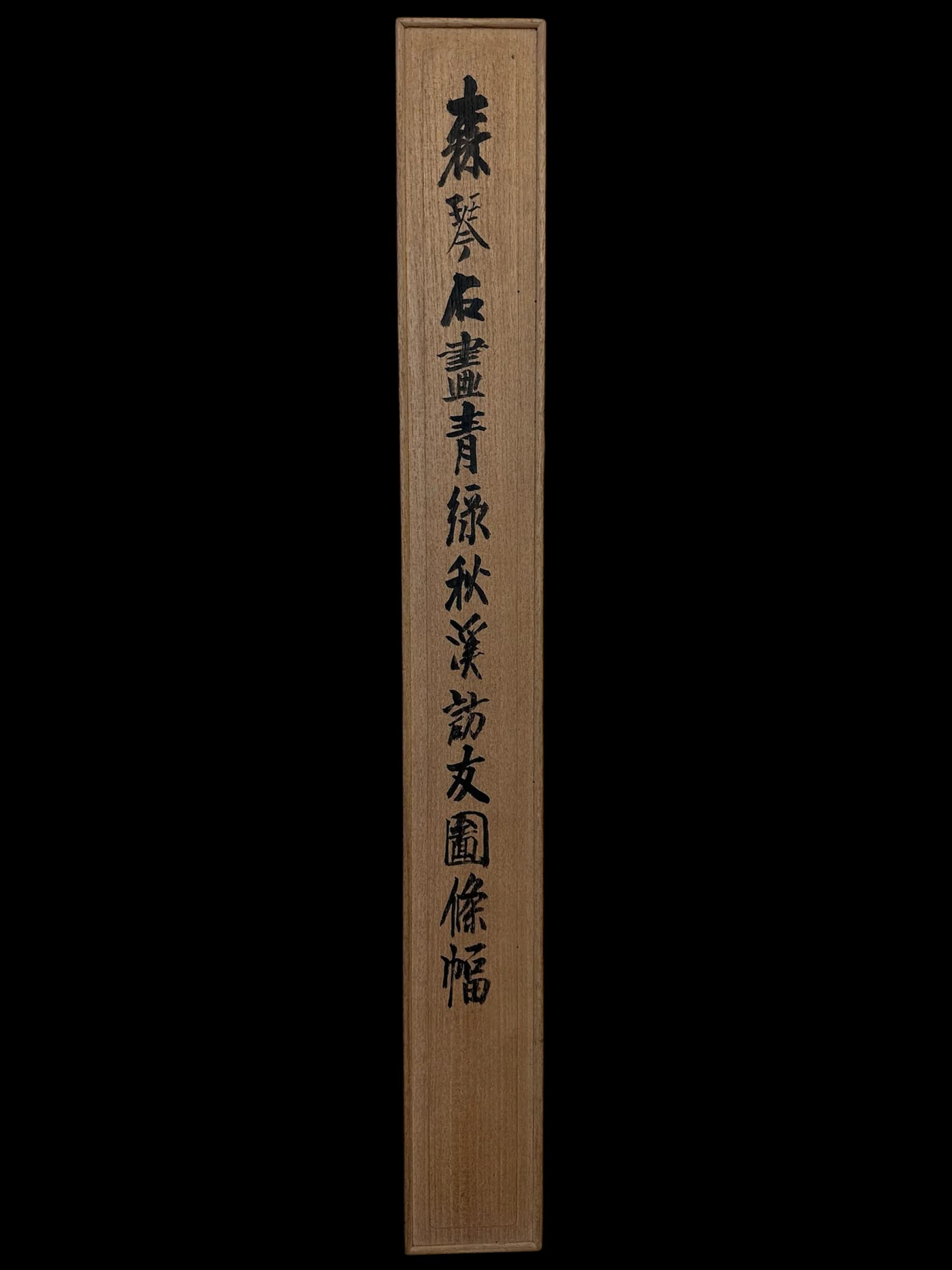
(front): 森琴石畵青緑秋溪訪友圖條幅 (Hanging Scroll of the Blue-Green Landscape—Visiting a Friend by an Autumn Stream, Painted by Mori Kinseki)
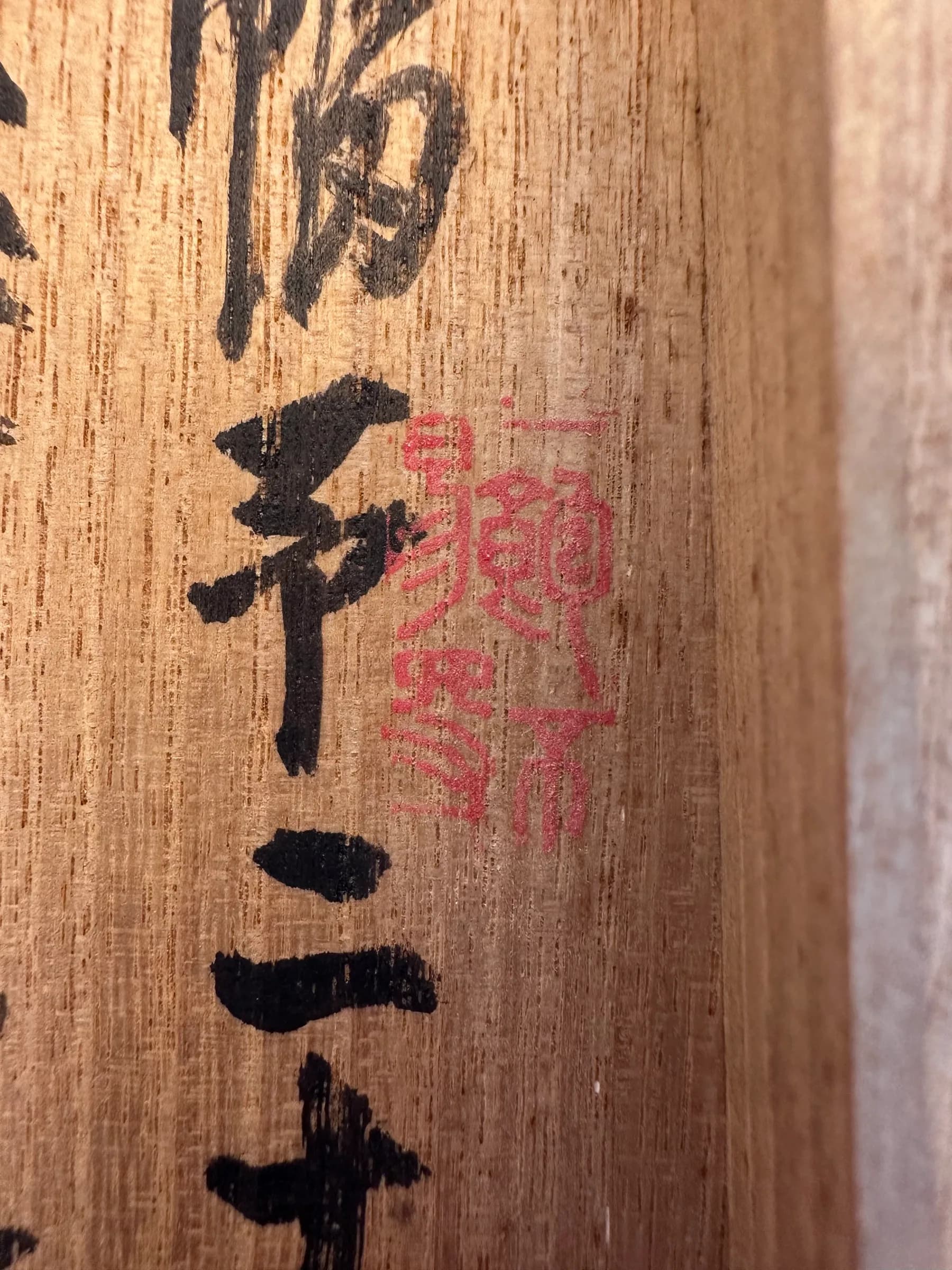
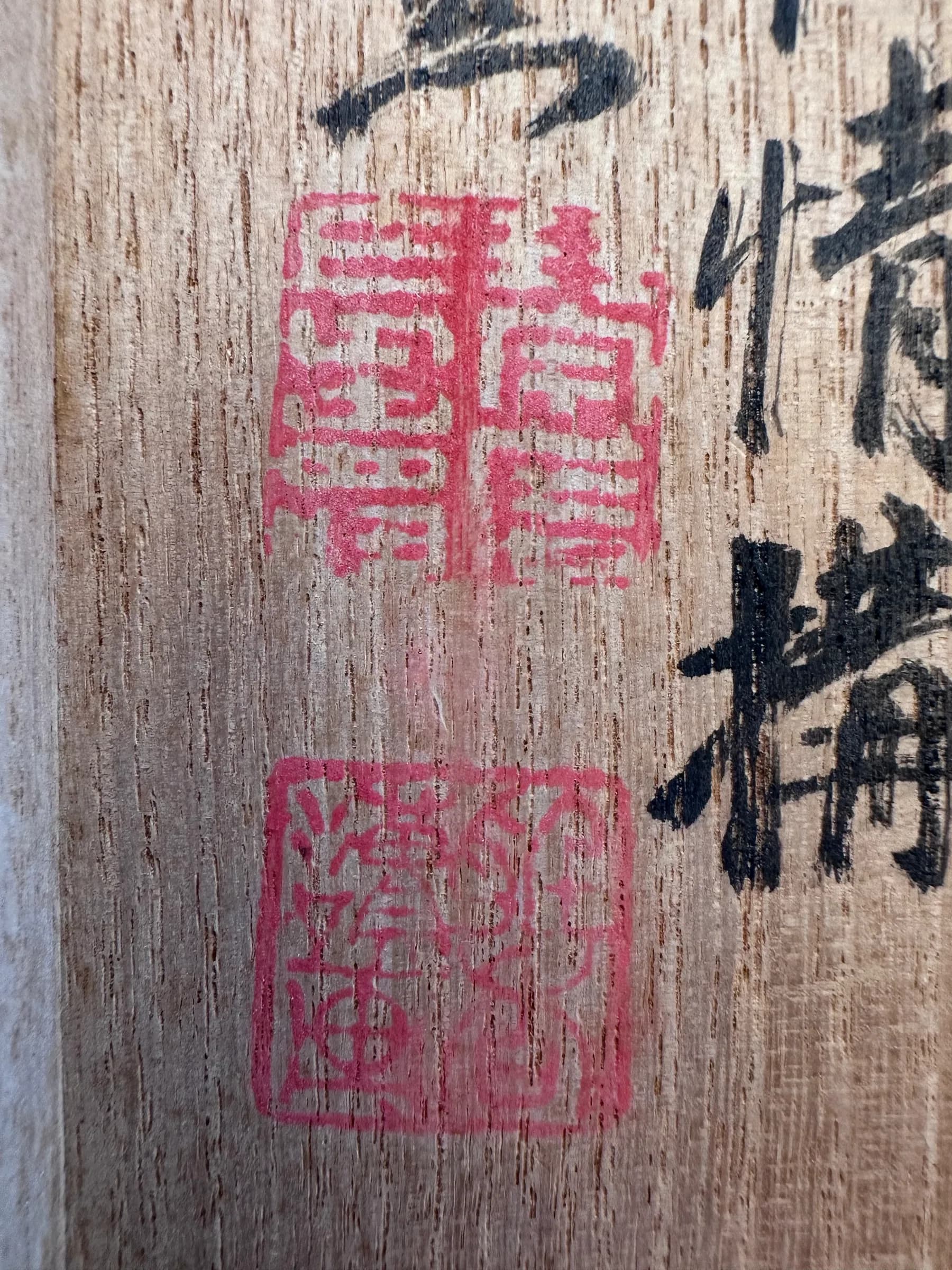
(verso): 此幅予二十有三年前所畫也徵題簽携来見示此畫養吾性情構思傾心若思作之今偶觀之不覺興懐因爰寫之併題匣面 琴石森繁 大正八年歳在己未菊月下澣 (This piece was painted by me twenty-three years ago. [The current owner] brought it to show me in order to request a formal title slip inscription. This painting deeply nourished my inner character. I poured my heart into its composition, remaining thoroughly absorbed in its creation as if I were still contemplating it. Seeing it today by chance, I cannot help but feel deeply moved with nostalgia. Therefore, I record these reflections here and concurrently inscribe them onto the surface of the storage box—Kinseki, Mori Han, during the last ten days of the chrysanthemum month (ninth lunar month) of the tsuchinotohitsuji year, the eighth year of the Taishō era [later October 1919])