
View 1 of 11
Ikeda Keisen (1863–1931)
池田桂仙
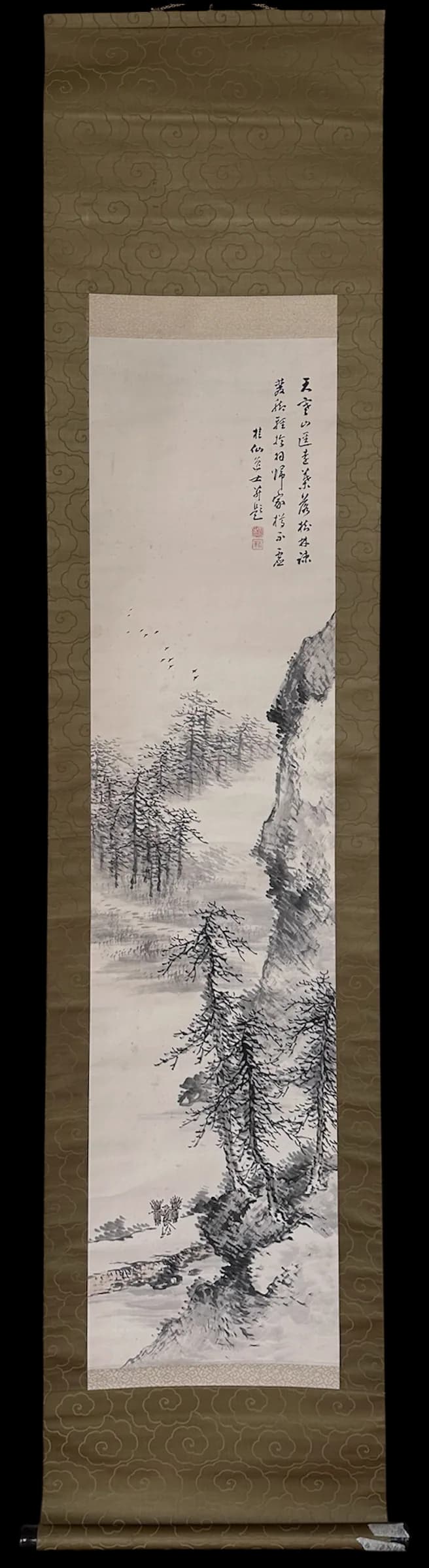
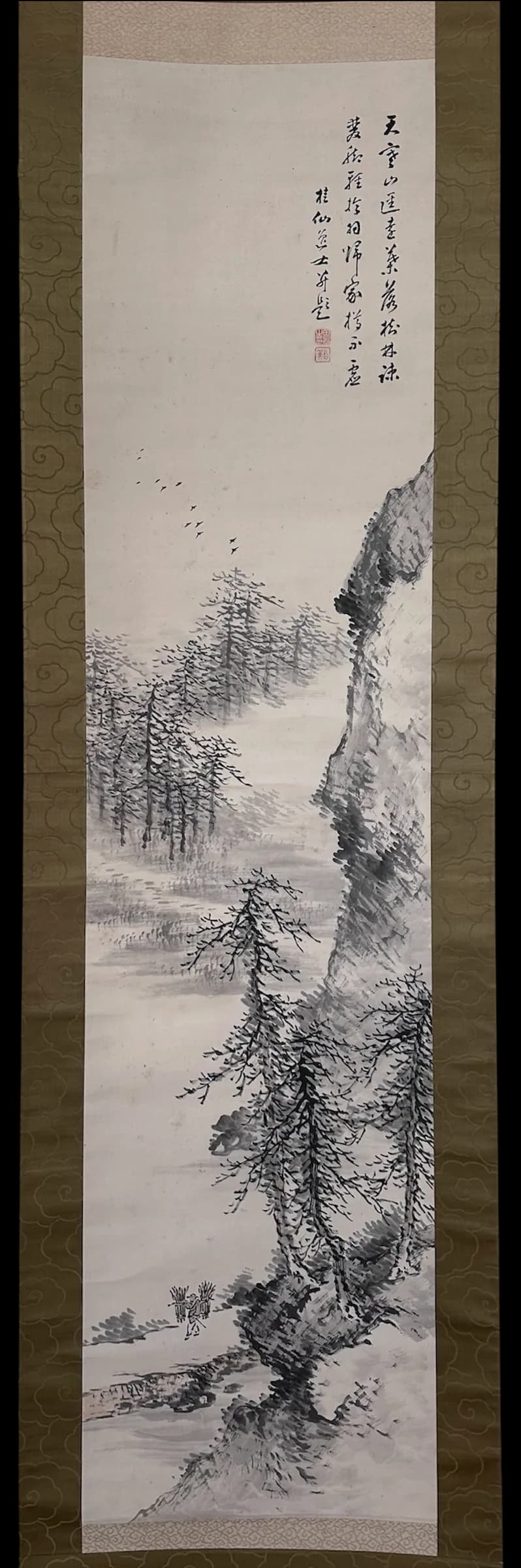
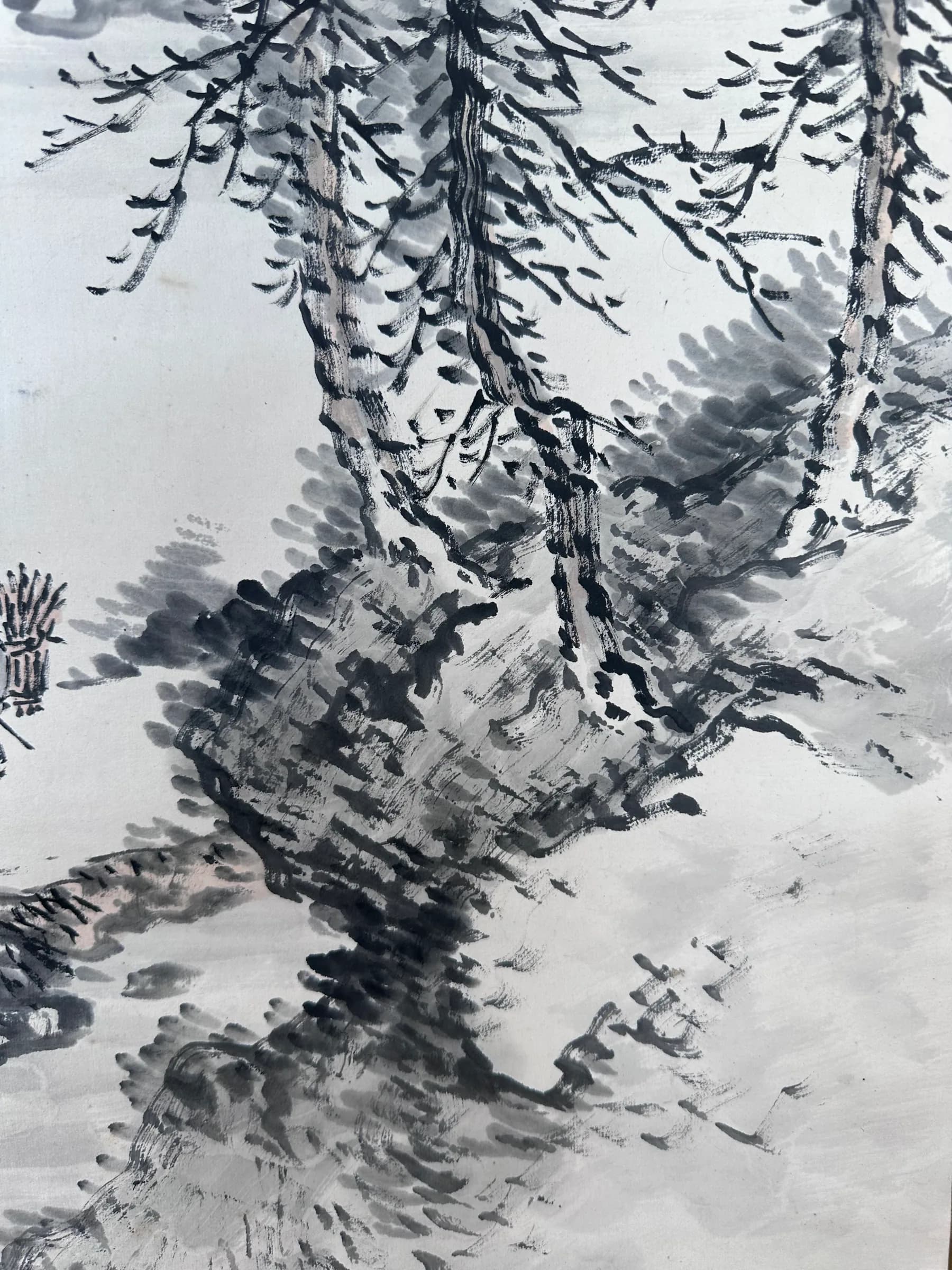
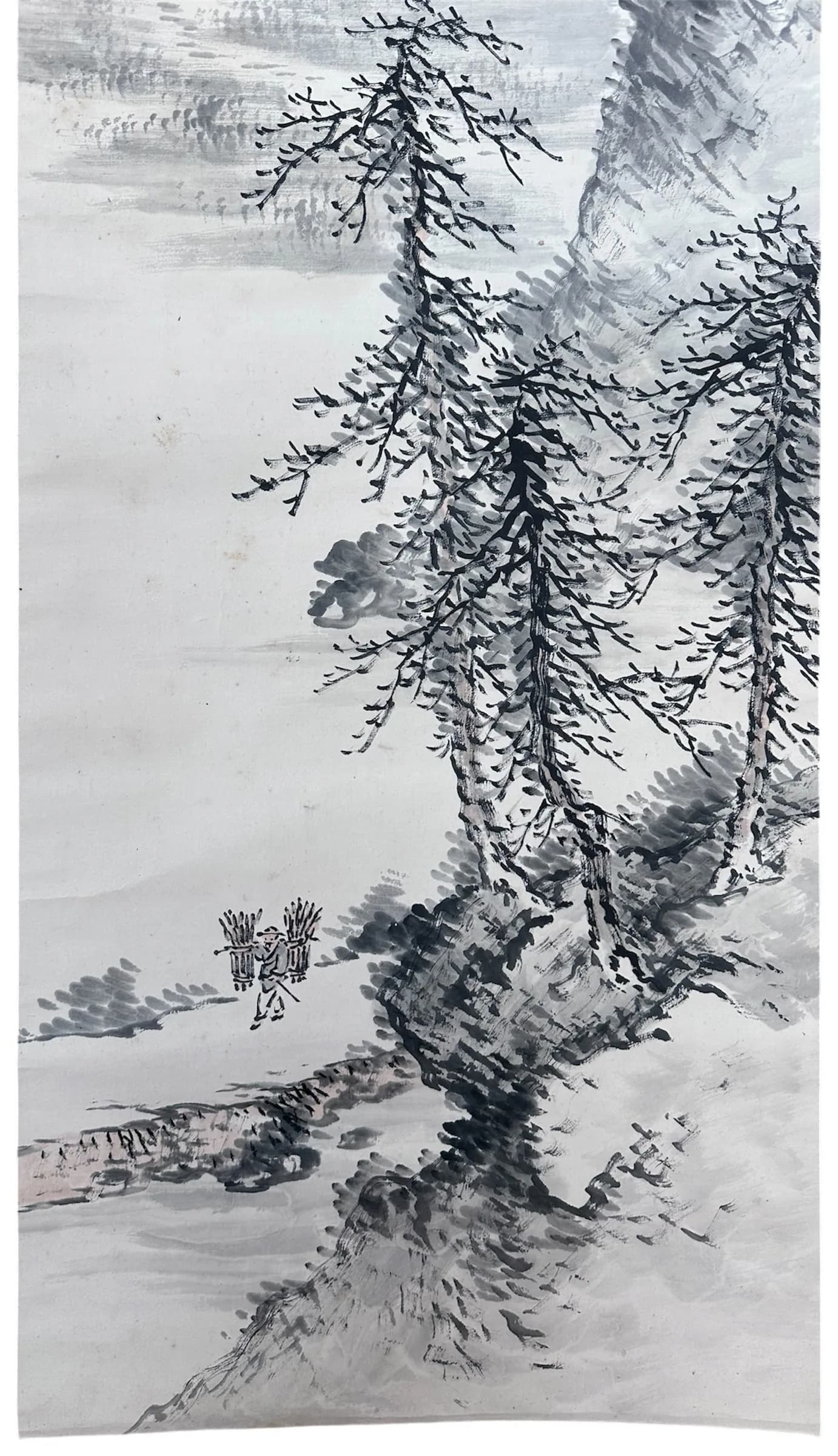
Woodcutter Returning from a Cold Mountain
寒山帰樵
- Era
- Kindai (近代)
- Subject
- Landscape (山水)
- Period
- Taishō Period
- Date
- 1921
- Medium
- Hanging scroll; ink and color on paper
- Availability
- Available
Description
Ikeda Keisen was a prominent Japanese Nanga painter and a central figure in the Kyoto art world, celebrated as one of the “Three Elders of the Kyoto Nanga Circle.” Born to an official domain painter in Mie Prefecture, he briefly trained at the Kyoto Prefectural School of Painting before dropping out to pursue an independent artistic path. He achieved widespread acclaim at national exhibitions, notably winning Special Recognition at the 1917 Bunten 文展 exhibition (art exhibition sponsored by the Ministry of Education from 1907 to 1918) for his masterpiece “Peach Blossom Spring.” Driven by a desire for artistic freedom outside state-sponsored constraints, he later co-founded the Japan Free Painting Society 日本自由画壇 in 1919 and the Japan Nanga Academy 日本南画院 in 1921. He wasz also a respected authenticator of classical Chinese art.
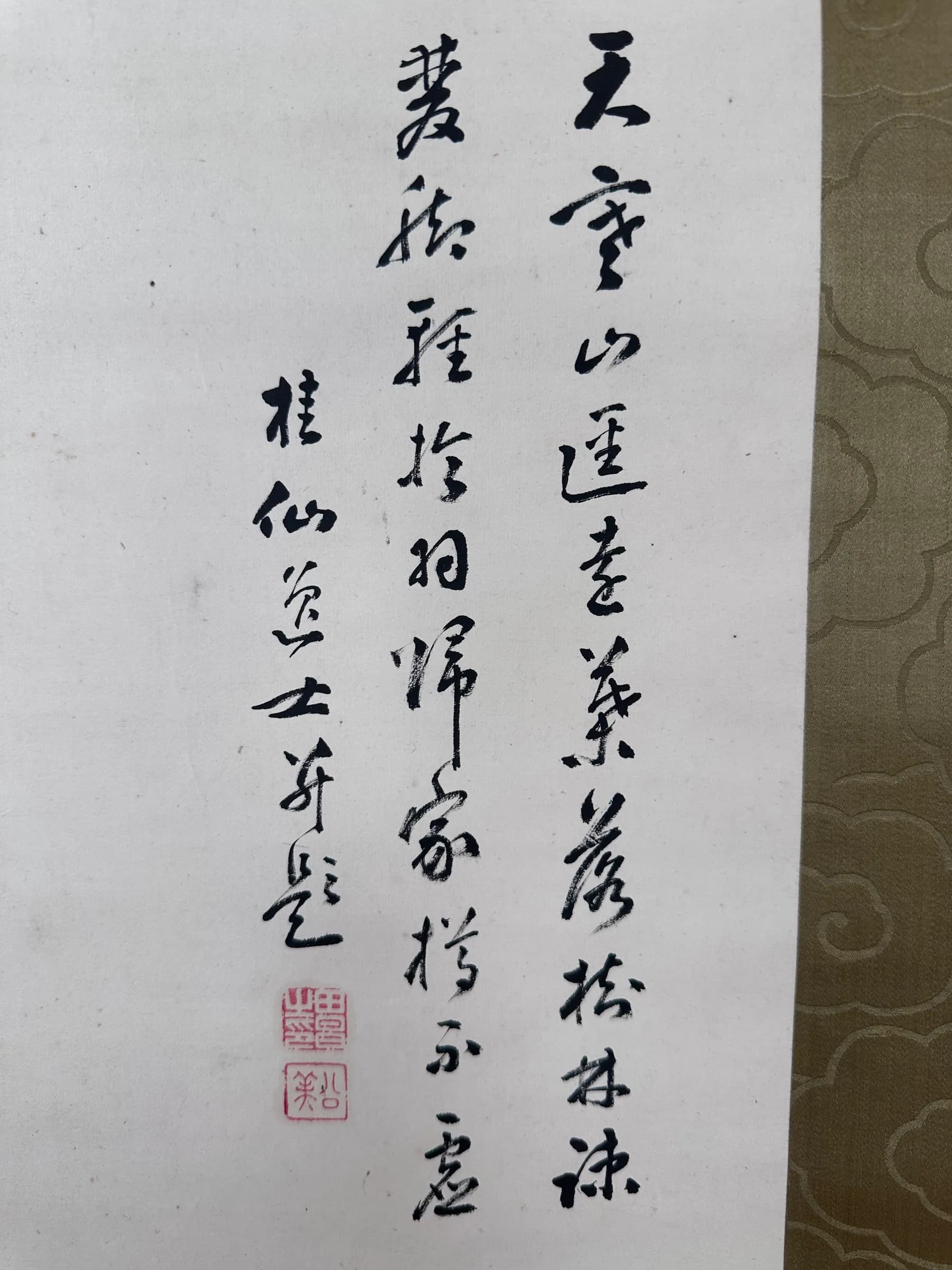
Nothing distills the spiritual core of a literati-style painting quite like its poetic inscription. Keisen’s five-character quatrain reads:
The air is cold, the mountain path stretches far (天寒山逕遠),
The leaves have fallen, leaving the forest bare (葉落樹林疏).
Yet my steps feel lighter than a feather (雙脚軽於羽),
Knowing a full cup of wine awaits me at home (帰家樽不虚).
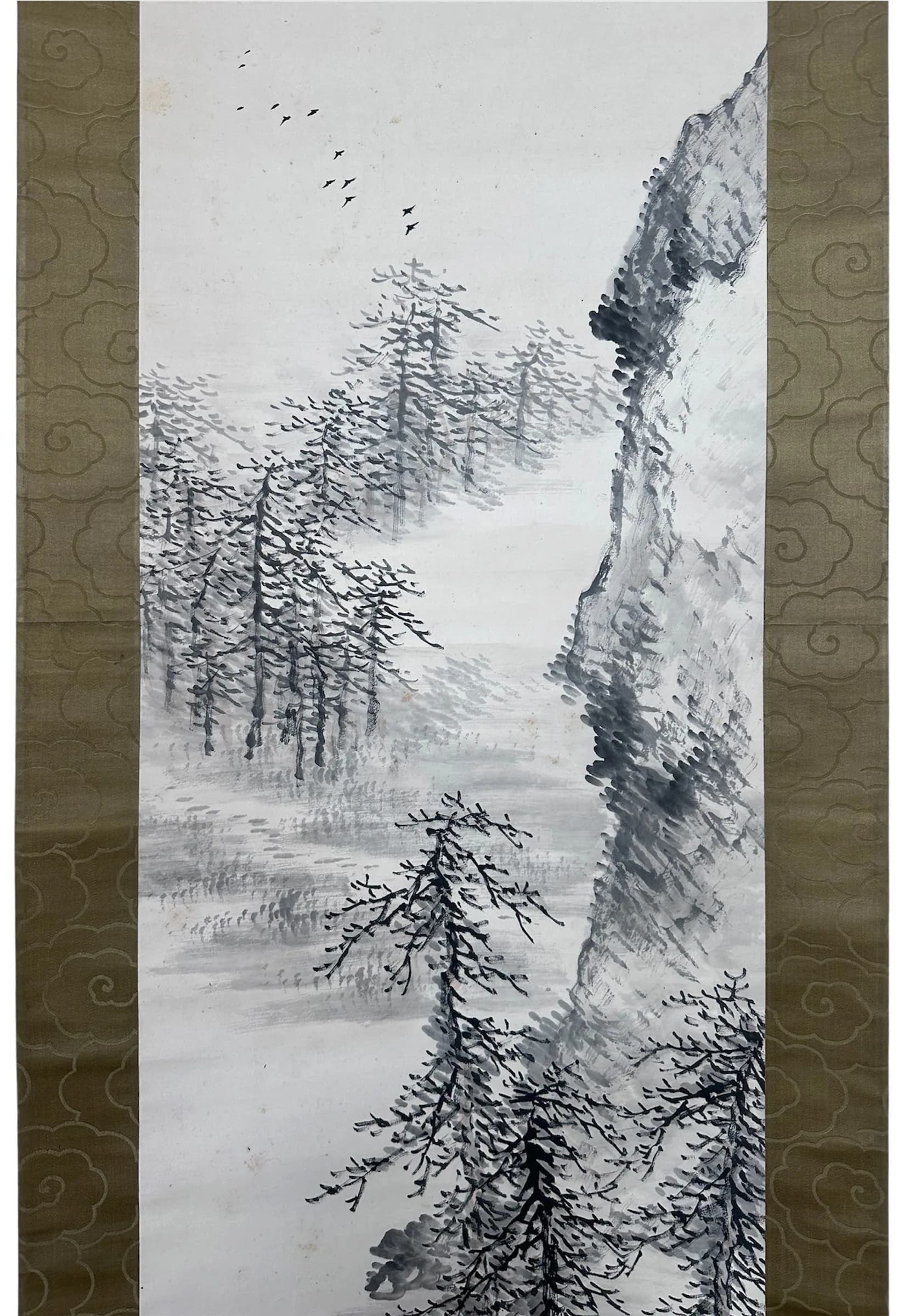
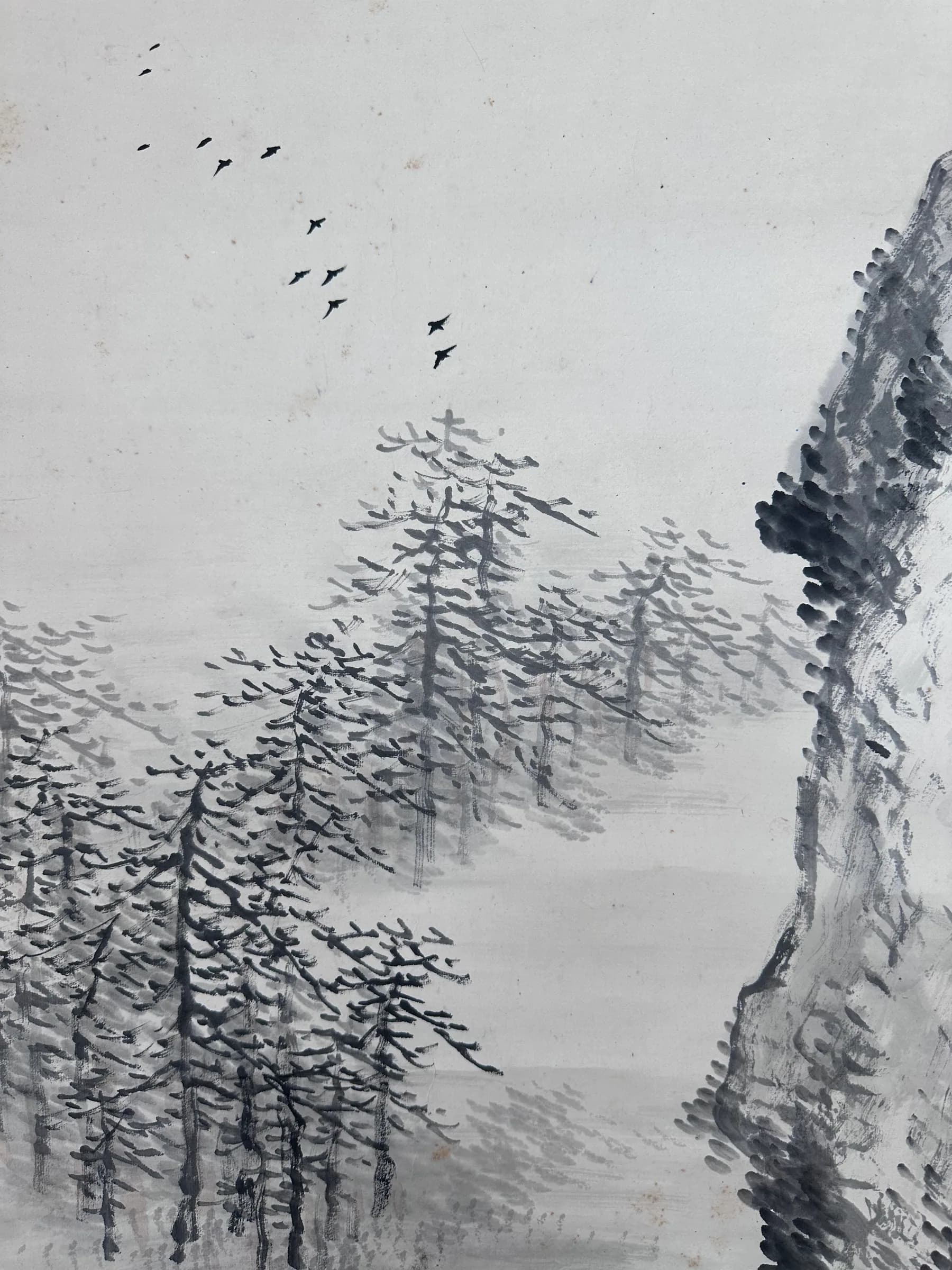
To emphasize the vast, barren winter landscape and the arduous journey, Keisen makes masterful use of negative space, leaving the upper portion of the painting unpainted to evoke freezing mist and a sweeping sense of distance. While the rugged landscape is rendered in stark, monochrome ink to capture the bitter cold, Keisen deliberately applies subtle, warm washes of color to only two elements: the woodcutter and the path leading homeward. This brilliant visual contrast directly mirrors the poem's concluding twist, shifting the emotional focus from the bleak, desolate mountains to the joyful, energetic anticipation of the waiting warm liquor. Our fellow woodcutter is, in true literati fashion, a bit of an alcoholic.
Painting inscription
天寒山逕遠
葉落樹林疏
雙脚軽於羽
帰家樽不虚
The air is cold, the mountain path stretches far,
The leaves have fallen, leaving the forest bare.
Yet my steps feel lighter than a feather,
Knowing a full cup of wine awaits me at home.
桂仙逸士并題 (inscribed by hermit Keisen)
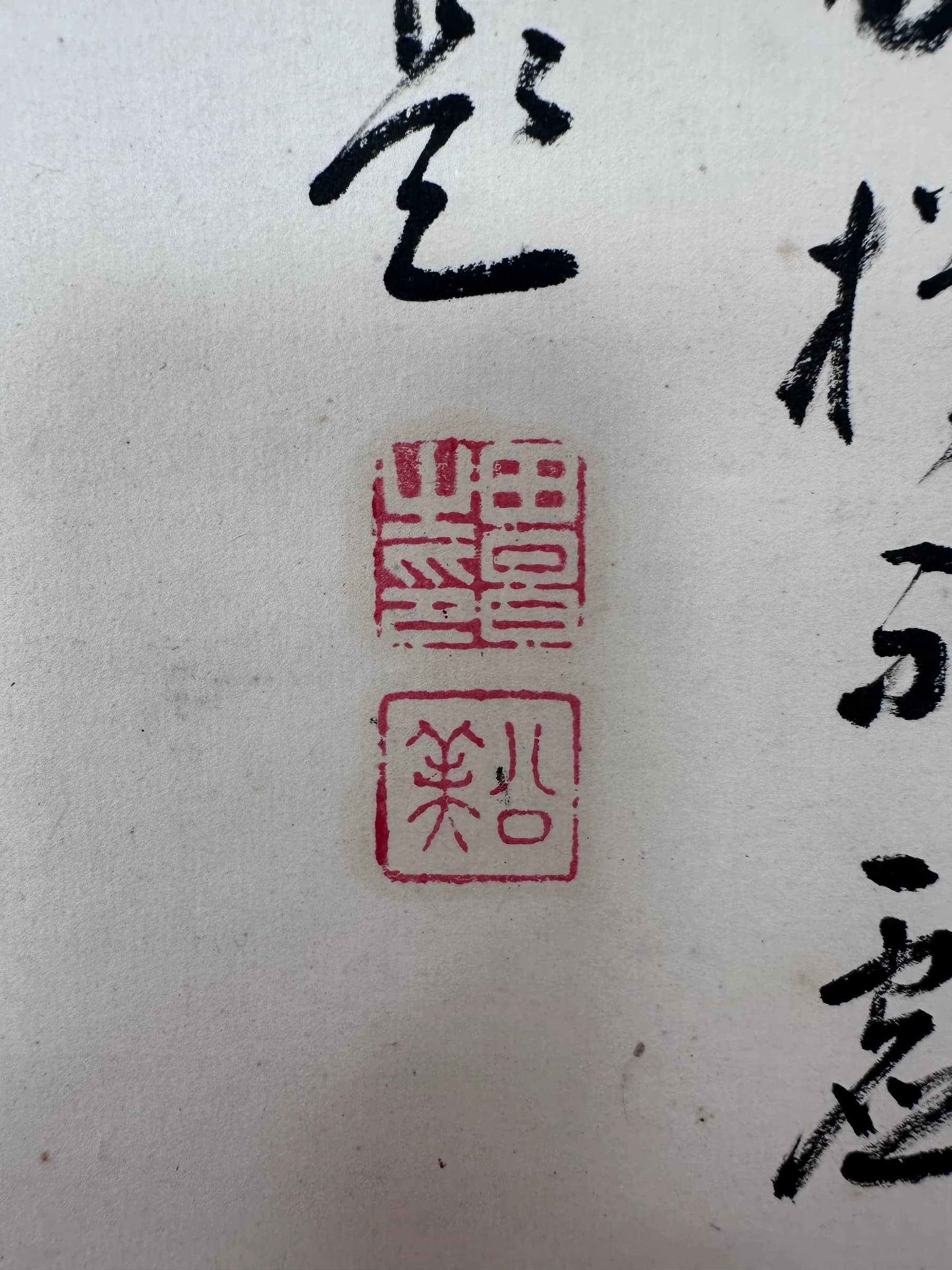
Seals
(square intaglio seal) Den Shō no in 田昌之印; (square relief seal) Kōbi 公美; (box round relief seal) Kōbi 公美
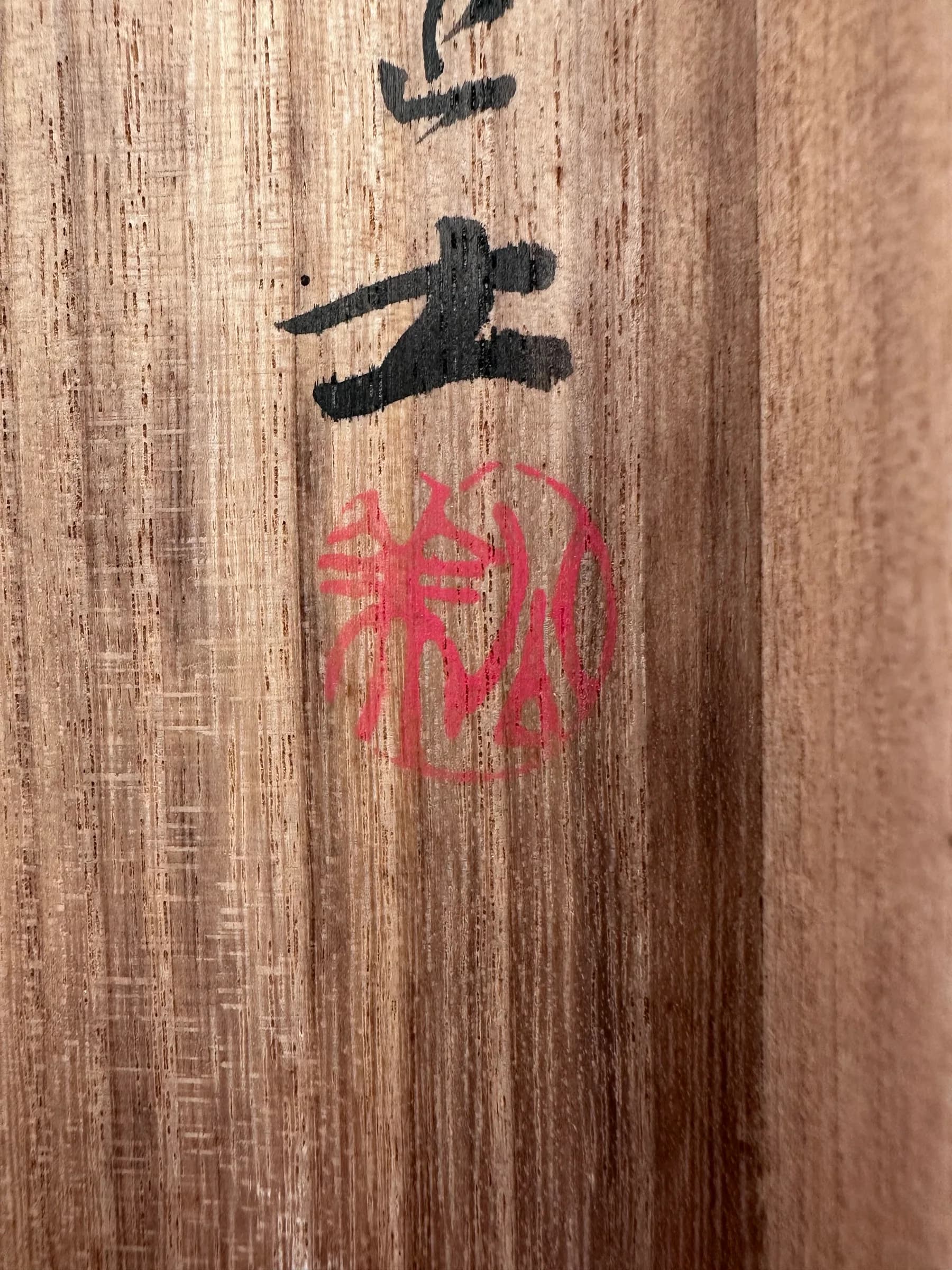
Keisen adopted the courtesy name Kōbi to align himself with a distinguished artistic lineage, honoring both the mid-Edo master Yanagisawa Kien and the legendary Tang-dynasty calligrapher Pei Xiu.
Box inscription
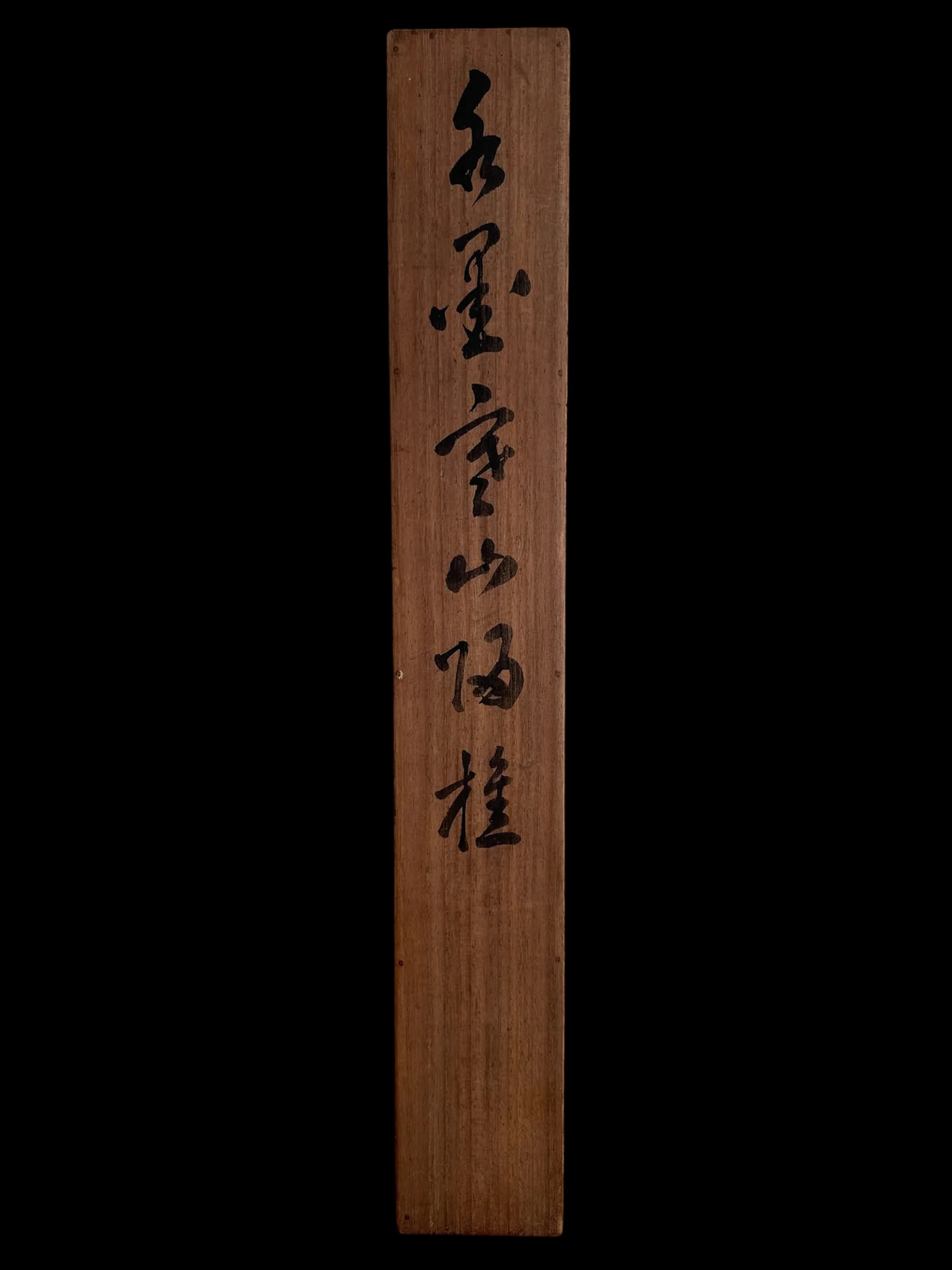
(front): 水墨寒山帰樵 (water-ink woodcutter returning from a cold mountain)
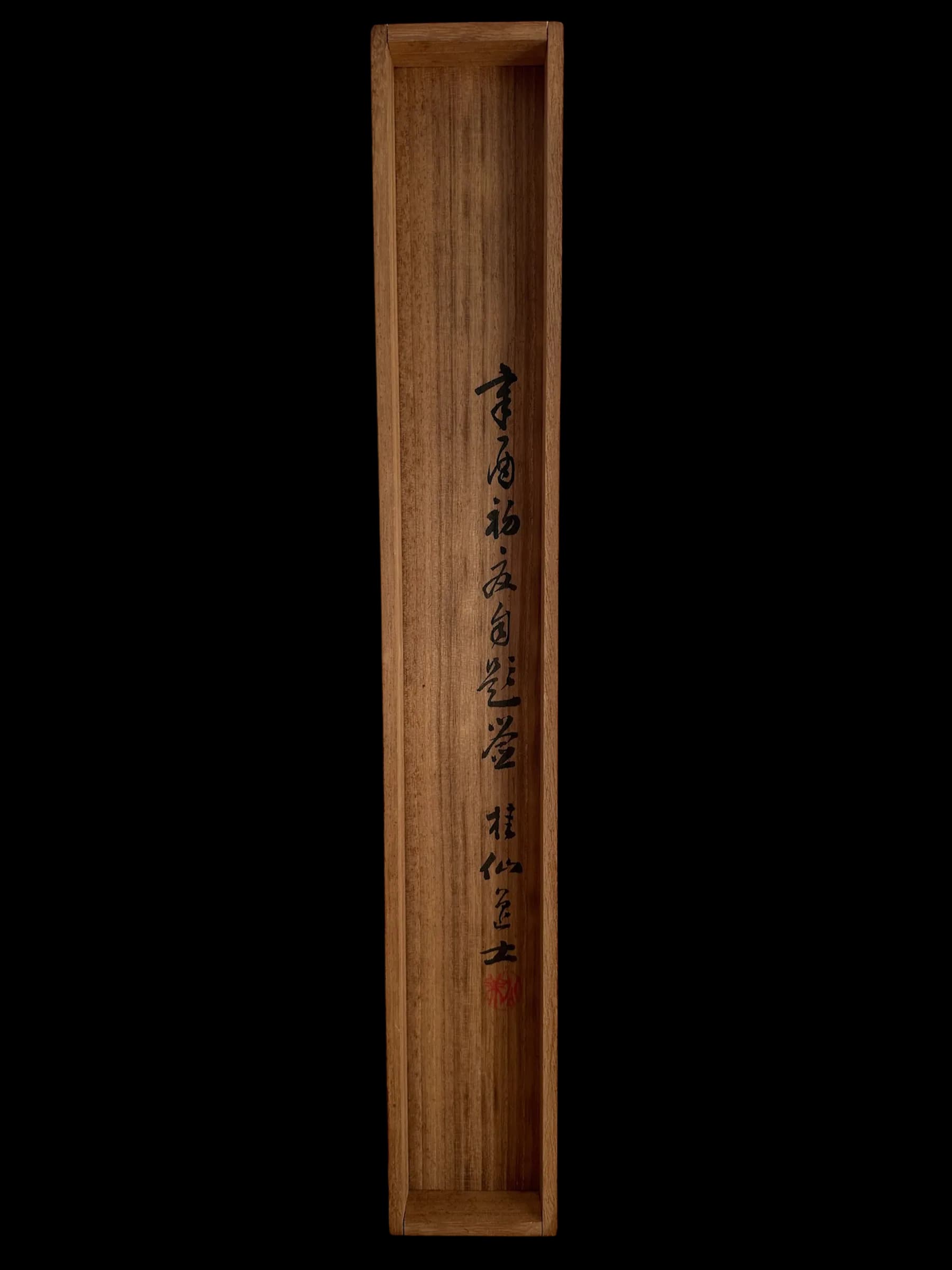
(verso): 辛酉初夏自題簽 桂仙逸士 (inscribed by myself in the early summer of the kanototori year [1921]—hermit Keisen)