
View 1 of 18
Takaku Aigai
高久靄厓
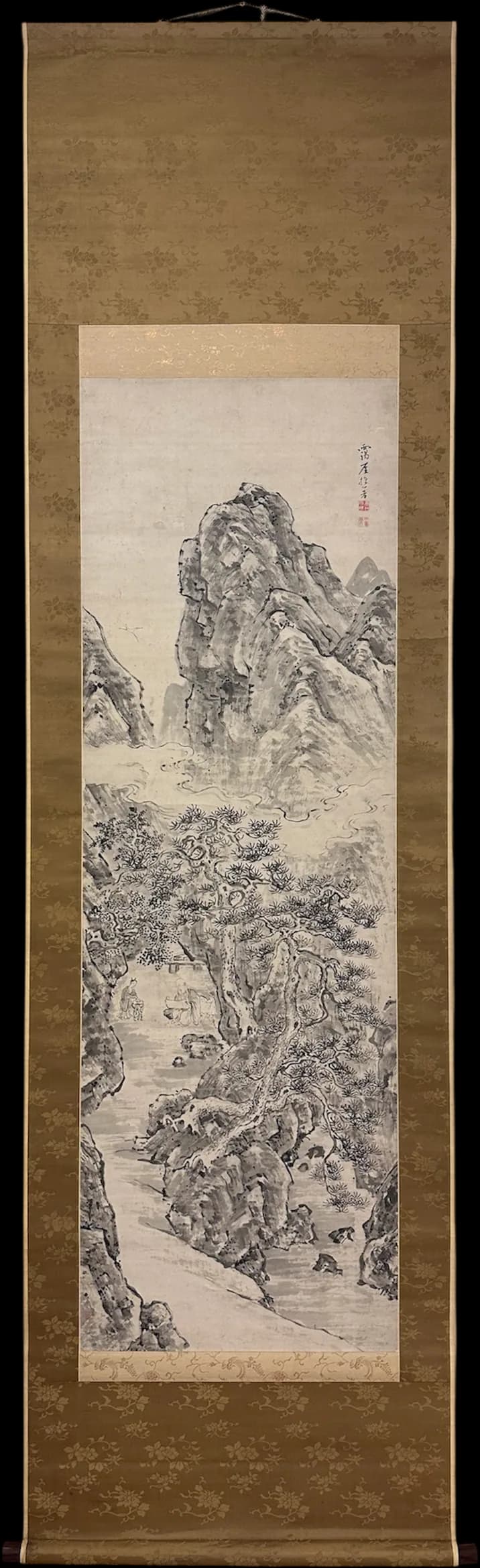
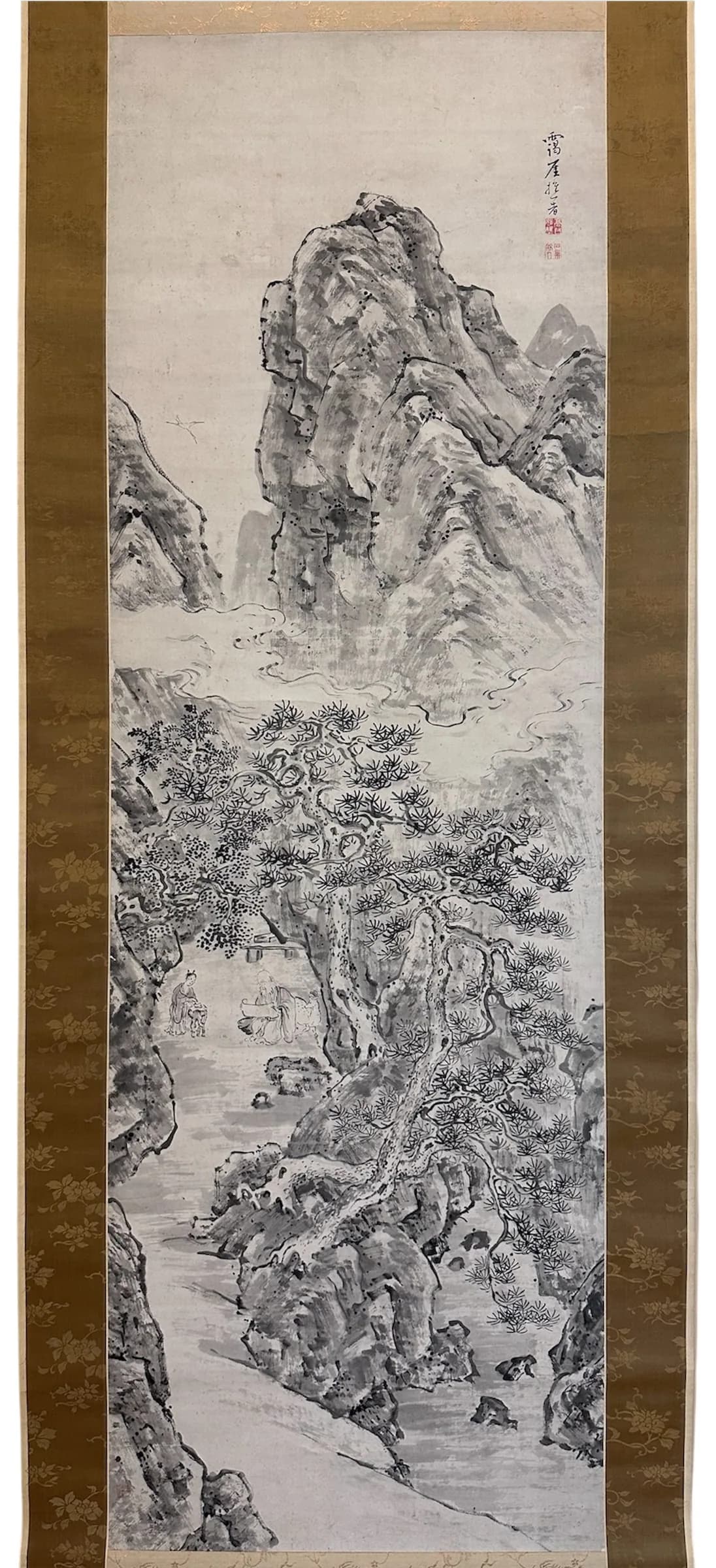
Noble Scholar Reading among Pines and Cranes
松鶴高士讀書図
- Era
- Kinsei (近世)
- Subject
- Landscape (山水)
- Period
- Edo period, early 19th century
- Medium
- Hanging scroll; ink and color on paper
- Dimensions
- 43.4 × 132.8 cm (image); 58.7 × 206.2 cm (overall)
Description
Takaku Aigai was a prominent Nanga painter active in the late Edo period. In his early years, he trained under Koizumi Ayaru, an official painter of the Kurobane Domain, while working as both a packhorse driver and a cigarette roller. In 1823, at the age of 27, Aigai was sponsored by Ōhashi Tanga 大橋淡雅 to study painting in the Shazanrō 写山楼 Academy of Tani Bunchō 谷文晁 in Edo. Although he was later celebrated as one of the Four Sages of the Bunchō School 文晁門四哲, Aigai grew unsatisfied with Bunchō’s compromised style and pursued a purer Nanga style through extensive travelling in Northeastern Japan to inspect and copy Chinese masters’ works. In 1843, at the age of 48, Aigai passed away suddenly due to a stroke or lung ailment.
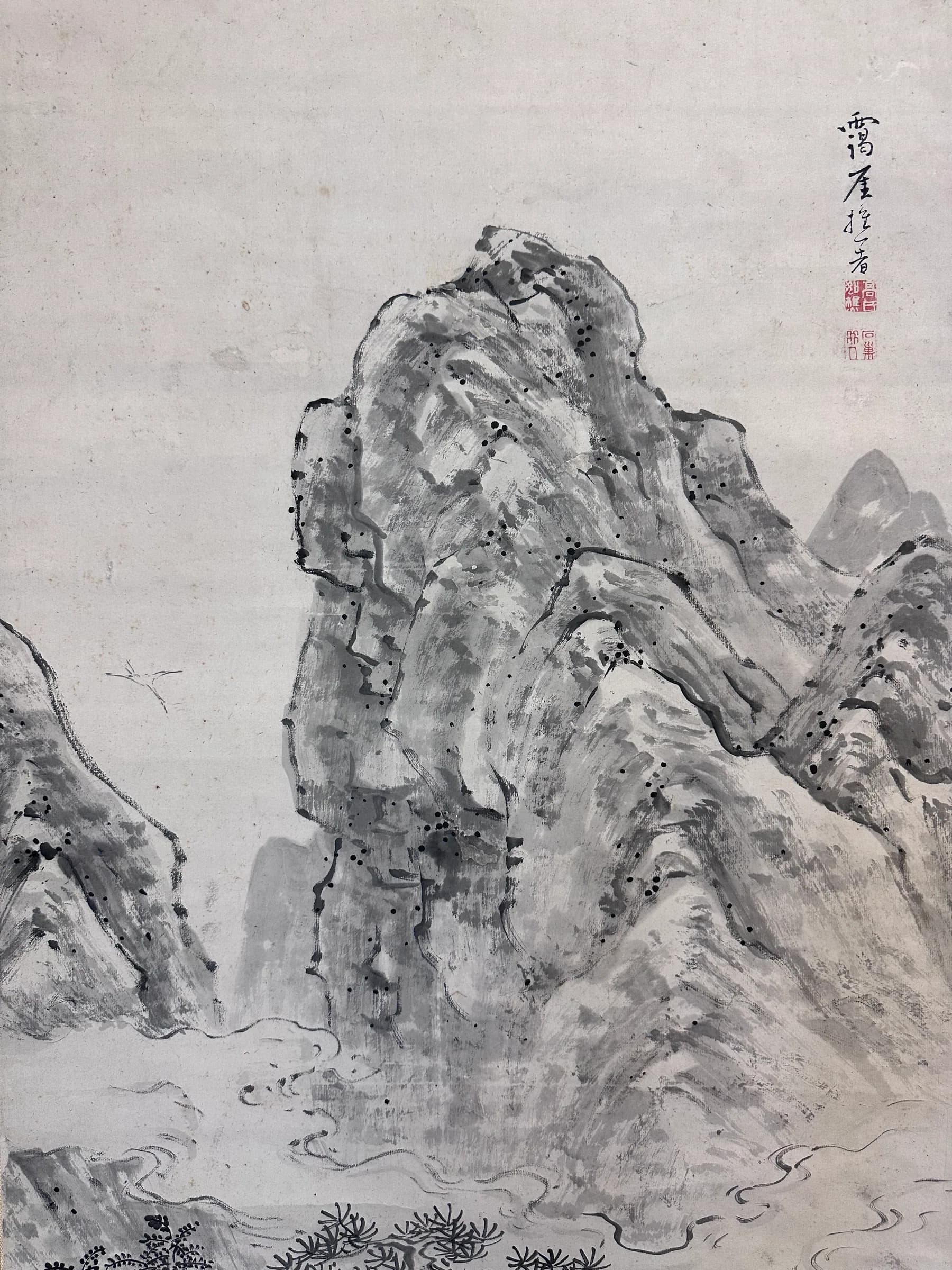
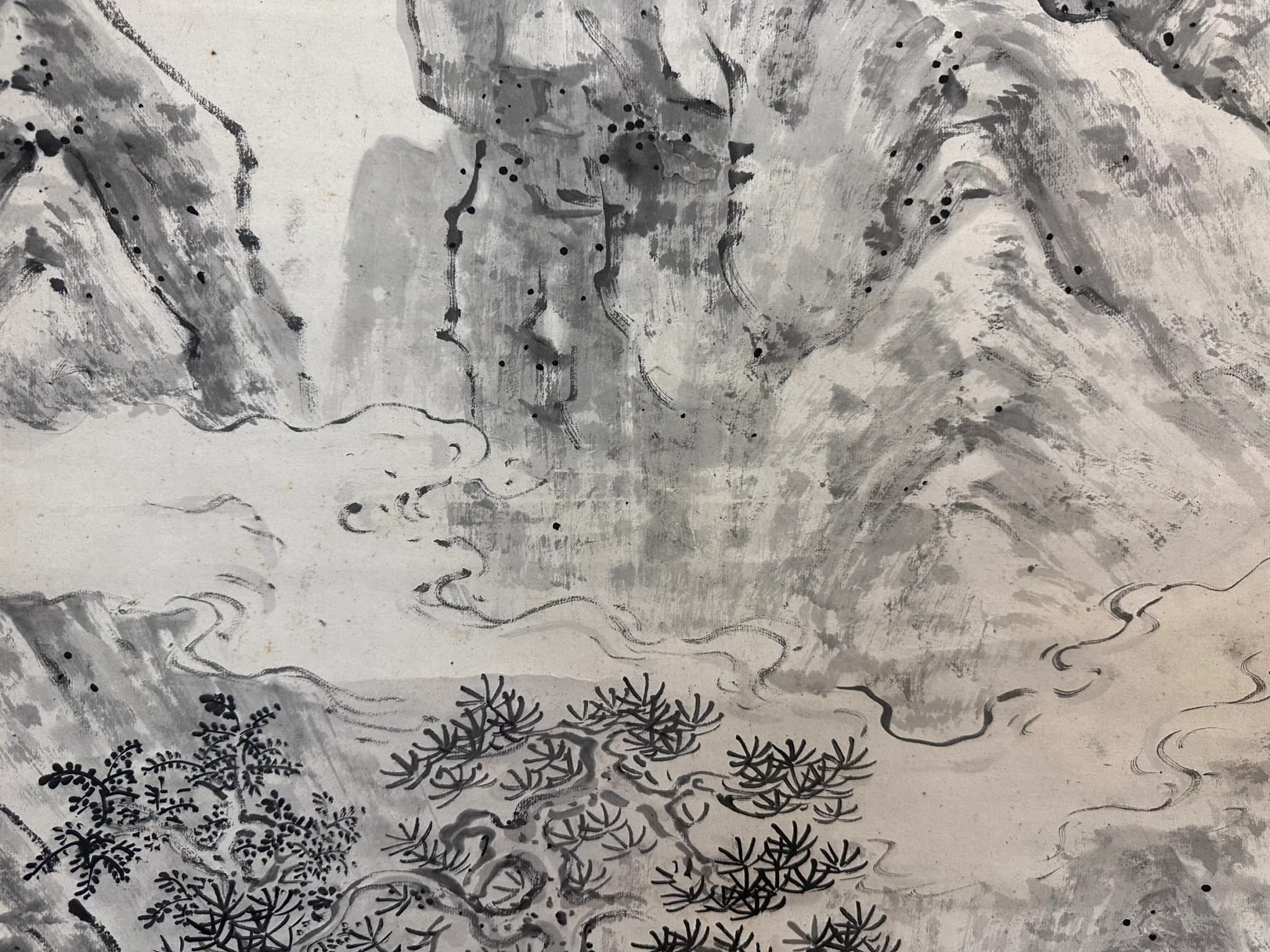
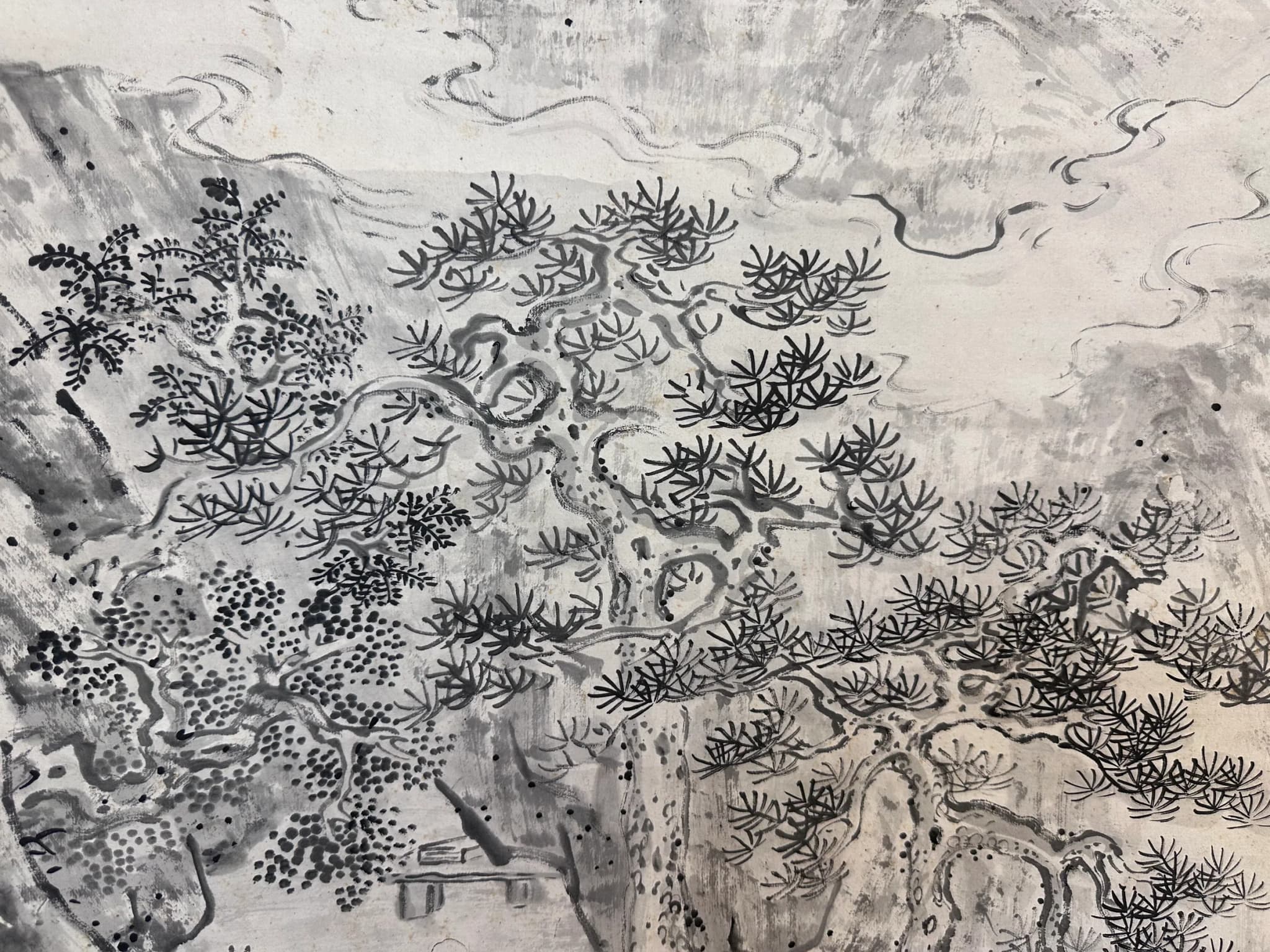
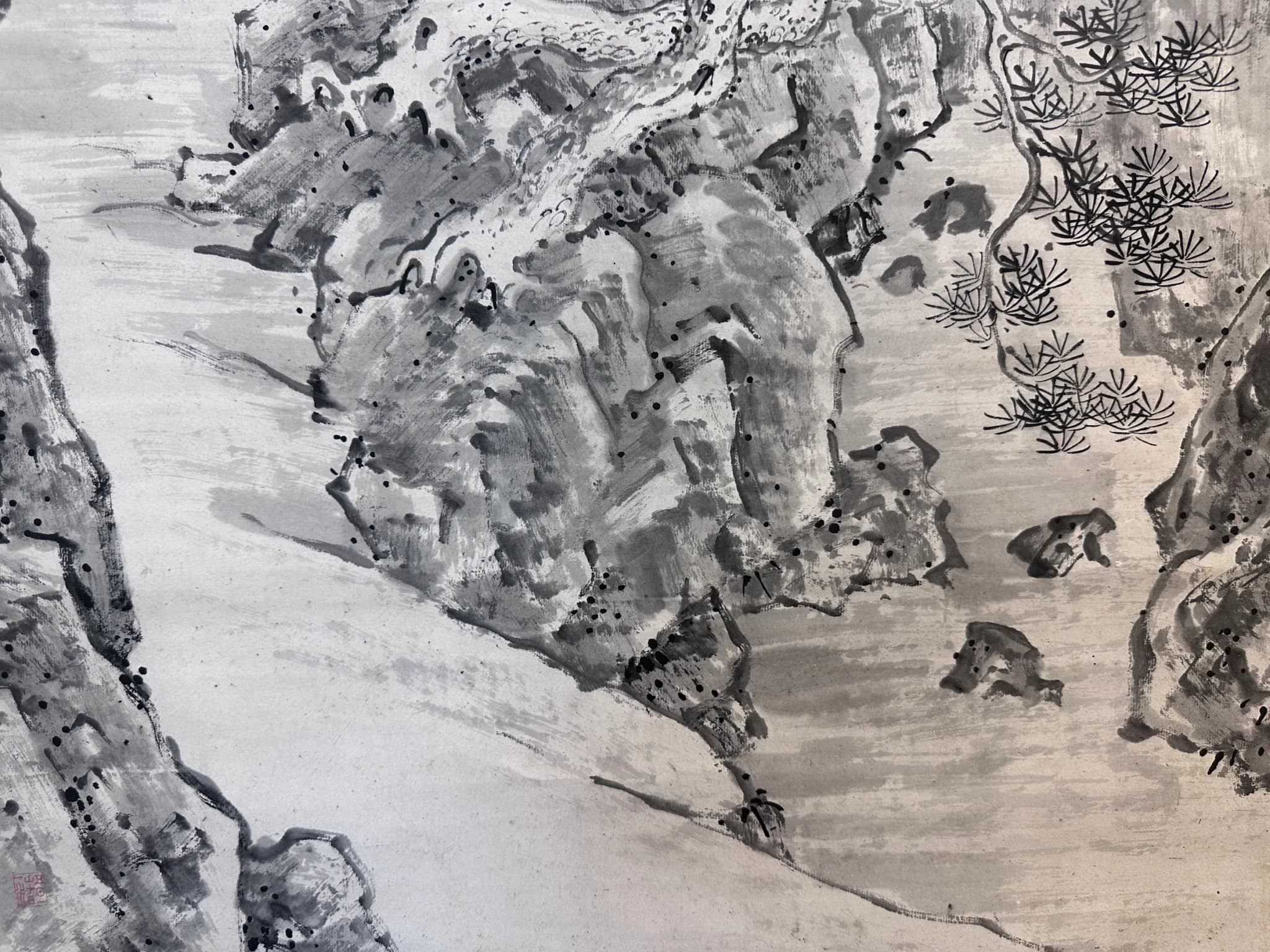
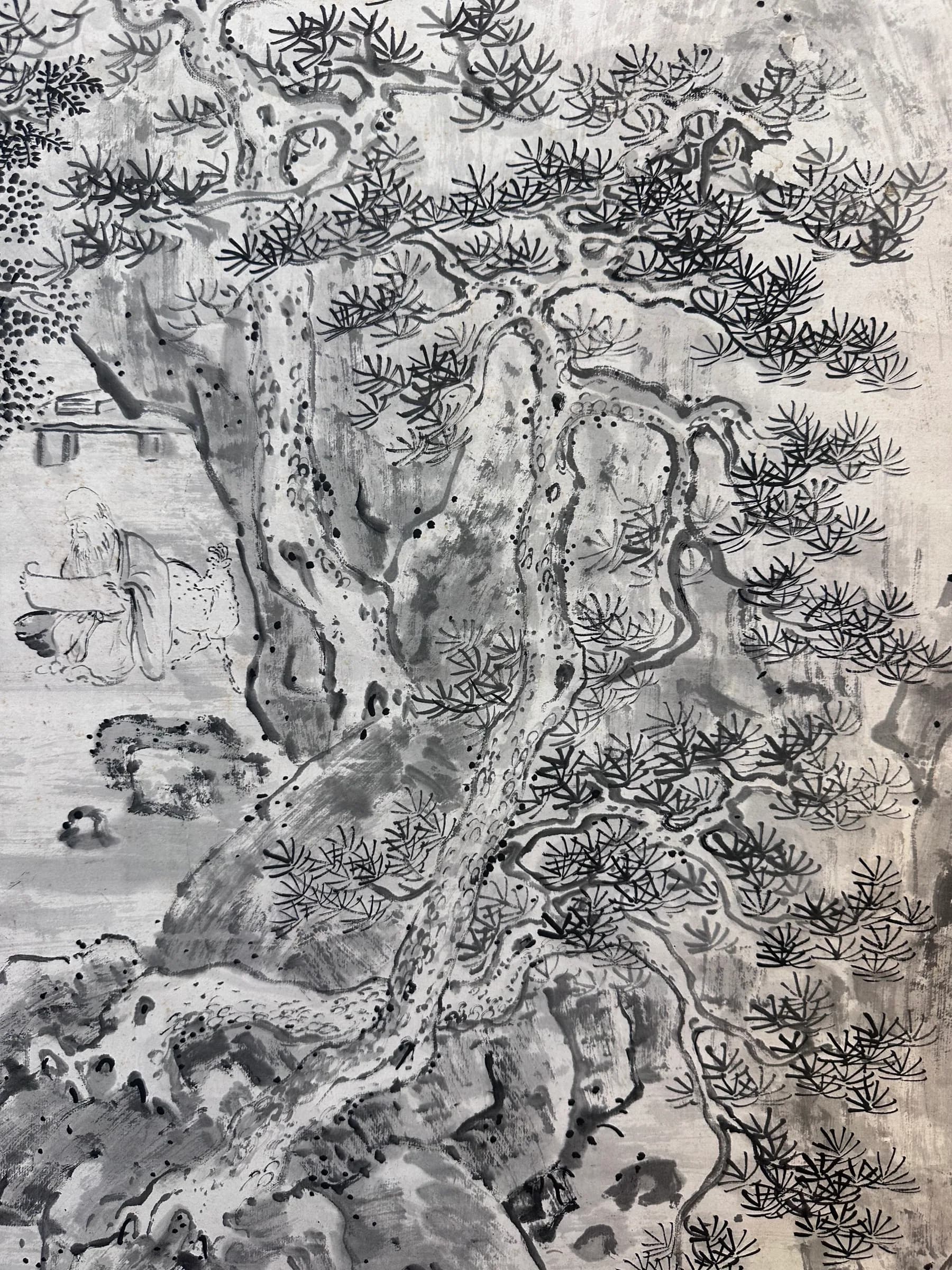
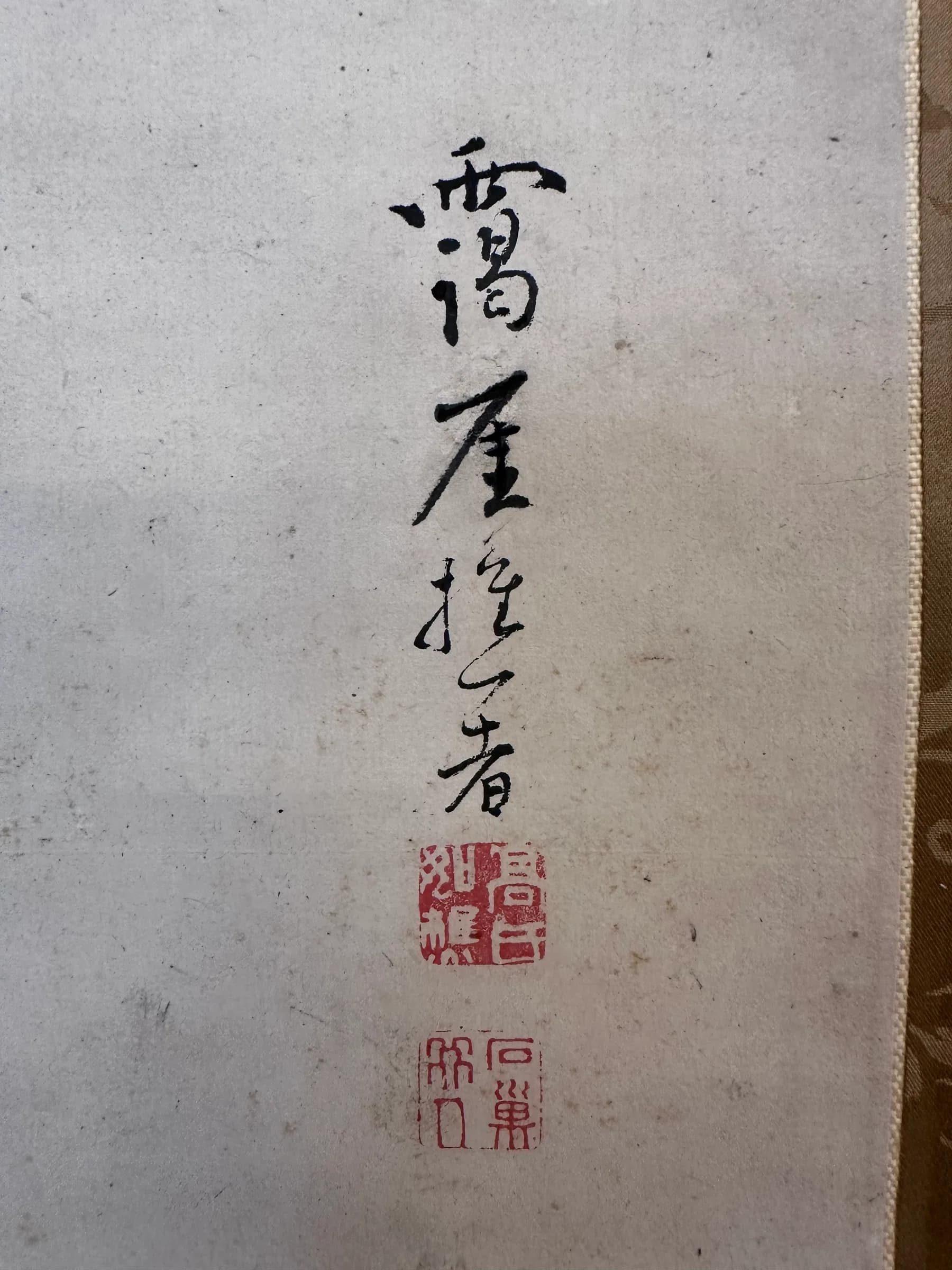
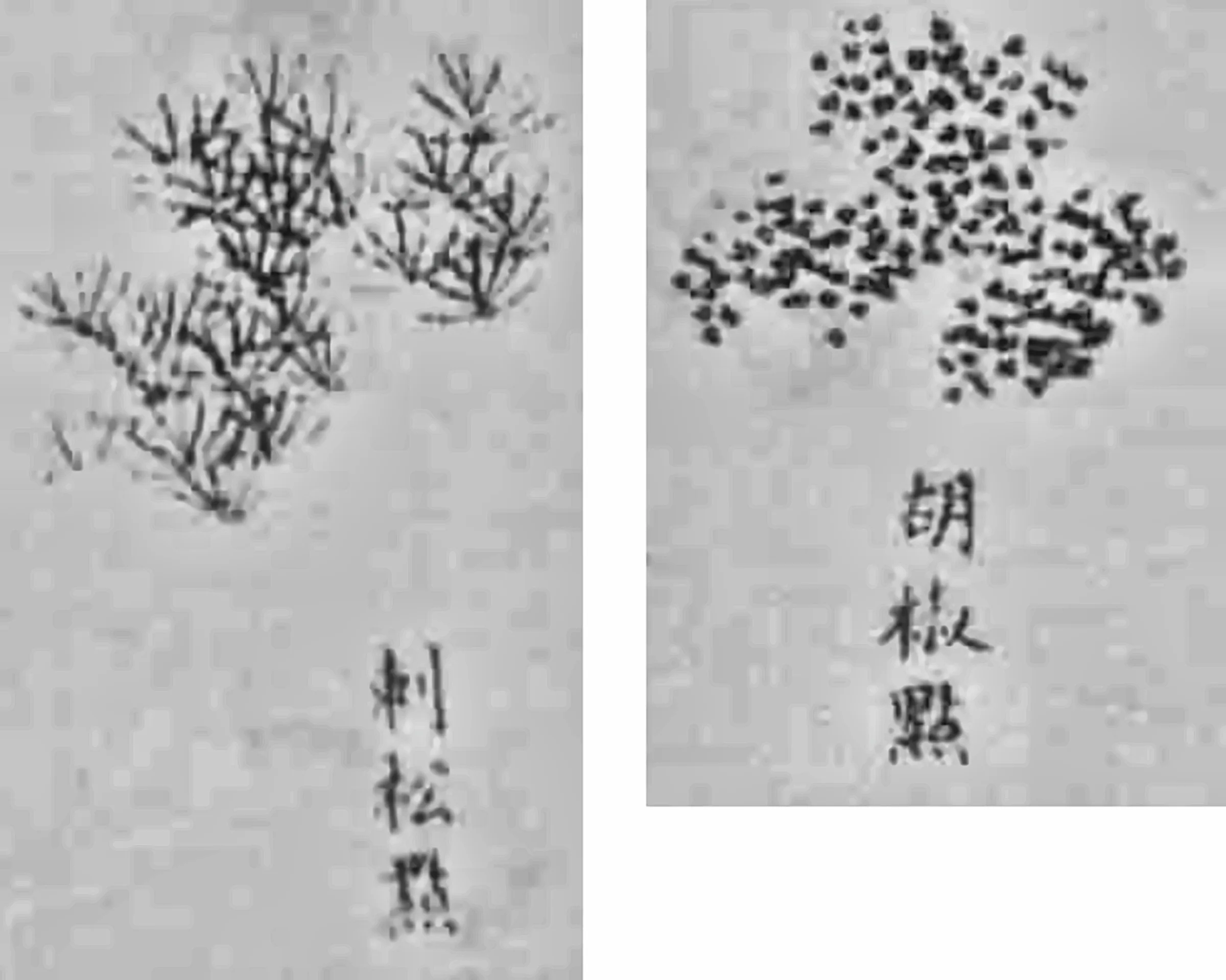
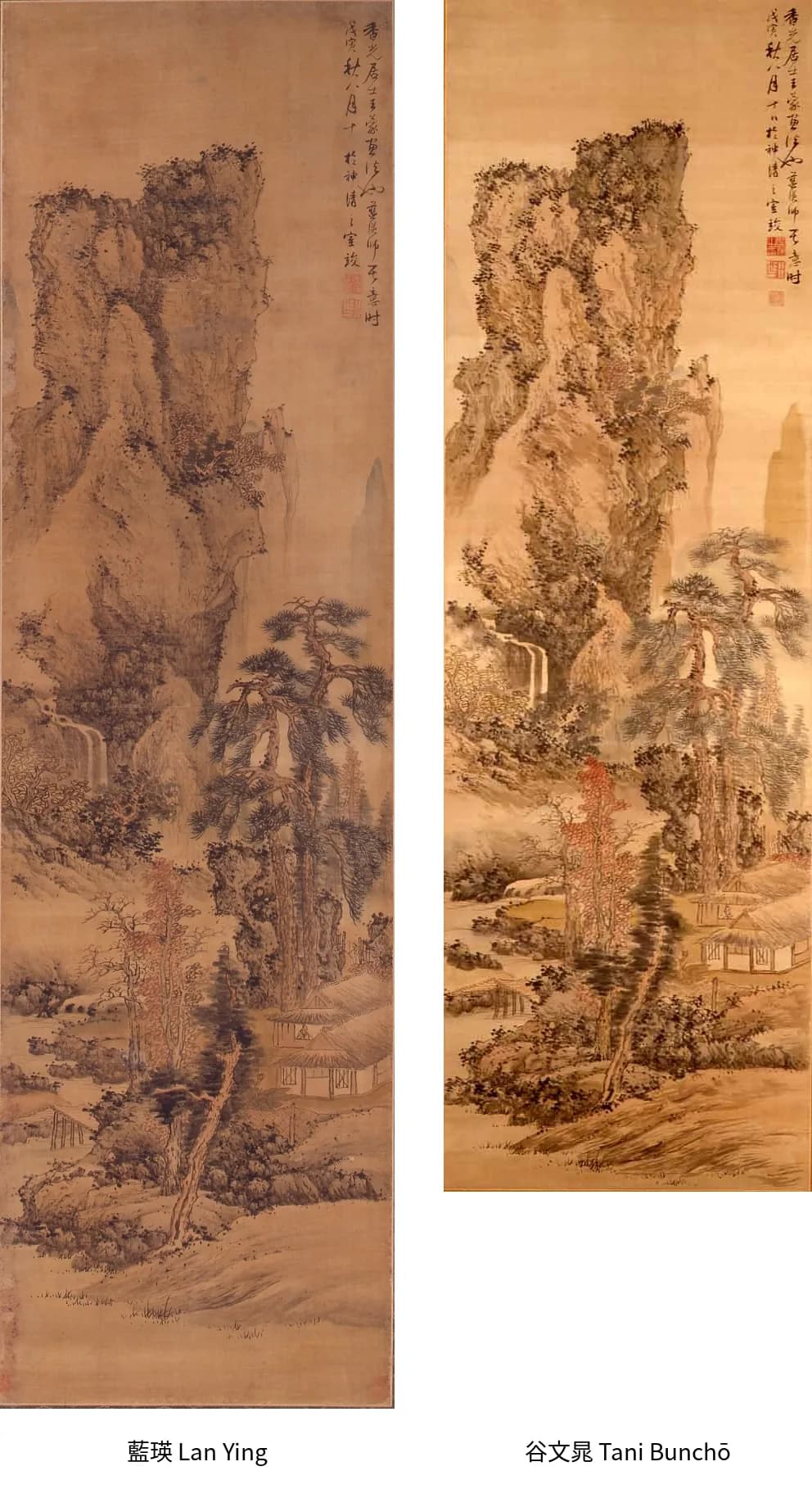
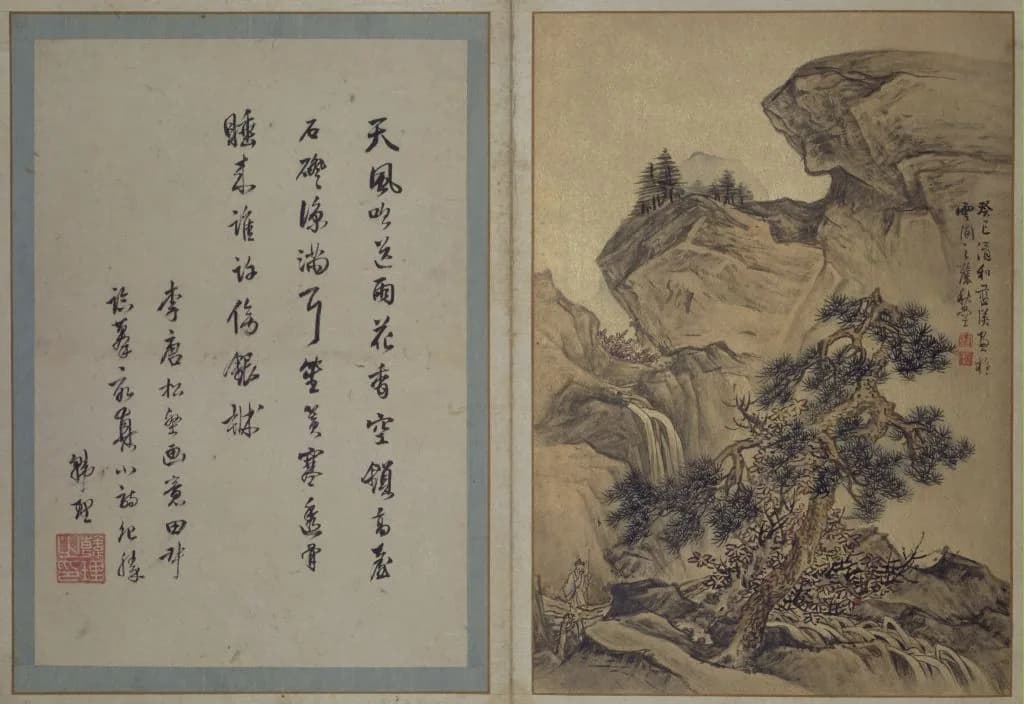
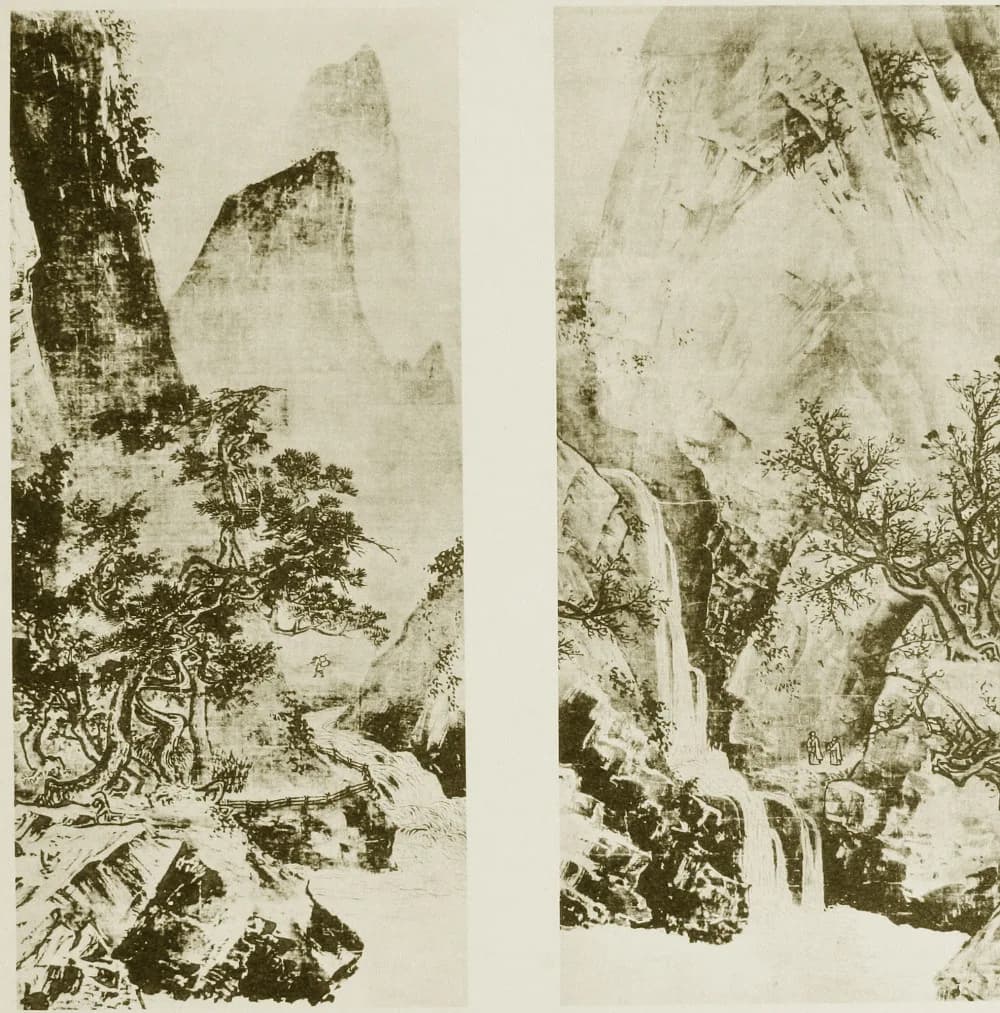
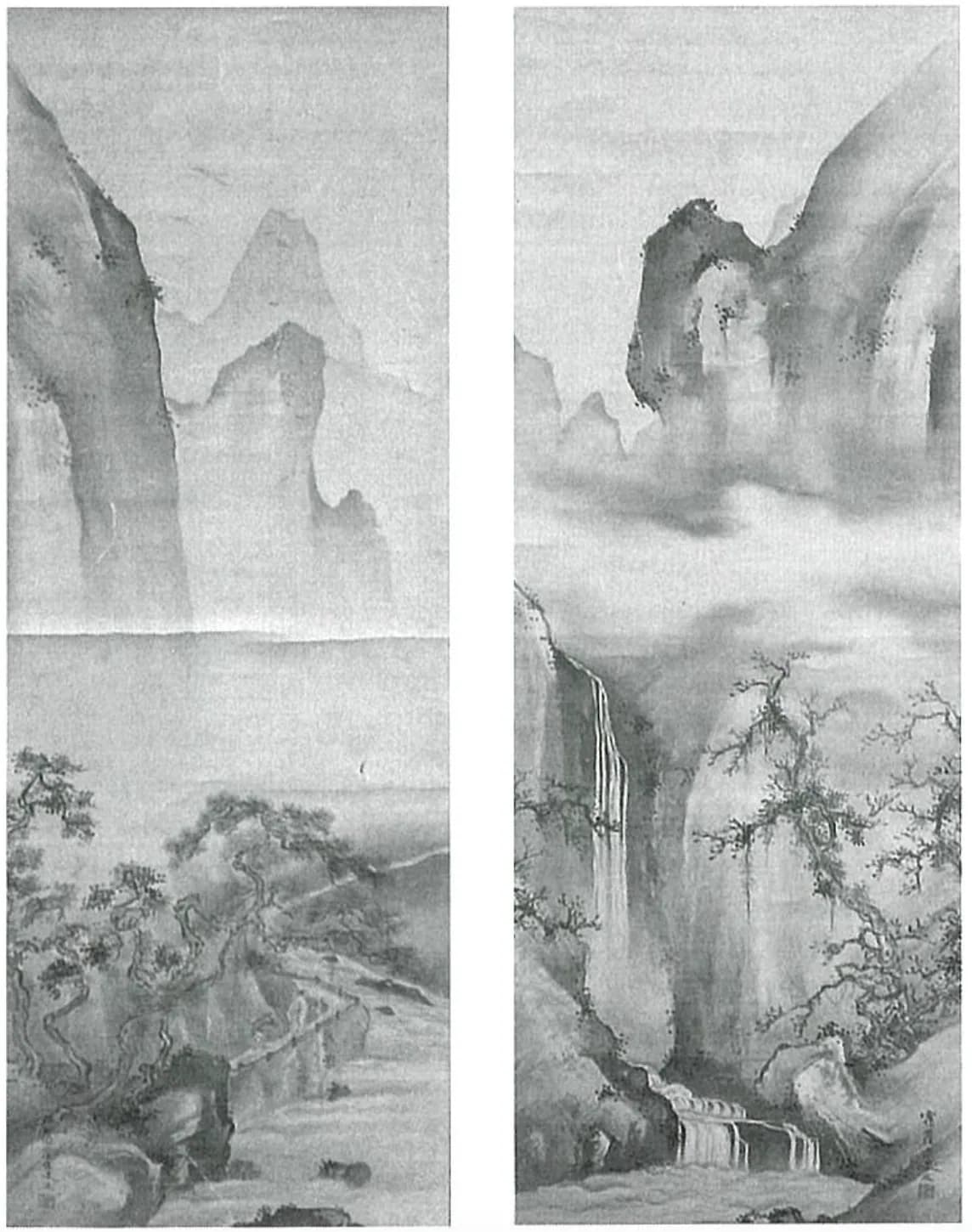
The inscription Aigai shōsha 靄厓樵者 is a signature characteristic of Aigai’s output following his relocation to Edo. In the Shazanrō Academy, Aigai gained unprecedented access to Bunchō’s collection of Chinese paintings, painting manuals, and powder sketches. The morphology of his trees indicates that Aigai, like the majority of Edo painters, was a dedicated follower of the Manual of the Mustard Seed Garden 芥子園画譜, specifically drawing from its instructional templates for prickly pine dots 刺松點 and pepper dots 胡椒點. Other extant works from this phase (such as his landscape after Mi Fu 米芾) suggest that Aigai was closely interrogating the legacy of the late-Ming master Lan Ying 藍瑛 as well as the Zhe School paintings he represented. Since Bunchō himself frequently reproduced Lan Ying’s landscapes and consciously adopted Zhe School methods of composition, it is highly probable that his most preeminent disciples followed the exact same pedagogical path. In many extant copies of his Album of Landscapes in Ancient Styles, Lan Ying always executes one leaf with the bold axe-cut texture strokes pioneered by the Northern Song master Li Tang 李唐. Aigai utilizes the same technique, but with his personal interpretation: he lays down one foundational wash of pale ink before overlaying it with heavy-ink strokes that approximate the structural rigidity of the axe-cut technique. Yet compared to the crisp execution of the Chinese masters, Aigai’s brushwork is noticeably wetter and more fluid, likely reflecting the lingering influence of his early studies of Ike no Taiga and I Fukyū. Overall, the striking contrast between unpainted reserves and varying layers of ink gives the mountains a rugged, mottled texture.
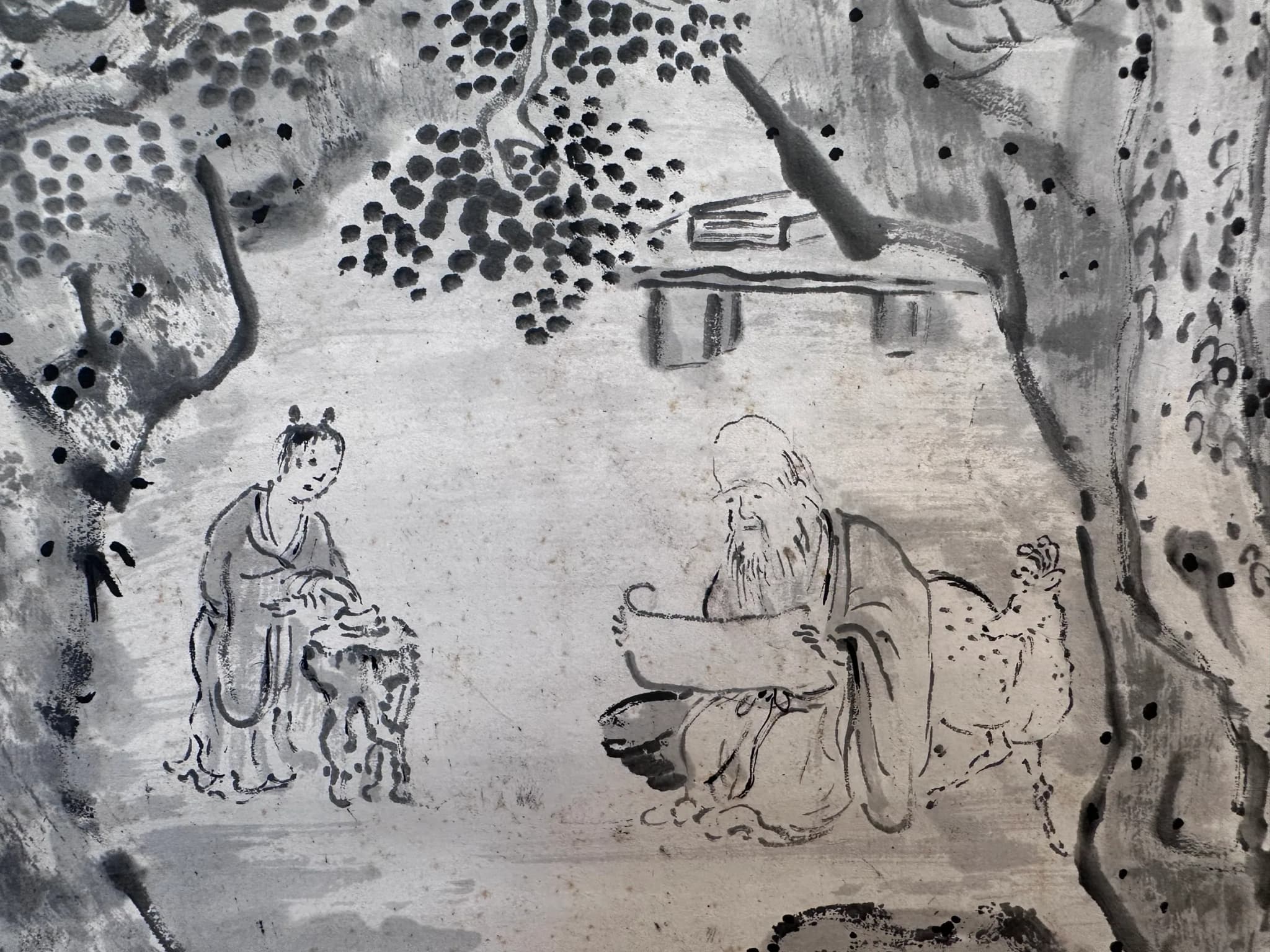
If viewers give a closer look at the noble scholar seated beneath the pine, they would notice that he is not a conventional literatus, but in fact Fukurokuju 福禄寿, the deity of longevity characterized by his large forehead. With a deer flanking Fukurokuju and a crane flying through the misty valley, the scene evokes the auspicious atmosphere of Mount Hōrai, the Daoist realm of the immortals. However, the rugged, muscular energy of the axe-cut brushwork stands in contrast to this otherwise serene, benevolent iconography. This tension captures a pivotal moment of Aigai’s development. His subsequent, celebrated pursuit of a more orthodox, lyrical Southern School idiom grew directly out of these early, experimental engagements with Northern School structural techniques. Even when Aigai later had the opportunity to copy authentic works by Li Tang, he deliberately attenuated the grimness of the axe-cut stroke in favor of a lighter, more ethereal aesthetic. Consequently, this scroll remains a rare document of Aigai’s mid-career artistic transition.
Painting inscription
靄厓樵者 (woodcutter Aigai)
Seals
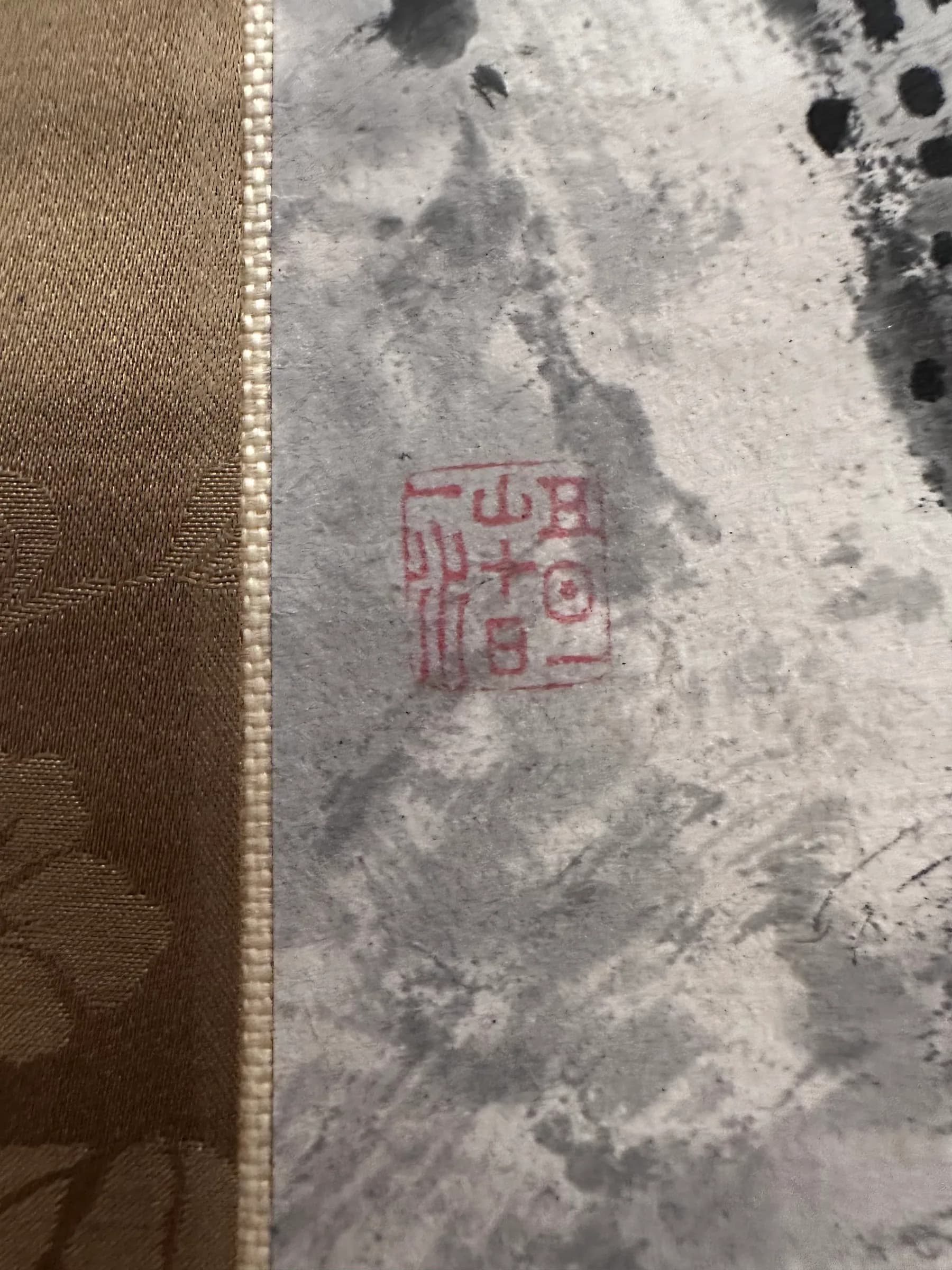
(square intaglio seal) Kōshi Joshō 高氏如樵; (square relief seal) Sekisō dōjin 石巣道人; (yūin: square relief seal) gojitsu issan jūjitsu issui 五日一山十日一水
Before entering Shazanrō Academy, Aigai was a great admirer of Nanga painter Ike no Taiga, tirelessly copying his works. Aigai’s pseudonym Joshō is inspired by Taiga’s painter name Kyūka Sanshō 九霞山樵. The seal gojitsu issan jūjitsu issui is a tribute to I Fukyū, who was the Chinese muse of Taiga and used the same seal in one of his paintings.
Box inscription
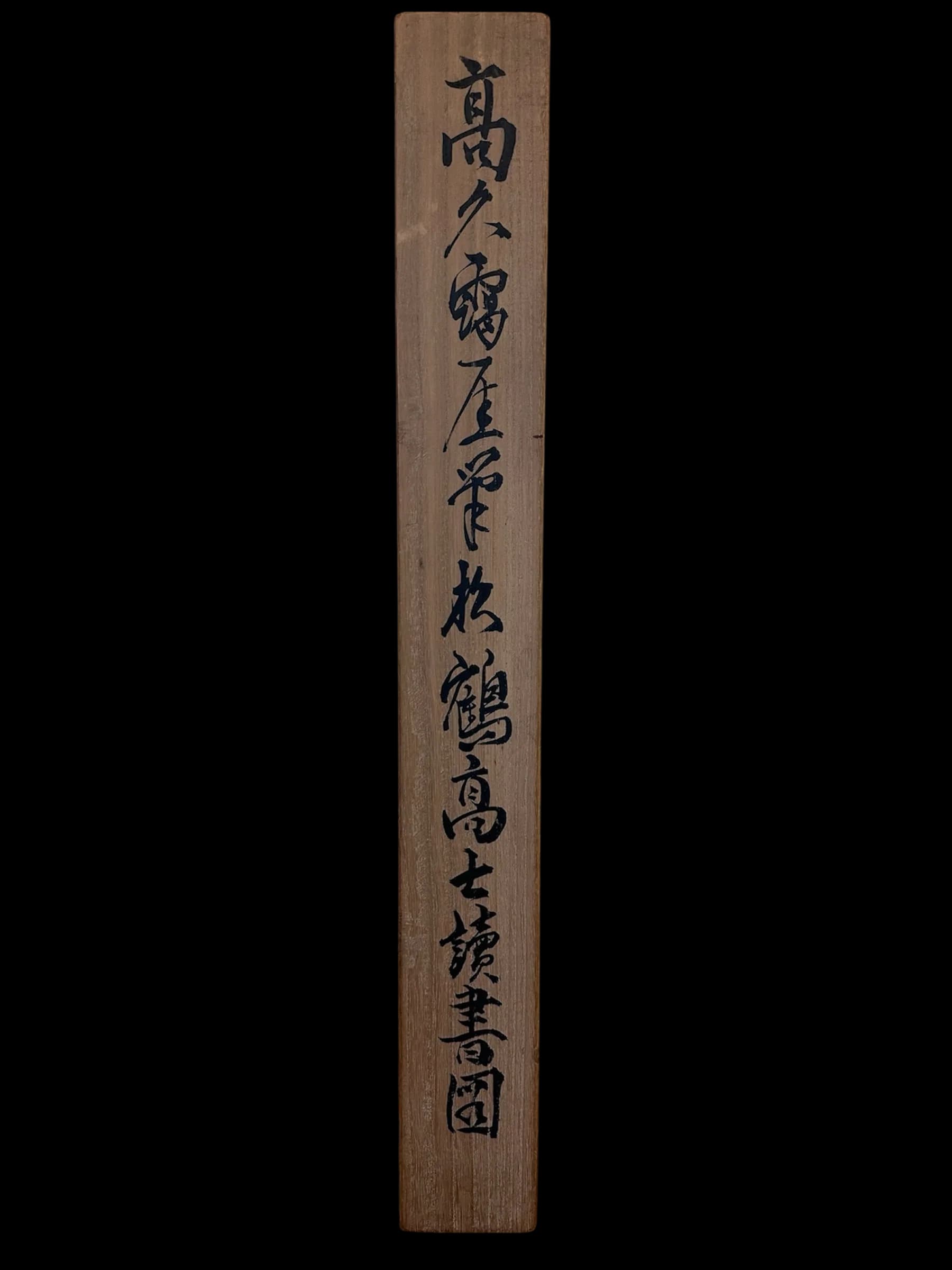
(front): 高久靄厓筆松鶴高士讀書図 (Noble Scholar Reading among Pines and Cranes by Takaku Aigai)
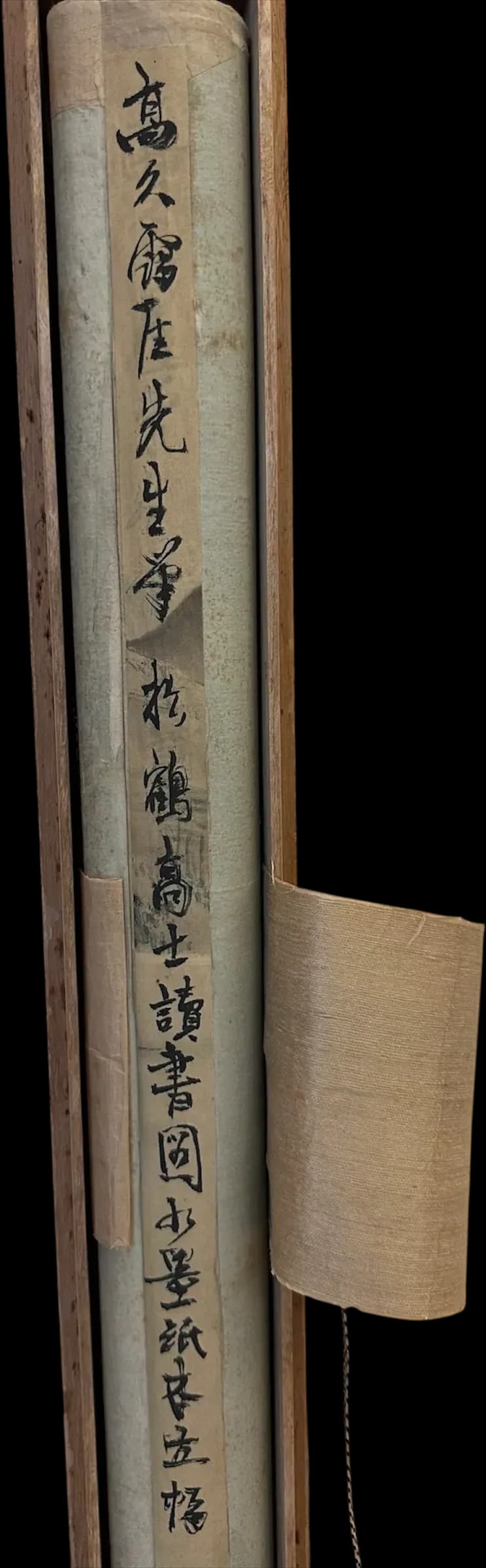
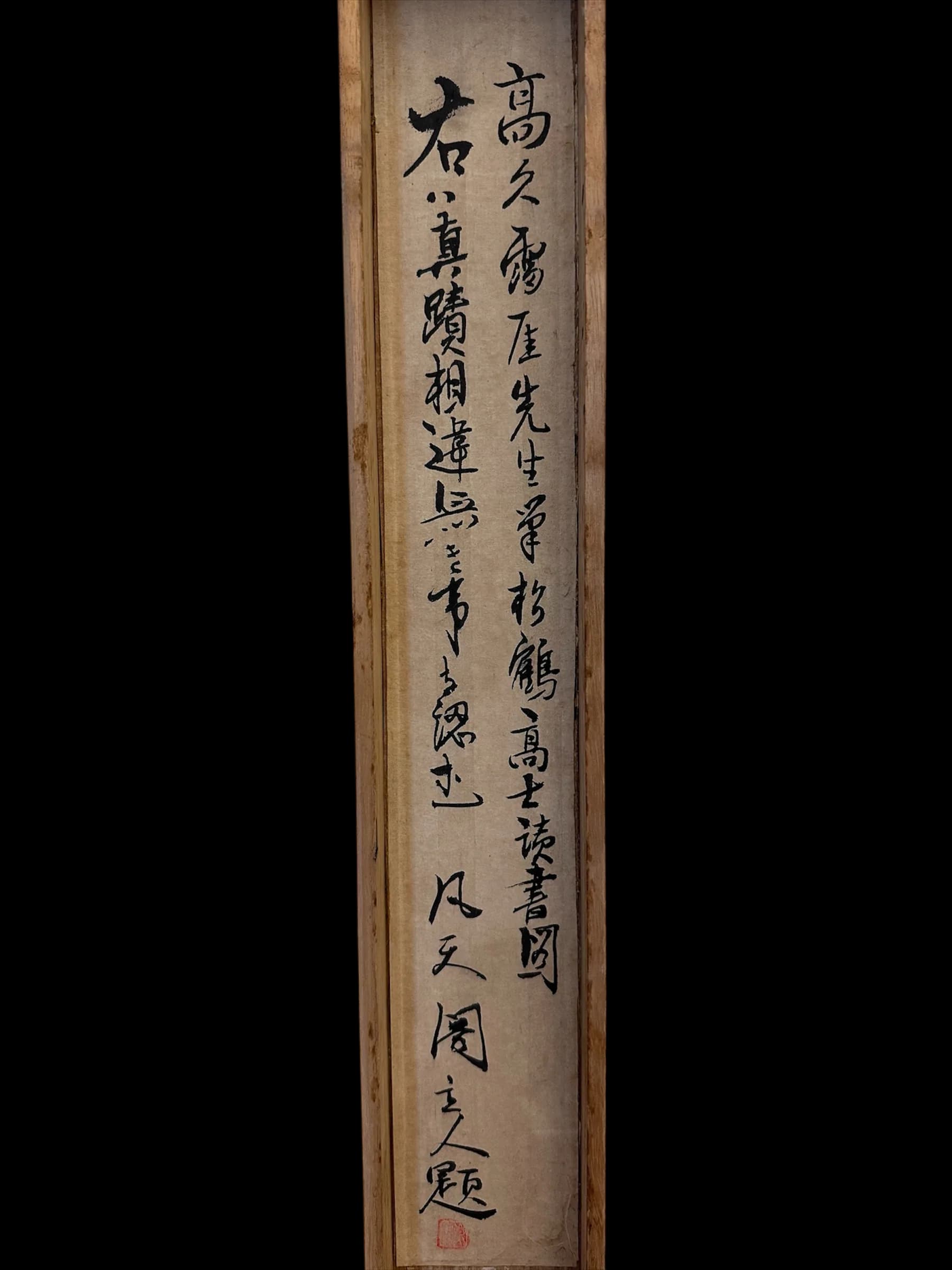
(verso): 高久靄厓先生筆松鶴高士讀書図 右ハ真蹟相違無き事を認む 凡天閣主人題 (Painting of a Noble Scholar Reading among Pines and Cranes by master Takaku Aigai. The aforementioned work is hereby certified to be undoubtedly authentic—inscribed by Master of Bontenkaku)